10% Off
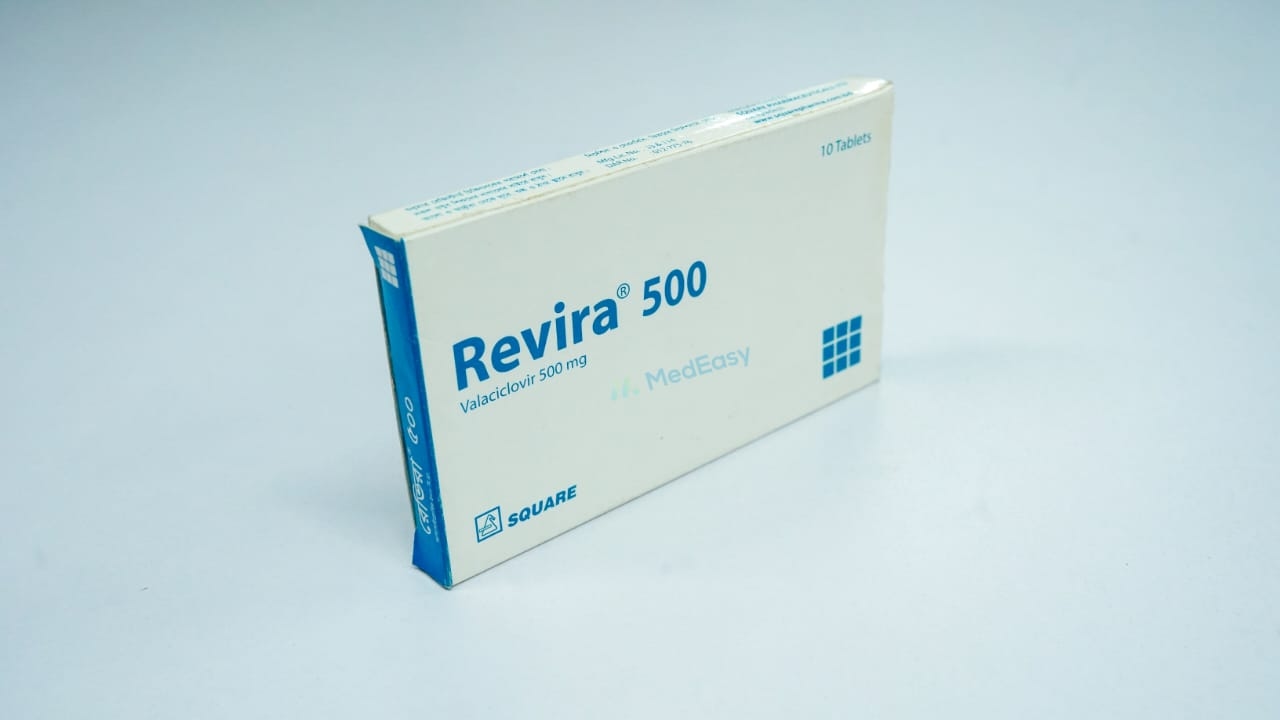
Revira500 mg
Square Pharmaceuticals PLC.
৳362.43
Add to cart

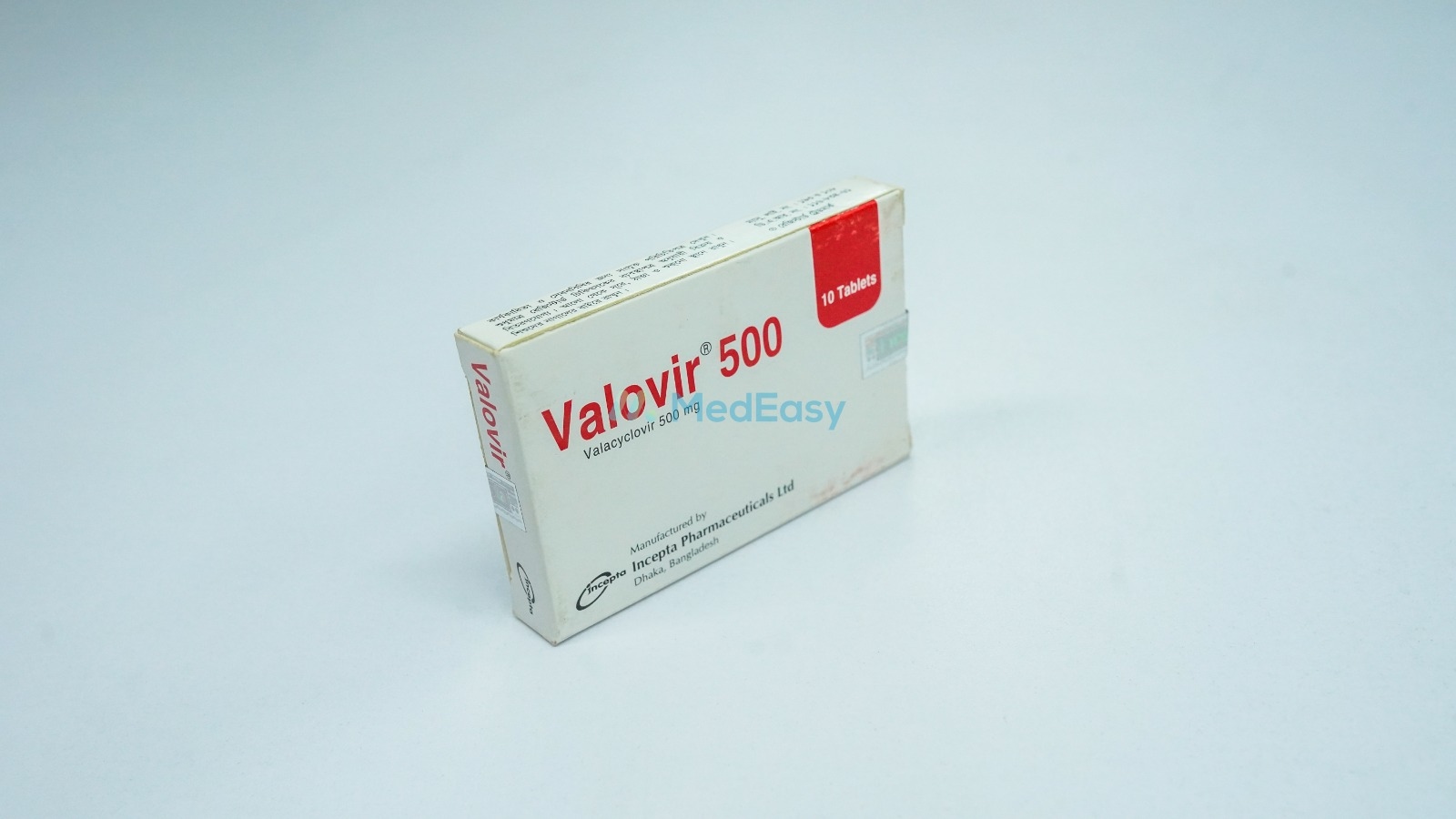
Valarux 500 mg Tablet is available on MedEasy for ৳361.35 per 10's pack, with home delivery anywhere in Bangladesh. It is manufactured by Opsonin Pharma Ltd. Its generic name is Valacyclovir.

Valarux is an antiviral medicine indicated for the treatment and management of infections caused by herpes simplex virus (HSV) and varicella-zoster virus (VZV). Its established and guideline-supported uses include:
Valarux does not cure herpes infections; it reduces the severity and duration of outbreaks and, with suppressive use, lowers the frequency of recurrences.
Each tablet contains Valacyclovir (as Valacyclovir hydrochloride), an antiviral compound that is a prodrug of acyclovir. It is available as immediate-release tablets in strengths such as 500 mg and 1 g, formulated with standard pharmaceutical excipients for oral administration.
Valarux is a synthetic nucleoside analogue antiviral drug and the L-valyl ester (prodrug) of acyclovir. After oral administration, it is rapidly and almost completely converted to acyclovir and the amino acid L-valine through first-pass intestinal and hepatic metabolism. This conversion gives Valarux substantially higher oral bioavailability than acyclovir itself, allowing less frequent dosing while achieving comparable or higher plasma acyclovir concentrations.
Valarux is used to treat infections caused by herpes simplex virus types 1 and 2 (HSV-1, HSV-2) and varicella-zoster virus (VZV), including cold sores, genital herpes, shingles, and chickenpox.
Valarux belongs to the therapeutic class of antiviral agents, specifically the synthetic nucleoside analogue antivirals used against herpesviruses.
Valacyclovir is a prodrug that is converted almost entirely to acyclovir after oral absorption, via first-pass metabolism by the enzyme valacyclovir hydrolase in the intestine and liver.
Acyclovir is itself inactive until it is phosphorylated. In cells infected with HSV or VZV, the viral enzyme thymidine kinase selectively phosphorylates acyclovir to acyclovir monophosphate, which is then converted by host cell enzymes to acyclovir triphosphate. This active triphosphate form:
Because this activation step depends heavily on viral thymidine kinase, the drug is selectively concentrated and active in virus-infected cells, giving it a favorable safety margin against uninfected human cells.
Pharmacokinetics: Oral bioavailability of acyclovir from Valacyclovir is approximately 3-5 times higher than from oral acyclovir itself. Peak plasma concentrations occur roughly 1-2 hours after dosing. Acyclovir (the active moiety) is widely distributed, has low plasma protein binding, and is eliminated primarily by renal excretion (glomerular filtration and tubular secretion), with an elimination half-life of approximately 2.5-3.3 hours in patients with normal renal function; this is prolonged in renal impairment, requiring dose adjustment.
Dosing of Valarux depends on the indication being treated, renal function, and immune status. It should be started as early as possible after symptom onset for maximum benefit.
| Indication | Typical adult dose | Duration |
|---|---|---|
| Herpes zoster (shingles) | 1 g three times daily | 7 days |
| Genital herpes - initial episode | 1 g twice daily | 10 days |
| Genital herpes - recurrent episode | 500 mg twice daily | 3 days |
| Genital herpes - chronic suppressive therapy (immunocompetent) | 500 mg or 1 g once daily (1 g once daily if ≥10 recurrences/year) | Long-term, reassessed periodically (e.g., annually) |
| Genital herpes - suppressive therapy in HIV-infected patients | 500 mg twice daily | Long-term, as advised by physician |
| Reducing transmission of genital herpes to partner | 500 mg once daily (source partner, immunocompetent) | Long-term, with safer-sex practices |
| Herpes labialis (cold sores) | 2 g twice daily, 12 hours apart | 1 day (single-day, 2-dose course) |
| Chickenpox (varicella), pediatric 2-<18 years | 20 mg/kg three times daily (max 1 g three times daily) | 5 days |
Renal impairment: Dose and/or dosing interval must be reduced according to creatinine clearance; a physician should individualize the regimen based on renal function (see Use in Special Populations).
Tablets should be taken with a full glass of water and can be taken with or without food. Maintaining adequate hydration during treatment, especially at higher doses, is recommended.
Valarux tablets are for oral use. Swallow the tablet whole with a full glass of water; do not crush or chew unless advised otherwise by a physician or pharmacist. It may be taken with or without food. Doses should be spaced evenly as prescribed, and the full course should be completed even if symptoms improve early, to obtain maximum antiviral benefit.
The following clinically significant interactions have been established for Valarux (via its active metabolite, acyclovir):
Inform your physician of all other medicines, including over-the-counter drugs and supplements, before starting Valarux.
Valacyclovir is contraindicated in patients with known hypersensitivity to Valacyclovir, acyclovir, or any component of the formulation.
Most patients tolerate Valarux well. Reported adverse effects include:
Seek medical attention promptly if severe reactions, unusual bruising/bleeding, reduced urination, or significant confusion occur.
Pregnancy: Data from the Valarux/Acyclovir pregnancy registries and other observational studies have not shown an increased risk of major birth defects compared with the general population; however, these data are not sufficient to rule out all risk. Valarux should be used during pregnancy only if the potential benefit justifies the potential risk to the fetus, and only under a physician's advice.
Lactation: Acyclovir (the active metabolite of Valarux) is excreted into human breast milk at concentrations higher than corresponding plasma levels. Caution is advised when Valarux is administered to a breastfeeding woman; use only if clearly needed and under medical supervision, with the infant monitored for adverse effects.
Before and during treatment with Valarux, the following precautions apply:
Overdose of Valarux may cause acute renal failure (due to precipitation of acyclovir in renal tubules) and neurological symptoms such as confusion, agitation, lethargy, seizures, or coma, particularly in elderly patients or those with renal impairment. If an overdose is suspected, seek immediate medical attention or contact emergency services/a poison control center. Hemodialysis may enhance removal of acyclovir from the blood and may be considered by treating physicians in cases of significant overdose associated with renal failure. Do not attempt home treatment for a suspected overdose.
Store at room temperature (below 30°C), away from light and moisture. Keep out of reach of children.
Renal impairment: Valarux requires dose and/or interval adjustment in patients with reduced creatinine clearance across all indications; a physician should individualize dosing based on renal function tests. Adequate hydration is important in this group.
Hepatic impairment: No dose adjustment is generally required in mild-to-moderate hepatic impairment, as conversion of Valarux to acyclovir is not substantially reduced, but caution and medical supervision are advised.
Elderly: Older patients are more likely to have reduced renal function and are at higher risk of neurotoxic and nephrotoxic effects; dose adjustment based on renal function and adequate hydration are especially important in this group.
Immunocompromised patients (e.g., HIV infection, transplant recipients): High-dose Valarux therapy in these populations carries an increased, though rare, risk of TTP/HUS (see Side Effects and Precautions); close monitoring is advised.
Pediatric use: see Pediatric Uses.
Duration of Valarux therapy is indication-specific: 7 days for shingles, 10 days for an initial genital herpes episode, 3 days for a recurrent genital herpes episode, a single day (2 doses) for cold sores, and 5 days for chickenpox in children. Suppressive therapy for recurrent genital herpes may be continued long-term, with periodic reassessment by the prescribing physician (e.g., after 12 months) to determine ongoing need.
Valacyclovir is classified as an antiviral agent, specifically a nucleoside analogue prodrug (of acyclovir) active against herpesviruses (HSV-1, HSV-2, VZV).
Valacyclovir is converted to acyclovir after absorption. Acyclovir is selectively phosphorylated by viral thymidine kinase in HSV/VZV-infected cells to its active triphosphate form, which competitively inhibits viral DNA polymerase and causes chain termination when incorporated into viral DNA, thereby halting viral replication while sparing uninfected host cells.
Category B (former FDA classification)
Valarux is approved for use in pediatric patients for specific indications:
Safety and efficacy for other indications (e.g., genital herpes, herpes zoster) have not been established in children below the approved age ranges; Valarux should not be used for these indications in younger children except under specialist advice. Use in neonates and infants under 2 years is not established and generally requires specialist (e.g., pediatric infectious disease) guidance, with acyclovir often preferred in this age group.
Q: What is Valarux 500 mg Tablet used for?
A: Valarux 500 mg Tablet is an antiviral medicine used to treat and manage infections caused by herpes simplex virus and varicella-zoster virus, including cold sores, genital herpes, shingles, and chickenpox.
Q: How quickly should I start taking Valarux 500 mg Tablet after symptoms begin?
A: Valarux 500 mg Tablet works best when started as early as possible after the first signs of an outbreak (e.g., tingling before a cold sore, or the first day of a shingles rash), ideally within 24-72 hours of symptom onset.
Q: Can Valarux 500 mg Tablet cure herpes completely?
A: No. Valarux 500 mg Tablet does not eliminate the herpes virus from the body. It reduces the severity, duration, and frequency of outbreaks, and can lower the risk of transmission to a partner, but the virus remains dormant in the body afterward.
Q: Is Valarux 500 mg Tablet safe during pregnancy or breastfeeding?
A: Valarux 500 mg Tablet should be used in pregnancy only if the potential benefit clearly outweighs the potential risk to the fetus, and only on a physician's advice; available registry data have not shown an increased risk of birth defects, but data remain limited. Acyclovir (the active form of Valarux 500 mg Tablet) passes into breast milk, so Valarux 500 mg Tablet should be used while breastfeeding only if clearly needed and under medical supervision.
Q: What are the serious side effects I should watch for with Valarux 500 mg Tablet?
A: Seek prompt medical attention for signs of kidney problems (reduced urination, swelling), confusion or agitation, or unusual bruising/bleeding with weakness and reduced urination, which could indicate the rare but serious blood disorder TTP/HUS, reported mainly with high-dose Valarux 500 mg Tablet in HIV-infected or transplant patients.
Q: Do I need to adjust my dose if I have kidney problems?
A: Yes. Valarux 500 mg Tablet is cleared by the kidneys, so patients with reduced kidney function need a lower dose or less frequent dosing, as determined by a physician based on kidney function tests. Adequate hydration is also recommended, especially at higher doses.
Disclaimer
The information provided is accurate to the best of our knowledge, but it does not replace professional medical advice. We cannot guarantee its completeness or accuracy, and the absence of specific information about a drug should not be taken as an endorsement. We are not responsible for any consequences arising from this information, so please consult a healthcare professional for any concerns or questions.