
5% Off
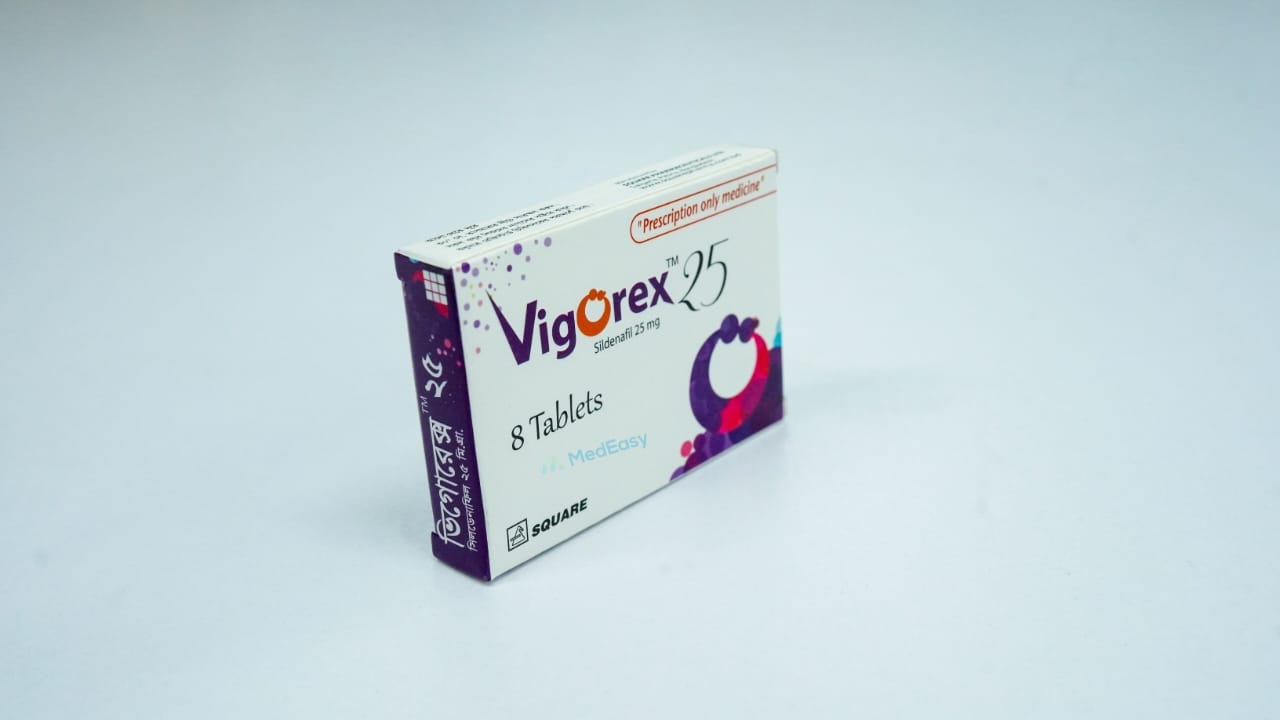
Vigorex25 mg
Square Pharmaceuticals PLC.
৳95.00
Add to cart
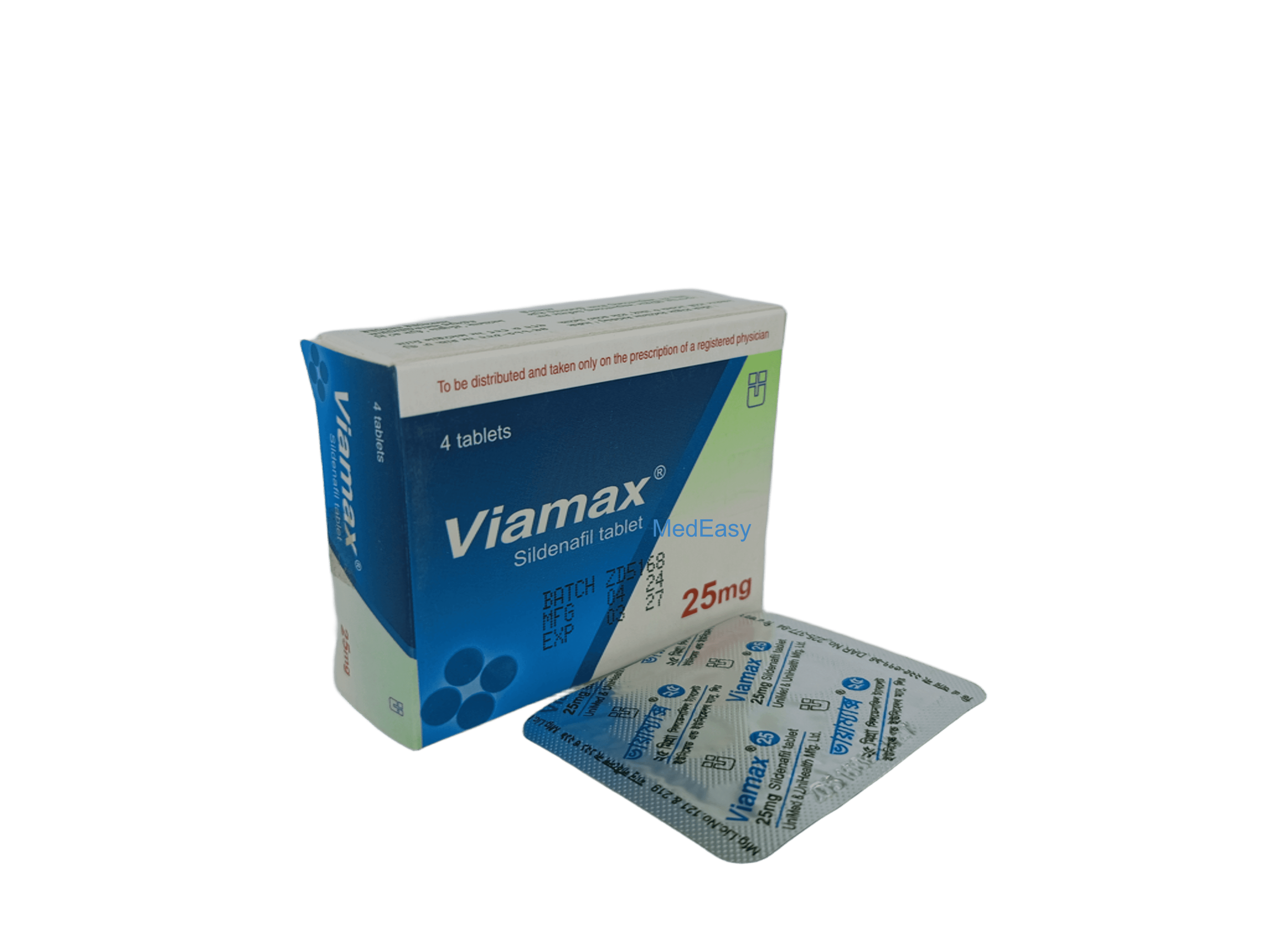

Viamax is indicated for the following uses:
Viamax is not indicated for use in women, and it is not a treatment for HIV or other sexually transmitted infections. It does not increase sexual desire on its own and has no effect in the absence of sexual stimulation.
Each tablet contains Sildenafil Citrate equivalent to sildenafil base. In Bangladesh, Sildenafil Citrate is commonly available as film-coated tablets in strengths of 25 mg, 50 mg, and 100 mg for the erectile dysfunction indication; a separate lower-strength tablet formulation is used for pulmonary arterial hypertension.
Viamax is a phosphodiesterase type 5 (PDE5) inhibitor used in the management of erectile dysfunction and, in a different formulation and dosing regimen, pulmonary arterial hypertension. It works by enhancing the natural nitric oxide-cGMP pathway that relaxes smooth muscle, increasing blood flow to specific vascular beds — the penile tissue in erectile dysfunction, and the pulmonary vasculature in pulmonary arterial hypertension.
Viamax does not initiate an erection by itself; sexual stimulation is required for it to produce its intended effect in erectile dysfunction. It is one of the most widely prescribed medicines of its class worldwide and is available in Bangladesh under multiple brand names as tablets in various strengths.
Sildenafil Citrate is a selective inhibitor of cyclic guanosine monophosphate (cGMP)-specific phosphodiesterase type 5 (PDE5), the enzyme responsible for degradation of cGMP in smooth muscle.
Sexual stimulation triggers local release of nitric oxide, which activates guanylate cyclase and increases cGMP levels in the corpus cavernosum, causing smooth muscle relaxation and increased blood inflow that produces an erection. By inhibiting PDE5, Sildenafil Citrate prevents the breakdown of cGMP, prolonging and enhancing this effect — but only in the presence of sexual stimulation.
PDE5 is also present in pulmonary vascular smooth muscle, where Sildenafil Citrate produces vasodilation, particularly in the pulmonary vascular bed and, to a lesser extent, in the systemic circulation, which underlies its efficacy in pulmonary arterial hypertension.
Sildenafil Citrate is absorbed rapidly after oral administration, reaching peak plasma concentration in about 30-120 minutes (median 60 minutes); absorption is delayed by a high-fat meal. It is metabolized principally by hepatic CYP3A4 (major route) and CYP2C9 (minor route), and is highly protein bound (approximately 96%). Elimination half-life is approximately 3-5 hours.
| Indication | Adult dose | Notes |
|---|---|---|
| Erectile dysfunction | 50 mg taken as needed, approximately 1 hour before sexual activity (may be taken 30 minutes to 4 hours before); range 25-100 mg based on effectiveness and tolerability | Maximum recommended dosing frequency is once per day |
| Pulmonary arterial hypertension | 20 mg three times daily, taken approximately 4-6 hours apart | Uses a separate, lower-strength formulation than the ED indication; with or without food |
Starting dose is usually 50 mg; the dose may be increased to 100 mg or decreased to 25 mg depending on response and tolerability. In patients taking potent CYP3A4 inhibitors (e.g. ritonavir, ketoconazole, itraconazole) or alpha-blockers, or in those with hepatic or severe renal impairment, a lower starting dose (25 mg) is recommended (see Interactions and Use in Special Populations).
No dose adjustment is generally needed in mild-to-moderate renal impairment; in severe renal impairment (creatinine clearance <30 mL/min), a starting dose of 25 mg should be considered for erectile dysfunction.
In hepatic impairment (e.g. cirrhosis), a starting dose of 25 mg is recommended for erectile dysfunction, as clearance of Viamax is reduced.
Viamax tablets for erectile dysfunction should be taken orally, as needed, approximately 1 hour before anticipated sexual activity (effect may be seen from about 30 minutes up to 4 hours after dosing). Sexual stimulation is required for the medicine to work. Taking Viamax with a high-fat meal may delay the onset of action; it may be taken with or without food.
For pulmonary arterial hypertension, Viamax tablets are taken three times a day, approximately 4-6 hours apart, with or without food, as prescribed by the physician — this dosing schedule should not be confused with the as-needed erectile dysfunction regimen.
Do not take more than one dose of Viamax in a 24-hour period unless specifically directed by a physician.
The following are well-established, clinically significant interactions with Viamax:
Sildenafil Citrate is contraindicated in the following situations:
Common and serious side effects associated with Viamax include:
Pregnancy: Viamax is not indicated for use in women, and there are no adequate data on its use in human pregnancy. As with any medicine not indicated for use during pregnancy, it should not be used in pregnant women; if inadvertent exposure occurs, it should only continue under medical advice where a physician judges that potential benefit clearly justifies potential risk to the fetus, and a physician should be consulted promptly.
Lactation: Viamax is not indicated for use in women, including breastfeeding women, and there are no adequate data on its transfer into human breast milk. It should not be used during breastfeeding except on the specific advice of a physician who judges that potential benefit justifies potential risk to the infant.
The following precautions apply to the use of Viamax:
Overdose of Viamax may cause an exaggeration of its known effects, such as headache, flushing, hypotension, prolonged visual disturbances, and priapism. If overdose of Viamax is suspected, seek immediate medical attention or contact a poison control center or emergency services right away. Treatment is supportive and symptomatic, based on the patient's clinical presentation; because Viamax is highly protein-bound and not significantly eliminated in urine, hemodialysis is not expected to accelerate its clearance.
Store at room temperature (below 30°C), away from light and moisture. Keep out of reach of children.
Special dosing and monitoring considerations for Viamax apply to the following populations:
For erectile dysfunction, Viamax is used on an as-needed basis rather than as a continuous daily therapy, with no more than one dose taken in a 24-hour period; treatment may continue for as long as clinically appropriate and desired, with periodic physician review of underlying cardiovascular and other risk factors. For pulmonary arterial hypertension, Viamax is used as an ongoing, long-term therapy taken three times daily, with the need for continued treatment reassessed periodically by the treating physician; it should not be stopped abruptly without medical advice in this indication.
Sildenafil Citrate belongs to the phosphodiesterase type 5 (PDE5) inhibitor class; also categorized among erectile dysfunction agents and, for the pulmonary arterial hypertension indication, pulmonary vasodilators.
Sildenafil Citrate selectively inhibits phosphodiesterase type 5 (PDE5), the enzyme that breaks down cyclic GMP (cGMP) in vascular smooth muscle. By preventing cGMP degradation, Sildenafil Citrate enhances and prolongs the nitric oxide-mediated smooth muscle relaxation triggered by sexual stimulation, increasing blood flow to the penile tissue in erectile dysfunction, and separately produces vasodilation in the pulmonary vascular bed in pulmonary arterial hypertension.
Category B (legacy FDA pregnancy classification; not indicated for use in women)
Viamax is not indicated for use in individuals under 18 years of age for erectile dysfunction. Safety and effectiveness for pulmonary arterial hypertension in pediatric patients have not been well established for the tablet formulation used in adults; pediatric use of Viamax for pulmonary arterial hypertension, where undertaken, should only be under specialist supervision, as some studies raised concerns about mortality with higher chronic doses in children with pulmonary arterial hypertension. Viamax should not be given to children for erectile dysfunction, and any pediatric use for pulmonary arterial hypertension should follow specific specialist guidance rather than adult dosing extrapolation.
Q: What is Viamax 25 mg Tablet used for?
A: Viamax 25 mg Tablet is used mainly to treat erectile dysfunction (difficulty achieving or maintaining an erection) in men. A different, separate dosing regimen of Viamax 25 mg Tablet is also used to treat pulmonary arterial hypertension, a type of high blood pressure in the lungs. It does not increase sexual desire and only works with sexual stimulation.
Q: How should I take Viamax 25 mg Tablet for erectile dysfunction?
A: For erectile dysfunction, Viamax 25 mg Tablet is usually taken as a single dose of 50 mg about 1 hour before sexual activity, though the dose may range from 25 mg to 100 mg depending on how you respond and tolerate it. It can be taken with or without food, but a heavy, high-fat meal may slow down how quickly it works. Do not take more than one dose of Viamax 25 mg Tablet in 24 hours.
Q: Can I take Viamax 25 mg Tablet if I use nitrate medicines or nitroglycerin for chest pain?
A: No. Viamax 25 mg Tablet must never be taken with nitrate medicines (such as glyceryl trinitrate/nitroglycerin, isosorbide mononitrate or dinitrate) in any form, or with riociguat, because the combination can cause a severe, potentially life-threatening drop in blood pressure. Tell every doctor and pharmacist that you take Viamax 25 mg Tablet so nitrates are never prescribed together with it, including in an emergency.
Q: What if I get an erection that will not go away after taking Viamax 25 mg Tablet?
A: An erection lasting longer than 4 hours (priapism) is a medical emergency after taking Viamax 25 mg Tablet. Seek immediate medical attention, as a prolonged, untreated erection can permanently damage the penis and cause lasting loss of sexual function.
Q: Are there serious side effects I should watch for with Viamax 25 mg Tablet?
A: Most people tolerate Viamax 25 mg Tablet well, with headache, flushing, indigestion, and nasal congestion being the most common effects. Rarely, Viamax 25 mg Tablet has been associated with sudden vision loss in one or both eyes, sudden hearing loss, and cardiovascular events such as chest pain or heart attack, particularly in men with underlying heart disease. Stop taking Viamax 25 mg Tablet and seek immediate medical attention if you experience sudden vision or hearing changes, chest pain, or a prolonged erection.
Q: Is it safe to combine Viamax 25 mg Tablet with blood pressure medicines or alcohol?
A: Viamax 25 mg Tablet can lower blood pressure further when combined with alpha-blockers or other blood pressure medicines, and excessive alcohol can add to this effect and to side effects like dizziness or flushing. Tell your physician about all blood pressure medicines you take before starting Viamax 25 mg Tablet, and limit alcohol intake while using it.
Disclaimer
The information provided is accurate to the best of our knowledge, but it does not replace professional medical advice. We cannot guarantee its completeness or accuracy, and the absence of specific information about a drug should not be taken as an endorsement. We are not responsible for any consequences arising from this information, so please consult a healthcare professional for any concerns or questions.

