

10% Off
VOLINAC Max50 gm
Square Pharmaceuticals PLC.
৳153.00
Add to cart
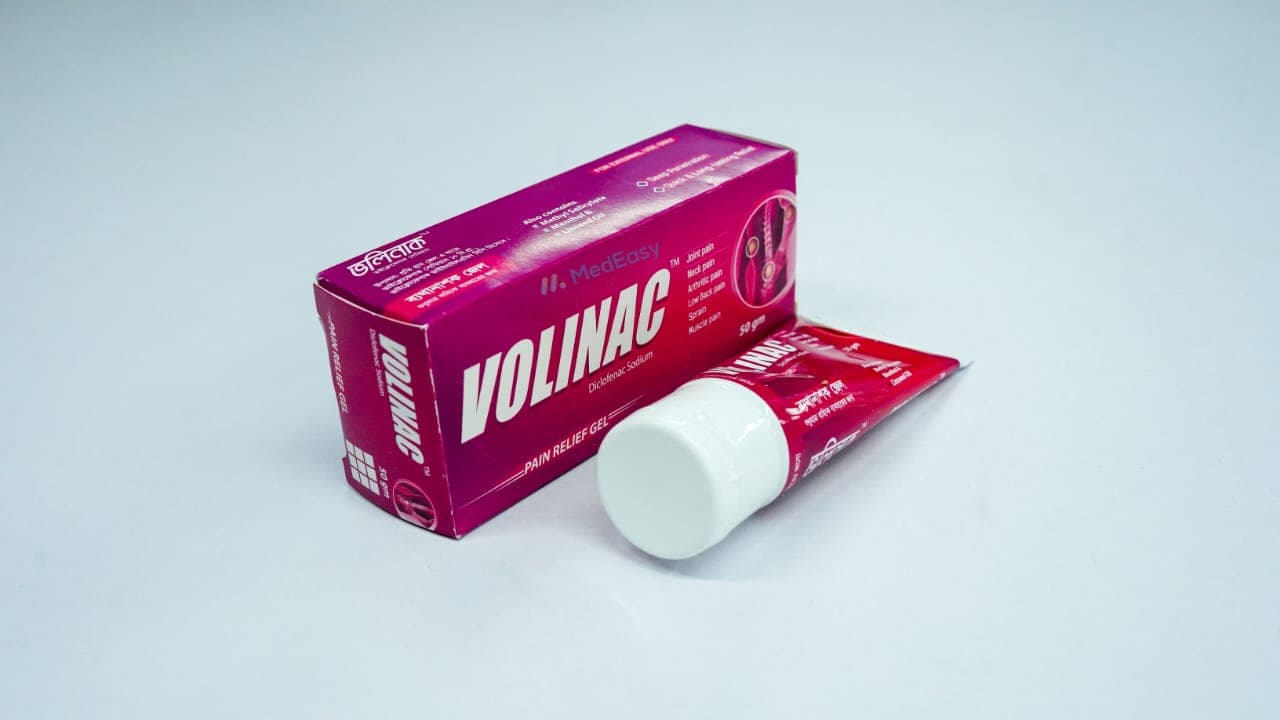

Volinac is a topical (external-use) analgesic combination indicated for the short-term symptomatic relief of localized musculoskeletal pain. Its evidence-based and traditional uses include:
Volinac is intended for short-term use on intact skin and is not a substitute for medical evaluation of persistent, severe, or worsening pain.
Diclofenac Sodium + Methyl Salicylate + Linseed Oil + Menthol is a fixed-dose topical combination. Formulations marketed under this generic name typically combine:
Exact strengths of each component vary by manufacturer and dosage form (gel, cream, or liniment). Always check the product label/pack insert for the precise composition of the specific brand dispensed.
Volinac is a topical multi-ingredient preparation used for localized relief of musculoskeletal pain. It combines an NSAID (diclofenac sodium) that provides local anti-inflammatory and analgesic action with counterirritant agents (methyl salicylate and menthol) that produce a warming/cooling sensation to distract from and modulate the perception of pain, together with linseed oil as an emollient carrier that aids absorption and skin conditioning.
It is available as a topical gel, cream, or liniment for external application only and is not intended for oral, ophthalmic, or mucosal use.
Topical NSAID and counterirritant (rubefacient) combination; Volinac belongs to the class of topical analgesic preparations combining a non-steroidal anti-inflammatory agent with salicylate/menthol counterirritants.
Diclofenac Sodium + Methyl Salicylate + Linseed Oil + Menthol works through complementary local mechanisms:
Systemic absorption through intact skin is generally low relative to oral NSAID use, but absorption increases with larger application areas, prolonged use, or use under occlusion.
Volinac is for external use only.
| Population | Recommended Use |
|---|---|
| Adults | Apply a thin layer (approximately a 2–4 cm strip, depending on the area to be treated) to the affected area 3–4 times daily, gently massaging until absorbed. |
| Elderly | Same as adult dosing; use the lowest effective amount for the shortest duration due to generally higher susceptibility to adverse effects. |
| Children (per age-specific label) | Use only as directed on the specific product label or by a physician; not recommended for young children unless specifically labeled for pediatric use (see Use in Special Populations). |
Do not use continuously for more than 7 days without consulting a physician, and do not apply to more than one or two body areas at a time.
For topical/external use only. Wash and dry the affected area before application. Gently massage a thin layer of Volinac into clean, intact skin until absorbed. Wash hands thoroughly after application (unless the hands are the area being treated). Do not apply to broken, infected, or irritated skin, near the eyes or mucous membranes, or under occlusive dressings or heating pads.
Volinac is applied topically, and clinically significant interactions are less common than with oral NSAIDs, but the following should be noted:
Diclofenac Sodium + Methyl Salicylate + Linseed Oil + Menthol is contraindicated in:
Most adverse effects of Volinac are local and mild:
Discontinue use and seek medical advice if a severe skin reaction, blistering, or signs of an allergic reaction (swelling, difficulty breathing, widespread rash) occur.
Volinac should be used in pregnancy only if clearly needed and if the potential benefit justifies the potential risk to the fetus; a physician should be consulted before use. Use is contraindicated during the third trimester due to the risk of premature closure of the ductus arteriosus associated with NSAIDs. Use during the first and second trimesters should be limited to the smallest effective area and shortest duration under medical supervision.
It is not known whether topically applied components are excreted in human breast milk in clinically significant amounts. As a precaution, breastfeeding mothers should avoid applying the product to the chest/breast area and should consult a physician before use during lactation.
The following precautions apply to Volinac:
Topical overdose (excessive or too-frequent application) of Volinac may increase the risk of local skin irritation, burns, or systemic NSAID/salicylate effects such as nausea, vomiting, tinnitus, or dizziness.
Accidental oral ingestion, particularly by children, can be serious due to the salicylate and NSAID content and may cause salicylate toxicity (nausea, vomiting, rapid breathing, ringing in the ears, confusion) or NSAID toxicity (gastrointestinal bleeding, renal impairment). In case of accidental ingestion or suspected overdose, seek immediate medical attention or contact a poison control center; do not attempt home treatment.
Store at room temperature (below 30°C), away from light and moisture. Keep the container tightly closed and out of reach of children.
Renal/Hepatic impairment: Systemic absorption of Volinac is low with normal topical use, but caution is advised in patients with significant renal or hepatic impairment, especially with extensive application; avoid use over large areas in these patients.
Elderly: No specific dose adjustment is established, but elderly patients may be more susceptible to adverse effects; use the minimum effective amount.
Children: Use only per the specific product's approved age restriction (commonly not recommended below 12 years unless specifically labeled); see Pediatric Uses.
Use of Volinac should generally be limited to short-term symptomatic relief, typically not exceeding 7 days of continuous use, unless otherwise directed by a physician. Persistent pain beyond this period warrants medical evaluation.
Diclofenac Sodium + Methyl Salicylate + Linseed Oil + Menthol belongs to the topical NSAID class (diclofenac component) combined with salicylate counterirritant (methyl salicylate) and menthol counterirritant classes, formulated in an emollient (linseed oil) base — collectively categorized as a topical analgesic/rubefacient combination.
Diclofenac Sodium + Methyl Salicylate + Linseed Oil + Menthol acts through a combined local mechanism: diclofenac sodium inhibits cyclooxygenase enzymes to reduce local prostaglandin-mediated inflammation and pain; methyl salicylate is absorbed and converted to salicylic acid, producing counterirritant warming and mild anti-inflammatory effects; menthol activates cutaneous cold receptors to create a cooling counterirritant sensation that modulates pain perception; linseed oil serves as an emollient vehicle enhancing skin penetration and comfort.
Category C (first and second trimester); use is contraindicated in the third trimester, consistent with NSAID class labeling.
Safety and efficacy of Volinac in children have not been well established for most formulations. Use in children should follow the specific product's approved age restriction (commonly not recommended under 12 years of age) and should only be undertaken under the guidance of a physician. Keep out of reach of children at all times, as accidental ingestion can cause serious salicylate/NSAID toxicity.
Q: What is Volinac 50 gm Gel used for?
A: Volinac 50 gm Gel is a topical preparation used for short-term relief of localized musculoskeletal pain such as minor sprains, strains, backache, and osteoarthritis-related joint pain.
Q: How should I apply Volinac 50 gm Gel?
A: Apply a thin layer to the affected, intact skin 3–4 times daily and gently massage until absorbed. Wash your hands after use unless treating the hands, and do not use under heating pads or bandages.
Q: Can I use Volinac 50 gm Gel during pregnancy?
A: Volinac 50 gm Gel should only be used in pregnancy if clearly needed and advised by a physician, and it is contraindicated in the third trimester due to NSAID-related risks to the fetus. Always consult your doctor first.
Q: Can Volinac 50 gm Gel be used with oral pain relievers?
A: Combining Volinac 50 gm Gel with oral NSAIDs or aspirin may increase the risk of systemic side effects such as stomach upset or bleeding. Consult your physician before combining treatments.
Q: What if I accidentally swallow Volinac 50 gm Gel?
A: Accidental ingestion can be dangerous, especially in children, and may cause salicylate or NSAID toxicity. Seek immediate medical attention or contact a poison control center; do not try to treat it at home.
Q: How long can I use Volinac 50 gm Gel?
A: Use is generally limited to short-term relief, typically no more than 7 days of continuous use, unless your physician advises otherwise. See a doctor if pain persists or worsens.
Disclaimer
The information provided is accurate to the best of our knowledge, but it does not replace professional medical advice. We cannot guarantee its completeness or accuracy, and the absence of specific information about a drug should not be taken as an endorsement. We are not responsible for any consequences arising from this information, so please consult a healthcare professional for any concerns or questions.
