
10% Off
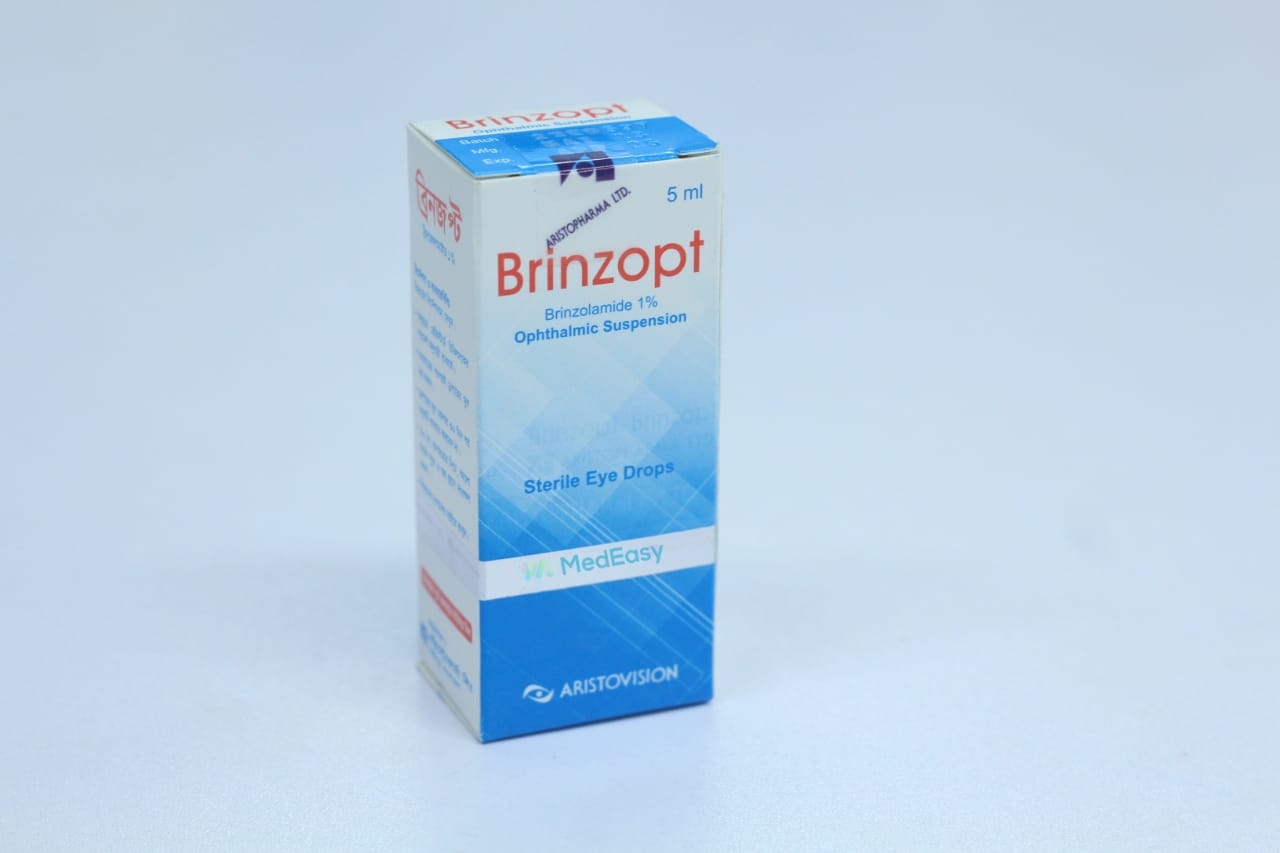
Brinzopt1%
Aristopharma Ltd.
৳495.00
Add to cart
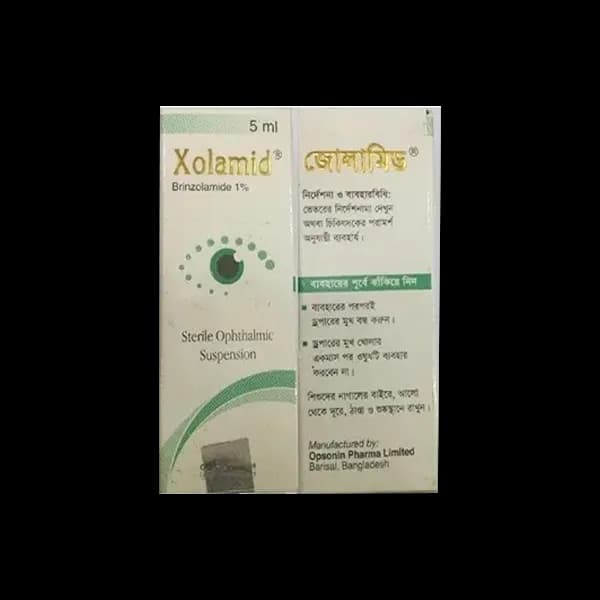
Xolamid 1% Ophthalmic Suspension is available on MedEasy for ৳450.00 per 5 ml drop, with home delivery anywhere in Bangladesh. It is manufactured by Opsonin Pharma Ltd. Its generic name is Brinzolamide.

Xolamid ophthalmic suspension is a carbonic anhydrase inhibitor indicated for the treatment of elevated intraocular pressure (IOP) in patients with:
Xolamid works by reducing the production of aqueous humor in the eye, thereby lowering IOP and reducing the risk of optic nerve damage and vision loss associated with glaucoma.
Each mL of Brinzolamide ophthalmic suspension contains 10 mg (1% w/v) of Brinzolamide as the active ingredient, along with benzalkonium chloride as a preservative and other inactive ingredients (carbomer, mannitol, tyloxapol, edetate disodium, sodium chloride, purified water) to adjust tonicity and pH.
Xolamid is a sulfonamide-derivative carbonic anhydrase inhibitor formulated as a sterile, aqueous, topical ophthalmic suspension. It is used to lower elevated intraocular pressure in patients with ocular hypertension or open-angle glaucoma. Unlike oral carbonic anhydrase inhibitors, Xolamid is applied directly to the eye, which limits (but does not eliminate) systemic absorption and systemic side effects.
Xolamid is supplied as a white to off-white suspension that must be shaken well before each use.
Xolamid belongs to the therapeutic class of Carbonic Anhydrase Inhibitors, specifically the ophthalmic (topical) subclass used in the management of glaucoma and ocular hypertension.
Mechanism of action: Brinzolamide inhibits carbonic anhydrase II (CA-II) in the ciliary processes of the eye. This enzyme catalyzes the reversible hydration of carbon dioxide and dehydration of carbonic acid, a reaction important in bicarbonate ion formation and fluid transport. By inhibiting CA-II, Brinzolamide reduces aqueous humor secretion, presumably by slowing the formation of bicarbonate ions, which decreases sodium and fluid transport, ultimately lowering intraocular pressure.
Pharmacokinetics: Following ocular administration, Brinzolamide is absorbed into the systemic circulation and accumulates in red blood cells due to binding with carbonic anhydrase, resulting in a long elimination half-life (approximately 111 days). It is metabolized in the liver and excreted primarily unchanged in the urine, along with one metabolite (N-desethyl brinzolamide).
| Indication | Dose |
|---|---|
| Ocular hypertension / Open-angle glaucoma (adults) | Instill one drop of Xolamid ophthalmic suspension into the affected eye(s) three times daily. May be used alone or in combination with other IOP-lowering eye drops. |
Administration instructions:
For ophthalmic (topical eye) use only. Not for injection or oral use. Shake well before use; instill as a single drop directly into the conjunctival sac of the affected eye(s).
Xolamid has the following clinically significant interactions:
Brinzolamide is contraindicated in patients with:
The most common side effects of Xolamid (occurring in 5-10% of patients) are:
Less common side effects (1-5%) include:
Rare but serious side effects: Because Xolamid is a sulfonamide derivative, rare systemic hypersensitivity reactions have been reported post-marketing, including Stevens-Johnson syndrome and toxic epidermal necrolysis. Seek immediate medical attention for skin rash, blistering, or peeling.
Pregnancy: There are no adequate and well-controlled studies of Xolamid in pregnant women. Animal studies have shown fetal effects at systemic doses much higher than those achieved with ophthalmic use in humans. Xolamid should be used during pregnancy only if the potential benefit justifies the potential risk to the fetus; consult a physician before use.
Lactation: It is not known whether Xolamid is excreted in human milk, although it has been detected in the milk of lactating animals. Because many drugs are excreted in human milk, caution should be exercised and a physician consulted before using Xolamid while breastfeeding.
Sulfonamide hypersensitivity: Xolamid is a sulfonamide derivative; although administered topically, systemic absorption occurs and serious sulfonamide-type reactions (including fatal cases of Stevens-Johnson syndrome) have been reported rarely. Discontinue use if signs of serious reaction or hypersensitivity occur (see Contraindications).
Corneal endothelial health: Xolamid should be used with caution in patients with low endothelial cell counts, as carbonic anhydrase inhibitors may affect corneal hydration; corneal edema and irreversible corneal decompensation have been reported in susceptible patients.
Renal impairment: Xolamid and its metabolite are primarily excreted by the kidney; use is not recommended in patients with severe renal impairment (creatinine clearance less than 30 mL/min) due to potential for metabolic acidosis.
Hepatic impairment: Xolamid has not been studied in patients with hepatic impairment; use with caution.
Contact lens wear: The preservative benzalkonium chloride in Xolamid may be absorbed by soft contact lenses. Remove contact lenses before instillation and wait at least 15 minutes before reinserting.
Contamination: Avoid touching the dropper tip to the eye, eyelid, or any surface to prevent contaminating the suspension.
Angle-closure glaucoma: Xolamid has not been specifically studied in patients with angle-closure glaucoma; its use in this setting has not been established.
Human data on oral or ophthalmic overdose of Xolamid are limited. Because Xolamid is a carbonic anhydrase inhibitor, systemic overdose (e.g., accidental ingestion) could theoretically cause electrolyte imbalance, development of an acidotic state, and effects on the nervous system. If overdose of Xolamid is suspected, seek immediate medical attention or contact a poison control center; serum electrolyte levels (particularly bicarbonate) and blood pH should be monitored by a physician. Do not attempt home treatment for a suspected overdose.
Store Xolamid ophthalmic suspension between 4°C and 30°C, away from light. Shake well before each use. Keep the bottle tightly closed when not in use, and keep out of reach of children.
Pediatric use: The safety and effectiveness of Xolamid in pediatric patients below 18 years have not been established for general use. A controlled clinical study in children (ages 4 weeks to 5 years) evaluating Xolamid given twice daily failed to demonstrate efficacy in pediatric glaucoma.
Geriatric use: No overall differences in safety or effectiveness of Xolamid have been observed between elderly and younger adult patients.
Renal impairment: Use of Xolamid is not recommended in patients with severe renal impairment (CrCl less than 30 mL/min) (see Precautions).
Hepatic impairment: Xolamid has not been studied in hepatic impairment; use with caution.
Xolamid is typically used long-term as a chronic therapy for glaucoma or ocular hypertension, since these are chronic conditions requiring sustained IOP control. Duration of treatment should be determined by an ophthalmologist based on regular monitoring of intraocular pressure and optic nerve health, and treatment should not be stopped or altered without medical advice.
Carbonic Anhydrase Inhibitor; Ophthalmic Antiglaucoma Agent; Sulfonamide derivative.
Brinzolamide inhibits carbonic anhydrase II in the ciliary processes of the eye, reducing bicarbonate ion formation and consequently decreasing aqueous humor secretion, which lowers intraocular pressure.
The safety and efficacy of Xolamid in pediatric patients have not been established for routine use. A clinical trial in children aged 4 weeks to 5 years using twice-daily Xolamid did not demonstrate efficacy in lowering intraocular pressure. Xolamid should be used in children only under close specialist supervision if a physician determines potential benefit outweighs risk.
Q: What is Xolamid 1% Ophthalmic Suspension used for?
A: Xolamid 1% Ophthalmic Suspension is an eye drop used to lower elevated intraocular pressure (IOP) in people with ocular hypertension or open-angle glaucoma, helping to protect the optic nerve and prevent vision loss.
Q: How should I use Xolamid 1% Ophthalmic Suspension eye drops?
A: Shake the bottle well, then instill one drop of Xolamid 1% Ophthalmic Suspension into the affected eye(s) three times daily, or as directed by your physician. Avoid letting the dropper tip touch your eye or any surface.
Q: Why does Xolamid 1% Ophthalmic Suspension leave a bitter taste in my mouth?
A: A bitter, sour, or unusual taste after using Xolamid 1% Ophthalmic Suspension is a very common and expected side effect, occurring because the drop drains through the tear duct into the throat. It is generally harmless, but tell your doctor if it is bothersome.
Q: Can I wear contact lenses while using Xolamid 1% Ophthalmic Suspension?
A: Remove soft contact lenses before instilling Xolamid 1% Ophthalmic Suspension, as the preservative in the drops can be absorbed by the lenses. You may reinsert your lenses about 15 minutes after using the drop.
Q: Is Xolamid 1% Ophthalmic Suspension safe during pregnancy or breastfeeding?
A: Xolamid 1% Ophthalmic Suspension has not been well studied in pregnant or breastfeeding women, and it should be used during pregnancy or lactation only if a physician determines the benefit outweighs the potential risk. Always consult your doctor before using Xolamid 1% Ophthalmic Suspension if you are pregnant, planning pregnancy, or breastfeeding.
Q: Who should not use Xolamid 1% Ophthalmic Suspension?
A: People with a known allergy to Xolamid 1% Ophthalmic Suspension or to sulfonamide (sulfa) drugs should not use it, since Xolamid 1% Ophthalmic Suspension is chemically related to sulfonamides and cross-reactions are possible. Inform your doctor of any drug allergies before starting Xolamid 1% Ophthalmic Suspension.
Disclaimer
The information provided is accurate to the best of our knowledge, but it does not replace professional medical advice. We cannot guarantee its completeness or accuracy, and the absence of specific information about a drug should not be taken as an endorsement. We are not responsible for any consequences arising from this information, so please consult a healthcare professional for any concerns or questions.
