
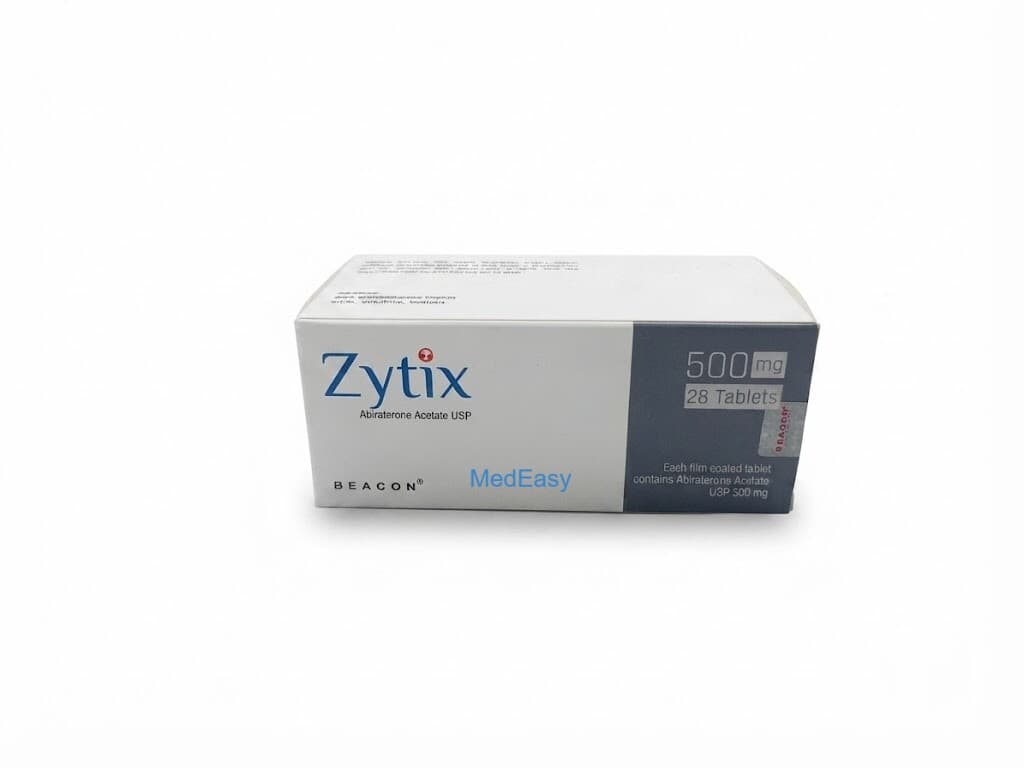

Medicine overview
Indications of Zytix
Zytix is a CYP17 (androgen biosynthesis) inhibitor used, in combination with corticosteroid therapy, for the treatment of prostate cancer in adult men. It is always used together with ongoing medical or surgical castration (androgen deprivation therapy).
FDA-approved / Established Indications
- Metastatic castration-resistant prostate cancer (mCRPC): Zytix in combination with prednisone (or prednisolone) is indicated for men with mCRPC, including those previously treated with chemotherapy and those who are chemotherapy-naive.
- Metastatic high-risk castration-sensitive prostate cancer (mCSPC): Zytix in combination with prednisone is indicated for men with newly diagnosed, high-risk metastatic castration-sensitive prostate cancer, given together with a GnRH analog (or after bilateral orchiectomy).
Zytix is not indicated for use in women and has no role in the treatment of any condition outside prostate cancer.
Composition
Each film-coated tablet contains Abiraterone Acetate as the active ingredient, commonly available in strengths of 250 mg and 500 mg. Formulations may differ slightly in bioavailability between manufacturers, so tablets from different brands or strengths should not be substituted interchangeably without medical advice.
Description
Zytix is an oral antiandrogen and androgen biosynthesis inhibitor used in the management of advanced prostate cancer. It is a prodrug that is converted in the body to abiraterone, which selectively and irreversibly inhibits the CYP17 (17α-hydroxylase/C17,20-lyase) enzyme, a key enzyme required for androgen (testosterone) production in the testes, adrenal glands, and prostate tumor tissue itself.
By blocking this enzyme, Zytix reduces circulating androgen levels below what surgical or medical castration alone can achieve, which can slow the growth of androgen-dependent prostate cancer. Because inhibiting CYP17 also increases upstream mineralocorticoid precursors, Zytix is always co-administered with a corticosteroid (prednisone/prednisolone) to reduce mineralocorticoid-related side effects such as high blood pressure, low potassium, and fluid retention.
Therapeutic Class
Zytix belongs to the therapeutic class of antiandrogens / androgen biosynthesis inhibitors (CYP17 inhibitors), a subclass of antineoplastic (anticancer) hormonal agents used specifically in prostate cancer.
Pharmacology
Abiraterone Acetate is hydrolyzed in vivo to abiraterone, the active moiety. Abiraterone is a selective, irreversible inhibitor of CYP17 (17α-hydroxylase/C17,20-lyase), an enzyme expressed in testicular, adrenal, and prostatic tumor tissues that is required for two sequential steps of androgen biosynthesis.
By inhibiting CYP17, Abiraterone Acetate suppresses production of testosterone and other androgens from all three sources, achieving androgen suppression beyond that produced by gonadotropin-releasing hormone (GnRH) analogs or orchiectomy alone. This is the basis for its efficacy in castration-resistant and high-risk castration-sensitive prostate cancer.
A pharmacologic consequence of CYP17 inhibition is a compensatory rise in adrenocorticotropic hormone (ACTH), leading to increased mineralocorticoid production (deoxycorticosterone), which underlies the characteristic side effects of hypertension, hypokalemia, and fluid retention; co-administered corticosteroid suppresses ACTH and mitigates this effect.
Absorption of Abiraterone Acetate is markedly increased by food (several-fold), which is why it must be taken on an empty stomach; abiraterone is metabolized mainly by hepatic enzymes including SULT2A1 and CYP3A4, and it is itself a moderate inhibitor of CYP2D6 and CYP2C8 hepatic enzymes.
Dosage & Administration of Zytix
General Instructions
Zytix tablets must be taken on an empty stomach — at least one hour before or at least two hours after a meal — because food substantially increases absorption and can result in excessive drug exposure. Tablets should be swallowed whole with water and must not be crushed or chewed.
Dosing by Indication
| Indication | Dose of Zytix | Co-administered Corticosteroid | Additional Therapy |
|---|---|---|---|
| Metastatic castration-resistant prostate cancer (mCRPC) | 1,000 mg (e.g., four 250 mg tablets) orally once daily | Prednisone/prednisolone 5 mg twice daily | Continue GnRH analog or prior bilateral orchiectomy |
| Metastatic high-risk castration-sensitive prostate cancer (mCSPC) | 1,000 mg orally once daily | Prednisone/prednisolone 5 mg once daily | Continue GnRH analog or prior bilateral orchiectomy |
Missed Dose
If a dose (or the daily corticosteroid dose) is missed, treatment should resume the next day at the usual dose; patients should not double the dose. Any missed dose should be discussed with the treating physician.
See Use in Special Populations for hepatic-impairment dose adjustments, and Precautions and Warnings for monitoring requirements during treatment.
Administration of Zytix
Take Zytix orally on a completely empty stomach — at least 1 hour before or 2 hours after any food — swallowing the tablet(s) whole with water. Do not crush, break, or chew the tablets. Take at approximately the same time each day, together with the prescribed corticosteroid dose.
Interaction of Zytix
The following interactions with Zytix are clinically significant and well documented:
- Strong CYP3A4 inducers (e.g., rifampin, phenytoin, carbamazepine, St. John's Wort): these can substantially reduce abiraterone plasma concentrations (rifampin reduced exposure by roughly half), potentially reducing efficacy. Combination should be avoided; if unavoidable, the dosing frequency of Zytix may need to be increased under medical supervision.
- CYP2D6 substrates with a narrow therapeutic index (e.g., certain antiarrhythmics, tricyclic antidepressants): Zytix inhibits CYP2D6 and can raise plasma levels of these drugs; avoid co-administration where possible or use with caution and dose adjustment.
- CYP2C8 substrates (e.g., pioglitazone, paclitaxel, repaglinide): Zytix inhibits CYP2C8 and increased pioglitazone exposure by about 46% in studies; monitor for toxicity of the co-administered drug.
- Spironolactone: has mineralocorticoid receptor–agonist activity and can worsen or mask the mineralocorticoid-excess effects of Zytix; concurrent use should generally be avoided.
- Drugs affecting gastric pH or food: taking Zytix with food (rather than on an empty stomach) markedly increases absorption and should be avoided, as described in Dosage and Administration.
Inform the prescribing physician of all other medicines, herbal products, and supplements being used before starting Zytix.
Contraindications
Abiraterone Acetate is contraindicated in:
- Patients with known hypersensitivity to abiraterone acetate or any component of the formulation.
- Women, particularly those who are pregnant or may become pregnant — Abiraterone Acetate is not indicated for use in females and can cause fetal harm.
- Patients with severe hepatic impairment (Child-Pugh Class C), in whom the drug has not been shown to be safe and should not be used.
Side Effects of Zytix
Common side effects of Zytix (occurring in more than 10% of patients) include:
- Fatigue
- Joint swelling or discomfort (arthralgia)
- Edema (fluid retention/swelling of the legs)
- Hot flushes
- Hypertension (high blood pressure)
- Diarrhea and nausea/vomiting
- Urinary tract infection
- Cough and upper respiratory infection
- Headache
Serious Side Effects
- Mineralocorticoid excess: hypertension, hypokalemia (low potassium), and fluid retention, related to the drug's mechanism of action.
- Adrenocortical insufficiency: especially during illness, physical stress, or abrupt discontinuation of the co-administered corticosteroid; symptoms include weakness, dizziness, and low blood pressure.
- Hepatotoxicity: elevations in liver enzymes and bilirubin; rare cases of severe liver injury have been reported.
- Laboratory abnormalities: anemia, elevated alkaline phosphatase, high triglycerides, low lymphocyte count, and high blood sugar.
Patients should promptly report symptoms of these serious effects to their physician; see Precautions and Warnings for monitoring guidance.
Pregnancy & Lactation
Zytix is not indicated for use in women and must not be used by women who are pregnant or who may become pregnant, as it can cause fetal harm based on its mechanism of action. Women who are pregnant or planning to become pregnant should not handle Zytix tablets, especially broken or crushed tablets, without protective gloves.
Male patients with female partners of reproductive potential should use effective contraception during treatment with Zytix and for a period after the last dose, as advised by their physician, because trace amounts of the drug may be present in semen.
There is no relevant data on use of Zytix during breastfeeding, as the drug is not intended for use in women. Consult a physician for any exposure-related concerns.
Precautions & Warnings
Empty-Stomach Dosing Requirement
Zytix must be taken strictly on an empty stomach. Taking it with food significantly increases drug absorption and can lead to exposure levels associated with an increased risk of toxicity. See Dosage and Administration.
Mineralocorticoid Excess
Zytix can cause hypertension, hypokalemia, and fluid retention due to increased mineralocorticoid production. Blood pressure, serum potassium, and signs of fluid retention should be monitored monthly throughout treatment, and pre-existing heart failure, hypertension, or hypokalemia should be controlled before starting therapy.
Adrenocortical Insufficiency
Because Zytix suppresses androgen and cortisol-pathway synthesis, adrenocortical insufficiency can occur, particularly during periods of stress, illness, surgery, or if the co-administered corticosteroid is stopped or reduced abruptly. The corticosteroid dose should never be stopped or changed without medical guidance, and increased corticosteroid coverage may be needed before, during, and after stressful situations.
Hepatotoxicity
Liver function tests (ALT, AST, bilirubin) must be checked before starting Zytix, every two weeks for the first three months, and monthly thereafter. Treatment may need to be interrupted, dose-reduced, or permanently discontinued if significant liver enzyme elevations occur.
Not for Use in Women
Zytix is intended only for use in male patients with prostate cancer and must never be given to women (see Contraindications and Pregnancy and Lactation).
Cardiovascular Monitoring
Because of its effects on blood pressure, fluid balance, and potassium, cardiovascular status should be monitored throughout treatment, especially in patients with pre-existing cardiac disease.
Overdose Effects of Zytix
There is no specific antidote for Zytix overdose. In case of a suspected overdose, seek immediate medical attention or contact emergency services / a poison control center right away.
In a hospital setting, management is supportive and includes close monitoring of cardiac function (including heart rhythm), blood pressure, serum potassium, and liver function, with treatment directed at any specific symptoms that develop. Patients or caregivers should not attempt to manage a suspected overdose at home.
Storage Conditions
Store at 20°C to 25°C (68°F to 77°F); brief excursions between 15°C and 30°C are permitted. Keep the container tightly closed, protected from light and moisture, and out of the reach of children and pregnant women.
Use In Special Populations
Use in Women
Zytix is not indicated for use in women under any circumstance (see Contraindications).
Pediatric Use
Zytix is indicated only for adult men with prostate cancer. Safety and effectiveness in children have not been established, and there is no pediatric indication for this drug.
Elderly Patients
No overall differences in safety or effectiveness have been observed between elderly and younger patients in clinical trials; since Zytix is used in a population that is predominantly older men, standard dosing generally applies, with the same monitoring precautions as for all patients.
Hepatic Impairment
- Mild impairment (Child-Pugh Class A): no dose adjustment needed.
- Moderate impairment (Child-Pugh Class B): reduce dose to 250 mg once daily.
- Severe impairment (Child-Pugh Class C): Zytix is contraindicated (see Contraindications).
Renal Impairment
No dose adjustment of Zytix is required in patients with renal impairment; however, caution and monitoring are advised in patients with severe renal disease.
Duration Of Treatment
Treatment with Zytix is continued for as long as it provides clinical benefit — typically until there is evidence of disease progression or unacceptable toxicity develops — as determined and monitored by the treating oncologist/urologist. It should not be stopped or its dose changed without medical advice, given the need to also manage the co-administered corticosteroid safely.
Drug Classes
Abiraterone Acetate is classified as an antiandrogen and CYP17 (androgen biosynthesis) inhibitor within the broader class of antineoplastic hormonal agents used in prostate cancer.
Mode Of Action
Abiraterone Acetate is converted in the body to abiraterone, which irreversibly inhibits CYP17 (17α-hydroxylase/C17,20-lyase), a key enzyme in androgen synthesis present in testicular, adrenal, and prostate tumor tissue. This blocks production of testosterone and other androgens from all sources, depriving androgen-dependent prostate cancer cells of the hormonal stimulation they need to grow, beyond what medical or surgical castration alone achieves.
Pediatric Uses
Zytix has no approved pediatric indication. It is used exclusively in adult men with prostate cancer, and safety and effectiveness in pediatric patients have not been established; it should not be used in children.
Frequently Asked Questions
Q: What is Zytix 500 mg Tablet used for?
A: Zytix 500 mg Tablet is used, together with a corticosteroid (prednisone or prednisolone) and ongoing androgen deprivation therapy, to treat metastatic castration-resistant prostate cancer and metastatic high-risk castration-sensitive prostate cancer in adult men.
Q: Why must Zytix 500 mg Tablet be taken on an empty stomach?
A: Food significantly increases the absorption of Zytix 500 mg Tablet, which can lead to excessive drug levels in the blood and a higher risk of side effects. It should always be taken at least 1 hour before or 2 hours after eating.
Q: Can Zytix 500 mg Tablet be taken alone, without a corticosteroid?
A: No. Zytix 500 mg Tablet must be taken together with a corticosteroid such as prednisone/prednisolone, because it increases mineralocorticoid activity that can cause high blood pressure, low potassium, and fluid retention; the corticosteroid helps prevent these effects. The corticosteroid dose should never be stopped abruptly without a doctor's advice, as this can cause adrenal insufficiency.
Q: Can women take Zytix 500 mg Tablet?
A: No. Zytix 500 mg Tablet is not indicated for use in women and can cause fetal harm if a woman is pregnant. Women who are or may become pregnant should avoid handling the tablets, especially if broken or crushed, without gloves.
Q: What monitoring is needed while taking Zytix 500 mg Tablet?
A: Regular monitoring of blood pressure, serum potassium, fluid status, and liver function tests (before starting, every two weeks for the first three months, then monthly) is required throughout treatment with Zytix 500 mg Tablet, because of the risks of mineralocorticoid excess, adrenal insufficiency, and liver toxicity.
Q: What should I do if I miss a dose of Zytix 500 mg Tablet?
A: If a dose of Zytix 500 mg Tablet or the corticosteroid is missed, resume the normal dosing schedule the next day; do not take a double dose. Contact your physician if you miss multiple doses or are unsure what to do.
Disclaimer
The information provided is accurate to the best of our knowledge, but it does not replace professional medical advice. We cannot guarantee its completeness or accuracy, and the absence of specific information about a drug should not be taken as an endorsement. We are not responsible for any consequences arising from this information, so please consult a healthcare professional for any concerns or questions.
