10% Off
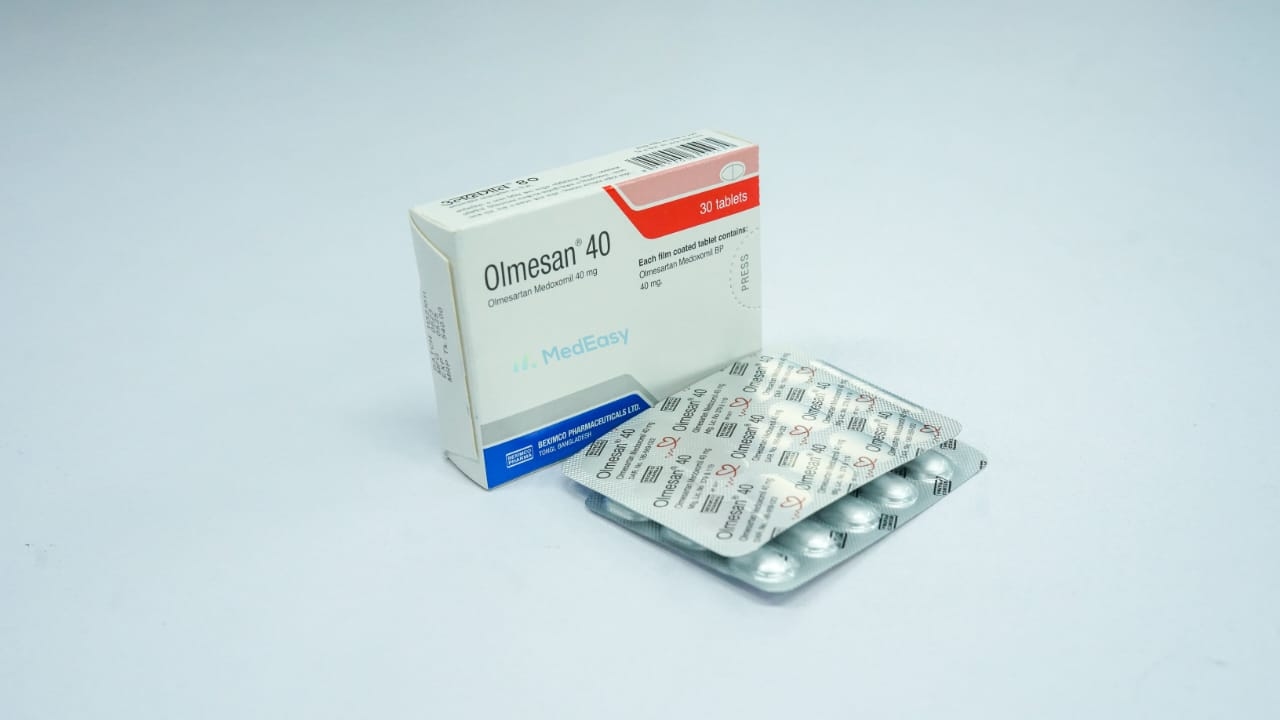
Olmesan40 mg
Beximco Pharmaceuticals Ltd.
৳243.00
Add to cart
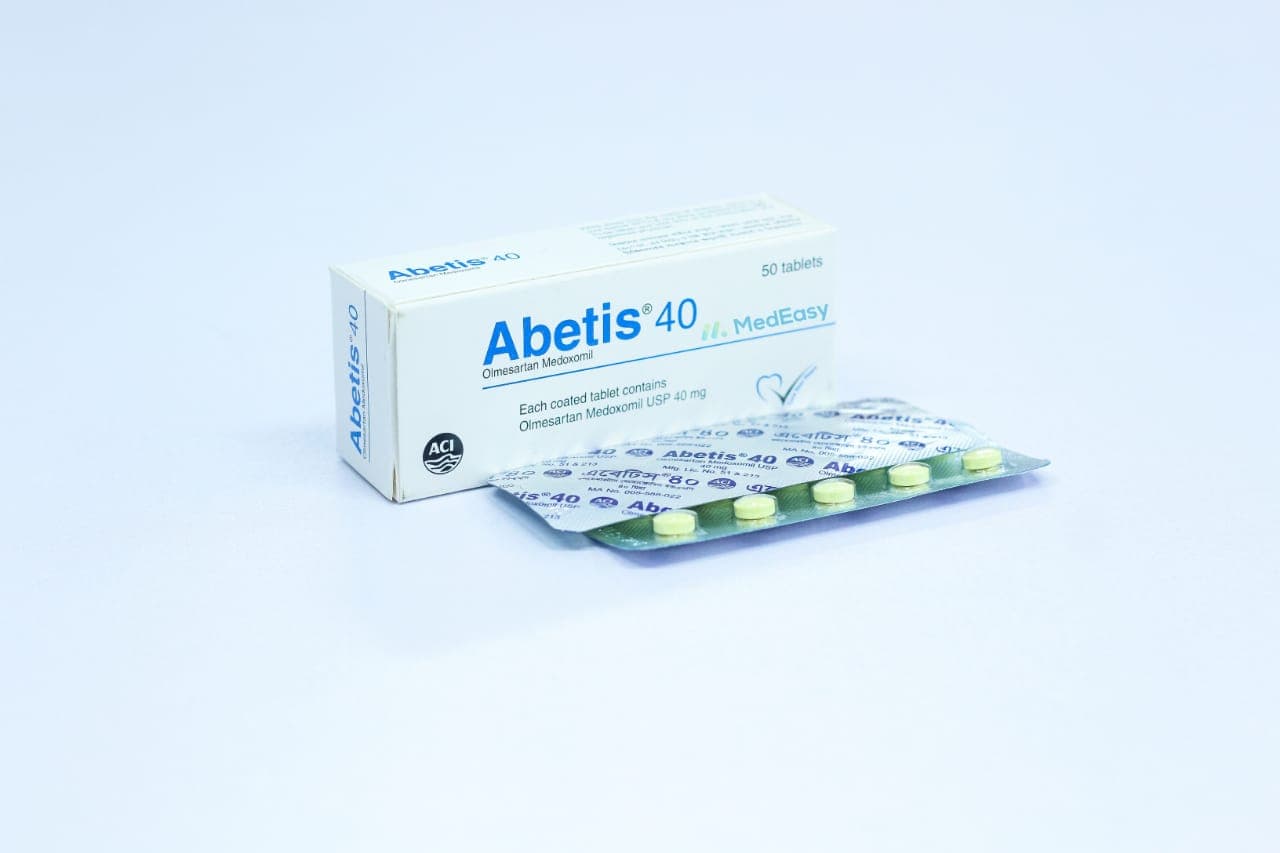

Abetis is indicated for the treatment of hypertension (high blood pressure) in adults, to lower blood pressure. Lowering blood pressure with Abetis reduces the risk of fatal and nonfatal cardiovascular events, primarily strokes and heart attacks. Abetis may be used alone or in combination with other antihypertensive medicines.
Abetis is indicated for the treatment of hypertension in children aged 6 to 16 years. Abetis has not been shown to be effective for lowering blood pressure in children younger than 6 years, and Abetis must not be given to infants younger than 1 year of age.
The 2017 ACC/AHA hypertension guideline lists angiotensin II receptor blockers such as Abetis among the first-line drug classes for initial antihypertensive therapy, alongside thiazide-type diuretics, ACE inhibitors, and calcium channel blockers. Whether Abetis or another first-line agent is most appropriate for a given patient is decided by the treating physician.
Each tablet contains Olmesartan Medoxomil as the active ingredient, available in strengths of 10 mg, 20 mg, and 40 mg.
Abetis is a prescription medicine used to treat high blood pressure (hypertension) in adults and in children aged 6 years and older. Abetis belongs to a group of medicines called angiotensin II receptor blockers (ARBs), which work by relaxing blood vessels so blood can flow more easily. By lowering blood pressure, Abetis helps reduce the long-term risk of serious problems such as stroke and heart attack. Abetis is taken by mouth, usually once a day, and is normally used as a long-term, ongoing treatment rather than a short course. Abetis should only be used under the guidance of a registered physician, who will decide the right dose for each patient.
Antihypertensive (Angiotensin II Receptor Blocker)
Olmesartan Medoxomil is an ester prodrug that is rapidly and completely bioactivated by ester hydrolysis during absorption from the gastrointestinal tract; the active moiety produced from Olmesartan Medoxomil selectively blocks the binding of angiotensin II to the AT1 receptor in vascular smooth muscle, preventing the vasoconstrictor and aldosterone-secreting effects of angiotensin II. The active metabolite of Olmesartan Medoxomil has more than a 12,500-fold greater affinity for the AT1 receptor than for the AT2 receptor and does not inhibit ACE (kininase II), the enzyme that generates angiotensin II and also degrades bradykinin. The blood-pressure-lowering effect of Olmesartan Medoxomil is dose-related across the 2.5 mg to 40 mg range, and the absolute bioavailability of Olmesartan Medoxomil is approximately 26%, with peak plasma concentrations reached 1 to 2 hours after dosing. Olmesartan Medoxomil is highly bound to plasma proteins (99%), is eliminated with a terminal half-life of approximately 13 hours, and reaches steady-state levels within 3 to 5 days of once-daily dosing, with elimination occurring through both renal and biliary/fecal routes.
The dosage of Abetis is determined by a qualified healthcare professional based on the patient's age, indication, blood pressure response, and other individual factors; the following information is a general guide and is not a substitute for a doctor's prescription. Abetis is given by mouth, generally once daily, and doses are adjusted gradually over time as needed.
Olmesartan Medoxomil is absolutely contraindicated in the following situations:
The most commonly reported side effect of Abetis in clinical trials was dizziness. Other side effects reported with Abetis at rates similar to placebo included headache, back pain, diarrhea, fatigue, and upper respiratory symptoms such as bronchitis, pharyngitis, rhinitis, sinusitis, and flu-like symptoms.
Abetis is contraindicated in pregnancy. Drugs that act on the renin-angiotensin system, including Abetis, can cause injury and even death to the developing fetus when used during pregnancy. Use of Abetis during the second and third trimesters reduces fetal renal function, which can lead to oligohydramnios (low amniotic fluid), fetal lung hypoplasia, skull hypoplasia, fetal renal impairment or anuria, and increased fetal and neonatal illness or death. If pregnancy is detected during treatment, Abetis should be discontinued as soon as possible, and the patient should be switched to an alternative antihypertensive medicine considered safer in pregnancy under a doctor's guidance. A newborn who was exposed to Abetis in utero should be closely monitored for low blood pressure, low urine output, and high potassium.
It is not known whether Abetis passes into human breast milk. Because of the potential for serious adverse effects in a nursing infant, a decision should be made, in consultation with a doctor, whether to discontinue breastfeeding or discontinue Abetis, taking into account the importance of Abetis to the mother.
There is limited clinical experience with overdose of Abetis. Based on the pharmacologic action of Abetis, the most likely effects of an overdose are low blood pressure (hypotension) and a fast heart rate (tachycardia); a slow heart rate (bradycardia) could occur from excessive parasympathetic (vagal) stimulation. If an overdose of Abetis is suspected, do not induce vomiting unless specifically directed to do so by a doctor or poison control center. Contact emergency medical services or a poison control center immediately. Treatment of an Abetis overdose is supportive, based on the patient's symptoms, and may include monitoring of blood pressure and heart function; it is not known whether Abetis can be removed from the body by dialysis.
Store according to the storage instructions on the product label of the specific Abetis brand, generally at controlled room temperature away from excess heat, moisture, and direct light. Keep Abetis out of the reach and sight of children, and do not use Abetis after the expiry date printed on the pack.
Abetis is approved for the treatment of hypertension in children aged 6 to 16 years, with dosing based on body weight; see Dosage. Abetis has not been shown to be effective in children younger than 6 years, and Abetis must not be given to infants younger than 1 year of age because of risk to developing kidneys.
No overall differences in the effectiveness or safety of Abetis have been observed between elderly and younger patients, although greater sensitivity in some older individuals cannot be ruled out; no initial dose adjustment of Abetis is required based on age alone.
Blood levels of Abetis are increased in patients with reduced kidney function, and no initial dose adjustment of Abetis is required for moderate-to-marked renal impairment, but these patients should be monitored closely for changes in kidney function and potassium levels while taking Abetis.
Blood levels of Abetis are increased in patients with moderate liver impairment; no initial dose adjustment of Abetis is recommended, but such patients should be monitored during treatment with Abetis.
See Pregnancy and Lactation for full information on the use of Abetis in these populations.
Abetis is typically used as a long-term, ongoing (chronic) treatment for hypertension, since high blood pressure usually requires continuous control rather than a short course of therapy. The duration of treatment with Abetis is determined by a doctor based on ongoing blood pressure response and overall cardiovascular risk, and Abetis should not be stopped abruptly without medical advice.
Antihypertensive; Angiotensin II Receptor Blocker (ARB); Renin-Angiotensin System (RAS) Inhibitor
Olmesartan Medoxomil is an ester prodrug that is converted to its active form during absorption; the active form of Olmesartan Medoxomil selectively blocks the binding of angiotensin II to the AT1 receptor found in vascular smooth muscle and other tissues, thereby blocking the vasoconstricting and aldosterone-secreting effects of angiotensin II. Olmesartan Medoxomil does not inhibit ACE (kininase II) and does not affect bradykinin breakdown.
Abetis is indicated for the treatment of hypertension in children 6 to 16 years of age; dosing of Abetis in this group is based on body weight (10 mg to 20 mg once daily for children weighing 20 kg to less than 35 kg, and 20 mg to 40 mg once daily for children weighing 35 kg or more). The effectiveness of Abetis has not been established in children younger than 6 years. Abetis must not be given to infants younger than 1 year of age, because renin-angiotensin system blockade with Abetis can adversely affect kidney development that is still ongoing in the first year of life. Children taking Abetis should be monitored by a pediatrician for blood pressure control, growth, and kidney function.
Q: What is Abetis 40 mg Tablet used for?
A: Abetis 40 mg Tablet is used to treat high blood pressure (hypertension) in adults and in children aged 6 years and older. By lowering blood pressure, Abetis 40 mg Tablet also helps reduce the long-term risk of stroke and heart attack.
Q: How should Abetis 40 mg Tablet be taken?
A: Abetis 40 mg Tablet is usually taken once daily, by mouth, with or without food, at about the same time each day, exactly as prescribed by a doctor. The dose of Abetis 40 mg Tablet should never be adjusted by the patient without medical advice.
Q: What is the usual starting dose of Abetis 40 mg Tablet for adults?
A: In adults, the usual starting dose of Abetis 40 mg Tablet is 20 mg once daily, which a doctor may increase to 40 mg once daily after about 2 weeks if blood pressure is not adequately controlled. The exact dose of Abetis 40 mg Tablet depends on individual patient factors and should always be set by a healthcare professional.
Q: Can Abetis 40 mg Tablet be taken during pregnancy?
A: No. Abetis 40 mg Tablet is contraindicated in pregnancy because it can cause serious injury or death to the developing fetus, particularly when used in the second or third trimester. Anyone who becomes pregnant while taking Abetis 40 mg Tablet should contact her doctor immediately so that Abetis 40 mg Tablet can be discontinued and switched to a safer alternative.
Q: Can children take Abetis 40 mg Tablet?
A: Yes, Abetis 40 mg Tablet is approved for treating hypertension in children aged 6 to 16 years, with the dose based on body weight. Abetis 40 mg Tablet must not be given to infants younger than 1 year of age, and its effectiveness has not been established in children younger than 6 years.
Q: What medicines can interact with Abetis 40 mg Tablet?
A: Abetis 40 mg Tablet can interact with ACE inhibitors, aliskiren, lithium, NSAIDs (including COX-2 inhibitors), and potassium-sparing diuretics or potassium supplements. Anyone taking Abetis 40 mg Tablet should tell their doctor about all other medicines they are using before starting or continuing Abetis 40 mg Tablet.
Q: What serious side effects of Abetis 40 mg Tablet need urgent medical attention?
A: Seek urgent medical attention if Abetis 40 mg Tablet causes signs of an allergic reaction (facial or throat swelling, difficulty breathing), severe or persistent diarrhea with unexplained weight loss, a marked decrease in urination, or symptoms of high potassium such as muscle weakness or an irregular heartbeat.
Q: Is severe diarrhea a known side effect of Abetis 40 mg Tablet?
A: Yes. Abetis 40 mg Tablet has been specifically linked to a condition called sprue-like enteropathy, involving severe, chronic diarrhea and significant weight loss that can develop months to years after starting Abetis 40 mg Tablet. Anyone experiencing these symptoms while taking Abetis 40 mg Tablet should contact their doctor promptly, as symptoms typically improve once Abetis 40 mg Tablet is stopped.
Q: Can Abetis 40 mg Tablet be stopped suddenly?
A: Abetis 40 mg Tablet should not be stopped suddenly without consulting a doctor, since untreated high blood pressure often has no warning symptoms but can still cause harm. Any change to Abetis 40 mg Tablet treatment, including stopping it, should be guided by a healthcare professional.
Disclaimer
The information provided is accurate to the best of our knowledge, but it does not replace professional medical advice. We cannot guarantee its completeness or accuracy, and the absence of specific information about a drug should not be taken as an endorsement. We are not responsible for any consequences arising from this information, so please consult a healthcare professional for any concerns or questions.