10% Off
Olmesan40 mg
Beximco Pharmaceuticals Ltd.
৳243.00
Add to cart
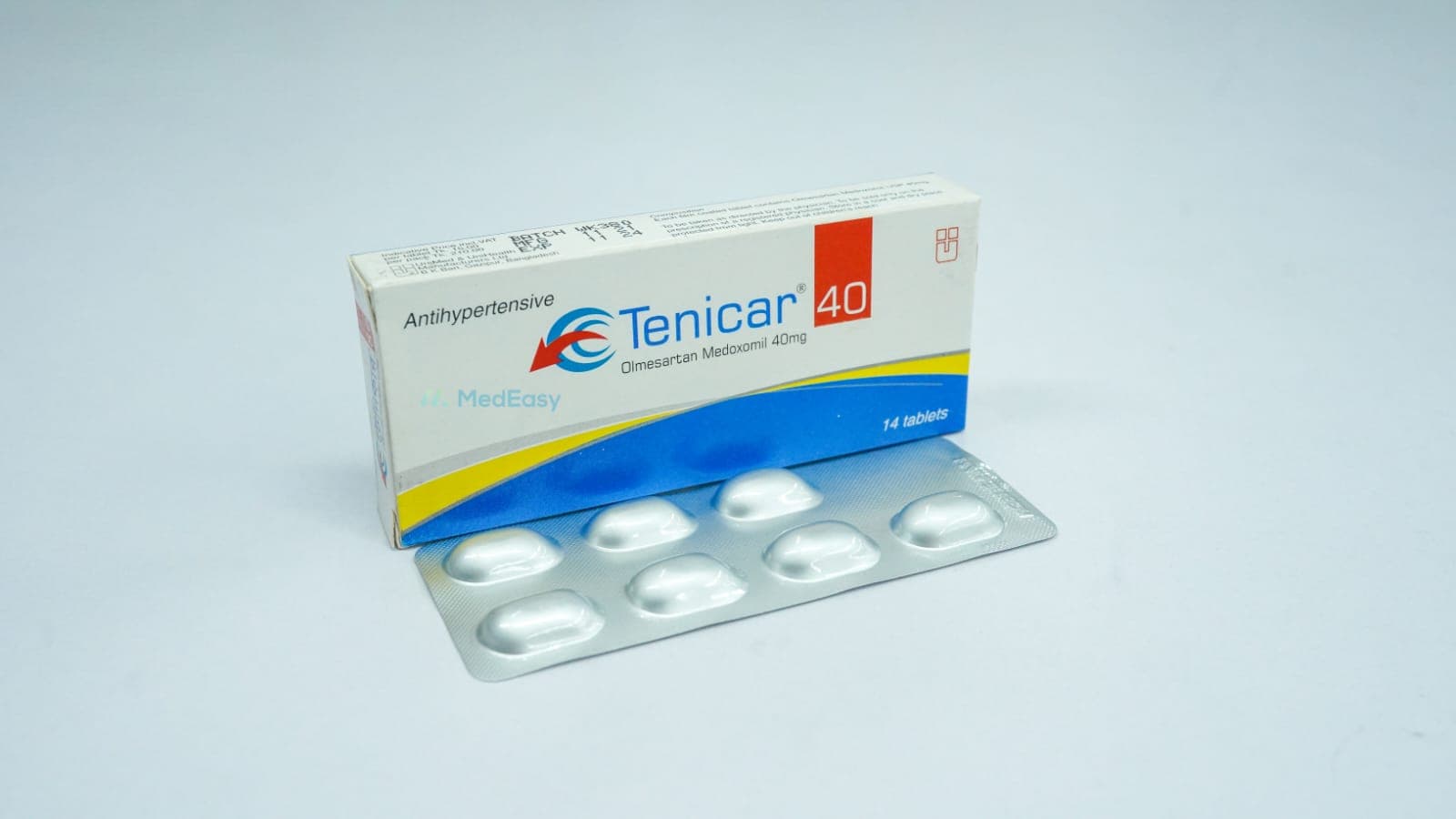

Tenicar 40 mg is an orally active angiotensin II receptor blocker (ARB) primarily indicated for the treatment of hypertension (high blood pressure) in adults. By lowering elevated blood pressure, it helps reduce the long-term risk of serious cardiovascular events such as stroke, heart attack, and kidney damage.
Tenicar 40 mg may be prescribed:
Controlling blood pressure with Tenicar 40 mg supports better cardiovascular and renal health over time. It should always be taken under the supervision of a registered physician.
Angiotensin-ll receptor blocker
Tenicar 40 mg is a prodrug that is rapidly and completely hydrolyzed to its active form, olmesartan, during absorption from the gastrointestinal tract. Olmesartan is a selective angiotensin II type 1 (AT1) receptor antagonist that exerts its antihypertensive effect by blocking the renin-angiotensin-aldosterone system (RAAS).
Angiotensin II is formed from angiotensin I through a reaction catalyzed by angiotensin-converting enzyme (ACE, kininase II). As the principal pressor agent of the renin-angiotensin system, angiotensin II produces a range of effects, including vasoconstriction, stimulation of aldosterone synthesis and release, cardiac stimulation, and renal reabsorption of sodium.
Olmesartan blocks the vasoconstrictor and aldosterone-secreting actions of angiotensin II by selectively preventing its binding to the AT1 receptor in vascular smooth muscle. Although the AT2 receptor is also present in many tissues, it is not known to be associated with cardiovascular homeostasis. Olmesartan demonstrates more than a 12,500-fold greater affinity for the AT1 receptor than for the AT2 receptor, making its action highly targeted.
Because olmesartan does not inhibit ACE (kininase II), it does not affect the response to bradykinin — a key difference from ACE inhibitors that explains its lower incidence of dry cough. While blockade of the angiotensin II receptor removes the negative feedback of angiotensin II on renin secretion (leading to increased plasma renin activity and circulating angiotensin II levels), these increases do not overcome the blood-pressure-lowering effect of olmesartan.
Dosage must be individualized according to each patient's blood pressure response and clinical condition. The medication may be taken with or without food, and is best taken at the same time each day to maintain consistent blood levels.
The safety and effectiveness of Tenicar 40 mg in paediatric patients have not been established.
Tenicar 40 mg has a relatively favorable interaction profile, but certain combinations require caution and monitoring.
Patients should always inform their physician about all prescription medicines, over-the-counter drugs, and supplements they are taking before starting Tenicar 40 mg.
Tenicar 40 mg is contraindicated in patients who are hypersensitive to olmesartan or to any other component of the product. Known allergy to the active ingredient or excipients may lead to serious hypersensitivity reactions and rules out the use of this medication.
Tenicar 40 mg has been evaluated for safety in more than 3,825 patients and subjects, including over 3,275 patients treated for hypertension in controlled trials. Overall, treatment was well tolerated, with an incidence of adverse reactions similar to placebo. The frequency of adverse reactions was not dose-related, and analysis across gender, age, and racial groups showed no meaningful differences between olmesartan-treated and placebo-treated patients.
The rate of withdrawal due to adverse reactions was 2.4% in olmesartan-treated patients versus 2.7% in control patients. In placebo-controlled trials, the only adverse reaction occurring in more than 1% of olmesartan-treated patients and at a higher incidence than placebo was:
The following reactions occurred at an incidence above 1% but at about the same or greater frequency in the placebo group: back pain, bronchitis, increased creatine phosphokinase, diarrhea, headache, hematuria, hyperglycemia, hypertriglyceridemia, influenza-like symptoms, pharyngitis, rhinitis, and sinusitis. Notably, the incidence of cough was similar between placebo (0.7%) and olmesartan (0.9%) patients — reflecting the lower cough risk of ARBs compared with ACE inhibitors.
Patients experiencing severe dizziness, signs of an allergic reaction, or reduced urine output should seek medical attention promptly.
Tenicar 40 mg should not be used during pregnancy. When pregnancy is detected, the medication must be discontinued as soon as possible. Drugs that act directly on the renin-angiotensin system, when used during the second and third trimesters, can cause injury and even death to the developing fetus. Because of this serious risk, alternative antihypertensive therapy should be considered for women who are pregnant or planning pregnancy.
It is not known whether olmesartan is excreted in human milk, though it is secreted at low concentrations in the milk of lactating rats. Because of the potential for adverse effects on the nursing infant, a decision should be made — in consultation with the physician — whether to discontinue nursing or to discontinue the drug, taking into account the importance of the medication to the mother.
As a consequence of inhibiting the renin-angiotensin-aldosterone system, changes in renal function may occur in susceptible individuals treated with Tenicar 40 mg. Particular caution is warranted in patients whose kidney function depends on the activity of this system.
Patients should not stop taking this medication suddenly without consulting their doctor.
There is limited clinical experience with Tenicar 40 mg overdose. The most likely effects of overdosage are hypotension (low blood pressure) and tachycardia (rapid heart rate); bradycardia (slow heart rate) could occur if parasympathetic (vagal) stimulation is triggered.
Management of overdose is supportive and depends on the time since ingestion and clinical presentation:
In case of suspected overdose, seek emergency medical care immediately.
Store in a cool and dry place below 30°C, protected from light and moisture. Keep the medication in its original packaging and out of the reach of children. Do not use the product after its expiry date, and dispose of any unused medicine responsibly.
Hepatic Impairment: Dose should not exceed 20 mg daily in moderate impairment.Renal Impairment: Max. 20 mg daily if eGFR 20–60 mL/minute/1.73 m2. Avoid if eGFR less than 20 mL/minute/1.73 m2.
Angiotensin-ll receptor blocker
Angiotensin-II formed from angiotensin-I in a reaction catalyzed by angiotensin-converting enzyme (ACE), is a potent vasoconstrictor, the primary vasoactive hormone of the renin-angiotensin system and an important component in the pathophysiology of hypertension. It also stimulates aldosterone secretion by the adrenal cortex. Olmesartan blocks the vasoconstrictor and aldosterone-secreting effects of angiotensin-II by selectively blocking the binding of angiotensin-II to the AT 1 receptor found in many tissues (e.g. vascular smooth muscle, adrenal gland). In-vitro-binding studies indicate that Olmesartan is a reversible & competitive inhibitor of AT 1 receptor. Olmesartan does not inhibit ACE (kinase-I, the enzyme that converts angiotensin-I to angiotensin-II and degrades bradykinin).
Pregnancy: When pregnancy is detected, discontinue this product as soon as possible. When used in pregnancy during the second and third trimesters, drugs that act directly on the renin-angiotensin system can cause injury and even death to the developing fetus.Nursing Mothers: It is not known whether Olmesartan is excreted in human milk, but Olmesartan is secreted at low concentration in the milk of lactating rats. Because of the potential for adverse effects on the nursing infant, a decision should be made whether to discontinue nursing or discontinue the drug, taking into account the importance of the drug to the mother.
Paediatric use: Safety and effectiveness in paediatric patients have not been established.
What is Tenicar 40 mg used for?
Tenicar 40 mg is an orally active angiotensin II receptor blocker (ARB) primarily indicated for the treatment of hypertension (high blood pressure) in adults. By lowering elevated blood pressure, it helps reduce the long-term risk of serious cardiovascular events such as stroke, heart attack, and kidney damage. Tenicar 40 mg may be prescribed: As monotherapy — used alone as a first-line agent for …
What is the dosage of Tenicar 40 mg?
Dosage must be individualized according to each patient's blood pressure response and clinical condition. The medication may be taken with or without food , and is best taken at the same time each day to maintain consistent blood levels. Recommended Dosage in Adults Starting dose: 20 mg once daily when used as monotherapy in patients who are not volume-depleted. Dose adjustment: For patients requi…
What are the side effects of Tenicar 40 mg?
Tenicar 40 mg has been evaluated for safety in more than 3,825 patients and subjects, including over 3,275 patients treated for hypertension in controlled trials. Overall, treatment was well tolerated, with an incidence of adverse reactions similar to placebo. The frequency of adverse reactions was not dose-related, and analysis across gender, age, and racial groups showed no meaningful difference…
Who should not take Tenicar 40 mg?
Tenicar 40 mg is contraindicated in patients who are hypersensitive to olmesartan or to any other component of the product. Known allergy to the active ingredient or excipients may lead to serious hypersensitivity reactions and rules out the use of this medication.
What precautions should be taken with Tenicar 40 mg?
As a consequence of inhibiting the renin-angiotensin-aldosterone system, changes in renal function may occur in susceptible individuals treated with Tenicar 40 mg. Particular caution is warranted in patients whose kidney function depends on the activity of this system. Impaired renal function: In patients with severe congestive heart failure or otherwise compromised renal function, treatment with …
Is Tenicar 40 mg safe during pregnancy and breastfeeding?
Pregnancy Tenicar 40 mg should not be used during pregnancy . When pregnancy is detected, the medication must be discontinued as soon as possible. Drugs that act directly on the renin-angiotensin system, when used during the second and third trimesters, can cause injury and even death to the developing fetus. Because of this serious risk, alternative antihypertensive therapy should be considered f…
The information provided is accurate to our best practices, but it does not replace professional medical advice. We cannot guarantee its completeness or accuracy. The absence of specific information about a drug should not be seen as an endorsement. We are not responsible for any consequences resulting from this information, so consult a healthcare professional for any concerns or questions.