

10% Off
Lipril5 mg
ACME Laboratories Ltd.
৳27.09
Add to cart
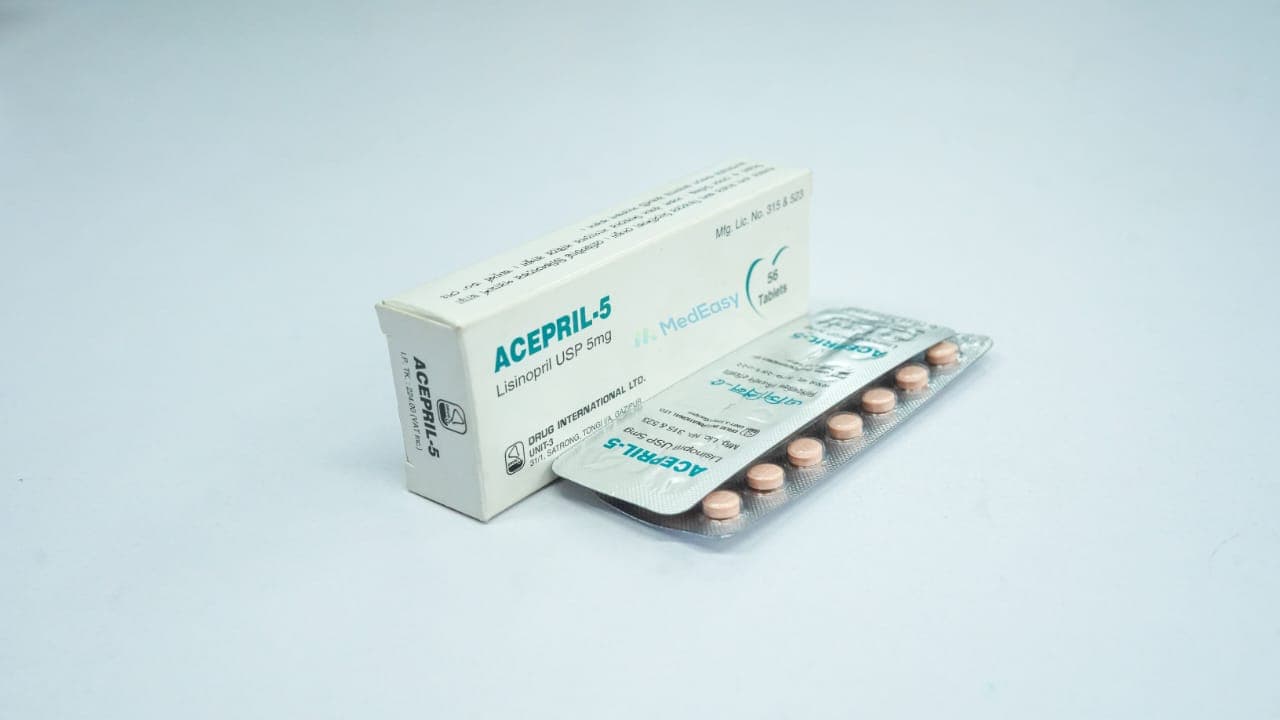

Acepril is an angiotensin-converting enzyme (ACE) inhibitor with the following evidence-based indications:
Use of Acepril for any indication should be individualized and directed by a physician based on clinical assessment.
Each tablet of Lisinopril contains Lisinopril (as lisinopril dihydrate) as the active ingredient, typically formulated as oral tablets in strengths such as 2.5 mg, 5 mg, 10 mg, and 20 mg. Excipients vary by manufacturer and formulation.
Acepril is a long-acting, orally active angiotensin-converting enzyme (ACE) inhibitor used primarily to manage high blood pressure and certain forms of heart disease. Unlike some other ACE inhibitors, Acepril is not a prodrug — it is pharmacologically active in its administered form and does not require hepatic metabolism for activation. It has a relatively long duration of action, allowing once-daily dosing in most patients.
Acepril belongs to the therapeutic class of Angiotensin-Converting Enzyme (ACE) Inhibitors, a group of medicines used mainly for cardiovascular and renal conditions.
Lisinopril inhibits angiotensin-converting enzyme (ACE), the enzyme responsible for converting angiotensin I to angiotensin II, a potent vasoconstrictor that also stimulates aldosterone secretion. By blocking this conversion, Lisinopril reduces peripheral vascular resistance, lowers blood pressure, and decreases aldosterone-mediated sodium and water retention. It also reduces degradation of bradykinin, a vasodilator peptide, which contributes to its antihypertensive effect but is also implicated in the characteristic dry cough and angioedema associated with this drug class.
Dosage of Acepril must be individualized by a physician based on the indication, blood pressure response, and renal function.
| Population | Dose |
|---|---|
| Adults (not on diuretic) | Initial 10 mg once daily; usual maintenance 20-40 mg once daily; maximum 80 mg/day |
| Adults on diuretic | Initial 5 mg once daily to reduce risk of symptomatic hypotension |
| Pediatric ≥6 years | Initial 0.07 mg/kg (up to 5 mg) once daily; titrated per response up to a maximum of 0.61 mg/kg or 40 mg/day |
Initial dose 5 mg once daily (2.5 mg once daily if serum sodium is low or the patient is hypotensive), titrated as tolerated toward a target dose of 20-40 mg once daily.
2.5-5 mg within 24 hours of symptom onset, followed by 5 mg at 24 hours, 10 mg at 48 hours, and 10 mg once daily thereafter for at least 6 weeks; lower starting doses are used if systolic blood pressure is low.
Dose reduction of Acepril is required based on creatinine clearance; see Use in Special Populations for details.
Acepril is taken orally, once daily, with or without food, at approximately the same time each day. Tablets should be swallowed with water. Do not stop taking Acepril or change the dose without consulting a physician, even if blood pressure feels normal.
Acepril has several clinically significant drug interactions:
Lisinopril is contraindicated in:
Common side effects of Acepril include:
Less common but serious effects include angioedema (swelling of the face, lips, tongue, or throat — see Precautions and Warnings), acute renal failure, neutropenia/agranulocytosis (rare), hepatic dysfunction, and severe skin reactions such as Stevens-Johnson syndrome. Any signs of facial or throat swelling, or difficulty breathing or swallowing, while taking Acepril require immediate emergency medical attention.
Boxed Warning: Acepril can cause fetal injury and death when used during pregnancy, particularly during the second and third trimesters. Acepril must be discontinued as soon as possible once pregnancy is detected, unless continued use is considered essential and no suitable alternative exists. Women of childbearing potential should be counseled about this risk before starting therapy.
Small amounts of Acepril may pass into breast milk. Because of the potential for serious adverse effects in a nursing infant, breastfeeding is generally not recommended during treatment with Acepril; use only if clearly needed and the potential benefit justifies the potential risk, and only under close medical supervision. Consult a physician before breastfeeding while taking Acepril.
Angioedema: Acepril can cause angioedema of the face, lips, tongue, glottis, and/or larynx at any time during treatment, including after the first dose. If there is any evidence of airway involvement (stridor, difficulty breathing or swallowing), Acepril should be discontinued immediately and emergency medical treatment sought. Patients with a history of angioedema unrelated to ACE inhibitor use may be at increased risk.
Hypotension: Symptomatic hypotension may occur, particularly after the first dose, in volume- or salt-depleted patients (e.g., those on diuretics, a low-salt diet, dialysis, or with vomiting/diarrhea). Correct volume depletion before starting Acepril where possible.
Renal impairment: In patients with bilateral renal artery stenosis or stenosis of the artery to a single functioning kidney, Acepril may cause deterioration of renal function and acute renal failure. Monitor renal function periodically during treatment.
Hyperkalemia: Risk is increased in patients with renal impairment, diabetes, or those taking potassium supplements, potassium-sparing diuretics, or potassium-containing salt substitutes.
Neutropenia/agranulocytosis: Rare but reported, more often in patients with collagen vascular disease and/or renal impairment; periodic monitoring of white blood cell counts may be considered in such patients.
Cough: A persistent, dry, non-productive cough is a recognized class effect of Acepril and other ACE inhibitors, typically resolving after discontinuation.
Anaphylactoid reactions: Rare reactions have been reported during desensitization treatments or dialysis/apheresis procedures using certain membranes in patients taking Acepril; inform the treating team if taking this medicine before such procedures.
The most likely manifestation of Acepril overdose is significant hypotension, which may be accompanied by dizziness, weakness, bradycardia, electrolyte disturbances, and renal impairment. If overdose of Acepril is suspected, seek immediate medical attention or contact a poison control center right away. Treatment is generally supportive; the patient should be closely monitored, and emergency medical personnel may administer intravenous fluids and other supportive measures as needed. Do not attempt to manage a suspected Acepril overdose at home.
Store at room temperature (below 30°C), away from light and moisture. Keep out of reach of children.
| Creatinine Clearance | Recommended Dose Adjustment |
|---|---|
| >30 mL/min | No dose adjustment typically required |
| 10-30 mL/min | Initial dose 5 mg once daily |
| <10 mL/min (including hemodialysis) | Initial dose 2.5 mg once daily; adjust based on blood pressure response |
No specific dose adjustment is established for hepatic impairment, but ACE inhibitors including Acepril have rarely been associated with a syndrome of cholestatic jaundice progressing to fulminant hepatic necrosis; discontinue Acepril immediately if jaundice or marked liver enzyme elevation occurs.
Elderly patients may be more sensitive to the blood-pressure-lowering effects of Acepril; dosing typically starts at the lower end of the range with close monitoring.
Safety and efficacy of Acepril for hypertension have been established in children 6 years of age and older; safety and efficacy in children under 6 years or in pediatric patients with glomerular filtration rate less than 30 mL/min/1.73m² have not been established. See Pediatric Uses.
Acepril is generally used long-term for chronic conditions such as hypertension and heart failure, often for the remainder of the patient's life, since these are ongoing conditions requiring sustained blood pressure and cardiac risk control. For post-myocardial infarction use, treatment with Acepril is typically continued indefinitely or as directed by the treating physician, with a minimum treatment period of about 6 weeks studied in clinical trials. Duration should always be determined by a physician based on ongoing clinical assessment.
Lisinopril is classified as an Angiotensin-Converting Enzyme (ACE) Inhibitor.
Lisinopril works by inhibiting the angiotensin-converting enzyme, blocking the conversion of angiotensin I to angiotensin II. This reduces vasoconstriction and aldosterone release, resulting in lowered blood pressure, decreased cardiac workload, and reduced sodium/water retention. It also increases levels of bradykinin, which contributes further to vasodilation.
D
Acepril is approved for the treatment of hypertension in pediatric patients 6 years of age and older. Dosing is weight-based, starting at approximately 0.07 mg/kg once daily (up to a maximum of 5 mg), titrated based on blood pressure response, up to a maximum of 0.61 mg/kg (not exceeding 40 mg) once daily. Acepril has not been studied in children under 6 years of age or in pediatric patients with glomerular filtration rate less than 30 mL/min/1.73m², and safety and efficacy in these groups have not been established. Acepril is not indicated for the treatment of heart failure or acute myocardial infarction in pediatric patients, as these uses have not been studied in children.
Q: What is Acepril 5 mg Tablet used for?
A: Acepril 5 mg Tablet is mainly used to treat high blood pressure (hypertension), manage heart failure alongside other medicines, and improve survival after a heart attack. It may also be used off-label to help protect kidney function in certain patients with diabetes.
Q: How should I take Acepril 5 mg Tablet?
A: Acepril 5 mg Tablet is usually taken once daily, by mouth, with or without food, at the same time each day. Do not stop or change your dose without talking to your doctor, even if you feel well, since blood pressure control needs consistent daily dosing.
Q: Can I take Acepril 5 mg Tablet during pregnancy?
A: No. Acepril 5 mg Tablet carries a boxed warning because it can cause serious injury or death to an unborn baby, especially if used during the second or third trimester. If you become pregnant while taking Acepril 5 mg Tablet, contact your doctor immediately so treatment can be reviewed. Women who may become pregnant should discuss safer alternatives with their doctor.
Q: Why do I have a dry cough since starting Acepril 5 mg Tablet?
A: A persistent, dry, tickling cough is a well-known side effect of Acepril 5 mg Tablet and other ACE inhibitors, thought to be related to increased bradykinin levels. It is not dangerous but can be bothersome; if troublesome, talk to your doctor, who may consider switching you to a different class of medicine.
Q: What should I do if my face or throat starts swelling while on Acepril 5 mg Tablet?
A: Facial, lip, tongue, or throat swelling (angioedema) is a rare but potentially life-threatening reaction to Acepril 5 mg Tablet. Stop taking Acepril 5 mg Tablet immediately and seek emergency medical care right away if you notice any swelling, difficulty breathing, or difficulty swallowing.
Q: What happens if I take too much Acepril 5 mg Tablet?
A: An overdose of Acepril 5 mg Tablet can cause a significant drop in blood pressure, dizziness, and weakness. If you or someone else has taken more than the prescribed amount of Acepril 5 mg Tablet, seek immediate medical attention or contact a poison control center; do not try to treat an overdose at home.
Disclaimer
The information provided is accurate to the best of our knowledge, but it does not replace professional medical advice. We cannot guarantee its completeness or accuracy, and the absence of specific information about a drug should not be taken as an endorsement. We are not responsible for any consequences arising from this information, so please consult a healthcare professional for any concerns or questions.
