8% Off
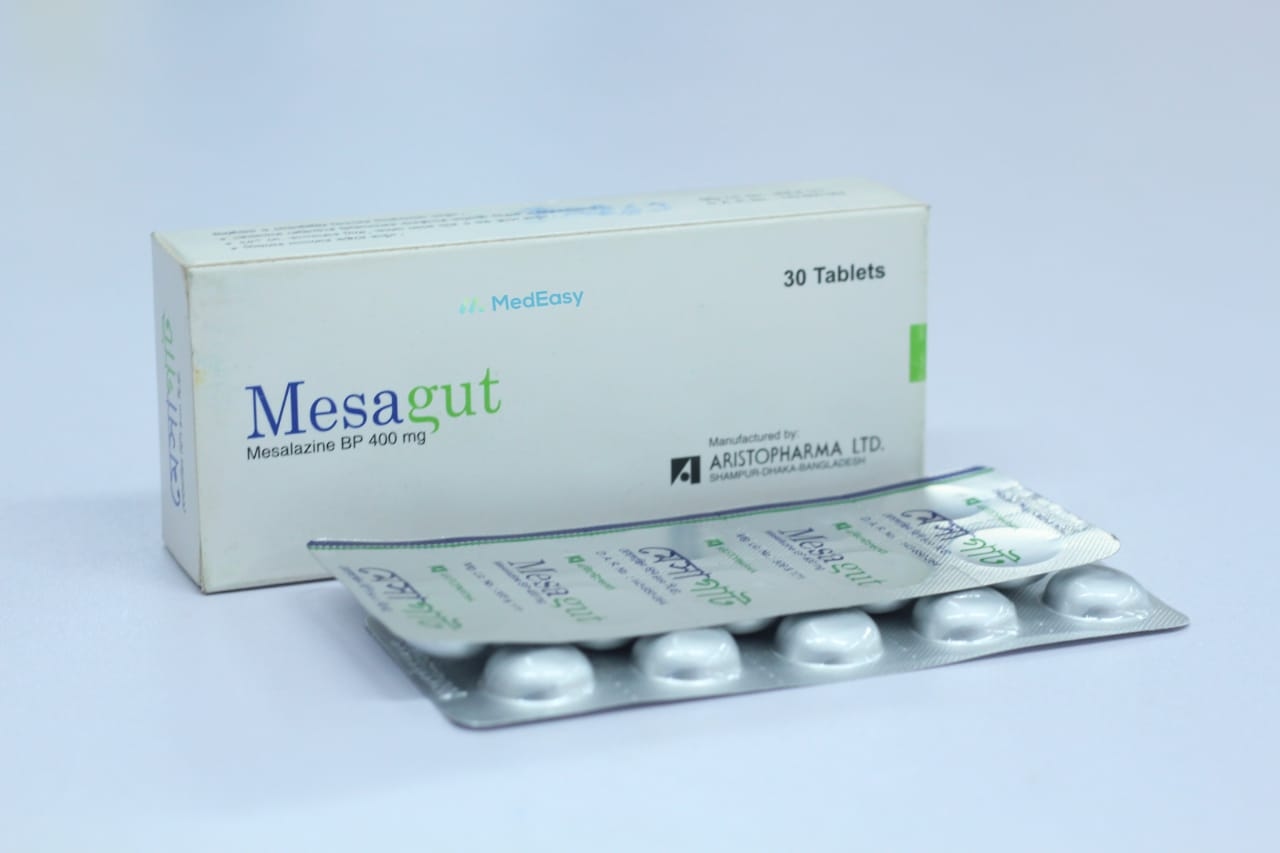
Mesagut400 mg
Aristopharma Ltd.
৳69.92
Add to cart


Canasa is an established, FDA-approved treatment for the induction of remission in patients with active mild-to-moderate ulcerative colitis.
Canasa is an established, FDA-approved treatment for the maintenance of remission of ulcerative colitis.
Canasa has a guideline-supported, though less robust, role in the treatment of mild-to-moderate active Crohn's disease involving the colon. Evidence of benefit is weaker than for ulcerative colitis, and some formulations are not specifically labeled for this use; treatment decisions should be individualized by a physician.
Rectal formulations (suppository, enema) of Canasa are established for distal disease limited to the rectum or rectosigmoid colon, and may be used alone or combined with oral formulations for more extensive disease.
Each formulation contains Mesalazine [5-aminosalicylic acid] as the active ingredient. Mesalazine [5-aminosalicylic acid] is available in Bangladesh and internationally as oral tablets and capsules (including delayed-release and extended-release/controlled-release forms designed to deliver drug to specific parts of the colon), oral granules/sachets, and rectal preparations (suppositories and enemas). Strength and release mechanism vary by brand and formulation; the specific product and strength should be selected and confirmed by the prescribing physician or pharmacist.
Canasa (also known as mesalamine) is an aminosalicylate anti-inflammatory agent used primarily in the management of inflammatory bowel disease (IBD). It is chemically related to sulfasalazine, from which the active moiety is derived, but is administered directly, avoiding the sulfapyridine component responsible for many of sulfasalazine's side effects.
Canasa acts topically on the lining of the colon and rectum to reduce inflammation. Various oral formulations use pH-dependent coatings, time-dependent (controlled) release, or multi-matrix delivery systems to release the drug in the ileum and colon, while rectal formulations act locally on the distal bowel.
Canasa belongs to the aminosalicylate (5-ASA) class of anti-inflammatory agents, used in the treatment of inflammatory bowel disease.
The precise mechanism of action of Mesalazine [5-aminosalicylic acid] is not completely established. It is believed to act topically on the colonic mucosa rather than systemically, reducing inflammation through several proposed pathways, including inhibition of cyclooxygenase (COX) and lipoxygenase pathways of arachidonic acid metabolism (reducing prostaglandin and leukotriene production), scavenging of reactive oxygen species, and inhibition of pro-inflammatory cytokine production and nuclear factor-kappa B (NF-kB) activation in the intestinal mucosa.
Absorption varies by formulation and site of release; a variable fraction is absorbed systemically, with the remainder acting locally and being eliminated in the stool. Absorbed drug is largely acetylated (mainly in the intestinal mucosa and liver) to the less active N-acetyl-5-aminosalicylic acid metabolite. Elimination occurs mainly via the kidneys (as the acetylated metabolite) and in the feces.
| Formulation/Use | Typical Adult Dose |
|---|---|
| Induction of remission (oral) | Typically 2.4-4.8 g/day in divided doses (or once daily for some formulations), depending on the specific product; higher end of range for more active disease. Follow the specific product labeling. |
| Maintenance of remission (oral) | Typically 1.2-2.4 g/day, per product labeling. |
| Rectal suppository (proctitis) | Typically 500 mg-1 g once or twice daily, per product labeling. |
| Rectal enema (distal colitis/proctosigmoiditis) | Typically 1-4 g once daily, usually at bedtime, per product labeling. |
Dosing is individualized by the treating physician; oral doses in a similar range to ulcerative colitis induction regimens have been used, guided by disease severity and formulation-specific labeling.
Canasa tablets/capsules should generally be taken with food or as directed, and swallowed whole without crushing or chewing (for delayed/extended-release forms). Rectal suppositories and enemas should be administered as directed, preferably at bedtime, and retained for as long as possible to maximize local effect. Consistency in the brand/formulation used is important, as different products release the drug differently along the gastrointestinal tract.
Concurrent use of Canasa with other nephrotoxic drugs, such as NSAIDs (including ibuprofen) and aminoglycoside antibiotics, may increase the risk of additive nephrotoxicity. Renal function should be monitored more closely if such combinations are necessary.
Concomitant use of Canasa with azathioprine or mercaptopurine may increase the risk of blood disorders (myelosuppression) due to possible interference with the metabolism of these agents. Complete blood counts should be monitored more closely if these drugs are used together.
Lactulose and other agents that lower colonic pH may impair the release of pH-dependent (enteric-coated) formulations of Canasa, potentially reducing efficacy. This is a formulation-specific consideration; consult a physician or pharmacist about specific product compatibility.
Mesalazine [5-aminosalicylic acid] is contraindicated in patients with known hypersensitivity to mesalazine, other salicylates, or aminosalicylates. It is also contraindicated in patients with severe renal impairment, given the well-established risk of nephrotoxicity, and in patients with severe hepatic impairment.
Canasa is generally regarded, among treatments for inflammatory bowel disease, as one of the better-studied options that is often continued during pregnancy when needed, since uncontrolled disease activity itself carries risks to mother and fetus. However, Canasa should be used during pregnancy only if clearly needed and if the potential benefit justifies the potential risk to the fetus; use should be guided and monitored by a physician rather than self-directed.
Canasa and its metabolites pass into breast milk in small amounts. Diarrhea in the breastfed infant has been reported rarely. Canasa should be used during breastfeeding only under medical supervision, with the infant monitored for any gastrointestinal symptoms; consult a physician before use.
Renal impairment, including interstitial nephritis, has been associated with Canasa use. Baseline renal function should be assessed before starting treatment, and periodic monitoring (e.g., serum creatinine) is recommended during therapy, particularly in patients with pre-existing renal disease or those taking other nephrotoxic drugs.
A rare acute intolerance reaction to Canasa can present with worsening abdominal cramping, bloody diarrhea, and sometimes fever, headache, or rash. This can closely mimic a flare of the underlying ulcerative colitis or Crohn's disease. If symptoms worsen after starting or during treatment, a physician should consider this reaction as a possible cause in addition to disease flare, since continuing the drug in this setting could worsen symptoms.
Caution is advised in patients with pre-existing liver disease; liver function should be monitored if used in this setting.
Rare cases of myocarditis and pericarditis have been reported; patients with a history of these conditions should use Canasa with caution and be monitored for symptoms such as chest pain or shortness of breath.
Patients with a known hypersensitivity reaction to sulfasalazine may be at increased risk of a similar reaction to Canasa; such patients should be monitored closely if treatment is used.
Limited data are available on overdose with Canasa; based on its salicylate-related structure, overdose could theoretically produce features of salicylate toxicity (such as tinnitus, nausea, vomiting, hyperventilation, or metabolic disturbance) at very high doses. In case of a suspected overdose, seek immediate medical attention or contact emergency services/a poison control center. Treatment is supportive and should be managed by medical professionals; specific home treatment is not recommended.
Store at room temperature (below 30°C), away from light and moisture. Keep out of reach of children. Do not use rectal preparations if the packaging is damaged.
Canasa is contraindicated in severe renal impairment and should be used with caution and close renal monitoring in mild-to-moderate renal impairment.
Canasa is contraindicated in severe hepatic impairment and should be used with caution in mild-to-moderate hepatic impairment, with monitoring of liver function.
Elderly patients may have age-related decline in renal function and should be monitored closely for renal adverse effects during treatment with Canasa.
See Pediatric Uses.
Duration of treatment with Canasa depends on the indication: induction regimens for active ulcerative colitis are typically continued for around 6-8 weeks or until remission is achieved, as guided by clinical and, where relevant, endoscopic response, while maintenance therapy is generally continued long-term to sustain remission, per the treating physician's advice. Treatment should not be stopped or altered without consulting a physician.
Aminosalicylate (5-aminosalicylic acid / 5-ASA derivative); gastrointestinal anti-inflammatory agent.
Mesalazine [5-aminosalicylic acid] acts topically on the colonic and rectal mucosa to reduce inflammation, likely through inhibition of cyclooxygenase and lipoxygenase pathways of arachidonic acid metabolism, scavenging of free radicals, and inhibition of pro-inflammatory cytokines and NF-kB activation, thereby reducing the mucosal inflammatory response characteristic of inflammatory bowel disease.
The safety and efficacy of Canasa in pediatric patients have been established for certain oral formulations in children above specific ages (varying by product, generally children and adolescents from around 5-6 years of age and older for some formulations, based on product-specific studies), for the treatment of ulcerative colitis, with weight-based or age-based dosing per the specific product labeling. For other formulations or younger children, safety and efficacy have not been established, and use should only be under specialist (pediatric gastroenterology) supervision.
Q: What is Canasa 400 mg Tablet used for?
A: Canasa 400 mg Tablet is used mainly to induce and maintain remission in mild-to-moderate ulcerative colitis, and is also used, with somewhat less robust evidence, for mild-to-moderate Crohn's disease involving the colon.
Q: How should I take Canasa 400 mg Tablet?
A: Take Canasa 400 mg Tablet exactly as prescribed, at the same time(s) each day. Swallow delayed-release or extended-release tablets/capsules whole without crushing or chewing, and use rectal forms (suppository or enema) as directed, ideally retaining them as long as possible. Do not switch brands or formulations without consulting your physician, and do not stop, extend, skip doses, or share this medicine with others without medical advice.
Q: Can Canasa 400 mg Tablet affect my kidneys?
A: Yes, in rare cases Canasa 400 mg Tablet has been associated with kidney problems, including interstitial nephritis. Your doctor will usually check your kidney function before starting treatment and periodically during treatment. Report any unusual decrease in urination, swelling, or unexplained fatigue to your physician promptly.
Q: What if my symptoms get worse after starting Canasa 400 mg Tablet?
A: Worsening abdominal pain, cramping, or bloody diarrhea after starting Canasa 400 mg Tablet could be either a flare of your underlying disease or, rarely, a drug-induced reaction called mesalazine-induced acute intolerance syndrome. Contact your physician promptly if this happens, as continuing the drug in this setting could make symptoms worse.
Q: Is Canasa 400 mg Tablet safe during pregnancy and breastfeeding?
A: Canasa 400 mg Tablet is among the more commonly continued treatments for inflammatory bowel disease during pregnancy when needed, since uncontrolled disease can itself pose risks, but it should only be used if the potential benefit outweighs any potential risk, and only under a physician's guidance. Small amounts pass into breast milk; use during breastfeeding should also be supervised by a physician, watching the infant for any diarrhea.
Q: What should I do if I take too much Canasa 400 mg Tablet?
A: If an overdose of Canasa 400 mg Tablet is suspected, seek immediate medical attention or contact emergency services or a poison control center right away. Do not attempt to treat an overdose at home.
Disclaimer
The information provided is accurate to the best of our knowledge, but it does not replace professional medical advice. We cannot guarantee its completeness or accuracy, and the absence of specific information about a drug should not be taken as an endorsement. We are not responsible for any consequences arising from this information, so please consult a healthcare professional for any concerns or questions.