
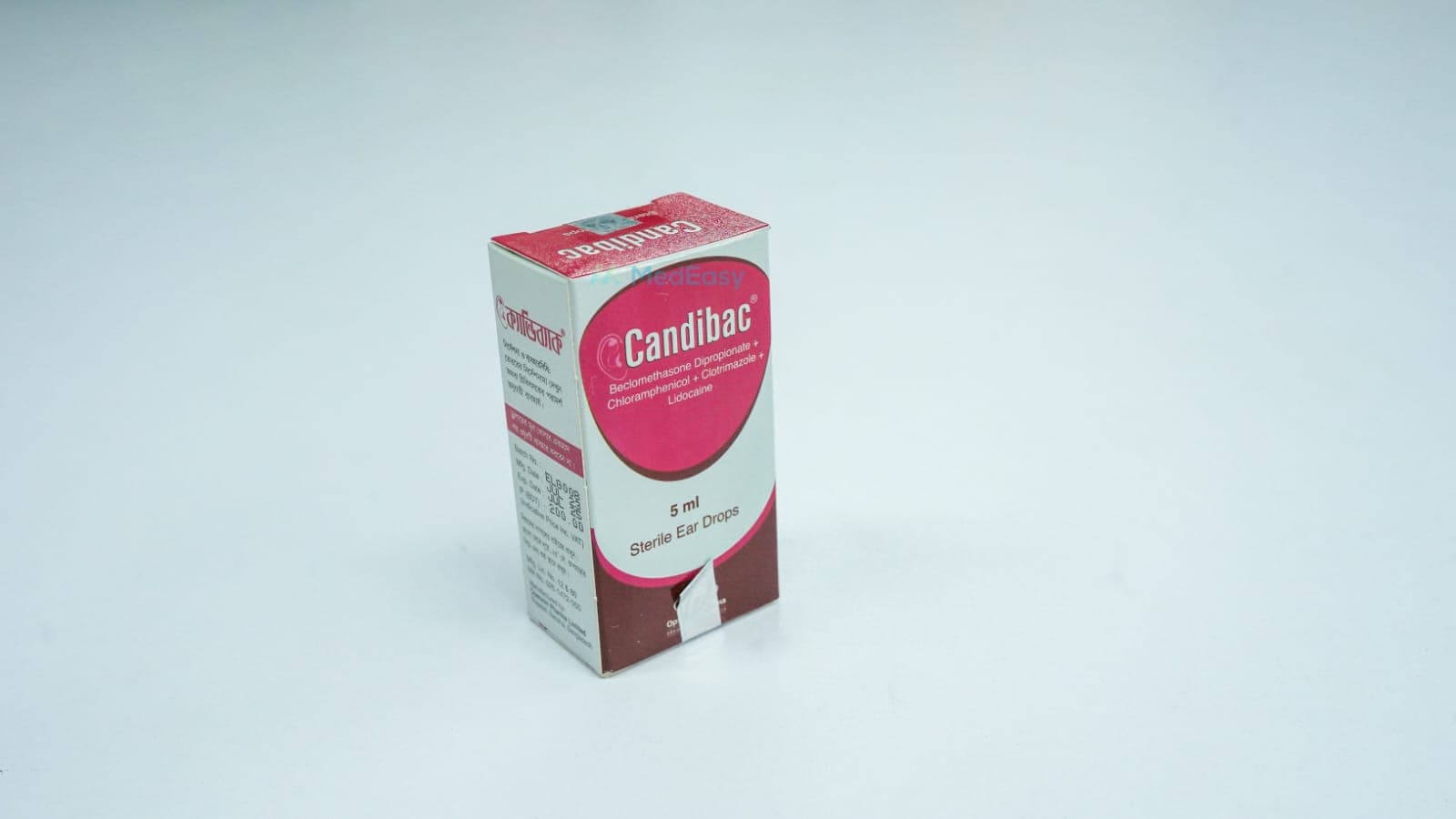
Candibac5 ml

Medicine overview
Indications of Candibac
Candibac is a fixed-dose topical (otic) combination preparation containing a corticosteroid, an antibacterial, an antifungal, and a local anesthetic. It is formulated for use in the external ear canal (and, in some marketed presentations, on affected skin) where inflammation coexists with a mixed bacterial and/or fungal infection and associated pain or itching.
Established uses
- Acute and chronic otitis externa (inflammation/infection of the external ear canal), including cases with associated bacterial and fungal (otomycosis-type) involvement.
- Eczematous or infected dermatitis of the external ear (pinna and external auditory canal) with itching and discomfort.
- Post-mastoidectomy or post-operative otic cavity care where inflammation with mixed infection and pain is present, when directed by a physician.
Evidence classification
Candibac is a guideline-consistent, commonly-prescribed combination product for symptomatic and infective otitis externa in regions including South Asia; it is not typically listed as a standalone monotherapy option in international (e.g., US) otitis externa guidelines, which more often favor single-agent otic antibiotic/steroid drops. Its use should be reserved for cases where a mixed bacterial-fungal-inflammatory picture with pain is suspected or confirmed, and only after an intact tympanic membrane has been confirmed by a qualified clinician.
Composition
Beclomethasone Dipropionate + Chloramphenicol + Clotrimazole + Lidocaine otic/topical drops typically combine:
- Beclomethasone Dipropionate - a topical corticosteroid providing anti-inflammatory and anti-pruritic action.
- Chloramphenicol - a broad-spectrum antibacterial active against many Gram-positive and Gram-negative organisms implicated in otitis externa.
- Clotrimazole - a broad-spectrum imidazole antifungal covering common fungal pathogens (e.g., Candida, Aspergillus species) associated with otomycosis.
- Lidocaine - a local (amide-type) anesthetic providing rapid, short-term relief of ear pain and discomfort.
Strengths vary by manufacturer/brand; the exact concentration of each component in a specific product should be confirmed on the pack label.
Description
Candibac is a multi-action topical/otic preparation that combines four pharmacologically distinct agents in a single dosage form (ear drops, and in some markets a skin drop/lotion) to simultaneously address inflammation, bacterial infection, fungal infection, and pain associated with conditions such as otitis externa.
By combining a corticosteroid, an antibacterial, an antifungal, and a local anesthetic, Candibac is intended to provide broad symptomatic and causal coverage in a single product, reducing the need for multiple separate topical medications and simplifying the treatment course for mixed infective/inflammatory ear conditions.
Therapeutic Class
Candibac belongs to the therapeutic class of topical otic (ear) combination preparations, specifically a corticosteroid + antibacterial + antifungal + local anesthetic combination used in otology and dermatology for external ear and skin conditions.
Pharmacology
Beclomethasone Dipropionate + Chloramphenicol + Clotrimazole + Lidocaine exerts its effect through the combined, complementary actions of its four components:
- Beclomethasone Dipropionate binds intracellular glucocorticoid receptors, suppressing the local inflammatory cascade (reducing cytokine release, vascular permeability, and leukocyte infiltration), which decreases swelling, redness, and itching in the ear canal or skin.
- Chloramphenicol inhibits bacterial protein synthesis by binding the 50S ribosomal subunit, giving it bacteriostatic (and at higher local concentrations, bactericidal) activity against many organisms commonly implicated in otitis externa, such as Staphylococcus aureus and Pseudomonas aeruginosa.
- Clotrimazole inhibits fungal cytochrome P450-dependent 14-alpha-demethylase, disrupting ergosterol synthesis in the fungal cell membrane, leading to increased membrane permeability and fungal cell death/growth inhibition.
- Lidocaine blocks voltage-gated sodium channels in local sensory nerve endings, reversibly preventing nerve depolarization and conduction, producing rapid local anesthesia and pain relief.
Because Beclomethasone Dipropionate + Chloramphenicol + Clotrimazole + Lidocaine is applied topically/locally to the ear or skin, systemic absorption of each component is generally low when used on intact skin or an intact tympanic membrane as directed, though absorption can increase substantially if the eardrum is perforated or skin is extensively broken (see Precautions and Contraindications).
Dosage & Administration of Candibac
General dosing
| Population | Typical Dose | Notes |
|---|---|---|
| Adults | 4-5 drops into the affected ear, 2-3 times daily (or as directed by the pack label/physician) | Course usually 7-10 days; do not exceed the prescribed duration |
| Children (as directed by physician) | 2-3 drops into the affected ear, 2-3 times daily | Use in young children only under medical supervision |
| Skin/dermatological use (if labeled for this route) | Apply a thin film to the affected area 2-3 times daily | Only for products specifically labeled for cutaneous use |
Exact dose, frequency, and duration should always follow the specific product label and the prescribing physician's instructions, as concentrations differ between brands. See Administration for technique and Duration of Treatment for course length.
Administration of Candibac
For otic (ear) use:
- Warm the bottle slightly in the hand before use (avoid direct heat) to reduce dizziness from instilling cold drops.
- Tilt the head sideways or lie down with the affected ear facing up.
- Gently pull the outer ear (pinna) up and back (adults) or down and back (young children) to straighten the ear canal.
- Instill the prescribed number of drops into the ear canal without letting the dropper tip touch the ear.
- Keep the head tilted or remain lying down for 2-3 minutes, gently pressing the small flap (tragus) in front of the ear a few times to help the drops penetrate.
- Wipe away any excess with a clean tissue; avoid inserting cotton buds/ear plugs immediately afterward unless directed.
- Wash hands before and after application.
If a dermatological (skin) formulation is prescribed, apply only to the affected skin area as directed, avoiding the eyes and mucous membranes.
Interaction of Candibac
Because Candibac is applied topically/locally with generally low systemic absorption, clinically significant drug-drug interactions are uncommon. However:
- Other ototopical or ototoxic agents: concurrent use with other potentially ototoxic ear preparations should be avoided unless directed by a physician, as combined local exposure could theoretically increase the risk of local toxicity if the eardrum is perforated.
- Other topical corticosteroids: concurrent use of additional topical steroids on the same site is not recommended, as it may increase the risk of local skin/tissue changes.
- Systemic chloramphenicol or other bone-marrow-suppressing drugs: although systemic absorption from topical/otic use is low, caution is advised with concurrent systemic chloramphenicol or other myelosuppressive agents.
Inform your physician or pharmacist of all other medicines, including other ear or skin preparations, being used.
Contraindications
Beclomethasone Dipropionate + Chloramphenicol + Clotrimazole + Lidocaine is contraindicated in:
- Known hypersensitivity to beclomethasone dipropionate, chloramphenicol, clotrimazole, lidocaine (or other amide-type local anesthetics), or any excipient in the formulation.
- Perforated tympanic membrane (perforated eardrum) when used otically - middle-ear absorption is unpredictable and carries a risk of ototoxicity and altered systemic absorption through the perforation.
- Viral infections of the external ear or treated skin area (e.g., herpes simplex, herpes zoster, varicella), because the corticosteroid component can worsen or mask viral infection.
Side Effects of Candibac
Most side effects of Candibac are local and mild, resolving on discontinuation:
- Local burning, stinging, or itching at the site of application immediately after use.
- Local skin irritation, redness, dryness, or rash.
- Hypersensitivity/allergic contact dermatitis (uncommon).
- With prolonged or extensive use: local skin thinning, discoloration, or superinfection (including fungal overgrowth) due to the corticosteroid and antibacterial components (see Precautions).
- Rarely, taste disturbance if drainage reaches the throat, or transient dizziness.
Seek medical advice if irritation worsens, symptoms fail to improve, or new symptoms (including hearing changes) develop during use.
Pregnancy & Lactation
Data on the use of Candibac specifically during pregnancy and lactation are limited. As a topical/otic combination containing a corticosteroid, an antibacterial, an antifungal, and a local anesthetic, systemic absorption is generally low when used as directed on intact skin/eardrum, but is not zero. Candibac should be used during pregnancy only if clearly needed and if the potential benefit justifies the potential risk to the fetus, and only under medical advice.
It is not known whether topically/otically applied Candibac is excreted in human breast milk in clinically significant amounts. Caution is advised, and a physician should be consulted before use while breastfeeding, particularly for prolonged courses or use over large skin areas.
Precautions & Warnings
- Confirm the tympanic membrane is intact before otic use; do not use if the eardrum is perforated or if perforation is suspected (see Contraindications).
- Use for the shortest effective duration. Prolonged use of the corticosteroid component can mask or worsen an untreated infection and cause local skin/tissue changes such as thinning, discoloration, or delayed healing.
- Although topical/otic use of the chloramphenicol component carries much lower systemic absorption than oral or intravenous chloramphenicol, rare local hypersensitivity reactions can occur; avoid use beyond the labeled course to reduce the risk of antimicrobial resistance and superinfection, including fungal overgrowth.
- If a formulation is intended for use near the eye, use only a product specifically labeled as safe for ophthalmic use.
- Discontinue and seek medical advice if irritation worsens, symptoms fail to improve, or if new or worsening hearing changes occur with otic use.
- Avoid use in undiagnosed ear or skin conditions without professional diagnosis, as inappropriate use may mask an underlying condition (e.g., a fungal, viral, or structural problem) requiring different treatment.
- Antimicrobial stewardship: take/use Candibac exactly as prescribed by your physician; do not stop, extend, skip doses, or share this medicine with others without medical advice.
Overdose Effects of Candibac
Topical/otic Candibac is applied in small local volumes, and clinically significant systemic overdose is unlikely with correct use. Accidental large-volume application, prolonged excessive use, or accidental ingestion of the product could theoretically increase the risk of local tissue effects or, rarely, systemic effects from the corticosteroid, chloramphenicol, or lidocaine components.
If accidental ingestion occurs, or if excessive or prolonged use leads to concerning symptoms (e.g., unusual dizziness, irregular heartbeat, signs of an allergic reaction, or marked local tissue damage), seek immediate medical attention or contact your local emergency services or poison control center. Do not attempt specific home treatment beyond removing/rinsing residual product from accessible skin and seeking prompt medical advice.
Storage Conditions
Store at room temperature (below 30°C), away from light and moisture. Keep the bottle tightly closed and out of reach of children. Do not use after the expiry date printed on the pack.
Use In Special Populations
- Pediatric patients: use in children should be under direct medical supervision; safety and efficacy of Candibac in infants and very young children have not been well established, and lower drop counts/shorter courses are typically used where prescribed (see Pediatric Uses).
- Elderly patients: no specific dose adjustment is generally required, but elderly patients with thinner or more fragile ear canal skin may be more susceptible to local irritation; monitor for local skin changes with prolonged use.
- Renal/hepatic impairment: because systemic absorption from topical/otic use is generally low, specific dose adjustment is not typically required; however, caution is advised with extensive or prolonged use in patients with significant hepatic or renal impairment, given the systemic toxicity potential of absorbed chloramphenicol.
- Perforated eardrum / recent ear surgery: avoid unless specifically directed by an ENT specialist (see Contraindications and Precautions).
Duration Of Treatment
Candibac is typically used for a short course of about 7-10 days, or as directed by the prescribing physician, and should not be continued beyond the labeled/prescribed duration. If symptoms have not improved within this period, or worsen at any point, medical review is required rather than extending treatment on one's own.
Drug Classes
Topical/otic corticosteroid + antibacterial + antifungal + local anesthetic combination
Mode Of Action
Beclomethasone Dipropionate + Chloramphenicol + Clotrimazole + Lidocaine works through four complementary local mechanisms: corticosteroid-mediated anti-inflammatory action (beclomethasone dipropionate), bacterial protein synthesis inhibition (chloramphenicol), fungal ergosterol synthesis inhibition (clotrimazole), and reversible sodium-channel blockade for local anesthesia (lidocaine). See Pharmacology for full mechanistic detail.
Pediatric Uses
Candibac may be used in children for otitis externa or similar conditions of the external ear/skin, but only under direct medical supervision, typically at a lower drop count (e.g., 2-3 drops, 2-3 times daily) than adults. Safety and efficacy in infants and very young children have not been formally established, and use in this age group should be individualized by a pediatrician or ENT specialist, with close monitoring for local irritation or hypersensitivity.
Frequently Asked Questions
Q: What is Candibac 5 ml Ear Drop used for?
A: Candibac 5 ml Ear Drop is a combination ear/skin drop used mainly for otitis externa (inflammation/infection of the external ear canal) that has a mixed bacterial and fungal component, along with associated pain and itching.
Q: Can I use Candibac 5 ml Ear Drop if my eardrum is perforated?
A: No. Candibac 5 ml Ear Drop should not be used in the ear if the eardrum is perforated, as this can increase the risk of ototoxicity and unpredictable absorption. Always have a doctor confirm your eardrum is intact before starting ear drops.
Q: How long can I use Candibac 5 ml Ear Drop?
A: Candibac 5 ml Ear Drop should generally be used for the shortest effective duration, typically about 7-10 days or as directed by your physician. Prolonged use of the corticosteroid component can mask infection or cause local skin changes, and prolonged antibacterial exposure can increase resistance and fungal overgrowth risk.
Q: What side effects should I watch for?
A: Most side effects of Candibac 5 ml Ear Drop are mild and local, such as burning, stinging, itching, or redness at the application site. Discontinue and see your doctor if irritation worsens, symptoms do not improve, or you notice new hearing changes.
Q: Is Candibac 5 ml Ear Drop safe during pregnancy or breastfeeding?
A: Data are limited. Candibac 5 ml Ear Drop should be used in pregnancy only if clearly needed and if the benefit outweighs potential risk, and only after consulting a physician; the same caution applies during breastfeeding.
Q: Can I use Candibac 5 ml Ear Drop in children?
A: Candibac 5 ml Ear Drop can be used in children only under a doctor's supervision, usually at a lower dose than adults. Safety in infants and very young children has not been well established, so pediatric use should always be individualized by a physician.
Disclaimer
The information provided is accurate to the best of our knowledge, but it does not replace professional medical advice. We cannot guarantee its completeness or accuracy, and the absence of specific information about a drug should not be taken as an endorsement. We are not responsible for any consequences arising from this information, so please consult a healthcare professional for any concerns or questions.
