5% Off
Eporen5000 IU
Square Pharmaceuticals PLC.
৳2001.00
Add to cart
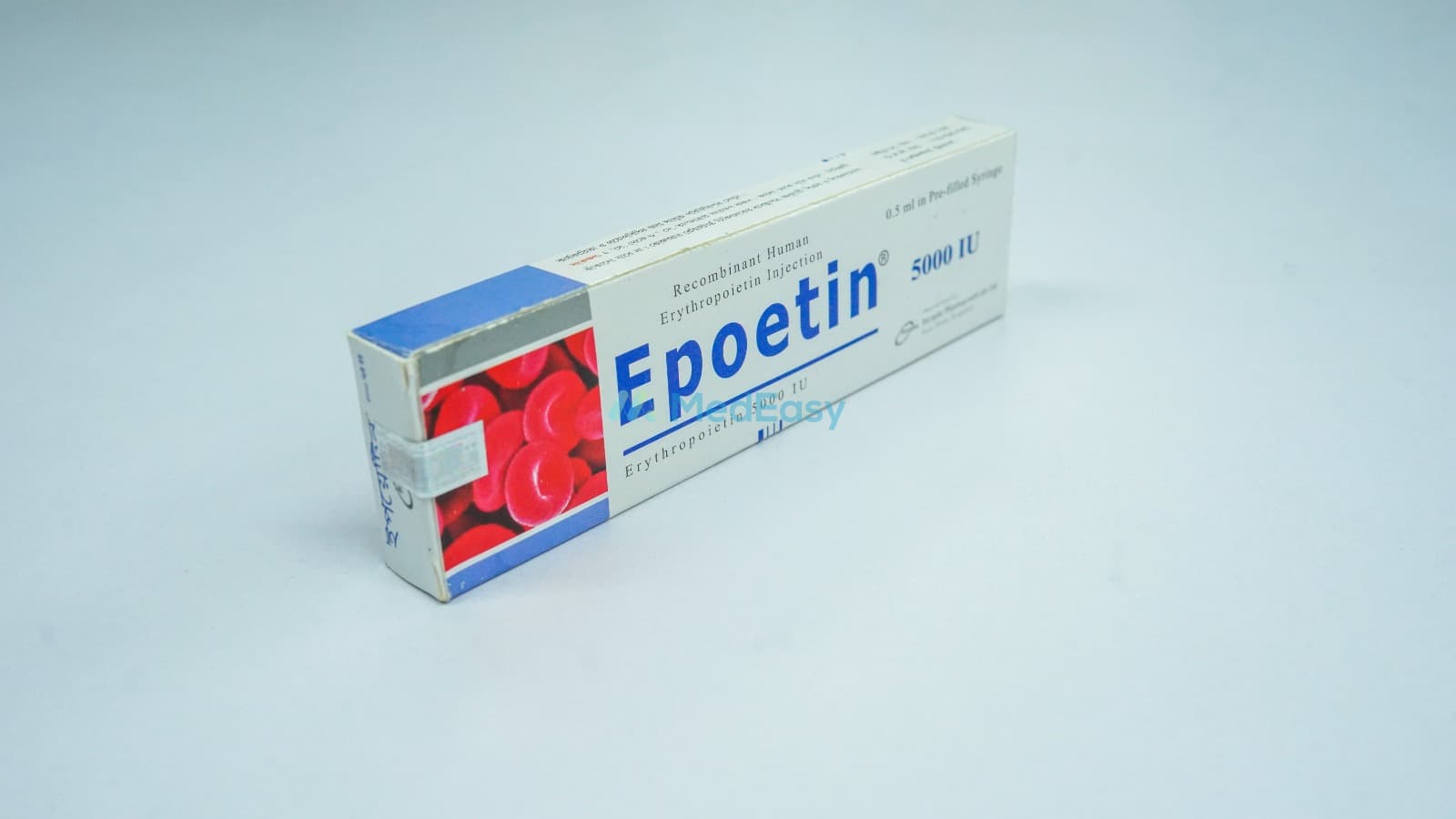

Epoetin is an erythropoiesis-stimulating agent (ESA), a recombinant form of human Epoetin that stimulates red blood cell production. It is FDA-approved and guideline-supported for the following established indications:
Important limitations: Epoetin is not indicated and is not FDA-approved for improvement of quality of life, fatigue, or general well-being; for cancer patients receiving hormonal agents, biologic products, or radiotherapy only (without concomitant myelosuppressive chemotherapy); for patients who are able to donate autologous blood; or for use in patients undergoing cardiac or vascular surgery. Therapy should target the lowest dose sufficient to reduce the need for RBC transfusion, not to normalize hemoglobin (see Precautions and Warnings for the boxed warning).
Each vial/pre-filled syringe contains Erythropoietin (recombinant human erythropoietin, epoetin alfa) as the active ingredient, supplied as a sterile solution for injection in strengths typically ranging from 1,000 IU to 10,000 IU per vial/syringe. Formulations may contain excipients such as human albumin or polysorbate, sodium citrate/citric acid buffer, sodium chloride, and (in multi-dose vials) benzyl alcohol as a preservative. Exact composition varies by brand and formulation strength; refer to the specific product label.
Epoetin is a glycoprotein hormone produced by recombinant DNA technology that is structurally and biologically similar to endogenous human Epoetin, the hormone normally produced by the kidneys that stimulates the bone marrow to produce red blood cells. It is administered by intravenous (IV) or subcutaneous (SC) injection and is used to treat certain forms of anemia by stimulating erythropoiesis (red blood cell production) in the bone marrow.
Epoetin carries an FDA boxed warning because erythropoiesis-stimulating agents, when used to target higher hemoglobin levels than recommended, increase the risk of serious cardiovascular events and, in cancer patients, may shorten survival or increase the risk of tumor progression/recurrence. Treatment must be individualized by a physician, with regular monitoring of hemoglobin and dose adjustment based on response.
Epoetin belongs to the therapeutic class of Erythropoiesis-Stimulating Agents (ESAs), also referred to as anti-anemic recombinant human Epoetins.
Erythropoietin is a recombinant human erythropoietin that acts by binding to erythropoietin receptors on erythroid progenitor cells in the bone marrow. This binding stimulates cell division and differentiation of these progenitor cells into mature red blood cells, increasing reticulocyte counts within approximately 10 days and hemoglobin/hematocrit levels within approximately 2-6 weeks.
Endogenous erythropoietin is normally produced primarily by the kidneys in response to hypoxia. In patients with chronic kidney disease, endogenous erythropoietin production is impaired, contributing to anemia; Erythropoietin replaces this deficient hormonal signal. In chemotherapy-induced anemia, Erythropoietin similarly stimulates red cell production to offset bone marrow suppression caused by cytotoxic drugs.
Adequate iron stores are required for an effective erythropoietic response to Erythropoietin; iron deficiency should be corrected before and during treatment, as it is the most common cause of an inadequate response.
Dosing of Epoetin must be individualized by a physician based on the indication, baseline hemoglobin, rate and degree of hemoglobin rise, and clinical response. The goal is to use the lowest dose sufficient to reduce the need for RBC transfusion, not to normalize hemoglobin. Epoetin is given by intravenous or subcutaneous injection; it should never be self-adjusted by the patient without physician guidance.
| Indication | Typical Starting Dose | Notes |
|---|---|---|
| Anemia of CKD (dialysis, adult) | 50-100 Units/kg IV or SC, 3 times weekly | Initiate when hemoglobin <10 g/dL; reduce dose if hemoglobin approaches or exceeds 11 g/dL |
| Anemia of CKD (non-dialysis, adult) | 50-100 Units/kg IV or SC, 3 times weekly | Consider therapy only if hemoglobin <10 g/dL; individualize to minimize transfusion need |
| Anemia of CKD (pediatric, ≥1 month) | 50 Units/kg, 3 times weekly | Initiate when hemoglobin <10 g/dL; reduce dose if hemoglobin approaches or exceeds 12 g/dL |
| Zidovudine-associated anemia in HIV (adult) | 100 Units/kg IV or SC, 3 times weekly | May increase by 50-100 Units/kg at 4-8 week intervals (up to 300 Units/kg) if response inadequate |
| Chemotherapy-induced anemia (adult) | 150 Units/kg SC 3 times weekly, or 40,000 Units SC once weekly | Continue for at least 2 additional months of planned chemotherapy; discontinue after chemotherapy course ends |
| Chemotherapy-induced anemia (pediatric ≥5 years) | 600 Units/kg IV once weekly | Reduce or withhold as per hemoglobin response |
| Perioperative (elective, non-cardiac, non-vascular surgery) | 300 Units/kg/day SC for 15 days (10 days before, day of, and 4 days after surgery), or 600 Units/kg SC on days 21, 14, and 7 before surgery plus day of surgery | For patients with hemoglobin 10-13 g/dL at high risk of perioperative blood loss; venous thromboembolism prophylaxis is recommended |
Hemoglobin should be monitored regularly (e.g., weekly to every 2-4 weeks) during therapy, and doses adjusted by the treating physician; the drug should be withheld if hemoglobin rises too rapidly or exceeds target levels. Iron status should be evaluated and corrected before and during treatment. Do not shake the solution, as vigorous shaking may denature the product.
Epoetin is administered by intravenous (IV) or subcutaneous (SC) injection only; it is not given orally. It is typically administered or supervised by a healthcare professional; in some cases, patients or caregivers may be trained to self-inject subcutaneously, but the dose and schedule must always be determined and adjusted by the physician based on hemoglobin monitoring, never self-adjusted by the patient. Do not shake the vial or syringe. Do not mix with other drug solutions. Discard any unused portion of single-dose vials; multi-dose vials should be used according to labeled storage limits after first entry.
No specific clinically significant pharmacokinetic drug-drug interactions are well established for Epoetin. Clinically relevant considerations include:
Erythropoietin is contraindicated in patients with:
Common and serious adverse effects reported with Epoetin include:
Pregnancy: Data on the use of Epoetin in pregnant women are limited. Animal reproduction studies have shown adverse effects (embryo-fetal death, skeletal anomalies, growth reduction) at doses producing exposures well above the recommended human dose range. Epoetin should be used during pregnancy only if clearly needed and the potential benefit justifies the potential risk to the fetus; a physician must be consulted before use. Multi-dose (benzyl alcohol-containing) formulations must not be used in pregnant women.
Lactation: There is limited information on the presence of Epoetin in human milk; endogenous Epoetin is naturally present in breast milk. Breastfeeding is generally not recommended for a period after use of benzyl alcohol-containing multi-dose formulations; single-dose, preservative-free formulations may be considered with caution and physician guidance, weighing the benefits of breastfeeding against any potential risk.
Epoetin, like other erythropoiesis-stimulating agents, carries a boxed warning: in controlled clinical trials, targeting a hemoglobin level greater than 11 g/dL increased the risk of death, myocardial infarction, stroke, and venous thromboembolism in patients with chronic kidney disease. In patients with cancer, ESAs including Epoetin increased the risk of death and of tumor progression or recurrence when used to target a hemoglobin of 12 g/dL or greater. To minimize these risks, use the lowest dose of Epoetin sufficient to reduce the need for RBC transfusions, and use only if the benefit of decreasing transfusions outweighs these risks. Epoetin is not indicated for patients receiving myelosuppressive chemotherapy when the anticipated outcome is cure.
Blood pressure commonly rises or worsens during Epoetin therapy, sometimes leading to hypertensive encephalopathy or seizures. Blood pressure must be adequately controlled before starting Epoetin and monitored closely throughout treatment.
Epoetin increases the risk of seizures, particularly in patients with CKD, especially during the first several months of therapy when hemoglobin/hematocrit is rising rapidly. Monitor closely for new-onset seizures or premonitory symptoms.
Rarely, prolonged use of Epoetin can lead to the development of neutralizing antibodies to Epoetin, causing PRCA — severe anemia with very low reticulocyte count. If a patient develops sudden loss of response with severe anemia, Epoetin should be withheld and the patient evaluated for antibody-mediated PRCA; Epoetin and other ESAs must not be restarted.
Anaphylaxis, angioedema, bronchospasm, skin rash, and urticaria have been reported. Severe cutaneous adverse reactions (Stevens-Johnson syndrome/toxic epidermal necrolysis) have rarely occurred. Discontinue Epoetin immediately if a serious hypersensitivity or severe skin reaction occurs.
Epoetin increases the risk of deep vein thrombosis and other thromboembolic events, particularly in the perioperative surgical setting; thromboprophylaxis is recommended when Epoetin is used perioperatively.
Epoetin must only be prescribed and dose-adjusted by a physician, with regular hemoglobin monitoring. It should never be self-initiated or self-adjusted by the patient.
Overdose of Epoetin can cause an excessive, too-rapid rise in hemoglobin/hematocrit, which increases the risk of severe hypertension, hypertensive crisis, seizures, and serious cardiovascular events such as myocardial infarction, stroke, and thromboembolism. There is no specific antidote. If overdose is suspected, seek immediate medical attention or contact a physician, hospital emergency department, or poison control center right away. Management is supportive and may include withholding Epoetin, close monitoring of blood pressure and hemoglobin, and phlebotomy (as clinically indicated by the treating physician) if hemoglobin rises excessively. Do not attempt to manage a suspected overdose at home.
Store in a refrigerator at 2°C to 8°C (36°F to 46°F). Do not freeze; discard if the product has been frozen. Protect from light — keep in the outer carton until time of use. Do not shake vigorously, as this may denature the product and reduce effectiveness. Keep out of reach of children. Do not use after the expiry date printed on the pack.
Epoetin is specifically indicated for anemia of chronic kidney disease, including patients on and not on dialysis; dosing is individualized based on hemoglobin response (see Dosage and Administration).
No well-established dose adjustment for hepatic impairment is defined in labeling; use with clinical caution and physician supervision.
No overall differences in safety or effectiveness have been established between elderly and younger adult patients; use with the same monitoring precautions, considering the higher likelihood of cardiovascular comorbidity in this age group.
Epoetin is approved for anemia of CKD in pediatric patients 1 month of age and older, and for chemotherapy-induced anemia in pediatric patients 5 years of age and older, at weight-based doses (see Dosage and Administration). Safety and effectiveness for other indications in children have not been established.
Duration of treatment with Epoetin depends on the indication and is determined by the treating physician based on ongoing hemoglobin response. In CKD, treatment is typically long-term/chronic as long as anemia management is needed. In chemotherapy-induced anemia, treatment continues for the duration of myelosuppressive chemotherapy plus approximately 2 additional months, and should be discontinued following completion of a chemotherapy course. In the perioperative setting, treatment is given over a defined short course of up to about 3-4 weeks around the time of surgery. Treatment should not continue for longer than clinically necessary at the lowest effective dose.
Erythropoietin belongs to the drug class of Erythropoiesis-Stimulating Agents (ESAs), also known as recombinant human erythropoietins or hematopoietic growth factors acting on the erythroid lineage.
Erythropoietin binds to erythropoietin receptors on erythroid progenitor cells in the bone marrow, stimulating their proliferation and differentiation into mature red blood cells, thereby increasing red blood cell production (erythropoiesis) and raising hemoglobin/hematocrit levels over several weeks.
Epoetin is approved for use in pediatric patients for select indications: anemia of chronic kidney disease in infants and children 1 month of age and older, and chemotherapy-induced anemia in children 5 years of age and older, using weight-based dosing under close physician supervision with regular hemoglobin monitoring. Safety and efficacy for other indications (e.g., HIV/zidovudine-associated anemia, perioperative use) have not been established in pediatric patients. Multi-dose, benzyl alcohol-containing formulations must not be used in neonates and infants due to risk of fatal toxicity; only single-dose, preservative-free formulations should be used in this age group.
Q: What is Epoetin 5000 IU IV/SC Injection used for?
A: Epoetin 5000 IU IV/SC Injection is used to treat anemia (low red blood cell count) caused by chronic kidney disease, certain cancer chemotherapy regimens, zidovudine treatment in HIV infection, and to reduce the need for blood transfusions in some surgical patients. It works by stimulating the bone marrow to produce more red blood cells.
Q: Why does Epoetin 5000 IU IV/SC Injection have a boxed warning?
A: Epoetin 5000 IU IV/SC Injection carries an FDA boxed warning because, when used to raise hemoglobin above recommended target levels, it increases the risk of serious problems such as heart attack, stroke, blood clots, and death, and in cancer patients may increase the risk of tumor growth or recurrence and shorten survival. This is why your physician will use the lowest dose needed and monitor your hemoglobin regularly, rather than trying to normalize it.
Q: How is Epoetin 5000 IU IV/SC Injection given, and can I adjust my own dose?
A: Epoetin 5000 IU IV/SC Injection is given as an injection under the skin (subcutaneous) or into a vein (intravenous), usually by or under the supervision of a healthcare professional. Even if you are trained to self-inject at home, the dose and schedule must always be set and adjusted by your physician based on blood test results — never change your dose on your own.
Q: What are the common side effects of Epoetin 5000 IU IV/SC Injection?
A: The most common side effects of Epoetin 5000 IU IV/SC Injection include high blood pressure, joint or muscle pain, fever, headache, nausea, and reactions at the injection site. Your physician will monitor your blood pressure and hemoglobin levels regularly during treatment to catch and manage any problems early.
Q: Can Epoetin 5000 IU IV/SC Injection be used during pregnancy or breastfeeding?
A: Epoetin 5000 IU IV/SC Injection should be used during pregnancy only if clearly needed, when the potential benefit to the mother justifies the potential risk to the fetus, and only under a physician's guidance; certain multi-dose formulations containing benzyl alcohol must not be used in pregnant or breastfeeding women. Always consult your physician before using Epoetin 5000 IU IV/SC Injection if you are pregnant, planning pregnancy, or breastfeeding.
Q: What should I do if I think I've had too much Epoetin 5000 IU IV/SC Injection?
A: If you suspect an overdose of Epoetin 5000 IU IV/SC Injection, seek immediate medical attention or contact your physician, the nearest hospital emergency department, or a poison control center right away. Do not try to manage a suspected overdose at home, as it can raise your red blood cell count too quickly and lead to dangerous blood pressure or clotting problems.
Disclaimer
The information provided is accurate to the best of our knowledge, but it does not replace professional medical advice. We cannot guarantee its completeness or accuracy, and the absence of specific information about a drug should not be taken as an endorsement. We are not responsible for any consequences arising from this information, so please consult a healthcare professional for any concerns or questions.