
10% Off
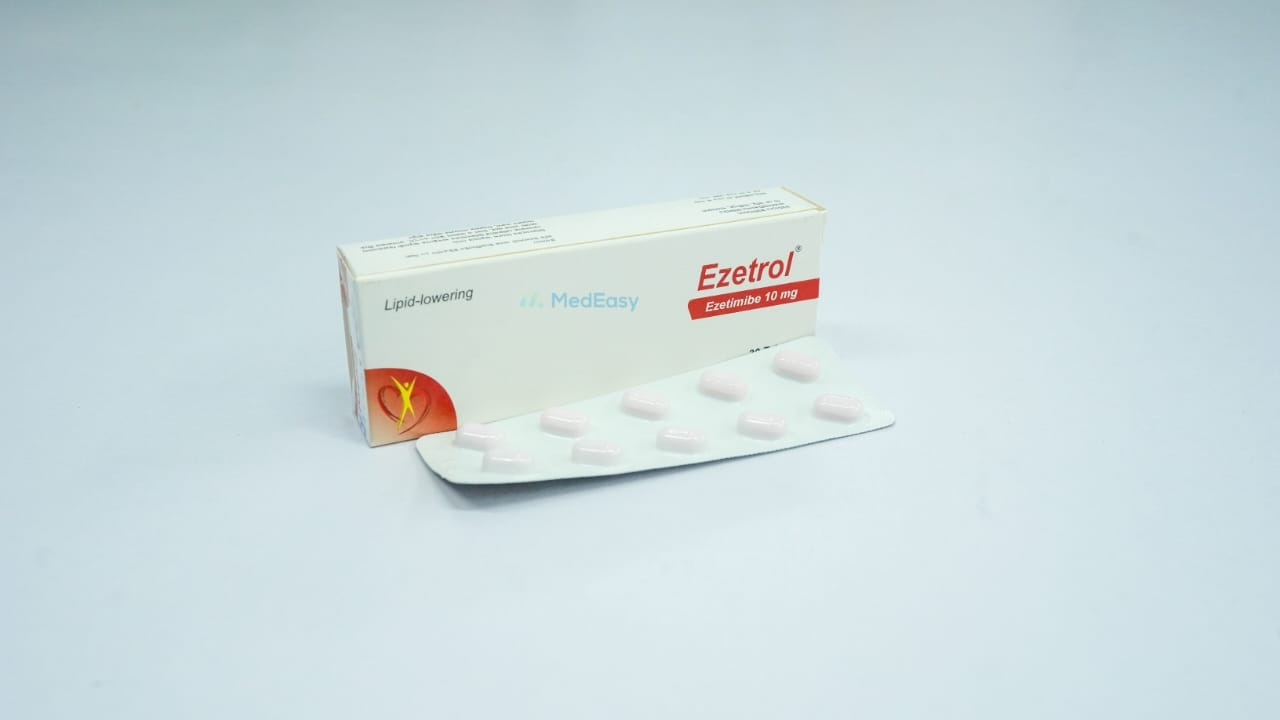
Ezetrol10 mg
Unimed Unihealth MFG. Ltd.
৳90.00
Add to cart


Ezetim is indicated, as an adjunct to diet, for the management of elevated cholesterol. Indications are classified below by strength of evidence.
Note: Ezetim monotherapy has a modest LDL-lowering effect (roughly 15–20%); combination with a statin is more common in practice and produces substantially greater lipid lowering.
Each tablet contains Ezetimibe INN 10 mg as the active ingredient, along with standard pharmaceutical excipients. Ezetimibe is also available as a fixed-dose combination tablet with a statin (e.g., simvastatin) in some markets.
Ezetim is a selective cholesterol absorption inhibitor belonging to the azetidinone class of lipid-lowering agents. Unlike statins, which reduce hepatic cholesterol synthesis, Ezetim acts at the brush border of the small intestine to block absorption of dietary and biliary cholesterol, lowering the delivery of cholesterol to the liver and increasing clearance of cholesterol from the blood.
Ezetim is used alone as an adjunct to diet, or together with a statin or fenofibrate, for the management of elevated cholesterol. It does not affect absorption of triglycerides or fat-soluble vitamins.
Antihyperlipidemic agent – selective cholesterol absorption inhibitor
Ezetimibe localizes at the brush border of the small intestine and inhibits the Niemann-Pick C1-Like 1 (NPC1L1) transporter, which mediates intestinal uptake of cholesterol and related phytosterols. By blocking NPC1L1, Ezetimibe reduces delivery of dietary and biliary cholesterol to the liver. This lowers hepatic cholesterol stores and increases clearance of cholesterol from the blood, distinct from statins (which inhibit HMG-CoA reductase) and bile acid sequestrants.
The usual dose of Ezetim is 10 mg once daily, taken with or without food, at any time of day. Ezetim can be given alone or together with a statin or fenofibrate.
| Indication | Adult dose | Pediatric dose |
|---|---|---|
| Primary hyperlipidemia (monotherapy or with a statin) | 10 mg once daily | 10 mg once daily in children ≥10 years with heterozygous familial hypercholesterolemia, under specialist supervision |
| Homozygous familial hypercholesterolemia | 10 mg once daily with atorvastatin or simvastatin | Safety and efficacy not established below 10 years |
| Homozygous sitosterolemia | 10 mg once daily | 10 mg once daily in children ≥6 years |
| Mixed hyperlipidemia (with fenofibrate) | 10 mg once daily | Not established |
If Ezetim is coadministered with a bile acid sequestrant (e.g., cholestyramine), Ezetim should be taken either at least 2 hours before or at least 4 hours after the sequestrant, as sequestrants reduce its absorption.
No dosage adjustment of Ezetim is required in mild-to-moderate renal impairment; data are limited in severe renal impairment, and use with caution.
No adjustment is needed in mild hepatic impairment (Child-Pugh A). Ezetim is not recommended in moderate or severe hepatic impairment (Child-Pugh B or C) due to accumulation of the drug.
Take Ezetim orally, with or without food, at approximately the same time each day. If taken with a bile acid sequestrant, separate dosing by at least 2 hours before or 4 hours after the sequestrant. See Dosage and Administration for details.
Clinically significant interactions with Ezetim include:
Ezetimibe monotherapy is contraindicated in patients with known hypersensitivity to Ezetimibe or any component of the formulation.
When Ezetimibe is coadministered with a statin, the contraindications of the statin also apply, which include:
Ezetim is generally well tolerated. Reported adverse effects include:
Ezetim monotherapy should be used during pregnancy only if clearly needed and if the potential benefit justifies the potential risk to the fetus; a physician should be consulted before use in pregnancy. When Ezetim is used together with a statin, the combination is contraindicated in pregnancy because of the statin component.
It is not known whether Ezetim passes into human breast milk. Because many drugs are excreted in breast milk, a decision should be made whether to discontinue nursing or to discontinue Ezetim, taking into account the importance of the drug to the mother; Ezetim combined with a statin should not be used during breastfeeding. Consult a physician before use while breastfeeding.
Liver enzymes: When Ezetim is coadministered with a statin, liver function tests should be performed as recommended for the statin, since combination therapy can increase the risk of transaminase elevation. See Contraindications for use in active liver disease.
Muscle effects: Patients on Ezetim combined with a statin should be advised to promptly report unexplained muscle pain, tenderness, or weakness, particularly if accompanied by fever or malaise, as this may indicate myopathy or rhabdomyolysis.
Gallbladder disease: Ezetim combined with fenofibrate increases the risk of cholelithiasis; use with caution in patients with pre-existing gallbladder disease.
Severe renal or hepatic impairment: Use Ezetim with caution in severe renal impairment, and avoid in moderate-to-severe hepatic impairment (see Dosage and Administration).
Clinical experience with Ezetim overdose is limited; doses up to 50 mg/day in normal volunteers and up to 40 mg/day in patients with a pre-existing condition have generally been well tolerated in studies. In case of a suspected overdose of Ezetim, seek immediate medical attention or contact a poison control center. Treatment should be symptomatic and supportive; there is no specific antidote.
Store Ezetim at room temperature (below 30°C), protected from light and moisture. Keep out of the reach of children.
Renal impairment: No dose adjustment of Ezetim is needed in mild-to-moderate renal impairment; use with caution and limited data exist in severe renal impairment.
Hepatic impairment: No adjustment is needed in mild hepatic impairment; Ezetim is not recommended in moderate-to-severe hepatic impairment (see Dosage and Administration).
Elderly: No dose adjustment of Ezetim is required based on age alone, though age-related decline in renal/hepatic function should be considered.
Pediatric use: See Pediatric Uses.
Ezetim is generally used long-term as part of chronic management of hyperlipidemia, alongside diet and lifestyle modification. Duration is determined by the treating physician based on lipid response and cardiovascular risk, with periodic monitoring of lipid profile (and liver enzymes if combined with a statin).
Antihyperlipidemic agents; cholesterol absorption inhibitors
Ezetimibe selectively inhibits the NPC1L1 transporter at the intestinal brush border, blocking absorption of dietary and biliary cholesterol. This reduces cholesterol delivery to the liver and lowers circulating LDL-cholesterol, complementing statins (which reduce hepatic cholesterol synthesis) rather than duplicating their mechanism.
C
Safety and efficacy of Ezetim have been established in select pediatric populations:
Safety and efficacy of Ezetim have not been established in children below these age thresholds or for other indications.
Q: What is Ezetim 10 mg Tablet used for?
A: Ezetim 10 mg Tablet is used, together with diet, to lower LDL ("bad") cholesterol. It is used alone or together with a statin or fenofibrate for hyperlipidemia, and with a statin for severe conditions such as homozygous familial hypercholesterolemia or to further reduce cardiovascular risk.
Q: How should I take Ezetim 10 mg Tablet?
A: Ezetim 10 mg Tablet is usually taken as one 10 mg tablet once daily, with or without food, at any convenient time. Take it exactly as prescribed by your physician.
Q: Can Ezetim 10 mg Tablet be taken with a statin?
A: Yes, Ezetim 10 mg Tablet is often prescribed together with a statin because the combination lowers LDL-cholesterol more than either drug alone. Your physician will monitor liver enzymes periodically during combination therapy.
Q: What are the main side effects of Ezetim 10 mg Tablet?
A: Ezetim 10 mg Tablet is generally well tolerated. Common effects include diarrhea, joint pain, and fatigue. When combined with a statin, muscle pain and elevated liver enzymes can occur; report unexplained muscle pain, weakness, or yellowing of the skin/eyes to your physician promptly.
Q: Is Ezetim 10 mg Tablet safe during pregnancy or breastfeeding?
A: Ezetim 10 mg Tablet alone should be used in pregnancy only if clearly needed, after consulting a physician. Ezetim 10 mg Tablet combined with a statin must not be used during pregnancy or breastfeeding because of the statin component. Always consult your physician before use in pregnancy or while breastfeeding.
Q: What should I do if I miss a dose or take too much Ezetim 10 mg Tablet?
A: If you miss a dose, take it as soon as you remember unless it is nearly time for the next dose; do not double the dose. If you suspect you have taken too much Ezetim 10 mg Tablet, seek immediate medical attention or contact a poison control center.
Disclaimer
The information provided is accurate to the best of our knowledge, but it does not replace professional medical advice. We cannot guarantee its completeness or accuracy, and the absence of specific information about a drug should not be taken as an endorsement. We are not responsible for any consequences arising from this information, so please consult a healthcare professional for any concerns or questions.

