
8% Off
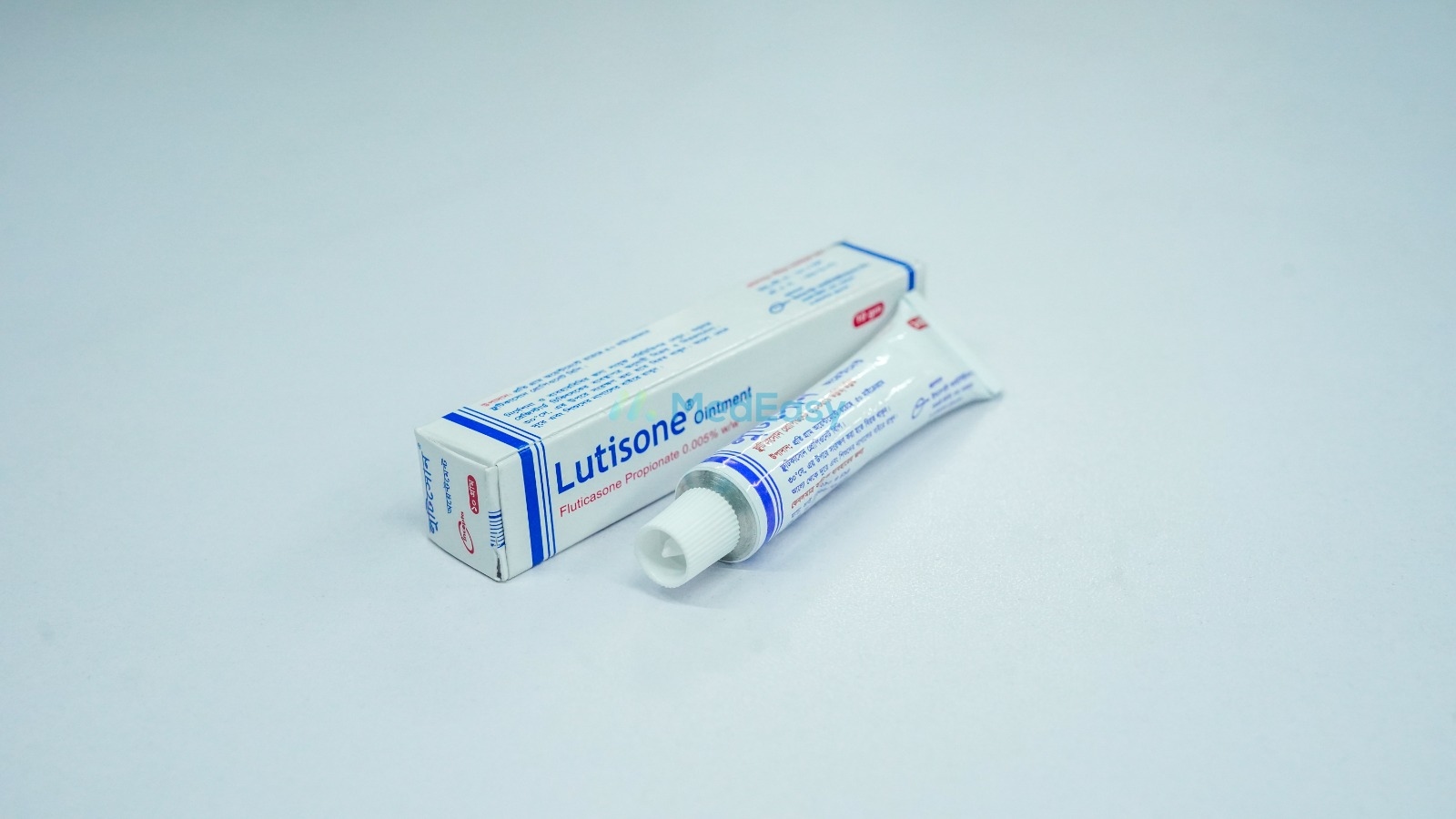
Lutisone0.005%
Incepta Pharmaceuticals Ltd.
৳46.00
Add to cart

Fluvate 0.005% Ointment is available on MedEasy for ৳45.17 per 10 gm tube, with home delivery anywhere in Bangladesh. It is manufactured by Opsonin Pharma Ltd. Its generic name is Fluticasone Propionate.

Fluvate is a synthetic corticosteroid used topically (intranasally, by oral inhalation, or by nebulisation) for its local anti-inflammatory effect. In Bangladesh it is marketed as a nasal spray, a pressurized/dry powder inhaler, and a nebuliser suspension.
Fluvate inhaler/nebuliser suspension is not indicated for the relief of acute bronchospasm or as a rescue treatment for status asthmaticus or other acute asthma episodes; a fast-acting bronchodilator ("reliever" inhaler) is required for that purpose.
Each formulation contains Fluticasone Propionate as the active ingredient:
Fluvate is a synthetic, halogenated trifluorinated glucocorticoid with potent local anti-inflammatory activity and very low systemic bioavailability when used as directed, because most of the swallowed portion undergoes extensive first-pass hepatic metabolism.
It is chemically related to other topical corticosteroids and is formulated for local delivery to the nasal mucosa (allergic rhinitis) or the lower airways (asthma), rather than for systemic use. It has no bronchodilator activity and does not provide immediate relief of acute breathing difficulty.
Fluvate belongs to the class of inhaled/intranasal corticosteroids (topical glucocorticoids), used as anti-inflammatory, anti-allergic agents for respiratory and nasal conditions.
Fluticasone Propionate is a corticosteroid with high topical (glucocorticoid receptor) anti-inflammatory potency and minimal mineralocorticoid activity. At the cellular level it suppresses the recruitment and activation of inflammatory cells (eosinophils, mast cells, lymphocytes, macrophages), reduces production of inflammatory mediators (cytokines, prostaglandins, leukotrienes), decreases mucosal oedema and mucus secretion, and stabilises capillary and lysosomal membranes.
In allergic rhinitis, this reduces nasal mucosal inflammation, congestion, and hyperreactivity. In asthma, it reduces airway inflammation, bronchial hyperresponsiveness, and the frequency and severity of exacerbations, but does not relax airway smooth muscle acutely and therefore has no role in relieving an acute attack.
Systemic absorption occurs mainly via pulmonary/nasal mucosal absorption and swallowed drug; the swallowed fraction undergoes extensive first-pass hepatic metabolism (via CYP3A4) to an inactive metabolite, giving very low oral bioavailability (<1%) and largely accounting for the drug's favourable safety profile at recommended doses.
| Population | Strength | Dose |
|---|---|---|
| Adults and children 12 years and older | 50 mcg/spray | 2 sprays per nostril once daily (200 mcg/day); may reduce to 1 spray per nostril once controlled (max 200 mcg/day) |
| Children 4-11 years | 50 mcg/spray | 1 spray per nostril once daily (100 mcg/day); do not exceed this dose |
| Chronic rhinosinusitis/nasal polyps (adults) | 93 mcg/spray | 1-2 sprays per nostril twice daily (max 744 mcg/day) |
Administration: Shake the bottle gently before use, prime before first use, tilt head slightly forward, insert nozzle into one nostril pointing away from the nasal septum, and spray while gently breathing in through the nose; avoid spraying directly onto the septum.
| Population | Dose range |
|---|---|
| Adults and children >16 years | 100-1000 mcg twice daily, titrated to the lowest dose that controls symptoms, according to asthma severity |
| Children 4-16 years | 50-200 mcg twice daily |
| Children 1-4 years (via spacer with face mask) | Up to 100 mcg twice daily, under specialist supervision |
Typically 0.5-2 mg twice daily via jet nebuliser, dose individualised by age and asthma severity, and stepped down to the lowest effective dose once control is achieved.
Administration: Shake the inhaler before use; use a spacer device where recommended, especially in children; hold the breath for about 10 seconds after inhalation; always rinse the mouth with water (and spit it out) after each inhaled dose to reduce the risk of oral thrush and hoarseness.
Dose should be titrated to the lowest amount that maintains effective control of symptoms; do not use for immediate relief of acute bronchospasm (see Indications and Precautions).
Nasal spray: Shake well, prime if new/unused for >7 days, insert nozzle just inside the nostril away from the septum, close the other nostril, and spray while inhaling gently.
Inhaler: Shake before use, breathe out fully, seal lips around the mouthpiece, inhale slowly and deeply while actuating, hold breath ~10 seconds, then rinse mouth with water and spit out afterward.
Nebuliser suspension: Shake gently, do not mix with other nebuliser solutions unless advised by a physician, and administer via a jet nebuliser with a face mask or mouthpiece as directed.
Strong CYP3A4 inhibitors: Co-administration of Fluvate with potent CYP3A4 inhibitors such as ritonavir or ketoconazole markedly increases systemic exposure to Fluvate and can cause clinically significant adrenal suppression/Cushing's syndrome; concurrent use is generally not recommended unless the benefit outweighs the risk of systemic corticosteroid side effects, and patients require monitoring.
Other systemic corticosteroids: Concurrent use with other corticosteroid-containing products (oral, systemic, or other topical steroids) increases the risk of additive systemic corticosteroid effects, including HPA-axis suppression; total corticosteroid burden should be assessed.
Other moderate CYP3A4 inhibitors (e.g. itraconazole, erythromycin) may also increase systemic Fluvate exposure to a lesser degree; caution is advised.
Fluticasone Propionate is contraindicated in patients with known hypersensitivity to fluticasone propionate or to any excipient in the formulation. Nasal and inhaled corticosteroid forms are not intended as sole therapy for status asthmaticus or other acute episodes of bronchospasm requiring intensive measures.
Hypersensitivity reactions (rash, angioedema, bronchospasm, anaphylaxis) are rare but can occur.
Pregnancy: There are no adequate and well-controlled studies establishing the safety of Fluvate in human pregnancy. As with other corticosteroids, it should be used during pregnancy only if the potential benefit to the mother clearly justifies the potential risk to the fetus; consult a physician before use. Uncontrolled asthma itself poses risks to mother and fetus, so treatment should not be stopped without medical advice.
Lactation: It is not known whether clinically relevant amounts of Fluvate are excreted in human breast milk. Caution is advised, and a physician should be consulted to weigh the benefits of treatment against any potential risk to the nursing infant.
Not for acute symptom relief: Fluvate inhaler/nebuliser suspension does not relieve acute bronchospasm and must not be used as a rescue medication; patients should have a fast-acting bronchodilator available for acute symptoms.
Local effects: Prolonged use may rarely cause nasal septal perforation (nasal form) or oral candidiasis (inhaled forms) - rinse the mouth after each inhaled dose. Avoid nasal spray use until nasal ulcers, surgery, or trauma have healed.
Systemic corticosteroid effects: High doses or prolonged use can suppress the hypothalamic-pituitary-adrenal (HPA) axis and cause Cushingoid features; monitor growth velocity regularly in children on long-term therapy. Use the lowest effective dose.
Infections: Use with caution in patients with active or quiescent tuberculosis, or untreated fungal, bacterial, viral, or parasitic infections; corticosteroids can mask or worsen infection and impair immune response. Patients should avoid exposure to chickenpox or measles if not previously immune, as these infections can be more serious in corticosteroid-treated patients.
COPD: An increased incidence of pneumonia has been reported in COPD patients using inhaled Fluvate-containing products; monitor for signs of respiratory infection.
Discontinuation: Do not stop abruptly after prolonged high-dose therapy, particularly in patients transferring from systemic (oral) corticosteroids, as this may unmask adrenal insufficiency or worsen underlying disease; withdraw gradually under medical supervision.
Acute overdose of Fluvate is unlikely to cause immediate danger because of its low systemic bioavailability, but chronic use of doses higher than recommended may lead to systemic corticosteroid effects such as HPA-axis suppression, Cushingoid features, and reduced growth in children. If excessive or accidental ingestion is suspected, or if signs of systemic corticosteroid excess develop, seek immediate medical attention or contact a poison control center; do not attempt home treatment. Management is generally supportive, with gradual dose reduction under medical supervision if chronic overuse has occurred.
Store at room temperature (below 30°C), away from light and moisture. Do not puncture, break, or burn the inhaler canister even when apparently empty, and avoid freezing. Keep out of reach of children.
Fluvate nasal spray is approved for use in children 4 years and older for allergic rhinitis, and the inhaler/nebuliser suspension is used from as young as 1 year of age under specialist supervision for asthma, using age-appropriate doses (see Dosage). Growth velocity should be monitored periodically in children receiving prolonged treatment. Safety and efficacy in younger children outside these approved ranges have not been established.
No specific dose adjustment is generally required in elderly patients; use the lowest effective dose.
No dosage adjustment is established for renal impairment. Since Fluvate undergoes extensive hepatic metabolism, patients with significant hepatic impairment may have increased systemic exposure and should be monitored for corticosteroid-related side effects.
Duration of treatment with Fluvate depends on the indication and clinical response: allergic rhinitis is usually treated for the duration of the allergen season or as long as symptoms warrant; asthma maintenance therapy is typically continued long-term, with the dose periodically reviewed and stepped down to the lowest effective level once control is achieved, under regular physician follow-up.
Fluticasone Propionate is classified as a topical/inhaled corticosteroid (glucocorticoid).
Fluticasone Propionate binds to glucocorticoid receptors in respiratory and nasal mucosal cells, altering gene transcription to reduce synthesis of pro-inflammatory mediators and increase synthesis of anti-inflammatory proteins, thereby suppressing local inflammation, mucosal oedema, and hyperreactivity without directly relaxing airway smooth muscle.
Fluvate nasal spray (50 mcg strength) is indicated for allergic rhinitis in children 4 years of age and older at a dose of 1 spray per nostril once daily (max 100 mcg/day); it should not be used in children under 4 years unless directed by a physician.
The inhaler and nebuliser suspension may be used for asthma maintenance from about 1 year of age under specialist supervision, with doses individualised by age and severity (see Dosage and Administration). Growth should be monitored regularly in children receiving long-term therapy, as intranasal and inhaled corticosteroids may cause a reduction in growth velocity. Safety and efficacy outside these established age ranges and doses have not been established.
Q: What is Fluvate 0.005% Ointment used for?
A: Fluvate 0.005% Ointment is a corticosteroid used as a nasal spray for allergic rhinitis (and nasal polyps) and as an inhaler or nebuliser suspension for the long-term maintenance treatment of asthma. It reduces inflammation but is not a fast-acting reliever medicine.
Q: Can I use the Fluvate 0.005% Ointment inhaler for a sudden asthma attack?
A: No. Fluvate 0.005% Ointment inhaler/nebuliser suspension does not relieve acute bronchospasm or a sudden asthma attack. It is a preventer medicine that must be used regularly; for sudden symptoms, a fast-acting reliever/rescue inhaler is needed, and you should seek medical attention if symptoms do not improve.
Q: Why do I need to rinse my mouth after using the Fluvate 0.005% Ointment inhaler?
A: Rinsing the mouth with water and spitting it out after each dose of the Fluvate 0.005% Ointment inhaler or nebuliser suspension helps prevent oral thrush (candidiasis) and hoarseness, which are common local side effects of inhaled corticosteroids.
Q: Is it safe to use Fluvate 0.005% Ointment nasal spray during pregnancy or while breastfeeding?
A: Fluvate 0.005% Ointment should be used during pregnancy or lactation only if a physician determines that the potential benefit justifies any potential risk, since safety has not been definitively established in humans; do not start or stop use in pregnancy without consulting your physician, as uncontrolled asthma or rhinitis can also carry risks.
Q: Can children use Fluvate 0.005% Ointment?
A: Yes, under medical supervision. The 50 mcg nasal spray is approved for allergic rhinitis in children 4 years and older, and the inhaler/nebuliser suspension can be used for asthma in younger children at doses set by a physician. Growth should be monitored periodically during long-term use.
Q: What if I accidentally use more Fluvate 0.005% Ointment than prescribed?
A: A single accidental extra dose is unlikely to cause harm, but if a large overdose is taken or symptoms of excess corticosteroid effect appear, contact a doctor, hospital emergency department, or poison control center immediately for advice; do not attempt to treat an overdose at home.
Disclaimer
The information provided is accurate to the best of our knowledge, but it does not replace professional medical advice. We cannot guarantee its completeness or accuracy, and the absence of specific information about a drug should not be taken as an endorsement. We are not responsible for any consequences arising from this information, so please consult a healthcare professional for any concerns or questions.
