
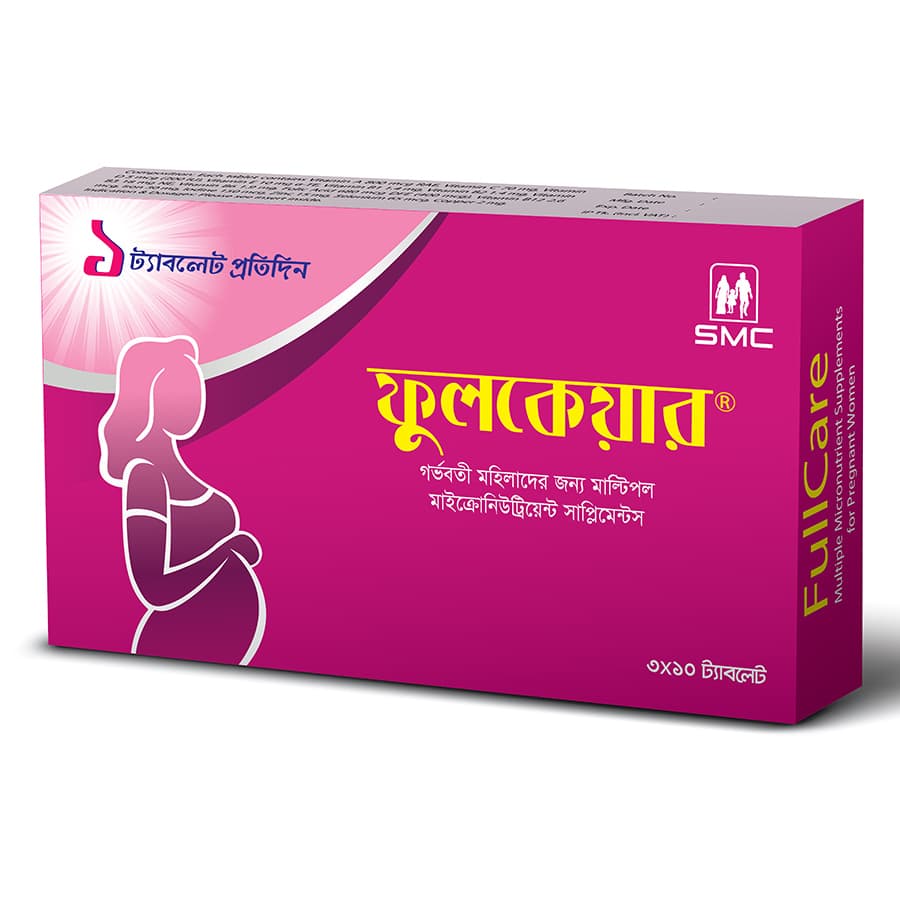

Medicine overview
Indications of FullCare
FullCare refers to combination products containing a broad panel of essential vitamins and minerals, used for the prevention and treatment of micronutrient deficiencies and for general nutritional support.
Established / Guideline-supported uses
- Prevention of micronutrient deficiency: FullCare are used to prevent deficiencies of vitamins and minerals in individuals with inadequate dietary intake, increased requirements, or malabsorption.
- Antenatal nutritional support: In several WHO-endorsed antenatal care programs, FullCare (containing iron and folic acid along with other micronutrients) are recommended as part of routine antenatal care in specific program contexts, as an alternative to iron-folic acid supplementation alone.
- Nutritional support in children: Used in public health programs to reduce the burden of micronutrient deficiencies (e.g., iron, vitamin A, zinc deficiency) in children at risk of inadequate dietary intake.
Adjunct / supportive uses
- General nutritional support during convalescence, in the elderly with reduced dietary intake, and in individuals on restrictive diets.
- Adjunct support in malnutrition or during recovery from prolonged illness, alongside a balanced diet and treatment of the underlying condition.
FullCare are dietary supplements, not a substitute for a balanced diet, and are not intended to treat a specific disease unless that disease is a diagnosed micronutrient deficiency.
Composition
Multiple Micronutrient Supplements products typically combine several of the following vitamins and minerals, though exact composition and strengths vary by brand and intended population (e.g., adult, pediatric, or antenatal formulations):
- Vitamins: Vitamin A, Vitamin D, Vitamin E, Vitamin C, Thiamine (B1), Riboflavin (B2), Niacin (B3), Pyridoxine (B6), Vitamin B12, Folic acid
- Minerals: Iron, Zinc, Copper, Selenium, Iodine, and sometimes Calcium and Magnesium
Always check the label of the specific Multiple Micronutrient Supplements product for its exact composition and strength per dose, as formulations differ between manufacturers.
Description
FullCare is a combination dietary supplement providing multiple essential vitamins and minerals (micronutrients) in a single dosage form (tablet, capsule, syrup, or powder sachet). It is designed to prevent or correct deficiencies that arise from inadequate dietary intake, increased physiological requirements (e.g., pregnancy, growth), or certain medical conditions.
Unlike a single-nutrient supplement, FullCare provide a broad panel of micronutrients formulated to work together, reflecting the recognition that dietary deficiencies rarely occur in isolation. FullCare are widely used both in routine self-care and in structured public health supplementation programs.
Therapeutic Class
Vitamin and mineral combination (multivitamin-multimineral); FullCare are classified as a dietary/nutritional supplement rather than a therapeutic drug for a specific disease.
Pharmacology
Multiple Micronutrient Supplements act by replenishing the body's stores of vitamins and minerals that serve as essential cofactors, structural components, and antioxidants in normal physiological processes.
- Vitamin A supports vision, immune function, and epithelial integrity.
- B-complex vitamins (B1, B2, B3, B6, B12, folic acid) act as coenzymes in energy metabolism, red blood cell formation, and neurological function.
- Vitamin C and Vitamin E function as antioxidants and support collagen synthesis and immune defense.
- Vitamin D regulates calcium and phosphate homeostasis and bone mineralization.
- Iron is essential for hemoglobin synthesis and oxygen transport.
- Zinc, copper, selenium, and iodine support immune function, enzymatic reactions, antioxidant defense, and thyroid hormone synthesis, respectively.
When intake and stores are adequate, correcting a deficiency with Multiple Micronutrient Supplements restores normal physiological function; when no deficiency exists, supplementation mainly maintains adequate micronutrient status.
Dosage & Administration of FullCare
Dosage of FullCare depends on the specific formulation, the indication, and the age/physiological status of the patient. Always follow the product label or a physician's instructions, as strengths vary widely between brands.
| Population / Indication | Typical Dosing |
|---|---|
| Adults (general nutritional support) | One tablet/capsule of FullCare daily, usually with or after a meal, or as directed on the product label. |
| Pregnant and lactating women (antenatal supplementation) | One daily dose of an antenatal FullCare formulation, generally started early in pregnancy and continued through pregnancy per physician or national antenatal care program guidance. |
| Children | Age-appropriate liquid, chewable, or powder formulations of FullCare, dosed per the product label or pediatrician's advice; not all adult formulations are suitable for children. |
| Elderly / malnourished individuals | One daily dose of an adult formulation of FullCare, adjusted by a physician based on nutritional status and any organ impairment. |
Renal or hepatic impairment: Certain minerals (e.g., iron, selenium) and fat-soluble vitamins may accumulate in patients with significant renal or hepatic impairment; a physician should review the specific formulation and adjust the dose or choose a formulation with lower mineral content if needed.
Administration of FullCare
FullCare tablets/capsules should generally be swallowed whole with a glass of water, preferably with or immediately after a meal to improve tolerability and absorption of fat-soluble vitamins. Chewable or liquid formulations should be measured and administered using the device/cup provided with the product. Do not crush or chew formulations designed to be swallowed whole unless the label states otherwise.
Interaction of FullCare
FullCare can interact with certain medicines because of their vitamin and mineral content. Clinically significant interactions include:
- Levothyroxine: Iron and calcium in FullCare can reduce absorption of levothyroxine; separate administration by at least 4 hours.
- Tetracyclines and fluoroquinolone antibiotics: Iron, zinc, and calcium in FullCare can chelate these antibiotics and reduce their absorption; separate dosing by at least 2-3 hours.
- Bisphosphonates: Mineral content of FullCare can impair absorption of oral bisphosphonates; these should not be taken at the same time.
- Penicillamine: Zinc and copper in FullCare can reduce the efficacy of penicillamine; separate dosing.
- Other vitamin/mineral supplements: Concomitant use of additional single-nutrient supplements (e.g., separate iron or vitamin A products) with FullCare increases the risk of nutrient excess/toxicity and should be avoided unless directed by a physician.
Contraindications
Multiple Micronutrient Supplements are contraindicated in:
- Known hypersensitivity to any active ingredient or excipient in the specific Multiple Micronutrient Supplements formulation.
- Iron overload conditions (e.g., hemochromatosis, hemosiderosis) when the formulation of Multiple Micronutrient Supplements contains iron.
- Wilson's disease or other conditions of copper accumulation, when the formulation of Multiple Micronutrient Supplements contains copper.
Side Effects of FullCare
FullCare are generally well tolerated when taken at recommended doses. Reported side effects include:
- Mild gastrointestinal discomfort, nausea, or constipation, particularly with iron-containing formulations.
- Dark or black-colored stool with iron-containing FullCare (a harmless, expected effect).
- Occasional heartburn or mild stomach upset if taken on an empty stomach.
- Rare hypersensitivity reactions (skin rash, itching) to a specific vitamin, mineral, or excipient.
Symptoms of chronic over-intake (see Precautions and Overdose) are distinct from these ordinary tolerability side effects.
Pregnancy & Lactation
Multiple micronutrient supplementation, including FullCare, is specifically recommended within some national and WHO-endorsed antenatal care guidance as an option during pregnancy, given the increased nutrient requirements of pregnancy. However, the specific formulation, timing, and duration should be used per physician or antenatal care program guidance, as not every FullCare product is designed or dosed for use in pregnancy.
During breastfeeding, FullCare formulated for lactating women are generally considered appropriate to help meet increased nutrient needs, but the product and dose should still be confirmed with a physician, since excessive intake of certain vitamins (e.g., vitamin A) can be undesirable during lactation.
Use FullCare in pregnancy and lactation only as advised by a physician or through a recognized antenatal care program, and avoid exceeding the recommended dose.
Precautions & Warnings
Do not exceed the recommended dose of FullCare. Chronic intake above recommended levels can lead to toxicity, particularly with fat-soluble vitamins (A, D, E) and with iron, which do not have the same margin of safety as water-soluble vitamins.
- Consult a physician before combining FullCare with other vitamin/mineral supplements, fortified foods, or prescription medicines, to avoid cumulative nutrient excess.
- Keep out of reach of children: Iron-containing FullCare products are a leading cause of accidental poisoning in young children; accidental ingestion of a large quantity can be life-threatening. Store securely.
- Use with caution in patients with renal impairment, as certain minerals may accumulate.
- Patients with a known metabolic disorder affecting a specific vitamin or mineral (e.g., iron-overload disorders) should use only a formulation of FullCare specifically appropriate for their condition, under medical supervision.
Overdose Effects of FullCare
Overdose of FullCare is most concerning when the product contains iron, as acute iron overdose (especially in children) can cause vomiting, abdominal pain, gastrointestinal bleeding, and in severe cases, shock, metabolic acidosis, and liver failure. Chronic excessive intake of fat-soluble vitamins (A, D, E) can cause toxicity with symptoms such as headache, blurred vision, bone pain, or hypercalcemia.
If overdose of FullCare is suspected, especially in a child, seek immediate medical attention or contact a poison control center/emergency services right away. Do not attempt specific home treatment; take the product packaging with you to the hospital.
Storage Conditions
Store at room temperature (below 30°C), away from light and moisture. Keep out of reach of children.
Use In Special Populations
Pregnant and lactating women: Use an antenatal/lactation-specific formulation of FullCare per physician or antenatal care program guidance (see Pregnancy and Lactation).
Children: Use only age-appropriate FullCare formulations (liquid, chewable, or powder) at doses recommended for the child's age/weight; not all products are suitable for young children (see Pediatric Uses).
Elderly: Generally well tolerated; a physician may adjust the formulation if renal function is reduced or if the patient takes multiple other medicines, to reduce interaction risk.
Renal or hepatic impairment: Certain minerals and fat-soluble vitamins can accumulate; a physician should select an appropriate formulation and dose (see Dosage and Administration).
Iron-overload or copper-accumulation disorders: Contraindicated for formulations of FullCare containing iron or copper respectively (see Contraindications).
Duration Of Treatment
Duration of FullCare use depends on the purpose: short-term use (weeks to a few months) may be appropriate to correct a confirmed dietary deficiency, while longer-term daily use is common during the full course of pregnancy and lactation, or throughout a defined public health supplementation program for children. Long-term use beyond the intended program or physician's advice should be reassessed periodically to avoid unnecessary chronic excess intake.
Drug Classes
Dietary/Nutritional Supplement; Vitamin and Mineral Combination Product
Mode Of Action
Multiple Micronutrient Supplements do not act through a single pharmacological mechanism like a conventional drug. Instead, each component vitamin and mineral in Multiple Micronutrient Supplements functions physiologically as an essential nutrient: as a coenzyme or cofactor in metabolic enzyme reactions (e.g., B-vitamins), as a component of oxygen-carrying proteins (iron in hemoglobin), as a regulator of gene expression and mineral homeostasis (vitamin D), or as part of antioxidant defense systems (vitamins C and E, selenium). Supplementation with Multiple Micronutrient Supplements restores adequate tissue and serum levels of these nutrients when dietary intake or absorption is insufficient, thereby correcting or preventing the physiological consequences of deficiency.
Pediatric Uses
FullCare formulated for children (liquid, drops, chewable tablets, or dispersible powders) are used to prevent or treat micronutrient deficiencies in infants and children, particularly in settings with inadequate dietary diversity, in accordance with pediatric nutrition guidance (e.g., WHO/UNICEF and national child health programs).
Dosing must be age- and weight-appropriate, following the specific product label or a pediatrician's instructions; safety and appropriate dosing of adult-strength FullCare formulations in young children have not been established, and adult formulations should not be substituted for pediatric ones. Iron-containing pediatric FullCare products must be stored strictly out of children's reach because of the serious risk of accidental overdose.
Frequently Asked Questions
Q: What are FullCare Tablet used for?
A: FullCare Tablet are used to prevent and treat deficiencies of essential vitamins and minerals, and to provide general nutritional support in people with inadequate dietary intake, including pregnant women, children, and the elderly.
Q: Can I take FullCare Tablet during pregnancy?
A: Multiple micronutrient supplementation is specifically recommended in some national and WHO-endorsed antenatal care guidance during pregnancy, but you should use FullCare Tablet only in the formulation and dose recommended by your physician or antenatal care program, as not all products are designed for pregnancy.
Q: Are there any side effects of FullCare Tablet?
A: FullCare Tablet are generally well tolerated. Mild nausea, constipation, or dark stool (with iron-containing formulations) can occur. Rare allergic reactions are possible. Contact your physician if side effects are severe or persistent.
Q: Can children take FullCare Tablet?
A: Yes, but only age-appropriate pediatric formulations (liquid, chewable, or powder) at doses recommended for the child's age and weight; adult formulations of FullCare Tablet are not appropriate substitutes for children, and safety of adult-strength products in young children has not been established.
Q: What happens if I take too much FullCare Tablet?
A: Taking more than the recommended dose of FullCare Tablet, especially iron-containing formulations, can be dangerous, particularly in children, and can cause vomiting, abdominal pain, and in severe cases, serious internal bleeding or organ damage. Seek immediate medical attention or contact a poison control center if overdose is suspected.
Q: Can I take FullCare Tablet together with other vitamin supplements or medicines?
A: Consult a physician before combining FullCare Tablet with other vitamin/mineral supplements or with medicines such as levothyroxine, tetracyclines, fluoroquinolones, bisphosphonates, or penicillamine, since FullCare Tablet can reduce absorption of these medicines or cause nutrient excess if combined with other supplements.
Disclaimer
The information provided is accurate to the best of our knowledge, but it does not replace professional medical advice. We cannot guarantee its completeness or accuracy, and the absence of specific information about a drug should not be taken as an endorsement. We are not responsible for any consequences arising from this information, so please consult a healthcare professional for any concerns or questions.
