10% Off
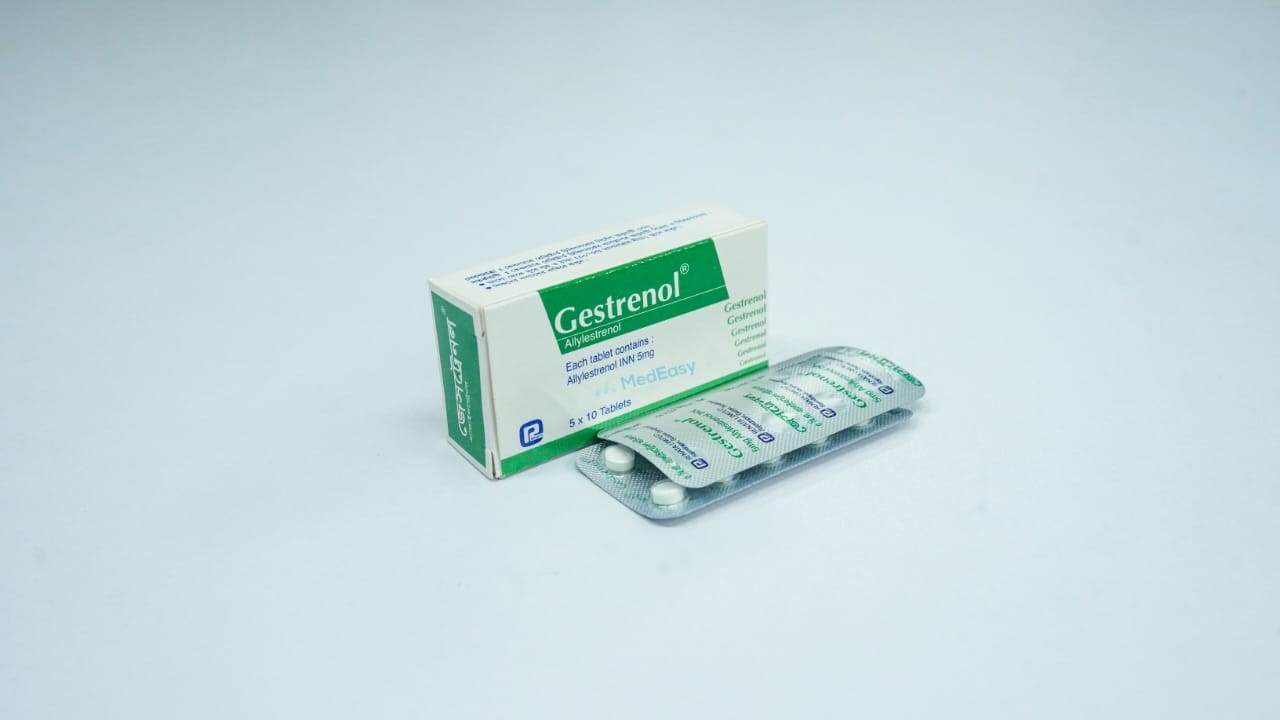
Gestrenol5 mg
Renata Limited
৳81.00
Add to cart
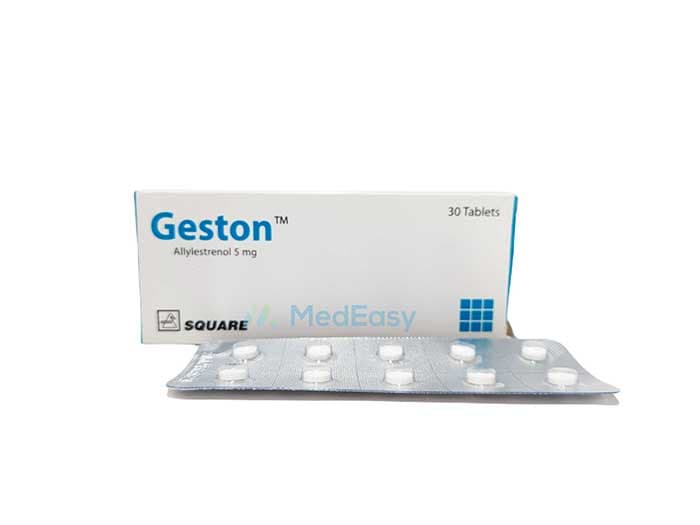

Geston is a synthetic oral progestogen used, under medical supervision, for progestogenic support in pregnancy. Its use should always be guided and monitored by a physician.
The strength of evidence supporting Geston for these pregnancy indications varies across regulatory bodies and clinical guidelines, and some systematic reviews have found limited or inconsistent benefit in unselected patients with recurrent miscarriage. Geston remains a labeled and commonly prescribed option in several markets, including Bangladesh, but should be used only after a physician has assessed the likelihood of progesterone deficiency and confirmed there is no other explanation for pregnancy loss.
Each tablet typically contains Allylestrenol as the active ingredient, most commonly available as 5 mg oral tablets. Strength and available pack sizes may vary by manufacturer and market; refer to the specific product label for exact composition.
Geston is a synthetic progestogen (a derivative of 19-nortestosterone) taken by mouth. It is chemically distinct from many other progestins in that it is largely devoid of estrogenic, androgenic, and significant anabolic activity, which makes it suitable for use during pregnancy when progestogenic support is required.
Geston is used specifically for progesterone-deficiency-related pregnancy complications, namely threatened and habitual (recurrent) miscarriage, and is not used as a general-purpose hormonal or contraceptive agent.
Geston belongs to the therapeutic class of progestogens (synthetic progesterone derivatives), specifically an orally active progesterone receptor agonist used for progestogenic support in pregnancy.
Allylestrenol acts as an agonist at the progesterone receptor. By binding to and activating progesterone receptors in the endometrium and myometrium, it supports the secretory transformation of the endometrium, helps maintain uterine quiescence, and reduces uterine contractility, thereby supporting continuation of pregnancy when progesterone deficiency contributes to the risk of miscarriage.
Unlike many other 19-nortestosterone-derived progestins, Allylestrenol has minimal estrogenic, androgenic, or anabolic activity at therapeutic doses, and does not appear to have significant glucocorticoid or antimineralocorticoid activity.
| Indication | Typical Adult Dose |
|---|---|
| Threatened miscarriage | 5 mg two to three times daily (15-30 mg/day), continued until symptoms resolve, then often tapered/continued through the period of risk as advised by the physician. |
| Habitual (recurrent) miscarriage | 5 mg two to three times daily (15-30 mg/day), typically started as early as possible once pregnancy is confirmed and continued through the period of previous pregnancy loss (often up to around 20-28 weeks), as directed by the physician. |
Exact dose and duration must be individualized by the treating physician based on clinical response and gestational age.
Geston tablets are taken orally, with or without food, at evenly spaced intervals as prescribed. Tablets should be swallowed whole with water. Do not stop or alter the dose without consulting the prescribing physician, since abrupt discontinuation during an ongoing pregnancy-support course is not recommended without medical advice.
Geston is administered orally. Tablets should be swallowed whole with a glass of water, at regular intervals as prescribed, with or without food. Consistency in timing helps maintain steady drug levels. Do not double the dose if a dose is missed; take it as soon as remembered unless it is close to the next scheduled dose.
Geston is metabolized in the liver via pathways involving the CYP3A4 enzyme, so drugs that induce or inhibit this enzyme may alter its blood levels and effectiveness.
Beyond these CYP3A4-mediated interactions, no other extensively documented, clinically significant systemic drug interactions are established for Geston, reflecting its limited off-target hormonal activity. Always inform the physician of all medicines, supplements, and herbal products being used.
Allylestrenol is contraindicated in patients with:
Geston is generally well tolerated at labeled doses. Reported side effects are usually mild and may include:
Serious hormone-related side effects such as androgenic or estrogenic effects are not typically seen with Geston due to its favorable receptor selectivity. Report any severe or persistent symptoms to the prescribing physician promptly.
Pregnancy: Geston is specifically indicated, under medical supervision, for progestogenic support during pregnancy in the setting of threatened or habitual miscarriage due to suspected progesterone deficiency. It should be used only after evaluation by a physician confirms this is an appropriate indication, and treatment should be monitored throughout the pregnancy. This differs from most other medicines, where pregnancy use is generally discouraged — here, physician-guided use during pregnancy is the primary purpose of the drug. Geston is not intended for indications unrelated to pregnancy support.
Lactation: Data on Geston use during breastfeeding are limited. Since its indication is specific to pregnancy support, it is not typically continued into the lactation period. If use during breastfeeding is being considered for any reason, a physician should be consulted to weigh potential benefits and risks to the infant.
Geston should be used only under medical supervision, with regular monitoring during pregnancy, since it is specifically indicated for a pregnancy-related condition.
Specific data on Geston overdose are limited. In the event of a suspected overdose, exaggerated progestogenic effects such as nausea, vomiting, or breast tenderness may occur. There is no specific antidote.
If an overdose of Geston is suspected, seek immediate medical attention or contact a poison control center/emergency services right away. Do not attempt to manage a suspected overdose at home without professional guidance.
Store at room temperature (below 30°C), away from light and moisture. Keep out of reach of children.
Geston is specifically used in pregnancy for threatened or habitual miscarriage under physician supervision, as described in Indications and Pregnancy and Lactation.
Not typically used during lactation, as its indication is pregnancy-specific; see Pregnancy and Lactation.
Geston is not indicated for use in children; safety and efficacy in the pediatric population have not been established, and it has no approved pediatric indication.
Not applicable, as Geston is used exclusively in women during pregnancy.
Geston is contraindicated in severe hepatic impairment (see Contraindications); use with caution and physician guidance in milder hepatic dysfunction.
No well-established dose adjustment is required for renal impairment, but use should still be under physician supervision.
Duration of Geston treatment is individualized by the treating physician. For threatened miscarriage, it is generally continued until symptoms resolve. For habitual (recurrent) miscarriage, it is often continued from early pregnancy through the gestational period during which previous losses occurred (commonly up to approximately 20-28 weeks), as determined by the physician based on clinical history and response.
Allylestrenol is classified as a synthetic progestogen (19-nortestosterone-derived progesterone receptor agonist) used for progestogenic support in pregnancy.
Allylestrenol works by binding to and activating progesterone receptors in the uterus, supporting endometrial and myometrial changes that favor maintenance of pregnancy and reducing uterine contractility, without significant estrogenic, androgenic, or anabolic activity.
Geston has no approved use in children. It is exclusively indicated for adult women during pregnancy for progestogenic support, and safety and efficacy in pediatric patients have not been established.
Q: Is Geston 5 mg Tablet safe to take during pregnancy?
A: Geston 5 mg Tablet is specifically indicated, under a physician's supervision, for use during pregnancy in cases of threatened or habitual miscarriage related to progesterone deficiency. It should only be taken after a doctor has evaluated the pregnancy and confirmed it is appropriate, with regular monitoring throughout treatment.
Q: What is Geston 5 mg Tablet used for?
A: Geston 5 mg Tablet is used to support pregnancy in women with threatened miscarriage (bleeding or symptoms suggesting risk of pregnancy loss) and to help prevent habitual (recurrent) miscarriage caused by progesterone deficiency, always under medical supervision.
Q: How should I take Geston 5 mg Tablet?
A: Geston 5 mg Tablet is usually taken by mouth, 5 mg two to three times a day, as prescribed by your physician, with or without food. Do not change the dose or stop treatment without consulting your doctor.
Q: What are the side effects of Geston 5 mg Tablet?
A: Geston 5 mg Tablet is generally well tolerated. Some patients may experience mild nausea, bloating, breast tenderness, or mild fluid retention. Serious side effects are uncommon. Contact your physician if you experience severe or persistent symptoms.
Q: Who should not take Geston 5 mg Tablet?
A: Geston 5 mg Tablet should not be used by people with known hypersensitivity to it, those with hormone-dependent cancers such as breast cancer, those with active blood clotting disorders, or those with severe liver disease. Discuss your full medical history with your physician before starting treatment.
Q: What should I do if I miss a dose or take too much Geston 5 mg Tablet?
A: If you miss a dose of Geston 5 mg Tablet, take it as soon as you remember unless it is nearly time for the next dose — do not double up. If you suspect you have taken too much Geston 5 mg Tablet, seek immediate medical attention or contact a poison control center right away.
Disclaimer
The information provided is accurate to the best of our knowledge, but it does not replace professional medical advice. We cannot guarantee its completeness or accuracy, and the absence of specific information about a drug should not be taken as an endorsement. We are not responsible for any consequences arising from this information, so please consult a healthcare professional for any concerns or questions.