
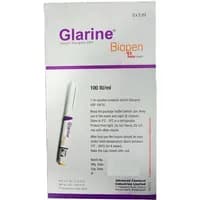

Medicine overview
Indications of Glarine
Glarine is a long-acting (basal) insulin analog indicated to improve glycemic control in adults and pediatric patients with the following:
- Type 1 diabetes mellitus (established, FDA-approved use) - as part of a regimen that includes a rapid- or short-acting insulin for mealtime coverage.
- Type 2 diabetes mellitus (established, FDA-approved use) - either alone or in combination with oral antidiabetic agents or other insulins, when basal insulin therapy is required.
Glarine is not indicated for the treatment of diabetic ketoacidosis; an intravenous, rapid-acting insulin is preferred in that setting.
Composition
Each mL of Insulin Glargine USP injection contains insulin glargine 100 units (or, in higher-strength formulations, 300 units), a recombinant human insulin analog produced by DNA technology, along with pharmaceutical excipients (zinc chloride, metacresol, glycerol, polysorbate 20 where applicable, hydrochloric acid and/or sodium hydroxide for pH adjustment, and water for injection) to form a clear, colorless, sterile solution for subcutaneous injection.
Description
Glarine is a long-acting human insulin analog manufactured using recombinant DNA technology in a non-pathogenic strain of Escherichia coli. It differs from human insulin by substitution of glycine for asparagine at position A21 and by addition of two arginine residues to the C-terminus of the B-chain. These modifications shift the isoelectric point, making the molecule fully soluble at the acidic pH of the injection solution (pH ~4) but forming microprecipitates upon subcutaneous injection into the neutral pH of tissue. This produces a slow, prolonged, relatively steady release of insulin from the injection site, giving a flat, peakless action profile lasting up to 24 hours.
Therapeutic Class
Glarine belongs to the class of long-acting (basal) insulin analogs, used in the pharmacological management of diabetes mellitus.
Pharmacology
Mechanism of Action
Insulin Glargine USP binds to insulin receptors on target tissues (primarily skeletal muscle and adipose tissue), stimulating peripheral glucose uptake, and inhibits hepatic glucose production. It also inhibits lipolysis and proteolysis and enhances protein synthesis.
Pharmacokinetics
Due to its microprecipitate-forming property at the injection site, Insulin Glargine USP is absorbed slowly and consistently, producing a relatively constant concentration/time profile over 24 hours with no pronounced peak, distinguishing it from intermediate- or short-acting insulins.
Dosage & Administration of Glarine
General Principles
The dose of Glarine must be individualized based on the patient's metabolic needs, blood glucose monitoring results, and glycemic control goals, under physician supervision.
| Indication | Dosing Guidance |
|---|---|
| Type 1 diabetes mellitus (adults and children) | Given once daily, at the same time each day, as part of a basal-bolus regimen with a mealtime rapid/short-acting insulin. Approximately one-third to one-half of the total daily insulin requirement is often provided as basal insulin; dose is titrated individually. |
| Type 2 diabetes mellitus (insulin-naive) | A common starting dose is approximately 0.2 units/kg or 10 units subcutaneously once daily, then titrated based on blood glucose response. |
| Switching from another basal insulin | Dose conversion and titration should be individualized and supervised by a physician; more frequent glucose monitoring is recommended during transition. |
Injected subcutaneously into the abdomen, thigh, or upper arm, with rotation of injection sites. Glarine must not be administered intravenously or via an insulin infusion pump, and must not be diluted or mixed with any other insulin or solution, as this alters its time-action profile and may cause unpredictable precipitation.
Administration of Glarine
Administer by subcutaneous injection only, once daily at the same time each day, rotating injection sites within the abdomen, thigh, or upper arm. Do not administer intravenously, intramuscularly, or via an insulin pump. Do not mix or dilute with other insulins or solutions.
Interaction of Glarine
Drugs That May Increase the Blood-Glucose-Lowering Effect (increased hypoglycemia risk)
Oral antidiabetic agents, ACE inhibitors, angiotensin receptor blockers, disopyramide, fibrates, fluoxetine, monoamine oxidase inhibitors, pentoxifylline, salicylates, and somatostatin analogs (e.g. octreotide) may enhance the glucose-lowering effect of Glarine.
Drugs That May Decrease the Blood-Glucose-Lowering Effect
Corticosteroids, niacin, danazol, diuretics, sympathomimetic agents, isoniazid, protease inhibitors, atypical antipsychotics, and thyroid hormone may reduce the glucose-lowering effect, increasing hyperglycemia risk when co-administered with Glarine.
Drugs That May Mask Hypoglycemia Symptoms
Beta-blockers, clonidine, and reserpine may blunt the warning signs of hypoglycemia, making early recognition difficult when combined with Glarine. Alcohol may either potentiate or reduce the glucose-lowering effect unpredictably.
Contraindications
Insulin Glargine USP is contraindicated in:
- Patients with known hypersensitivity to insulin glargine or any of its excipients.
- During episodes of hypoglycemia.
Side Effects of Glarine
The most common and clinically significant adverse effect of Glarine is hypoglycemia, which may be serious and, in severe cases, life-threatening. Other reported adverse effects include:
- Injection site reactions (redness, swelling, itching)
- Lipodystrophy (lipohypertrophy or lipoatrophy) at repeated injection sites
- Weight gain
- Peripheral edema, particularly when combined with thiazolidinediones
- Allergic reactions, including rare cases of generalized hypersensitivity (rash, angioedema, bronchospasm, hypotension, anaphylaxis)
- Pruritus
Pregnancy & Lactation
Insulin, including Glarine, does not cross the placental barrier in clinically significant amounts. Poor glycemic control during pregnancy increases the risk of maternal and fetal complications, and insulin therapy is a preferred option for achieving glycemic control during pregnancy when needed; however, Glarine should be used only if clearly needed and under close physician supervision, as insulin requirements may change substantially during pregnancy and the postpartum period.
Limited data are available on the presence of insulin glargine in human milk; because insulin is a normal constituent of human milk, use of Glarine during breastfeeding is generally considered acceptable, but should be undertaken with medical guidance and monitoring of the infant's and mother's glucose levels.
Precautions & Warnings
Use Glarine with the following precautions:
- Hypoglycemia is the most common and most serious risk; dose, meal timing, and activity must be carefully balanced, and patients should be educated on recognition and management of low blood sugar.
- Injection site lipodystrophy may occur with repeated injection at the same site; rotate injection sites regularly.
- Requires careful, individualized dose titration and regular blood glucose monitoring, especially when changing dose, insulin regimen, diet, or activity level.
- Hypokalemia risk - insulin therapy, including Glarine, can cause a shift of potassium into cells, resulting in hypokalemia; monitor potassium levels in at-risk patients.
- Glarine is not intended for and must not be used to treat diabetic ketoacidosis; intravenous short-acting insulin is required in that setting.
- Do not dilute or mix Glarine with any other insulin or solution; this will alter its time-action profile and effectiveness.
- Do not administer via an insulin infusion pump.
- Use caution in patients with renal or hepatic impairment, as insulin requirements may be reduced.
- Avoid abrupt changes in insulin product without medical supervision, as this can affect glycemic control.
Overdose Effects of Glarine
Overdose of Glarine relative to food intake and energy expenditure can result in severe, and sometimes prolonged and life-threatening, hypoglycemia. Symptoms may include sweating, tremor, palpitations, confusion, seizures, and loss of consciousness. Mild episodes are usually managed with oral fast-acting carbohydrates; severe episodes with altered consciousness require immediate medical attention, and emergency services or a poison control center should be contacted promptly. Prolonged monitoring may be needed given the extended action of this long-acting insulin.
Storage Conditions
Unopened vials, cartridges, or pens should be stored refrigerated (2°C to 8°C) and protected from light; do not freeze, and discard if frozen. Once in use, Glarine may generally be kept at room temperature (below 30°C), away from direct heat and light, for the period specified by the manufacturer (commonly up to 28 days), after which any remaining product should be discarded. Keep out of reach of children.
Use In Special Populations
Renal Impairment
Insulin requirements may be reduced in patients with renal impairment due to decreased insulin clearance; monitor glucose closely and adjust the dose of Glarine accordingly.
Hepatic Impairment
Insulin requirements may be reduced in patients with hepatic impairment due to reduced capacity for gluconeogenesis and insulin metabolism; monitor closely.
Elderly
Initiate conservatively with careful titration, as elderly patients may have progressive renal or hepatic decline and may have reduced ability to recognize hypoglycemia.
Pediatric
See Pediatric Uses.
Duration Of Treatment
Glarine is generally used long-term/lifelong as part of ongoing diabetes management, for as long as basal insulin therapy is required to maintain glycemic control, as determined by the treating physician.
Drug Classes
Long-acting (basal) insulin analog; antidiabetic agent.
Mode Of Action
Insulin Glargine USP binds insulin receptors on skeletal muscle and adipose tissue, promoting cellular glucose uptake, while suppressing hepatic glucose output, lipolysis, and proteolysis, and enhancing protein synthesis. Its structural modification (glycine substitution at A21 and two additional C-terminal arginines on the B-chain) causes it to remain soluble at the acidic pH of the formulation but to form microprecipitates upon subcutaneous injection at physiological pH, from which small amounts are continuously and slowly released, producing a relatively flat, peakless glucose-lowering effect over approximately 24 hours.
Pediatric Uses
Glarine has established safety and efficacy for the treatment of type 1 diabetes mellitus in pediatric patients within the age range specified by the product labeling (commonly 6 years of age and older for certain formulations); use in younger children should only be under specialist pediatric endocrinology supervision. Safety and efficacy for type 2 diabetes mellitus in pediatric patients have not been established for all formulations; consult current product labeling and a pediatric specialist before use in this population.
Frequently Asked Questions
Q: What is Glarine 100 IU/ml Biopen used for?
A: Glarine 100 IU/ml Biopen is a long-acting basal insulin used to control blood sugar levels in adults and children with type 1 diabetes mellitus, and in adults with type 2 diabetes mellitus, as part of an overall diabetes management plan.
Q: How often should Glarine 100 IU/ml Biopen be injected?
A: Glarine 100 IU/ml Biopen is typically injected once daily, at the same time each day, under the skin (subcutaneously) into the abdomen, thigh, or upper arm, with rotation of injection sites to reduce the risk of skin changes.
Q: What is the biggest risk with Glarine 100 IU/ml Biopen?
A: The most common and serious risk is hypoglycemia (low blood sugar), which can cause sweating, shakiness, confusion, and, if severe, loss of consciousness or seizures; patients should always carry a fast-acting source of sugar and know how to recognize and treat low blood sugar.
Q: Can Glarine 100 IU/ml Biopen be mixed with other insulins?
A: No. Glarine 100 IU/ml Biopen should never be diluted or mixed with any other insulin or solution in the same syringe, as this changes its slow-release action and can make blood sugar control unpredictable.
Q: Is Glarine 100 IU/ml Biopen safe during pregnancy?
A: Insulin therapy, including Glarine 100 IU/ml Biopen, is a preferred option for controlling blood sugar during pregnancy when medically needed, since poor glucose control poses risks to both mother and baby; however, it should only be used under close physician supervision, as insulin dose needs often change during pregnancy.
Q: Can Glarine 100 IU/ml Biopen be used to treat diabetic ketoacidosis?
A: No. Glarine 100 IU/ml Biopen is not intended for treating diabetic ketoacidosis; intravenous short-acting (regular) insulin is required for that emergency condition, and patients should seek immediate medical care if this is suspected.
Disclaimer
The information provided is accurate to the best of our knowledge, but it does not replace professional medical advice. We cannot guarantee its completeness or accuracy, and the absence of specific information about a drug should not be taken as an endorsement. We are not responsible for any consequences arising from this information, so please consult a healthcare professional for any concerns or questions.
