
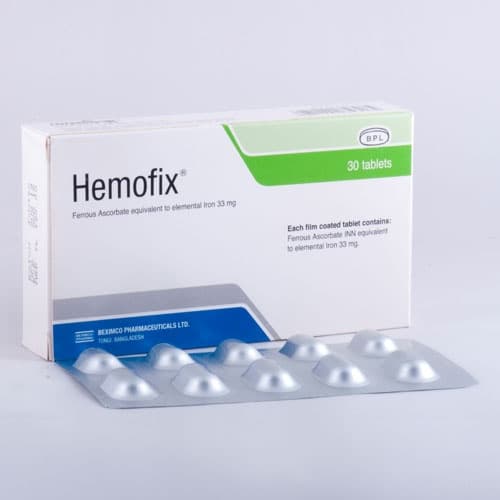

Medicine overview
Indications of Hemofix
Prevention of Iron-Deficiency Anemia
Hemofix is an established oral iron supplement used to prevent iron-deficiency anemia in individuals with increased iron requirements or inadequate dietary intake, including during pregnancy and lactation, in menstruating women, and in growing children and adolescents. National antenatal-care programs, including in Bangladesh, routinely recommend daily oral iron (with folic acid, when combined products are used) for pregnant women as a preventive measure, and Hemofix is one of the oral iron salts used for this purpose.
Treatment of Iron-Deficiency Anemia
Hemofix is an established, guideline-supported treatment for confirmed iron-deficiency anemia of nutritional origin or due to chronic blood loss (for example, from heavy menstrual bleeding, gastrointestinal blood loss, or repeated blood donation), once the underlying cause has been identified and addressed by a physician. Hemofix is combined with ascorbic acid (vitamin C), which enhances gastrointestinal absorption of the iron component compared with plain ferrous salts.
Adjunct Use
Hemofix is also used as an adjunct to correct or prevent iron deficiency in patients recovering from surgery involving significant blood loss, and in some chronic disease states associated with iron deficiency, under a physician's supervision and typically alongside treatment of the underlying condition.
Hemofix is not effective for anemia that is not due to iron deficiency (for example, anemia of chronic disease without true iron deficiency, or hemolytic anemia), and it does not replace evaluation of the underlying cause of anemia.
Composition
Ferrous Ascorbate is marketed in more than one oral formulation. Tablets and capsules commonly contain Ferrous Ascorbate equivalent to 100 mg of elemental iron per unit; oral liquid formulations (syrup or drops) typically provide a lower strength of elemental iron per 5 mL or per mL, intended for pediatric or lower-dose use. Exact strength and the presence of other co-formulated ingredients vary by manufacturer and market — always check the product label or ask a pharmacist for the specific strength of the product being dispensed.
Description
Hemofix is an oral iron-replacement preparation in which ferrous iron is combined with ascorbic acid (vitamin C). Ascorbic acid helps keep iron in its more readily absorbed ferrous (Fe2+) form and enhances its absorption from the gastrointestinal tract, while generally being better tolerated than some older ferrous salts. Hemofix is used to prevent and treat iron-deficiency anemia arising from inadequate dietary iron, increased physiological demand (such as pregnancy and growth), or chronic blood loss.
Hemofix is not an antibiotic and has no role in treating infections. Hemofix works by replenishing the body's iron stores so that the bone marrow can resume normal production of hemoglobin and red blood cells; it does not correct anemia caused by factors other than iron deficiency.
Therapeutic Class
Antianemic preparation — oral iron (hematinic) supplement
Pharmacology
Ferrous Ascorbate supplies iron in the ferrous (Fe2+) state combined with ascorbic acid. Ascorbic acid acts as a reducing agent that helps maintain iron in the ferrous form, the form most readily absorbed by intestinal mucosal cells, and this combination is associated with improved bioavailability of iron compared with some plain ferrous salts. Iron absorption from Ferrous Ascorbate occurs mainly in the duodenum and proximal jejunum and is regulated by the body's existing iron stores — absorption increases when iron stores are low (as in iron-deficiency anemia) and decreases as stores are replenished.
Once absorbed, iron from Ferrous Ascorbate is transported bound to transferrin to the bone marrow, where it is incorporated into developing red blood cells for hemoglobin synthesis; excess iron is stored as ferritin and hemosiderin, mainly in the liver, spleen, and bone marrow. Clinically, treatment with Ferrous Ascorbate typically produces a measurable rise in reticulocyte count within about a week and a rise in hemoglobin over several weeks, although iron stores generally require a longer course of therapy to replenish fully.
Dosage & Administration of Hemofix
The dose, formulation, and duration of Hemofix therapy depend on the indication (prevention versus treatment of iron-deficiency anemia), the patient's age, body weight, and the severity of iron deficiency, and should be individualized by a physician. The regimens below reflect commonly used dosing conventions for oral Hemofix products and are general guidance only, not a substitute for a prescriber's instructions.
Administration of Hemofix
- Hemofix is best absorbed when taken on an empty stomach, for example, one hour before or two hours after meals.
- If Hemofix causes stomach upset, it may be taken with a small amount of food, although this may modestly reduce iron absorption.
- Swallow tablets/capsules of Hemofix with water; do not crush or chew unless the product is designed for that purpose. Liquid formulations of Hemofix should be measured with the measuring device provided.
- Avoid taking Hemofix at the same time as tea, coffee, milk, calcium supplements, or antacids, as these can reduce iron absorption; separate dosing by at least 2 hours where possible.
- Avoid taking Hemofix within 2 hours of tetracycline-class or fluoroquinolone antibiotics (see Interactions).
- Hemofix may darken the stool; this is a harmless, expected effect and not a sign of bleeding.
- Take Hemofix for the full duration advised by the physician, even after symptoms improve, so that iron stores are adequately replenished.
Interaction of Hemofix
- Tetracycline and fluoroquinolone antibiotics (e.g., doxycycline, ciprofloxacin): Hemofix can form insoluble complexes with these antibiotics in the gut, substantially reducing absorption of both the antibiotic and the iron. Separate dosing of Hemofix from these antibiotics by at least 2 hours (before or after).
- Antacids, calcium and magnesium-containing products: may reduce absorption of iron from Hemofix; separate dosing by at least 1–2 hours where possible.
- Proton pump inhibitors and H2-receptor blockers: reduced gastric acidity from these agents can reduce iron absorption from Hemofix; clinical significance should be assessed by the prescriber if long-term co-administration is needed.
- Levothyroxine and penicillamine: iron from Hemofix can reduce absorption of these drugs; separate dosing by several hours.
- Oral bisphosphonates: co-administration with Hemofix may reduce absorption of both agents; these should be dosed apart as advised by the prescriber.
This is not an exhaustive list. Inform your physician or pharmacist of all medicines being taken before starting Hemofix.
Contraindications
Ferrous Ascorbate is contraindicated in patients with:
- Known hypersensitivity to Ferrous Ascorbate, ascorbic acid, or any component of the formulation.
- Hemochromatosis or other conditions of iron overload.
- Hemolytic anemia not caused by iron deficiency, and other anemias not due to iron deficiency (such as thalassemia without coexisting iron deficiency), where iron therapy provides no benefit and can be harmful.
Side Effects of Hemofix
Common Side Effects
- Nausea and epigastric discomfort
- Constipation
- Diarrhea
- Dark-colored (black) stool — a harmless, expected effect
- Metallic taste
Less Common / Serious Effects (Seek Medical Attention)
- Severe abdominal pain or vomiting
- Signs of an allergic reaction, such as rash, itching, swelling of the face/throat, or difficulty breathing
- Signs of iron overload with prolonged excessive use (fatigue, joint pain, unusual skin bronzing) — see Precautions and Warnings
Pregnancy & Lactation
Pregnancy
Oral iron supplementation, including with agents such as Hemofix, is routinely recommended by antenatal-care guidelines to prevent and treat iron-deficiency anemia in pregnancy, where physiological iron requirements increase. Even so, Hemofix should be used in pregnancy only as advised by the treating physician, at a dose and duration appropriate to the individual's iron status, since unnecessary high-dose iron supplementation without confirmed deficiency is not advised. Pregnant women should consult their physician before starting or adjusting Hemofix.
Breastfeeding
Hemofix is generally considered compatible with breastfeeding when used at recommended doses to correct or prevent maternal iron deficiency, as only a small amount of the iron and ascorbic acid components is expected to pass into breast milk. As with any medicine used during lactation, Hemofix should be taken under medical advice, and any effects noted in the breastfed infant should be reported to a physician.
Precautions & Warnings
- Gastrointestinal tolerability: Hemofix commonly causes constipation, nausea, or stomach discomfort; taking it with a little food (if tolerated), adequate fluids, and dietary fiber can help, but persistent or severe symptoms should be discussed with a physician rather than self-adjusting the dose.
- Iron overload: Hemofix should not be used in patients with existing iron overload states (see Contraindications), and should be used cautiously and with monitoring in patients who receive repeated blood transfusions or who have conditions predisposing to iron accumulation.
- Peptic ulcer disease and active gastrointestinal bleeding: oral iron products such as Hemofix can aggravate gastric irritation; use with caution and under medical supervision in patients with a history of peptic ulcer disease, inflammatory bowel disease, or active gastrointestinal bleeding.
- Masking of stool color changes: because Hemofix normally darkens the stool, this can make it harder to visually detect gastrointestinal bleeding; report any unusual abdominal pain, tarry stool with a distinct odor, or other concerning symptoms to a physician.
- Accidental pediatric ingestion: accidental overdose of iron-containing products, including Hemofix, is a well-recognized and potentially fatal cause of poisoning in young children (see Overdose Effects). Store Hemofix in a child-resistant container out of the sight and reach of children at all times.
- Use only for confirmed or likely iron deficiency: Hemofix should not be used to self-treat fatigue or non-specific symptoms without a physician first assessing whether iron deficiency is actually present, since inappropriate iron use can mask other diagnoses and cause iron overload over time.
Overdose Effects of Hemofix
Overdose of Hemofix, particularly in young children who accidentally ingest a large number of tablets, is a medical emergency and a well-recognized cause of serious and potentially fatal pediatric poisoning. Early symptoms of iron overdose (within hours) can include nausea, vomiting (sometimes bloody), abdominal pain, and diarrhea; this may be followed by a deceptive period of apparent improvement, before more severe effects such as metabolic acidosis, low blood pressure, drowsiness, seizures, and multi-organ (including liver) damage can develop hours to days later.
If overdose of Hemofix is suspected or witnessed, seek immediate emergency medical attention or contact a poison control service without delay, even if the person initially appears well — do not wait for symptoms to appear, and do not attempt any specific home treatment. Take the product packaging with you to the hospital so that the amount of elemental iron ingested can be estimated. Management of iron overdose requires assessment and treatment by medical professionals and, in significant cases, specific chelation therapy administered in a hospital setting.
Storage Conditions
Store at room temperature (below 30°C), away from light and moisture. Keep the container tightly closed and out of the reach and sight of children.
Use In Special Populations
Children
Hemofix is used in children to prevent or treat confirmed iron-deficiency anemia, generally using a pediatric liquid formulation with weight-based dosing determined by a pediatrician. Hemofix should always be kept in child-resistant packaging and stored out of children's reach, given the serious risk of accidental overdose in this age group (see Overdose Effects).
Elderly
Hemofix can be used in elderly patients with confirmed iron-deficiency anemia; no specific dose adjustment based on age alone is established, but older adults may be more prone to constipation and should be monitored for gastrointestinal tolerability and, where relevant, for an underlying cause of blood loss (such as gastrointestinal pathology) that may need separate investigation.
Renal Impairment
No specific dose adjustment of Hemofix is well established for renal impairment; however, the underlying cause of anemia in patients with chronic kidney disease should be evaluated by a physician, as such patients may need a different iron formulation (e.g., intravenous iron) or additional treatments such as erythropoiesis-stimulating agents.
Hepatic Impairment
Hemofix should be used with caution in patients with significant liver disease, particularly conditions associated with iron accumulation (such as hereditary hemochromatosis with liver involvement), and only under medical supervision.
Pregnant and Breastfeeding Women
See the Pregnancy and Lactation section above for detailed guidance on the use of Hemofix in this population.
Duration Of Treatment
The duration of Hemofix therapy depends on the indication. For prevention of iron-deficiency anemia (for example, routine antenatal supplementation), Hemofix is typically continued throughout the period of increased iron requirement, as advised by the antenatal-care provider. For treatment of confirmed iron-deficiency anemia, Hemofix is usually continued for approximately 3 to 6 months, or for about 2–3 months after hemoglobin returns to normal, in order to replenish the body's iron stores — stopping Hemofix as soon as hemoglobin normalizes commonly leads to relapse. The exact duration should be determined and periodically reviewed by the treating physician, generally with follow-up blood tests.
Drug Classes
Hematinic agent; oral iron supplement (iron salt combined with ascorbic acid)
Mode Of Action
Ferrous Ascorbate acts by supplying elemental iron in the ferrous (Fe2+) form, combined with ascorbic acid, which helps keep the iron in its reduced, more absorbable state and enhances its uptake across the intestinal mucosa. The absorbed iron is used by the bone marrow as an essential building block for hemoglobin synthesis, correcting the iron deficit that underlies iron-deficiency anemia and allowing normal red blood cell production to resume. See Pharmacology for further detail.
Pediatric Uses
Hemofix is used in children for the prevention and treatment of iron-deficiency anemia, most often as an oral liquid (syrup or drops) formulation that allows weight-based dosing appropriate for a child's age and body weight; a pediatrician should determine the correct dose. Hemofix tablet or capsule strengths intended for adults are generally not appropriate for young children. Because accidental ingestion of iron-containing products such as Hemofix is a recognized cause of serious pediatric poisoning, caregivers must store Hemofix in child-resistant packaging, out of children's sight and reach, and must never refer to iron supplements as "candy" or sweets to a child. Any suspected ingestion beyond the prescribed dose in a child should be treated as a medical emergency (see Overdose Effects).
Frequently Asked Questions
Q: What is Hemofix 33 mg Tablet used for?
A: Hemofix 33 mg Tablet is an oral iron supplement combined with vitamin C (ascorbic acid) that is used to prevent and treat iron-deficiency anemia, including in pregnancy, in people with heavy menstrual bleeding or other causes of chronic blood loss, and in growing children with increased iron needs. Hemofix 33 mg Tablet is not effective for anemia that is not caused by iron deficiency.
Q: How should I take Hemofix 33 mg Tablet?
A: Hemofix 33 mg Tablet is best absorbed on an empty stomach, about one hour before or two hours after meals, though it may be taken with a little food if it upsets your stomach. Avoid taking Hemofix 33 mg Tablet at the same time as tea, coffee, milk, calcium supplements, or antacids, and separate it from tetracycline or fluoroquinolone antibiotics by at least 2 hours, since these reduce iron absorption. Always follow your physician's specific dosing instructions.
Q: Is it normal for Hemofix 33 mg Tablet to darken my stool?
A: Yes. Dark or black stool is a common and harmless effect of Hemofix 33 mg Tablet and other oral iron products, and does not by itself indicate a problem. However, if you also notice severe abdominal pain, tarry or foul-smelling stool, or other new symptoms, contact your physician, since these effects should not be assumed to be caused by iron alone.
Q: Can Hemofix 33 mg Tablet be taken during pregnancy?
A: Oral iron supplementation, including with Hemofix 33 mg Tablet, is routinely recommended in pregnancy to prevent and treat iron-deficiency anemia because iron requirements increase substantially during pregnancy. Even so, Hemofix 33 mg Tablet should be used during pregnancy at the dose and for the duration advised by your antenatal-care provider, rather than self-prescribed, and you should consult your physician before starting it.
Q: What happens if a child accidentally swallows too much Hemofix 33 mg Tablet?
A: Accidental overdose of Hemofix 33 mg Tablet and other iron-containing products is a serious and potentially fatal cause of poisoning in young children. If a child has swallowed more than the prescribed amount of Hemofix 33 mg Tablet, seek emergency medical attention or contact a poison control center immediately, even if the child seems fine at first, since serious symptoms can appear after a delay. Always store Hemofix 33 mg Tablet in a child-resistant container, out of children's reach.
Q: Can Hemofix 33 mg Tablet be taken together with antibiotics?
A: Hemofix 33 mg Tablet should not be taken at the same time as tetracycline-class or fluoroquinolone antibiotics (such as doxycycline or ciprofloxacin), because iron can bind to these antibiotics in the gut and reduce absorption of both the antibiotic and the iron. If you are prescribed such an antibiotic together with Hemofix 33 mg Tablet, separate the two doses by at least 2 hours, as advised by your physician or pharmacist.
Disclaimer
The information provided is accurate to the best of our knowledge, but it does not replace professional medical advice. We cannot guarantee its completeness or accuracy, and the absence of specific information about a drug should not be taken as an endorsement. We are not responsible for any consequences arising from this information, so please consult a healthcare professional for any concerns or questions.
