

10% Off
Indo-A100 mg
ACME Laboratories Ltd.
৳6.34
Add to cart
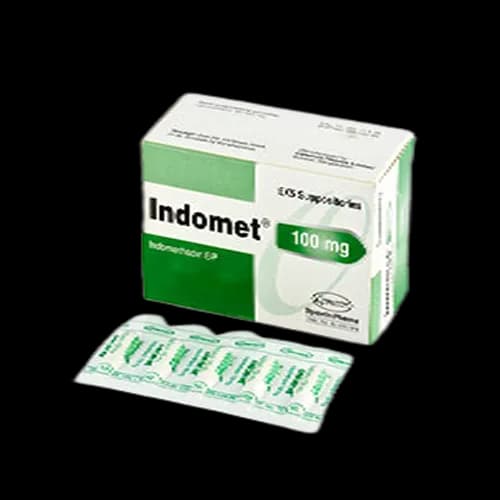

Indomet is a potent non-steroidal anti-inflammatory drug (NSAID) of the indole acetic acid class, used to relieve pain, swelling, and inflammation in a range of musculoskeletal and inflammatory conditions.
An intravenous formulation of Indomet is used in neonatal intensive care to promote closure of a hemodynamically significant patent ductus arteriosus (PDA) in premature infants. This use requires strict weight- and age-based dosing under specialist supervision and is not relevant to outpatient/oral therapy.
Indomet is a symptomatic treatment — it reduces pain and inflammation but does not alter the underlying course of arthritic disease.
Each capsule/tablet contains Indomethacin as the active pharmaceutical ingredient, commonly available in strengths of 25 mg and 50 mg (immediate-release), and 75 mg (sustained/extended-release). A rectal suppository form (commonly 50 mg or 100 mg) is also available in some markets, including Bangladesh. Excipients vary by manufacturer and formulation.
Indomet is a nonselective, non-steroidal anti-inflammatory drug (NSAID) belonging to the indole acetic acid derivative group. It is one of the most potent NSAIDs in clinical use and has been used for decades to treat inflammatory arthritic conditions, acute gout, and acute periarticular pain.
Indomet is available as immediate-release capsules, sustained-release capsules, and, in some markets, rectal suppositories. Compared with many other NSAIDs, Indomet is associated with a distinctly higher rate of central nervous system side effects such as headache, dizziness, and confusion, which is an important factor in choosing therapy and in patient counseling.
Non-Steroidal Anti-Inflammatory Drug (NSAID) — Indole Acetic Acid Derivative. Indomet belongs to the same broad NSAID class as diclofenac and sulindac, sharing similar mechanisms and class-wide cardiovascular and gastrointestinal risks, though Indomet is notably more potent and CNS side effects are more prominent.
Indomethacin works by non-selectively inhibiting cyclooxygenase (COX-1 and COX-2) enzymes, thereby blocking the conversion of arachidonic acid to prostaglandins and thromboxanes. Prostaglandins mediate pain, inflammation, fever, and also play protective roles in the gastric mucosa, renal blood flow, and platelet function.
By suppressing prostaglandin synthesis, Indomethacin produces analgesic, anti-inflammatory, and antipyretic effects. Its strong COX inhibition explains both its high anti-inflammatory potency and its comparatively higher risk of gastrointestinal and CNS adverse effects relative to many other NSAIDs.
Pharmacokinetics: Indomethacin is well absorbed orally, is highly protein bound (>90%), undergoes hepatic metabolism (O-demethylation, N-deacylation) with some enterohepatic recirculation, and is eliminated renally and biliary with an elimination half-life of approximately 2–11 hours.
| Indication | Typical Adult Dose |
|---|---|
| Rheumatoid arthritis / Osteoarthritis / Ankylosing spondylitis | 25 mg twice or three times daily; may increase by 25–50 mg/day at weekly intervals up to a maximum of 150–200 mg/day. Sustained-release: 75 mg once or twice daily. |
| Acute gouty arthritis | 50 mg three times daily until pain is tolerable, then reduce and stop; typically used for a few days only. Not intended for long-term/maintenance therapy of gout. |
| Acute painful shoulder (bursitis/tendinitis) | 75–150 mg/day in divided doses for 7–14 days, then discontinue. |
Use with caution and at the lowest effective dose in mild-to-moderate renal or hepatic impairment; Indomet should be avoided in severe renal or hepatic impairment (see Contraindications and Precautions).
Indomet capsules should be swallowed whole with a full glass of water, taken with food or milk to reduce gastrointestinal irritation. Sustained-release capsules must not be crushed, chewed, or opened. If a rectal suppository formulation is prescribed, it should be inserted as directed by the physician, typically after a bowel movement. Remain upright (sitting or standing) for 15–30 minutes after taking a dose where possible, to reduce esophageal irritation.
Indomet has several well-documented, clinically significant interactions:
Indomethacin is contraindicated in the following situations:
Most common (particularly notable with Indomet compared to other NSAIDs):
Less common but serious (see Precautions and Warnings for full detail):
Pregnancy: Indomet, like other NSAIDs, should be avoided starting at 20 weeks of pregnancy because of the risk of fetal renal dysfunction leading to low amniotic fluid (oligohydramnios), which can lead to fetal complications. Indomet is contraindicated from around 30 weeks of gestation (third trimester) onward because of the risk of premature closure of the fetal ductus arteriosus and other fetal/neonatal complications. Earlier in pregnancy, Indomet should be used only if clearly needed, at the lowest effective dose for the shortest time, and only after consulting a physician, as potential benefit must be weighed against potential risk to the fetus.
Lactation: Indomet passes into breast milk in small amounts. Because of case reports of seizures in a breastfed infant and the general caution recommended for NSAIDs during lactation, Indomet should be used during breastfeeding only if clearly needed and under medical supervision, with the infant monitored for any unusual signs.
Indomet, like other NSAIDs, can increase the risk of serious cardiovascular thrombotic events, including heart attack and stroke, which can be fatal. This risk may occur early in treatment and increases with duration of use and in patients with existing cardiovascular disease or risk factors. Indomet is contraindicated for perioperative pain in the setting of CABG surgery (see Contraindications).
NSAIDs, including Indomet, can cause serious gastrointestinal adverse events including bleeding, ulceration, and perforation of the stomach or intestines, which can occur at any time during use, with or without warning symptoms, and can be fatal. Elderly patients and those with a prior history of peptic ulcer disease or GI bleeding are at greater risk.
Long-term use of Indomet can impair renal function, particularly in patients with pre-existing renal impairment, heart failure, liver dysfunction, or those taking diuretics or ACE inhibitors/ARBs, and in the elderly. Renal papillary necrosis has been reported with prolonged NSAID use. Indomet should be avoided in severe renal impairment.
Elevations of liver enzymes can occur; Indomet should be discontinued if abnormal liver test results persist or worsen, or if clinical signs of liver disease develop. Avoid in severe hepatic impairment.
Indomet has a notably higher rate of CNS effects (headache, dizziness, confusion) compared with many other NSAIDs; caution is advised when driving or operating machinery, especially at treatment initiation, and particularly in elderly patients.
Elderly patients are more susceptible to gastrointestinal, cardiovascular, renal, and CNS adverse effects of Indomet; use the lowest effective dose for the shortest duration and monitor closely.
Use the lowest effective dose of Indomet for the shortest duration consistent with individual treatment goals.
Symptoms of Indomet overdose may include lethargy, drowsiness, nausea, vomiting, and epigastric pain, and in more severe cases gastrointestinal bleeding, headache, confusion, hypertension, acute kidney injury, respiratory depression, or seizures.
If an overdose of Indomet is suspected, seek immediate medical attention or contact emergency services/poison control right away. Treatment is supportive and should be provided in a medical facility; do not attempt specific home treatment.
Store at room temperature (below 30°C), away from light and moisture. Keep out of reach of children.
Safety and efficacy of oral Indomet have not been well established for routine outpatient pediatric use, and it is generally not recommended in children outside of specialist care. The intravenous formulation of Indomet is used in a highly specialized hospital setting to close a patent ductus arteriosus in premature infants, dosed by a neonatologist based on age and weight; this use is unrelated to general oral pain/inflammation therapy.
Elderly patients are at higher risk of gastrointestinal, cardiovascular, renal, and CNS side effects with Indomet. Use the lowest effective dose for the shortest duration and monitor closely for adverse effects.
Use with caution and reduced dose in mild-to-moderate renal impairment; avoid in severe renal impairment.
Use with caution in mild-to-moderate hepatic impairment; avoid in severe hepatic impairment.
Duration of Indomet therapy depends on the indication: acute conditions such as gout flares or acute painful shoulder are typically treated for a few days up to about 2 weeks, using the lowest effective dose. Chronic conditions such as rheumatoid arthritis, osteoarthritis, or ankylosing spondylitis may require longer-term use, but treatment should be reassessed periodically by a physician, using the shortest duration and lowest dose that controls symptoms, given increasing cardiovascular and gastrointestinal risk with prolonged use.
Indomethacin belongs to the Non-Steroidal Anti-Inflammatory Drug (NSAID) class, specifically the indole acetic acid derivative subgroup, which also includes drugs such as sulindac and etodolac.
Indomethacin nonselectively inhibits cyclooxygenase (COX-1 and COX-2) enzymes, reducing synthesis of prostaglandins and thromboxane A2 from arachidonic acid. This suppresses inflammation, pain signaling, and fever, but also reduces protective prostaglandins in the gastric mucosa and kidneys, which underlies its gastrointestinal and renal risk profile.
C (prior to 30 weeks gestation); contraindicated at or after approximately 30 weeks gestation (Category D-like risk in the third trimester per current labeling)
Routine oral use of Indomet in children has not been well established for safety and efficacy, and it is generally avoided outside specialist supervision. A specialized intravenous formulation of Indomet is used in neonatal intensive care units to promote closure of a hemodynamically significant patent ductus arteriosus in premature infants, typically under 1750 g birth weight, dosed by a neonatologist in a defined short course based on postnatal age. This specialized use is distinct from general anti-inflammatory/analgesic therapy and must only be undertaken by qualified specialists in a hospital setting.
Q: What is Indomet 100 mg Suppository used for?
A: Indomet 100 mg Suppository is a potent non-steroidal anti-inflammatory drug (NSAID) used to relieve pain, swelling, and stiffness in conditions such as rheumatoid arthritis, osteoarthritis, ankylosing spondylitis, acute gout attacks, and acute painful shoulder (bursitis/tendinitis). It is also commonly used for painful menstrual cramps.
Q: Can I take Indomet 100 mg Suppository with other painkillers like aspirin or ibuprofen?
A: You should not combine Indomet 100 mg Suppository with aspirin or other NSAIDs, as this increases the risk of stomach bleeding and ulcers without added pain relief. Always tell your doctor about all medicines you are taking before starting Indomet 100 mg Suppository.
Q: Is Indomet 100 mg Suppository safe during pregnancy?
A: Indomet 100 mg Suppository should be avoided from 20 weeks of pregnancy onward due to risks to the baby's kidneys and amniotic fluid levels, and it is contraindicated from about 30 weeks of pregnancy (third trimester) due to risk of premature closure of a blood vessel in the fetal heart. Earlier in pregnancy, Indomet 100 mg Suppository should be used only if clearly needed and your physician determines the benefit outweighs the risk. Always consult your doctor before use during pregnancy.
Q: Why does Indomet 100 mg Suppository cause more headaches or dizziness than other painkillers?
A: Indomet 100 mg Suppository is known to cause central nervous system side effects such as headache, dizziness, and occasionally confusion more often than many other NSAIDs. This is a recognized characteristic of the drug. If these symptoms are severe or persistent, contact your physician, and avoid driving or operating machinery until you know how Indomet 100 mg Suppository affects you.
Q: Can I take Indomet 100 mg Suppository on an empty stomach?
A: It is best to take Indomet 100 mg Suppository with food, milk, or an antacid to reduce the risk of stomach upset, ulcers, or bleeding. Taking it on an empty stomach increases the chance of gastrointestinal irritation.
Q: What should I do if I think I've taken too much Indomet 100 mg Suppository?
A: If you suspect an overdose of Indomet 100 mg Suppository, seek immediate medical attention or contact emergency services/poison control right away. Symptoms of overdose can include severe drowsiness, nausea, vomiting, stomach pain, confusion, or gastrointestinal bleeding. Do not try to treat an overdose at home.
Disclaimer
The information provided is accurate to the best of our knowledge, but it does not replace professional medical advice. We cannot guarantee its completeness or accuracy, and the absence of specific information about a drug should not be taken as an endorsement. We are not responsible for any consequences arising from this information, so please consult a healthcare professional for any concerns or questions.
