

10% Off
Eziride150 mcg
Opsonin Pharma Ltd.
৳4.50
Add to cart
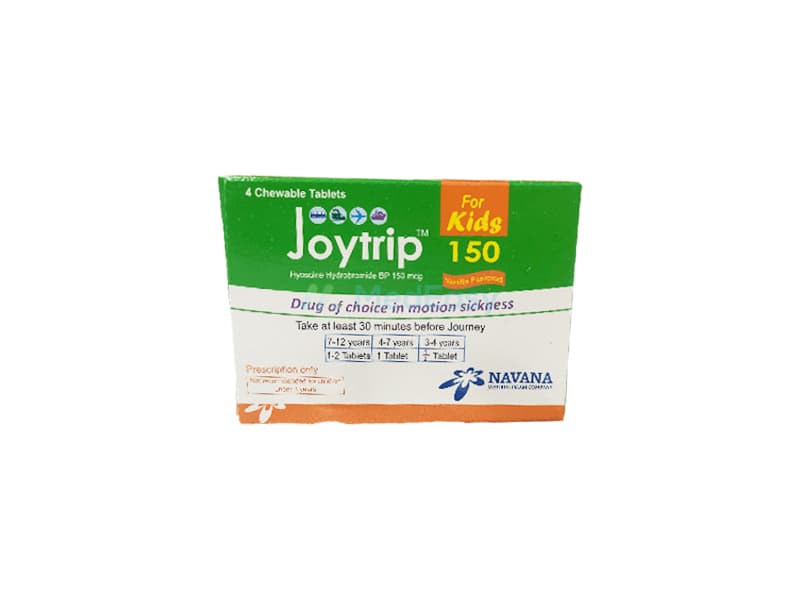

Joytrip is a belladonna-alkaloid antimuscarinic used in several clinical settings, with the strength of evidence varying by indication:
A physician should confirm the specific indication and formulation appropriate for each patient.
Each formulation of Hyoscine Hydrobromide contains hyoscine hydrobromide (scopolamine hydrobromide) as the sole active pharmaceutical ingredient. It is available in multiple dosage forms, including:
Excipients vary by manufacturer and formulation.
Joytrip, also known as scopolamine hydrobromide, is a naturally occurring tertiary amine belladonna alkaloid obtained from plants of the Solanaceae family (e.g., Hyoscyamus and Datura species). It is a competitive antagonist at muscarinic acetylcholine receptors and, unlike the related quaternary ammonium compound hyoscine butylbromide, it crosses the blood-brain barrier, giving it central as well as peripheral anticholinergic effects.
Joytrip belongs to the anticholinergic (antimuscarinic) / belladonna alkaloid class of drugs, and is classified therapeutically as an antiemetic / antivertigo and antisecretory agent.
Hyoscine Hydrobromide is a competitive antagonist at muscarinic acetylcholine receptors, blocking cholinergic transmission at postganglionic parasympathetic nerve endings. Centrally, it inhibits transmission from the vestibular apparatus to the vomiting center, accounting for its antiemetic effect in motion sickness. Peripherally, it reduces secretions from salivary, bronchial and sweat glands, decreases gastrointestinal and genitourinary smooth-muscle tone/motility, and can produce mydriasis and cycloplegia.
Dosing of Joytrip depends on the indication and formulation used; the following is a general guide and does not replace product-specific labeling or a physician's instructions.
| Indication | Formulation | Typical Adult Dose |
|---|---|---|
| Motion sickness prevention | Transdermal patch | One patch applied to hairless skin behind the ear at least 4 hours before travel; effective for up to 72 hours. |
| Motion sickness prevention | Oral tablet | Typically 300 mcg, 20-30 minutes before travel; may be repeated per product labeling up to a maximum daily dose. |
| Prevention of postoperative nausea/vomiting | Transdermal patch | One patch applied the evening before surgery, removed 24 hours after surgery. |
| Pre-anesthetic secretion reduction | Injection (IM/IV/SC) | Typically 200-600 mcg as a single pre-operative dose, per anesthesiologist's protocol. |
| Excessive respiratory secretions (palliative care) | Injection (SC/IV) or transdermal patch | Individualized by the palliative care/medical team, per local protocol. |
See Dosage and Administration for further detail, and Use in Special Populations for pediatric, elderly, and organ-impairment considerations.
Transdermal patch: Apply to a clean, dry, hairless area of skin behind the ear; do not cut the patch; wash hands thoroughly with soap and water immediately after applying or removing the patch to avoid accidental transfer to the eyes (risk of pupil dilation/blurred vision). Injection: For intramuscular, subcutaneous, or intravenous administration by a qualified healthcare professional, according to the prescribed protocol. Oral tablets: Swallow with water; may be taken with or without food. Always follow the specific instructions provided by the prescribing physician or product label.
Joytrip has clinically significant interactions with:
Inform the physician or pharmacist of all concurrent medications before starting Joytrip.
Hyoscine Hydrobromide is contraindicated in patients with:
Common side effects of Joytrip include:
Less common but clinically important effects include tachycardia, urinary retention, constipation, confusion or agitation (particularly in the elderly), and rarely, hallucinations, psychosis, or hyperthermia (see Precautions and Warnings). Report severe or persistent side effects to a physician promptly.
Pregnancy: Data on Joytrip in human pregnancy are limited. It crosses the placenta. Eclamptic-type seizures have been reported when scopolamine was given by injection to women with severe pre-eclampsia; it should generally be avoided in this population. Joytrip should be used in pregnancy only if clearly needed and if the potential benefit justifies the potential risk to the fetus - consult a physician before use.
Lactation: Joytrip is excreted in breast milk. Because of the potential for adverse effects (including reduced milk production and infant sedation/anticholinergic effects) in a breastfeeding infant, a decision should be made whether to discontinue breastfeeding or discontinue the drug, considering the importance of the drug to the mother, in consultation with a physician.
Overdose with Joytrip produces signs of anticholinergic toxicity, which may include agitation, confusion, hallucinations, flushed/dry/hot skin, dry mouth, blurred vision, dilated pupils, tachycardia, urinary retention, and fever, potentially progressing to seizures, respiratory depression, or coma in severe cases. If overdose is suspected, seek immediate medical attention or contact emergency services/a poison control center. Treatment is supportive and should be provided in a medical facility; do not attempt to manage a suspected overdose at home.
Store Joytrip at room temperature (below 30°C), away from light and moisture. Transdermal patches should be stored flat in their original sealed pouch and not cut before use. Keep out of reach of children.
Renal impairment: No formal dosing studies are available; use with caution and monitor closely for increased central nervous system effects, as elimination may be prolonged.
Hepatic impairment: Use with caution and monitor closely, since Joytrip undergoes hepatic metabolism.
Elderly and pediatric patients: See Precautions and Warnings and Pediatric Uses for detailed guidance, as these groups require special caution.
Duration of use depends on the indication: a single transdermal patch of Joytrip may be used continuously for up to 72 hours for motion sickness, or applied once (evening before surgery, removed 24 hours after) for prevention of postoperative nausea and vomiting. For management of excessive respiratory secretions in palliative care, use continues for as long as clinically indicated, with regular reassessment by the care team. Oral tablets are generally used intermittently, as needed, and injections are typically used as single or intermittent doses around the time of a procedure. Do not use for longer than advised by a physician.
Hyoscine Hydrobromide is classified under: Anticholinergics; Antimuscarinics; Belladonna alkaloids; Antiemetic/antivertigo agents.
Hyoscine Hydrobromide acts as a competitive antagonist at muscarinic acetylcholine receptors (M1-M5 subtypes), blocking the action of acetylcholine at parasympathetic postganglionic nerve endings, including sites in smooth muscle, secretory glands, and the central nervous system. This produces its antiemetic, antisecretory, and antispasmodic effects (see Pharmacology for full detail).
C
The transdermal patch formulation of Joytrip is not recommended in children; safety and efficacy have not been established in this age group. Injectable Joytrip has been used in pediatric premedication before anesthesia in some settings, with weight-based dosing determined by the anesthesiology team, but children - especially infants and young children - are more susceptible to anticholinergic adverse effects and may experience paradoxical excitement, restlessness, or hallucinations instead of sedation. Use in children should occur only under direct medical/anesthesiology supervision, with close monitoring, particularly in hot environments due to the risk of hyperthermia from reduced sweating.
Q: What is Joytrip 150 mcg Chewable Tablet used for?
A: Joytrip 150 mcg Chewable Tablet is mainly used to prevent nausea and vomiting caused by motion sickness and after surgery, to reduce saliva and airway secretions before anesthesia, and to manage excessive respiratory secretions in palliative/end-of-life care.
Q: How is the Joytrip 150 mcg Chewable Tablet patch applied?
A: Apply one patch to a clean, dry, hairless area of skin behind the ear at least 4 hours before an antiemetic effect is needed. Do not cut the patch, and wash your hands thoroughly with soap and water immediately after applying or removing it, since accidental contact with the eyes can cause pupil dilation and blurred vision.
Q: Can Joytrip 150 mcg Chewable Tablet be used during pregnancy or breastfeeding?
A: Joytrip 150 mcg Chewable Tablet should be used in pregnancy only if clearly needed, since data are limited and it crosses the placenta; it should generally be avoided in women with severe pre-eclampsia. It also passes into breast milk, so a physician should be consulted to weigh the benefits and risks before use while breastfeeding.
Q: Who should not use Joytrip 150 mcg Chewable Tablet?
A: Joytrip 150 mcg Chewable Tablet should not be used by people with a known hypersensitivity to it or other belladonna alkaloids, angle-closure glaucoma, myasthenia gravis, paralytic ileus or other gastrointestinal obstruction, or urinary retention/bladder outlet obstruction.
Q: What are the common side effects of Joytrip 150 mcg Chewable Tablet?
A: The most common side effects are dry mouth, drowsiness, blurred vision, dilated pupils, and dizziness. Less commonly, it can cause confusion, agitation, tachycardia, constipation, or urinary retention, particularly in elderly patients.
Q: What should I do if someone takes too much Joytrip 150 mcg Chewable Tablet?
A: An overdose can cause confusion, hallucinations, a fast heartbeat, hot dry skin, and fever. If overdose is suspected, seek immediate medical attention or contact emergency services or a poison control center right away; do not try to treat it at home.
Disclaimer
The information provided is accurate to the best of our knowledge, but it does not replace professional medical advice. We cannot guarantee its completeness or accuracy, and the absence of specific information about a drug should not be taken as an endorsement. We are not responsible for any consequences arising from this information, so please consult a healthcare professional for any concerns or questions.
