10% Off
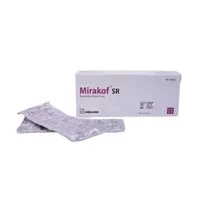
Mirakof SR50 mg
Square Pharmaceuticals PLC.
৳90.63
Add to cart


Kofnix SR is indicated for the symptomatic relief of dry, irritating (non-productive) cough of various causes, including cough associated with the common cold, acute upper respiratory tract infections, and other conditions that cause an irritating cough without significant mucus or phlegm production. Kofnix SR works by suppressing the cough reflex; it does not treat the underlying cause of the cough.
Kofnix SR should not be used for a productive (chesty, mucus-producing) cough, where coughing is helping to clear secretions from the airways. Suppressing this type of cough with Kofnix SR can allow mucus to build up in the lungs and airways, which may worsen breathing difficulty or increase the risk of chest infection. For this reason, Kofnix SR should not be combined with mucolytic or expectorant medicines (see Interaction and Precautions and Warnings for the full explanation).
Regulatory product information supports the use of Kofnix SR to suppress cough before and after surgical procedures, and during diagnostic procedures such as bronchoscopy, where coughing could interfere with the procedure itself or with post-operative recovery.
Some regional product literature for Kofnix SR also describes its adjunctive use for cough associated with whooping cough (pertussis) and acute inflammation of the lower respiratory tract. In these situations, Kofnix SR is used only as an adjunct to relieve the cough symptom, alongside appropriate antimicrobial and supportive treatment of the underlying infection, and its use should be guided by a physician.
Each formulation of Butamirate Citrate contains Butamirate Citrate as its active ingredient. In Bangladesh, Butamirate Citrate is marketed as: sustained-release tablets containing Butamirate Citrate 50 mg; oral syrup containing Butamirate Citrate 7.5 mg/5 mL; and pediatric oral drops containing Butamirate Citrate 5 mg/mL.
Kofnix SR is a non-opioid, centrally-acting cough-suppressant (antitussive) medicine used to relieve a dry, irritating cough that is not helping to clear mucus from the airways. Unlike opioid-based cough medicines, Kofnix SR is not derived from opium and does not typically cause the marked sedation or dependence associated with opioid antitussives, although mild drowsiness can occur. Kofnix SR is available in Bangladesh as tablets, syrup, and pediatric drops, allowing the dose to be tailored to adults, older children, and young children or infants under medical guidance. Kofnix SR is intended only for short-term, symptomatic relief of dry cough, and is not a treatment for productive (mucus-producing) cough or for the illness causing the cough. As with any medicine, Kofnix SR should be used strictly as directed by a doctor or pharmacist.
Antitussive (Cough Suppressant, Non-Opioid, Centrally-Acting)
Butamirate Citrate is thought to act mainly by reducing the sensitivity of the cough centre, thereby suppressing the cough reflex, without acting through opioid receptors; because it is not an opioid, Butamirate Citrate does not carry the respiratory-depressant or addictive potential associated with opioid cough suppressants. Product literature also describes mild peripheral effects of Butamirate Citrate on the airways, including anticholinergic and bronchodilating (bronchospasmolytic) activity, which may further ease breathing during a coughing episode. After oral intake, Butamirate Citrate is absorbed relatively quickly, is highly bound to plasma proteins, and is extensively broken down (hydrolysed) in the body to metabolites that are eliminated mainly via the kidneys.
Dosing of Kofnix SR is not the same for every patient — it depends on the formulation used (tablet, syrup, or drops), the patient's age, and the indication being treated. The dose of Kofnix SR should always be determined and confirmed by a doctor or pharmacist; the information below is a general reference only and is not a substitute for professional medical advice.
Butamirate Citrate is contraindicated in patients with known hypersensitivity (allergy) to Butamirate Citrate or to any excipient of the specific Butamirate Citrate product, and during the first trimester of pregnancy.
Reported adverse effects of Kofnix SR include drowsiness, dizziness, nausea, diarrhoea, and itchy skin rash or urticaria. These are generally described as occurring in a small proportion of patients and often improve with dose reduction or discontinuation of Kofnix SR.
Seek prompt medical attention if signs of a serious allergic reaction to Kofnix SR occur, such as swelling of the face, lips, tongue, or throat, severe skin rash, or difficulty breathing, or if severe dizziness, loss of balance, or a marked drop in blood pressure develops.
Kofnix SR is contraindicated during the first trimester of pregnancy. In the second and third trimesters, Kofnix SR should be used only if a doctor considers it clearly necessary, after weighing the potential benefit against the risk, as safety data for this period remain limited.
Use of Kofnix SR during breastfeeding is not recommended, as there is insufficient data on its excretion into breast milk and its effect on the nursing infant; some product information specifically advises against its use while breastfeeding. A doctor should be consulted before using Kofnix SR during breastfeeding.
Reported symptoms of Kofnix SR overdose include drowsiness, nausea, vomiting, diarrhoea, loss of balance or dizziness, and low blood pressure (hypotension). There is no specific antidote for Kofnix SR overdose. If an overdose of Kofnix SR is suspected, do not induce vomiting unless specifically directed to do so by a doctor or a poison control service, and seek emergency medical attention or contact a poison control centre immediately. Management of Kofnix SR overdose is supportive and should be carried out by medical professionals in a hospital setting.
Store Kofnix SR below 30°C in a cool, dry place, protected from light and moisture, and out of the reach and sight of children. Because storage conditions can vary slightly between different brands and formulations (tablet, syrup, drops) of Kofnix SR, always store according to the specific instructions printed on the product label and pack, and discard any unused syrup or drops after the period stated on the label once the pack has been opened.
Children: Age-appropriate formulations and doses of Kofnix SR exist — pediatric drops for infants from about 2 months to 3 years of age, and syrup for children from about 3 years upward — but the exact minimum age and dose depend on the specific approved product, and some Kofnix SR products are approved for adults and adolescents only. A doctor should confirm the correct formulation and dose of Kofnix SR for a child.
Elderly: Specific data on the use of Kofnix SR in elderly patients are limited; Kofnix SR should be used with caution and under medical supervision, with attention to drowsiness.
Renal impairment: Specific data on Kofnix SR in patients with renal impairment are limited; use with caution and under medical supervision.
Hepatic impairment: Specific data on Kofnix SR in patients with hepatic impairment are limited; use with caution and under medical supervision.
Other: Patients with hereditary fructose intolerance should check the excipients of the specific Kofnix SR syrup formulation, as some contain sorbitol or fructose.
Kofnix SR is intended for short-term, symptomatic treatment of dry cough, generally for the duration prescribed by a doctor, often up to about one week. If the cough being treated with Kofnix SR persists for more than about 7 days in adults, or more than about 3 days in children, or is accompanied by fever, rash, persistent headache, or difficulty breathing, medical advice should be sought rather than continuing Kofnix SR without review, as a prolonged, unexplained cough may indicate an underlying condition that needs separate evaluation.
Antitussive; Non-opioid cough suppressant; Centrally-acting cough-reflex inhibitor
Butamirate Citrate acts primarily by reducing the sensitivity of the cough centre, thereby suppressing the cough reflex, without acting through opioid receptors. It also exhibits mild peripheral anticholinergic and bronchodilating (bronchospasmolytic) activity on the airways, which can help ease breathing during a coughing episode.
Kofnix SR is available in pediatric-specific formulations in Bangladesh — oral drops (5 mg/mL) and syrup (7.5 mg/5 mL) — that allow dosing to be tailored to a child's age. Per regional product information, drops are typically used in infants from about 2 months to 3 years of age, and syrup in children from about 3 years upward, with the specific dose depending on age (see the Dosage table). However, not every approved Kofnix SR product is licensed for pediatric use in every country — some are approved for adults and adolescents 18 years and above only — so the age-appropriateness of a given Kofnix SR product should always be confirmed from its specific label or by a doctor or pharmacist before use in a child.
Q: What is Kofnix SR 50 mg Tablet used for?
A: Kofnix SR 50 mg Tablet is used for the symptomatic relief of dry, irritating (non-productive) cough, such as cough due to the common cold or acute upper respiratory tract infection, and to suppress cough before and after surgery or procedures like bronchoscopy.
Q: How does Kofnix SR 50 mg Tablet work?
A: Kofnix SR 50 mg Tablet works mainly by reducing the sensitivity of the brain's cough centre, which suppresses the cough reflex; it also has mild airway-relaxing (bronchodilating) effects, and it is not an opioid.
Q: Can Kofnix SR 50 mg Tablet be used for a chesty, mucus-producing cough?
A: No. Kofnix SR 50 mg Tablet should not be used for a productive (chesty) cough, because suppressing that type of cough can cause mucus to build up in the airways; Kofnix SR 50 mg Tablet is intended only for dry, non-productive cough.
Q: What is the dose of Kofnix SR 50 mg Tablet for children?
A: The dose of Kofnix SR 50 mg Tablet for children depends on age and formulation — for example, pediatric drops for infants and toddlers, or syrup for older children — and must be confirmed by a doctor; see the Dosage table for general reference doses.
Q: Can Kofnix SR 50 mg Tablet be taken together with a mucolytic or expectorant cough syrup?
A: No. Kofnix SR 50 mg Tablet should not be combined with mucolytic or expectorant medicines, because suppressing cough while also thinning and increasing mucus can cause mucus to accumulate in the airways and increase the risk of breathing difficulty or infection.
Q: Is Kofnix SR 50 mg Tablet safe during pregnancy?
A: Kofnix SR 50 mg Tablet is contraindicated in the first trimester of pregnancy. In the second and third trimesters it should be used only if a doctor decides it is clearly necessary, since safety data remain limited.
Q: Can Kofnix SR 50 mg Tablet be taken while breastfeeding?
A: Use of Kofnix SR 50 mg Tablet while breastfeeding is not recommended, as there is not enough safety data; a doctor should be consulted before using Kofnix SR 50 mg Tablet during breastfeeding.
Q: What are the common side effects of Kofnix SR 50 mg Tablet?
A: Kofnix SR 50 mg Tablet can cause drowsiness, dizziness, nausea, diarrhoea, or an itchy skin rash in some patients; these are generally uncommon and often improve if the dose is reduced or Kofnix SR 50 mg Tablet is stopped.
Q: How long can Kofnix SR 50 mg Tablet be taken for?
A: Kofnix SR 50 mg Tablet is meant for short-term use, typically as directed by a doctor and often up to about a week; if the cough continues beyond about 7 days in adults (or 3 days in children), a doctor should be consulted rather than continuing Kofnix SR 50 mg Tablet on its own.
Disclaimer
The information provided is accurate to the best of our knowledge, but it does not replace professional medical advice. We cannot guarantee its completeness or accuracy, and the absence of specific information about a drug should not be taken as an endorsement. We are not responsible for any consequences arising from this information, so please consult a healthcare professional for any concerns or questions.