8% Off
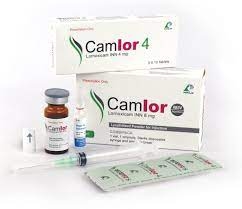
Lorno4 mg
Square Pharmaceuticals PLC.
৳138.00
Add to cart


Loricam is a non-steroidal anti-inflammatory drug (NSAID) of the oxicam class, indicated for the short-term symptomatic relief of pain and inflammation in the following conditions:
Loricam is intended for short-term use; it does not alter the underlying disease process in arthritis and should be used at the lowest effective dose for the shortest duration consistent with the treatment goal.
Each tablet of Lornoxicam contains Lornoxicam INN 4 mg or 8 mg as the active ingredient. The lyophilized powder for injection contains Lornoxicam INN 8 mg per vial, to be reconstituted with the accompanying solvent (water for injections) immediately before use.
Loricam is a potent non-steroidal anti-inflammatory drug (NSAID) belonging to the oxicam group, chemically related to piroxicam and tenoxicam but distinguished by a much shorter elimination half-life (approximately 3-5 hours), which reduces the risk of drug accumulation with repeated dosing.
It produces analgesic, anti-inflammatory, and antipyretic effects primarily through inhibition of both cyclo-oxygenase (COX-1 and COX-2) isoenzymes, thereby reducing prostaglandin synthesis at sites of inflammation. Loricam is available as oral tablets and as a lyophilized powder for intramuscular/intravenous injection for short-term management of acute postoperative pain.
Loricam belongs to the Non-Steroidal Anti-Inflammatory Drug (NSAID) class, specifically the oxicam group of enolic acid derivatives.
Lornoxicam is a non-selective inhibitor of cyclo-oxygenase (COX-1 and COX-2), the enzymes responsible for converting arachidonic acid into prostaglandins and thromboxanes. By reducing prostaglandin synthesis, Lornoxicam produces analgesic, anti-inflammatory, and antipyretic effects. Some evidence also suggests Lornoxicam stimulates physiological release of endogenous cortisol and reduces nitric oxide production, contributing additional analgesic activity beyond pure COX inhibition.
The dose and duration of Loricam should be individualized, using the lowest effective dose for the shortest period needed to control symptoms.
| Indication | Adult Dose |
|---|---|
| Osteoarthritis / Rheumatoid arthritis | 8-16 mg per day in 2-3 divided doses (e.g., 4 mg three times daily or 8 mg twice daily); maximum 16 mg/day. |
| Acute low back pain / sciatica | 8-16 mg per day in divided doses for a short course, generally not exceeding 5-7 days. |
| Postoperative pain (oral) | 8 mg initially, followed by a further 8 mg after 1-2 hours if required (maximum 16 mg on day one); thereafter 8 mg twice daily as needed. |
| Postoperative pain (injection, IM/IV) | 8 mg by slow intravenous or intramuscular injection; may be repeated once after 1-2 hours if needed (maximum 16 mg/day); parenteral use is generally limited to a maximum of 2 days before switching to oral therapy. |
Tablets should be taken with a full glass of water, preferably with food or milk, to reduce gastrointestinal irritation. See Use in Special Populations for dose considerations in renal or hepatic impairment and the elderly.
Loricam tablets should be swallowed whole with a full glass of water, preferably with or after food to minimize stomach upset. The injectable form of Loricam is for short-term use only and should be administered by slow intravenous or deep intramuscular injection by a healthcare professional after reconstitution.
Loricam has clinically significant interactions with the following medicines:
Lornoxicam is contraindicated in patients with:
Most side effects of Loricam are mild and reversible on stopping treatment.
Loricam is contraindicated during the third trimester of pregnancy due to the risk of premature closure of the fetal ductus arteriosus and impaired fetal renal function. Use during the first and second trimesters is not recommended unless clearly necessary; if used, the lowest effective dose for the shortest duration should be chosen, only under medical supervision, since the potential benefit must be weighed against potential risk to the fetus.
Loricam is not recommended during breastfeeding, as it is likely excreted into breast milk and safety in nursing infants has not been established. Consult a physician before using Loricam while breastfeeding.
Cardiovascular risk: As with other NSAIDs, Loricam may increase the risk of serious cardiovascular thrombotic events, including myocardial infarction and stroke; use the lowest effective dose for the shortest duration, particularly in patients with cardiovascular risk factors.
Gastrointestinal risk: Loricam can cause serious gastrointestinal adverse events, including bleeding, ulceration, and perforation, at any time during use, with or without warning symptoms; risk is higher in the elderly and in those with a prior history of peptic ulcer disease (see Contraindications for absolute exclusions).
Renal function: Use with caution in patients with pre-existing renal impairment, dehydration, heart failure, or those on diuretics/ACE inhibitors, as Loricam may further reduce renal blood flow.
Hepatic function: Use with caution in patients with mild to moderate hepatic impairment; monitor liver function during prolonged use of Loricam.
Elderly patients: More susceptible to adverse effects of Loricam, particularly gastrointestinal bleeding and renal impairment; use the lowest effective dose.
Masking of infection: Loricam may reduce fever and inflammation, potentially masking signs of an underlying infection.
Bleeding risk: Use Loricam with caution in patients on anticoagulants or with other conditions predisposing to bleeding.
Symptoms of Loricam overdose may include nausea, vomiting, abdominal pain, lethargy, and drowsiness. In more severe cases, gastrointestinal bleeding, hypertension, acute renal failure, respiratory depression, coma, and seizures may occur.
There is no specific antidote for Loricam overdose. If overdose is suspected, seek immediate medical attention or contact a poison control center or emergency services right away. Management is supportive and symptomatic; activated charcoal may be considered if the patient presents soon after ingestion, under medical supervision.
Store at room temperature (below 30°C), away from light and moisture. Keep out of reach of children. The reconstituted injection solution of Loricam should be used immediately after preparation.
Use Loricam with caution and at a reduced dose in patients with mild to moderate renal impairment. Contraindicated in severe renal impairment.
Use Loricam with caution and at a reduced dose in patients with mild to moderate hepatic impairment. Contraindicated in severe hepatic impairment.
No specific dose adjustment is generally required, but elderly patients are at greater risk of gastrointestinal, renal, and cardiovascular adverse effects with Loricam; use the lowest effective dose.
Safety and efficacy of Loricam in children and adolescents under 18 years have not been established; use is not recommended in this age group.
Loricam is intended for short-term use. For acute pain (e.g., postoperative pain, acute low back pain), treatment is generally limited to a few days, up to a maximum of about 7 days. For chronic conditions such as osteoarthritis or rheumatoid arthritis, Loricam may be continued longer under regular medical supervision, with periodic review of the need for continued therapy at the lowest effective dose.
The lyophilized powder for injection form of Loricam (8 mg per vial) should be reconstituted immediately before use with the accompanying solvent (water for injections), gently swirled until completely dissolved, and the resulting solution used promptly. Do not use if the reconstituted solution is discolored or contains particulate matter.
Non-Steroidal Anti-Inflammatory Drug (NSAID) - Oxicam derivative
Lornoxicam works by non-selectively inhibiting the cyclo-oxygenase (COX-1 and COX-2) enzymes, blocking the conversion of arachidonic acid into prostaglandins that mediate pain, inflammation, and fever. This reduction in prostaglandin synthesis at the site of tissue injury accounts for the analgesic and anti-inflammatory effects of Lornoxicam.
The safety and efficacy of Loricam in pediatric patients under 18 years of age have not been established. Therefore, Loricam is not recommended for use in children and adolescents.
Q: What is Loricam 4 mg Tablet used for?
A: Loricam 4 mg Tablet is used for the short-term relief of pain and inflammation in conditions such as osteoarthritis, rheumatoid arthritis, acute low back pain and sciatica, and postoperative pain.
Q: How should I take Loricam 4 mg Tablet?
A: Loricam 4 mg Tablet tablets should be taken with food or milk and a full glass of water to reduce the risk of stomach irritation, at the dose and frequency prescribed by your physician.
Q: Is Loricam 4 mg Tablet safe during pregnancy?
A: Loricam 4 mg Tablet is contraindicated during the third trimester of pregnancy because it can cause premature closure of the fetal ductus arteriosus and affect fetal kidney function. In earlier pregnancy, Loricam 4 mg Tablet should only be used if clearly necessary and under a physician's guidance, weighing potential benefit against potential risk to the baby.
Q: Can Loricam 4 mg Tablet be given to children?
A: No. The safety and efficacy of Loricam 4 mg Tablet in children and adolescents under 18 years have not been established, so it is not recommended for this age group.
Q: Can Loricam 4 mg Tablet be taken with other pain relievers?
A: Loricam 4 mg Tablet should not be combined with other NSAIDs or aspirin, as this significantly increases the risk of stomach ulcers and gastrointestinal bleeding. Always tell your physician about all medicines you are taking before starting Loricam 4 mg Tablet.
Q: What should I do if I take too much Loricam 4 mg Tablet?
A: An overdose of Loricam 4 mg Tablet can cause nausea, vomiting, stomach pain, drowsiness, and in severe cases, gastrointestinal bleeding or kidney problems. Seek immediate medical attention or contact a poison control center if an overdose is suspected.
Disclaimer
The information provided is accurate to the best of our knowledge, but it does not replace professional medical advice. We cannot guarantee its completeness or accuracy, and the absence of specific information about a drug should not be taken as an endorsement. We are not responsible for any consequences arising from this information, so please consult a healthcare professional for any concerns or questions.