
10% Off
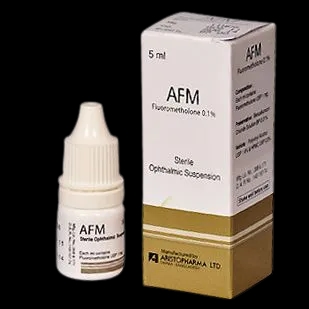
AFM0.1%
Aristopharma Ltd.
৳90.00
Add to cart
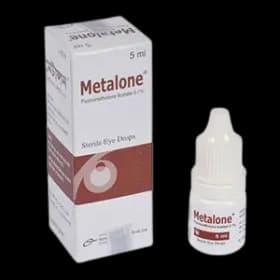

Metalone ophthalmic suspension is a corticosteroid eye drop indicated for the treatment of steroid-responsive inflammatory conditions of the eye. Its use is supported by regulatory approval as follows:
Note: Metalone should be used only under ophthalmologist supervision, as inappropriate use in viral, fungal, or mycobacterial eye infections can worsen the underlying condition (see Contraindications).
Each mL of Fluorometholone Acetate ophthalmic suspension typically contains 1 mg (0.1% w/v) of fluorometholone acetate as the active ingredient, with benzalkonium chloride as preservative and excipients including sodium chloride, edetate disodium, hydroxyethyl cellulose, tyloxapol, and purified water, with pH adjusted using hydrochloric acid and/or sodium hydroxide.
Metalone is a synthetic corticosteroid formulated as a sterile ophthalmic suspension for topical use in the eye. It belongs to a family of ocular anti-inflammatory agents used to control inflammation and reduce swelling, redness, and discomfort associated with various eye conditions. Metalone is available as an eye drop suspension intended for short- to medium-term use under medical supervision, for ophthalmic (topical eye) use only.
Metalone belongs to the therapeutic class of ophthalmic corticosteroids (topical anti-inflammatory agents), used specifically for controlling ocular surface and anterior segment inflammation.
Fluorometholone Acetate is a corticosteroid that suppresses the inflammatory response to a variety of inciting agents including mechanical, chemical, and immunological triggers. It works by inhibiting release of inflammatory mediators (prostaglandins and other arachidonic acid metabolites) and reducing capillary permeability, edema, fibrin deposition, and leukocyte infiltration at the site of inflammation, thereby diminishing the clinical signs of inflammation.
Compared to some other topical ophthalmic corticosteroids (e.g. dexamethasone), Fluorometholone Acetate has been noted in clinical studies to have a longer average time to produce a measurable rise in intraocular pressure (IOP), sometimes cited as a relatively favorable IOP profile among ophthalmic steroids. However, this does not mean Fluorometholone Acetate is free of IOP-elevation risk, and the eventual magnitude of pressure rise with prolonged use can be comparable to other steroids; regular monitoring is still required (see Precautions and Warnings).
Dosing of Metalone should always follow the prescribing ophthalmologist's instructions. General guidance is as follows:
| Population/Phase | Typical Dose |
|---|---|
| Adults - standard maintenance dosing | 1-2 drops into the affected eye(s) 4 times daily |
| Adults - initial 24-48 hours (severe inflammation) | Dosing frequency may be increased to 1-2 drops every 2 hours, at physician discretion |
| Pediatric patients | Safety and efficacy not established; use only under specialist supervision if prescribed (see Use in Special Populations) |
Shake the suspension well before each use. Only one bottle of Metalone should be dispensed initially; a follow-up eye examination is recommended before any refill is provided, since prolonged use carries risk of elevated intraocular pressure and other complications.
To administer Metalone: wash hands thoroughly, shake the bottle well, tilt the head back, gently pull down the lower eyelid to form a small pocket, and instill the prescribed number of drops without letting the dropper tip touch the eye, eyelid, or any surface. Close the eye gently for 1-2 minutes and apply light pressure at the inner corner of the eye (punctal occlusion) to reduce systemic absorption. Remove contact lenses before instilling Metalone and wait at least 15 minutes before reinserting them, as the preservative benzalkonium chloride may be absorbed by soft contact lenses. If using other eye drops concurrently, space administration at least 5 minutes apart.
Formal drug-drug interaction studies with Metalone are limited given its topical ophthalmic use and low systemic absorption. Clinically relevant considerations include:
Fluorometholone Acetate is contraindicated in the following conditions:
Adverse effects associated with Metalone are generally local to the eye and depend on dose and duration of use.
Pregnancy: There are no adequate and well-controlled studies of Metalone in pregnant women. Animal reproduction studies with fluorometholone have shown embryocidal and teratogenic effects (including fetal loss and abnormalities such as cleft palate, rib cage deformities, limb anomalies, and neural defects) at low multiples of the human topical dose. Metalone should be used during pregnancy only if the potential benefit justifies the potential risk to the fetus, and only under the direct advice and supervision of a physician.
Lactation: It is not known whether topical ophthalmic Metalone is excreted in human breast milk; however, systemically administered corticosteroids do appear in breast milk. Caution should be exercised, and a physician should be consulted, when Metalone is prescribed to a nursing mother.
The following precautions apply to the use of Metalone:
Topical ocular overdose of Metalone (e.g. excessive or overly frequent instillation) may cause increased local irritation or worsening of steroid-related ocular side effects such as elevated intraocular pressure. If Metalone is accidentally ingested, seek immediate medical attention or contact a poison control center; excess product in the eye can be flushed with lukewarm water. Do not attempt to manage a suspected overdose at home without professional guidance.
Store Metalone ophthalmic suspension upright, between 2°C and 25°C (36°F to 77°F); protect from freezing and excessive heat. Keep the bottle tightly closed and protected from light. Keep out of reach of children. Discard any unused portion after the labeled in-use period following opening.
Pediatric Use: The safety and effectiveness of Metalone in pediatric patients have not been established. If used in children, they may be at increased risk of systemic corticosteroid effects such as adrenal suppression or Cushing's syndrome compared to adults; use only under close pediatric ophthalmology supervision.
Geriatric Use: No overall differences in safety or effectiveness have been observed between elderly and younger adult patients using Metalone; no dose adjustment is generally required based on age alone.
Renal/Hepatic Impairment: No specific dose adjustment of Metalone is established or generally required for renal or hepatic impairment, given minimal systemic absorption with topical ophthalmic use; caution is advised in patients with significant hepatic disease if prolonged or high-dose use occurs.
The duration of treatment with Metalone depends on the severity and response of the underlying inflammatory eye condition, and should be determined by the prescribing ophthalmologist. Treatment is generally intended to be short-term (days to a few weeks); use beyond 10 days requires periodic monitoring of intraocular pressure. Only one bottle of Metalone should be dispensed initially, and continued or refill use should follow re-assessment by the physician. Therapy should not be stopped or extended without medical advice.
Fluorometholone Acetate belongs to the drug class of synthetic corticosteroids, specifically the subclass of topical ophthalmic corticosteroids / ocular anti-inflammatory agents.
Fluorometholone Acetate acts by binding to glucocorticoid receptors within ocular tissue, inhibiting phospholipase A2 and thereby reducing synthesis of prostaglandins and other inflammatory mediators. This suppresses vascular permeability, leukocyte migration, and fibrin/collagen deposition at the site of inflammation, leading to a reduction in redness, swelling, and discomfort associated with steroid-responsive ocular inflammatory conditions.
C
The safety and effectiveness of Metalone in pediatric patients have not been formally established in controlled trials. When Metalone is prescribed for a child by an ophthalmologist, close monitoring is recommended given the theoretical increased risk of systemic corticosteroid absorption and effects (e.g. adrenal suppression) in children compared with adults. Use in children should be limited to the lowest effective dose for the shortest necessary duration, under specialist supervision.
Q: What is Metalone 0.1% Ophthalmic Suspension used for?
A: Metalone 0.1% Ophthalmic Suspension is an ophthalmic corticosteroid eye drop used to treat steroid-responsive inflammation of the eye, such as allergic conjunctivitis, inflammation after eye surgery, and certain forms of uveitis or keratitis, as prescribed by an ophthalmologist.
Q: How should I use Metalone 0.1% Ophthalmic Suspension eye drops?
A: Shake the bottle well, then instill 1-2 drops into the affected eye(s) up to 4 times daily, or as directed by your doctor. In severe inflammation, your doctor may ask you to use it more frequently for the first 24-48 hours. Always wash your hands before use and avoid touching the dropper tip to your eye.
Q: Can I wear contact lenses while using Metalone 0.1% Ophthalmic Suspension?
A: Remove soft contact lenses before instilling Metalone 0.1% Ophthalmic Suspension, as the preservative can be absorbed by the lens material and cause irritation. You can generally reinsert lenses at least 15 minutes after using the drops, unless your doctor advises otherwise.
Q: What are the main risks of using Metalone 0.1% Ophthalmic Suspension for a long time?
A: Prolonged use of Metalone 0.1% Ophthalmic Suspension (more than about 10 days) can raise intraocular pressure and increase the risk of glaucoma, optic nerve damage, and cataract formation. It can also mask or worsen eye infections and slow corneal healing. For this reason, your doctor may want to check your eye pressure periodically and will not usually prescribe long-term refills without re-examining you.
Q: Is Metalone 0.1% Ophthalmic Suspension safe during pregnancy or breastfeeding?
A: Metalone 0.1% Ophthalmic Suspension has not been well studied in pregnant women, and animal studies with fluorometholone have shown a risk of fetal harm at high exposures. It should only be used during pregnancy if your doctor determines the benefit outweighs the potential risk. Because systemic corticosteroids can pass into breast milk, breastfeeding mothers should also consult their physician before using Metalone 0.1% Ophthalmic Suspension.
Q: Who should not use Metalone 0.1% Ophthalmic Suspension?
A: Metalone 0.1% Ophthalmic Suspension should not be used by anyone with a known hypersensitivity to it or its ingredients, or by patients with certain untreated viral (such as active herpes simplex keratitis), fungal, or mycobacterial eye infections, as it can worsen these conditions. Always confirm the diagnosis with an eye doctor before starting treatment.
Disclaimer
The information provided is accurate to the best of our knowledge, but it does not replace professional medical advice. We cannot guarantee its completeness or accuracy, and the absence of specific information about a drug should not be taken as an endorsement. We are not responsible for any consequences arising from this information, so please consult a healthcare professional for any concerns or questions.

