
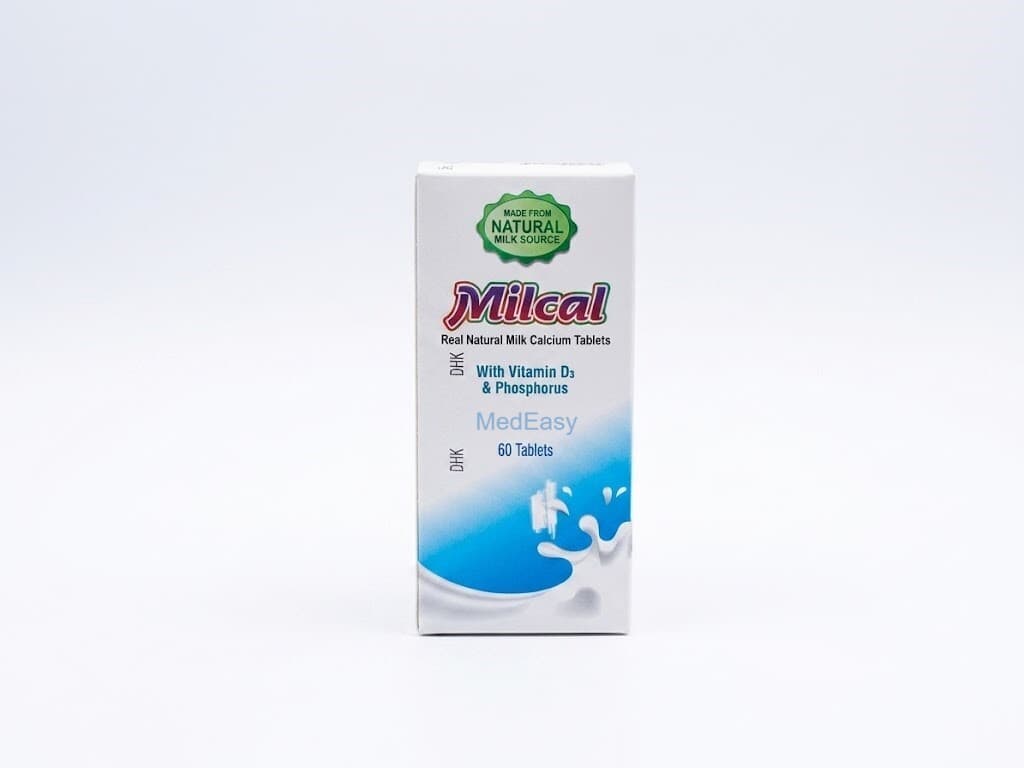

Medicine overview
Indications of Milcal
Milcal is a calcium and vitamin D3 supplement indicated for:
- Established/first-line use: Prevention and treatment of dietary calcium and vitamin D3 deficiency in individuals with inadequate dietary intake.
- Guideline-supported use: As an adjunct to specific osteoporosis therapy (e.g., bisphosphonates, hormone therapy) to ensure adequate calcium and vitamin D3 status, per bone-health guidelines for postmenopausal women and older adults.
- Supportive/adjunct use: Maintenance of bone mineralization during periods of increased calcium demand, such as pregnancy, lactation, growth spurts in children and adolescents, and in the elderly at risk of bone loss.
- Adjunct use: Supportive therapy alongside prescribed corticosteroid treatment, where corticosteroid-induced bone loss is a concern (used together with, not instead of, physician-directed bone-protective therapy).
Milcal is not intended to treat established osteoporosis or severe calcium/vitamin D deficiency as a sole therapy; it is a supplement to be used under medical or pharmacist guidance.
Composition
Each dose of Calcium Phosphate [Milk source] + Vitamin D3 contains calcium phosphate derived from a milk-source mineral complex (providing elemental calcium and phosphorus) together with cholecalciferol (vitamin D3). Exact elemental calcium and vitamin D3 content vary by formulation and strength; refer to the product label for the precise amount per tablet/sachet/chewable unit.
Description
Milcal is a combination supplement in which the calcium phosphate component is sourced from milk (a milk-derived mineral complex, sometimes referred to as milk-derived calcium hydroxyapatite/calcium phosphate complex), combined with vitamin D3 (cholecalciferol) to enhance intestinal calcium absorption. It is used to support bone mineralization and to correct or prevent calcium and vitamin D3 insufficiency.
Because the calcium phosphate is milk-derived, Milcal may contain trace milk proteins; this is an important consideration for patients with milk protein allergy.
Therapeutic Class
Milcal belongs to the therapeutic class of mineral and vitamin supplements — specifically, calcium salts in combination with vitamin D3 (bone-health/anti-osteoporotic supportive agents).
Pharmacology
Calcium Phosphate [Milk source] + Vitamin D3 works through the complementary actions of its two components:
- Calcium phosphate (milk-source): Provides elemental calcium and phosphate, essential minerals for bone and teeth mineralization, neuromuscular function, cardiac function, and blood clotting.
- Vitamin D3 (cholecalciferol): Is hydroxylated in the liver and kidney to its active form, calcitriol, which promotes intestinal absorption of calcium and phosphate, supports renal reabsorption of calcium, and facilitates normal bone mineralization and remodeling.
Together, the components of Calcium Phosphate [Milk source] + Vitamin D3 increase the fraction of dietary and supplemental calcium that is absorbed and made available for bone formation.
Dosage & Administration of Milcal
| Population/Indication | Typical Dose |
|---|---|
| Adults (general calcium/vitamin D3 supplementation) | 1 tablet/chewable/sachet of Milcal once or twice daily, providing approximately 500–1000 mg elemental calcium and 200–400 IU vitamin D3 per day, or as directed by a physician |
| Adjunct in osteoporosis management (postmenopausal women, elderly) | As directed by physician, generally 1000–1200 mg elemental calcium and 400–800 IU vitamin D3 daily from all combined sources, given as Milcal in divided doses |
| Pregnancy/lactation (dietary insufficiency) | As directed by physician, typically similar to adult dose; do not exceed recommended daily allowance without medical supervision |
| Children/adolescents | Dose adjusted by age/weight per physician's advice; see Pediatric Use |
Take Milcal preferably with or after food to enhance absorption and reduce gastrointestinal discomfort. If more than one dose per day is prescribed, divide doses evenly through the day. Do not exceed the recommended dose or combine with other calcium/vitamin D products without checking total daily intake with a physician or pharmacist.
Administration of Milcal
Milcal is administered orally. Tablets/chewable tablets should be chewed or swallowed with water; if a sachet/powder formulation is dispensed, dissolve in water or a soft food/drink as directed. Taking Milcal with meals improves calcium absorption and minimizes stomach upset. Doses should be spaced evenly if given more than once daily, and separated by at least 2 hours from other medicines known to interact (see Interactions).
Interaction of Milcal
Milcal has the following well-established clinically significant interactions:
- Tetracycline and fluoroquinolone antibiotics: Calcium in Milcal chelates with these antibiotics, substantially reducing their absorption and efficacy. Separate administration by at least 2–3 hours.
- Bisphosphonates (e.g., alendronate): Calcium markedly reduces bisphosphonate absorption. Take bisphosphonates at least 30–60 minutes before Milcal or any calcium-containing product.
- Levothyroxine: Calcium can reduce levothyroxine absorption. Separate dosing by at least 4 hours.
- Thiazide diuretics: Concurrent use with Milcal increases the risk of hypercalcemia due to reduced renal calcium excretion; calcium levels should be monitored.
- Digoxin: Hypercalcemia arising from excess intake of Milcal can potentiate digoxin toxicity and increase the risk of cardiac arrhythmia; caution is advised with concurrent use.
- Iron and zinc supplements: Calcium can reduce the absorption of oral iron and zinc; separate dosing where possible.
Contraindications
Calcium Phosphate [Milk source] + Vitamin D3 is contraindicated in patients with:
- Known hypersensitivity to calcium phosphate, vitamin D3, or any excipient in the formulation.
- Milk protein allergy: Because the calcium phosphate in Calcium Phosphate [Milk source] + Vitamin D3 is sourced from milk, this product is contraindicated in patients with a known milk protein allergy, as trace milk proteins may be present.
- Hypercalcemia (elevated blood calcium).
- Hypercalciuria (excessive urinary calcium excretion).
- Hypervitaminosis D.
- Conditions associated with severe risk of nephrocalcinosis or calcium-containing kidney stones where calcium/vitamin D supplementation is specifically contraindicated by a treating physician.
Side Effects of Milcal
Milcal is generally well tolerated at recommended doses. Reported side effects include:
- Common: Mild gastrointestinal upset, constipation, bloating, flatulence, nausea.
- Uncommon: Allergic reaction in patients sensitive to milk proteins (rash, itching, swelling, or more severe hypersensitivity reactions) — see Contraindications.
- Rare (with excessive/prolonged overuse): Symptoms of hypercalcemia such as loss of appetite, excessive thirst, frequent urination, weakness, confusion, or muscle/bone pain.
Patients should report persistent gastrointestinal symptoms or any signs of allergic reaction to their physician.
Pregnancy & Lactation
Milcal may be used during pregnancy and lactation to correct dietary calcium and vitamin D3 insufficiency, but only if clearly needed and the potential benefit justifies the potential risk; excessive intake above recommended levels should be avoided as high-dose vitamin D3 and hypercalcemia have been associated with adverse fetal/infant outcomes. Total calcium and vitamin D3 intake from all sources (diet, prenatal vitamins, and Milcal) should be reviewed with a physician before use in pregnancy or breastfeeding.
Precautions & Warnings
Use Milcal with caution in the following situations:
- Renal impairment: Calcium and vitamin D metabolism is altered in renal disease, increasing the risk of hypercalcemia and soft-tissue calcification; use only under medical supervision with monitoring.
- Sarcoidosis or hyperparathyroidism: These conditions increase sensitivity to vitamin D3 and calcium, raising hypercalcemia risk.
- History of kidney stones: Use with caution and adequate hydration.
- Total daily intake: Avoid exceeding the recommended daily calcium and vitamin D3 intake from all combined dietary and supplemental sources, including other fortified foods or supplements, while taking Milcal.
- Concurrent thiazide diuretics: Increased risk of hypercalcemia (see Interactions).
- Milk protein sensitivity/severe lactose intolerance: Given the milk-derived source of the calcium phosphate in Milcal, patients with dairy allergy should be clearly counselled and avoid this product unless the formulation's purification has been confirmed suitable by their physician (see Contraindications).
- Immobilized patients: At increased risk of hypercalcemia; use with caution.
Overdose Effects of Milcal
Overdose of Milcal can cause hypercalcemia and vitamin D toxicity, with symptoms such as nausea, vomiting, loss of appetite, constipation, excessive thirst, frequent urination, muscle weakness, confusion, and in severe cases, kidney stones, kidney damage, or cardiac arrhythmia. In case of suspected overdose, discontinue the product immediately and seek immediate medical attention or contact a poison control center; do not attempt specific home treatment.
Storage Conditions
Store at room temperature (below 30°C), away from light and moisture. Keep out of reach of children.
Use In Special Populations
Renal impairment: Use Milcal with caution and medical supervision, as impaired renal clearance increases the risk of hypercalcemia and vitamin D toxicity; dose adjustment or avoidance may be needed depending on severity.
Hepatic impairment: Vitamin D3 requires hepatic activation; significant hepatic impairment may reduce efficacy, though no specific dose adjustment is well established. Use with medical guidance.
Elderly: Commonly used in this population for bone-health maintenance; monitor for hypercalcemia, particularly with concurrent thiazide use or renal impairment.
Milk protein allergy/lactose intolerance: See Contraindications — Milcal is unsuitable for patients with confirmed milk protein allergy owing to its milk-derived calcium phosphate source.
Duration Of Treatment
Duration of Milcal therapy depends on the indication and is determined by the prescribing physician — ranging from short-term correction of dietary deficiency to long-term maintenance therapy (months to years) in chronic conditions such as osteoporosis prevention. Periodic reassessment of calcium and vitamin D status is recommended during prolonged use.
Drug Classes
Calcium Phosphate [Milk source] + Vitamin D3 is classified under mineral supplements (calcium salts) in fixed combination with vitamin D3 (fat-soluble vitamin/cholecalciferol analogue).
Mode Of Action
The calcium phosphate component of Calcium Phosphate [Milk source] + Vitamin D3 supplies elemental calcium and phosphate for bone mineral matrix formation, while the vitamin D3 component is converted in the body to calcitriol, which upregulates intestinal calcium-binding proteins to increase active calcium absorption and supports the renal reabsorption of calcium, together maintaining calcium homeostasis and supporting bone mineralization.
Pediatric Uses
Milcal may be used in children and adolescents to support bone growth and to prevent or correct dietary calcium/vitamin D3 deficiency, with dosing adjusted according to age, body weight, and dietary intake, under the guidance of a pediatrician. Safety and efficacy of specific higher-strength formulations of Milcal have not been separately established for all pediatric age groups, and the appropriate age-specific formulation/strength should be selected by a physician. Children with milk protein allergy should not receive Milcal (see Contraindications).
Frequently Asked Questions
Q: What is Milcal 250 mg+250 IU Tablet used for?
A: Milcal 250 mg+250 IU Tablet is a calcium and vitamin D3 supplement used to prevent and treat calcium/vitamin D3 deficiency, and to support bone health, particularly in growing children, pregnant or lactating women, the elderly, and postmenopausal women, often alongside prescribed osteoporosis therapy.
Q: Is Milcal 250 mg+250 IU Tablet safe for people with a milk allergy?
A: No. Because the calcium phosphate in Milcal 250 mg+250 IU Tablet is sourced from milk, it may contain trace milk proteins and is contraindicated in patients with a known milk protein allergy or severe lactose intolerance. Such patients should avoid Milcal 250 mg+250 IU Tablet unless their physician has confirmed the specific formulation is suitable.
Q: Can I take Milcal 250 mg+250 IU Tablet during pregnancy or while breastfeeding?
A: Milcal 250 mg+250 IU Tablet may be used during pregnancy and lactation if clearly needed and only under medical supervision, since excessive calcium or vitamin D3 intake should be avoided. Always discuss your total intake from diet, prenatal vitamins, and Milcal 250 mg+250 IU Tablet with your physician before use.
Q: What happens if I take too much Milcal 250 mg+250 IU Tablet?
A: Taking more than the recommended dose of Milcal 250 mg+250 IU Tablet can cause hypercalcemia and vitamin D toxicity, with symptoms including nausea, vomiting, weakness, confusion, and kidney problems. If overdose is suspected, stop the product and seek immediate medical attention or contact a poison control center.
Q: Can Milcal 250 mg+250 IU Tablet be taken with other medicines?
A: Milcal 250 mg+250 IU Tablet can reduce the absorption of certain antibiotics (tetracyclines, fluoroquinolones), bisphosphonates, levothyroxine, iron, and zinc if taken together; separate dosing by at least 2–4 hours. It should also be used cautiously with thiazide diuretics and digoxin due to increased hypercalcemia risk. Always inform your physician or pharmacist of all medicines you take alongside Milcal 250 mg+250 IU Tablet.
Q: How should I take Milcal 250 mg+250 IU Tablet for best absorption?
A: Milcal 250 mg+250 IU Tablet is best taken with or after meals, in divided doses if more than one dose daily is prescribed, and should not be combined with other calcium/vitamin D-containing products without checking your total daily intake with a healthcare provider.
Disclaimer
The information provided is accurate to the best of our knowledge, but it does not replace professional medical advice. We cannot guarantee its completeness or accuracy, and the absence of specific information about a drug should not be taken as an endorsement. We are not responsible for any consequences arising from this information, so please consult a healthcare professional for any concerns or questions.
