
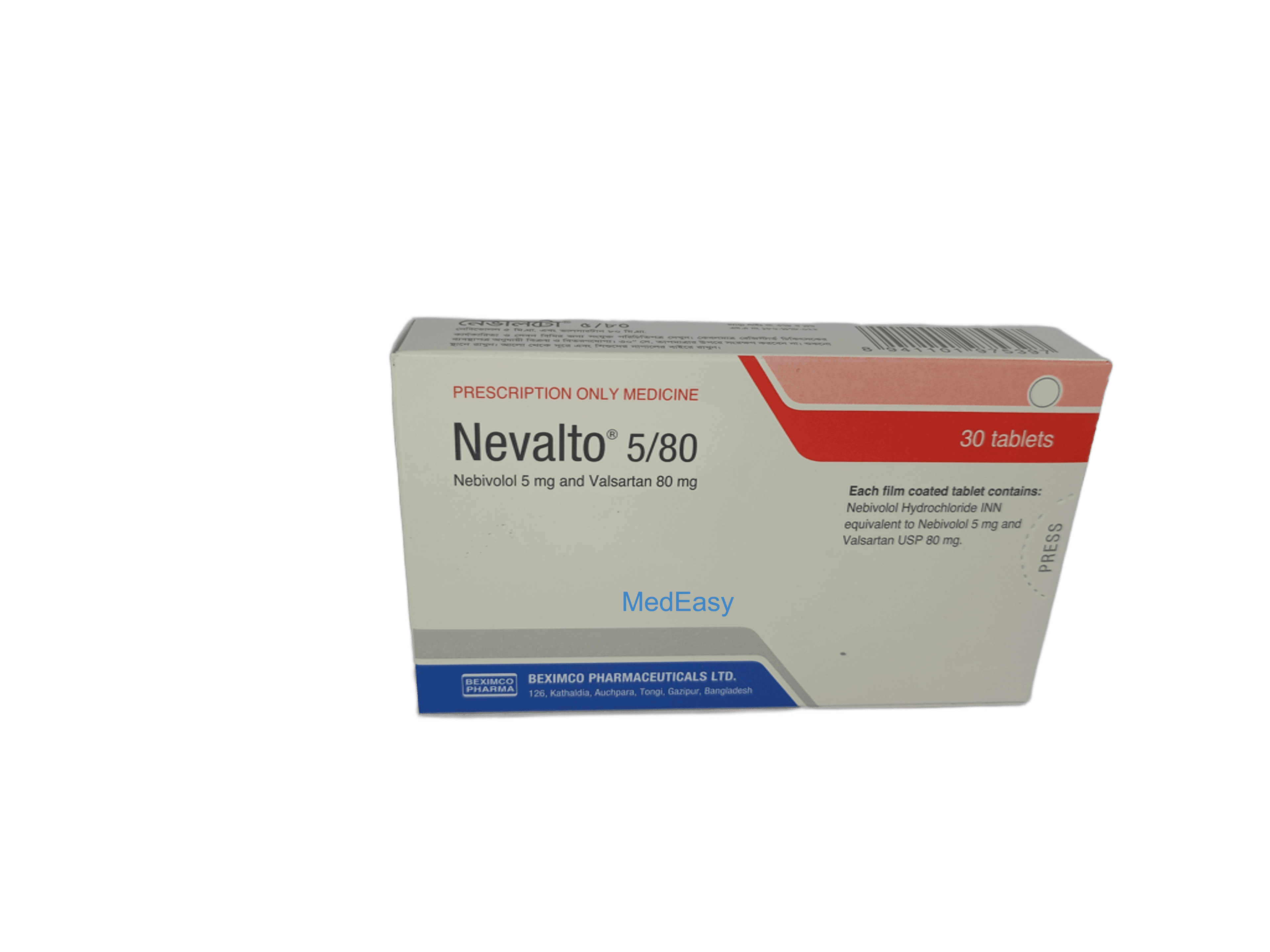

Medicine overview
Indications of Nevalto
Nevalto is a fixed-dose combination antihypertensive approved for the treatment of hypertension (high blood pressure) in adults.
Approved Use
- Treatment of hypertension in adult patients whose blood pressure is not adequately controlled on a single antihypertensive agent (monotherapy).
- Lowering blood pressure reduces the risk of fatal and non-fatal cardiovascular events, primarily strokes and myocardial infarctions.
Important Notes on Use
- Nevalto is not indicated as initial (first-line) therapy for hypertension; it is intended for patients who need add-on therapy after monotherapy has proven insufficient.
- The combination itself has not been directly studied for reduction of cardiovascular morbidity and mortality; such benefit is inferred from the individual drug classes (beta-blockers and angiotensin receptor blockers).
Composition
Each tablet of Nebivolol + Valsartan combines two active ingredients from different antihypertensive classes:
- Nebivolol (as nebivolol hydrochloride) – a cardioselective beta-1 adrenergic blocker.
- Valsartan – an angiotensin II receptor blocker (ARB).
The most studied and marketed fixed-dose strength combines nebivolol 5 mg with valsartan 80 mg in a single tablet for once-daily oral use.
Description
Nevalto is an oral fixed-dose combination medicine used to manage high blood pressure. It pairs a highly cardioselective beta-blocker (nebivolol), which also promotes mild vasodilation, with an angiotensin II receptor blocker (valsartan) that relaxes blood vessels by blocking a hormone that narrows them. Combining two complementary mechanisms allows better blood pressure control in patients who do not respond adequately to a single agent, and the fixed-dose tablet simplifies dosing to once daily.
Therapeutic Class
Nevalto belongs to the therapeutic class of combination antihypertensive agents, specifically combining a cardioselective beta-adrenergic blocker with an angiotensin II receptor blocker (ARB).
Pharmacology
Nebivolol + Valsartan works through two complementary blood pressure-lowering mechanisms:
Nebivolol
A highly selective beta-1 adrenergic receptor blocker at usual doses. It reduces heart rate and cardiac output, and additionally stimulates endothelial nitric oxide release, producing mild vasodilation that further contributes to blood pressure reduction.
Valsartan
A selective antagonist of the angiotensin II AT1 receptor. By blocking angiotensin II from binding this receptor, valsartan prevents its vasoconstrictor and aldosterone-releasing effects, leading to vasodilation and reduced sodium/water retention, both of which lower blood pressure.
Together, the two components produce an additive antihypertensive effect through independent mechanisms (reduced cardiac workload plus vasodilation via two different pathways).
Dosage & Administration of Nevalto
Dosing for Hypertension (Adults)
| Indication | Recommended Dose | Notes |
|---|---|---|
| Hypertension, add-on therapy | One tablet (typically nebivolol 5 mg / valsartan 80 mg) orally once daily | Maximum blood pressure-lowering effect is generally seen within 2 weeks; the fixed-dose tablet should not be split. |
Dose adjustment of the individual components is not possible with the fixed-dose tablet; if a different ratio of nebivolol to valsartan is required, the individual single-ingredient medicines should be used instead, as directed by a physician. See Use in Special Populations for renal and hepatic dosing considerations.
Administration of Nevalto
Nevalto may be taken with or without food, at approximately the same time each day to maintain consistent blood levels. It should be swallowed whole with a glass of water. Blood pressure should be monitored periodically by a physician to assess response to therapy.
Interaction of Nevalto
Nevalto has the following clinically significant drug interactions:
- Aliskiren: Concomitant use in patients with diabetes is contraindicated due to increased risk of hyperkalemia, hypotension, and renal impairment; use in other patients should generally be avoided.
- ACE inhibitors or other ARBs: Combining with the valsartan component increases the risk of hypotension, hyperkalemia, and renal impairment without added benefit; dual renin-angiotensin system blockade should be avoided.
- Potassium-sparing diuretics, potassium supplements, or salt substitutes: May increase serum potassium when combined with the valsartan component; monitor potassium levels.
- CYP2D6 inhibitors (e.g., paroxetine, fluoxetine, quinidine, propafenone): May increase plasma levels of the nebivolol component; dose caution is advised.
- Other antihypertensives, diuretics, or nitrates: Additive blood pressure-lowering effect; risk of symptomatic hypotension.
- Calcium channel blockers (verapamil, diltiazem) or digoxin: Additive effects on heart rate and atrioventricular conduction; risk of significant bradycardia or heart block.
- Clonidine: Beta-blockers can exacerbate rebound hypertension if clonidine is withdrawn; if both are used, the beta-blocker component should be stopped several days before clonidine is tapered.
- NSAIDs: May reduce the antihypertensive effect and increase the risk of renal impairment, particularly in volume-depleted or elderly patients.
- Lithium: ARBs such as the valsartan component can reduce lithium clearance and increase lithium toxicity; monitor lithium levels.
Contraindications
Nebivolol + Valsartan is contraindicated in patients with:
- Known hypersensitivity to nebivolol, valsartan, or any component of the tablet.
- Severe bradycardia.
- Sick sinus syndrome or second- or third-degree atrioventricular (AV) block, unless a functioning pacemaker is in place.
- Cardiogenic shock.
- Decompensated (acutely uncompensated) heart failure.
- Severe hepatic impairment.
- Pregnancy (see Pregnancy and Lactation).
- Concomitant use with aliskiren in patients with diabetes mellitus.
Side Effects of Nevalto
Most patients tolerate Nevalto well. Reported side effects include:
Common
- Headache
- Dizziness
- Fatigue
- Diarrhea
- Peripheral edema (swelling of ankles/feet)
Less Common but Clinically Important
- Bradycardia (slow heart rate)
- Symptomatic hypotension (low blood pressure, lightheadedness on standing)
- Hyperkalemia (elevated blood potassium)
- Worsening renal function, particularly in at-risk patients (see Precautions and Warnings)
- Angioedema (rare, swelling of face/lips/tongue/throat) – requires immediate medical attention
Pregnancy & Lactation
Pregnancy
Nevalto is contraindicated in pregnancy. Medicines that act on the renin-angiotensin system, such as the valsartan component, can cause injury and even death to the developing fetus when used during the second and third trimesters, including reduced fetal kidney function, oligohydramnios, skull and lung underdevelopment, and fetal death. If pregnancy is detected, Nevalto should be discontinued as soon as possible and the physician should be informed immediately so that alternative therapy can be started.
Lactation
It is not known whether Nevalto passes into human breast milk in clinically significant amounts. Because of the potential for serious adverse effects in a nursing infant, a decision should be made, in consultation with a physician, whether to discontinue breastfeeding or discontinue the medicine, taking into account the importance of treatment to the mother.
Precautions & Warnings
The following precautions apply to use of Nevalto:
- Do not stop abruptly: Sudden discontinuation of the beta-blocker component can cause rebound hypertension, chest pain (angina), or, in patients with coronary artery disease, myocardial infarction. The dose should be tapered gradually over one to two weeks under medical supervision.
- Hypotension: Symptomatic low blood pressure may occur, particularly in volume- or salt-depleted patients (e.g., from diuretics, vomiting, diarrhea, or low-salt diet). Correct volume depletion before starting, or start under close monitoring.
- Renal impairment: Changes in renal function, including acute kidney injury, have been reported, especially in patients whose kidney function depends on the renin-angiotensin system (e.g., severe heart failure) or those with renal artery stenosis. Kidney function should be monitored.
- Hyperkalemia: The valsartan component can raise serum potassium; monitor potassium levels periodically, especially with concomitant potassium-sparing agents or renal impairment.
- Bronchospasm/reactive airway disease: Although nebivolol is cardioselective, beta-1 selectivity is not absolute and may diminish at higher doses; use with caution in patients with asthma or chronic obstructive pulmonary disease, and only when clearly needed.
- Masking of hypoglycemia and hyperthyroidism: Beta-blockers may mask signs of low blood sugar (tachycardia) in diabetics and signs of an overactive thyroid; use with caution in these patients.
- Anesthesia and major surgery: Continued beta-blockade reduces the risk of arrhythmia during anesthesia and surgery, but the anesthesiologist should be informed the patient is taking Nevalto.
- Angioedema: Rare but serious swelling of the face, lips, tongue, or throat has been reported with ARBs; discontinue immediately and seek emergency care if this occurs.
- Peripheral vascular disease: Beta-blockers may aggravate symptoms of arterial insufficiency; use with caution.
Overdose Effects of Nevalto
Overdose with Nevalto may cause pronounced hypotension (low blood pressure), marked bradycardia (slow heart rate), dizziness, fainting, and in severe cases, cardiac conduction disturbances or shock.
If an overdose is suspected, seek immediate emergency medical attention or contact a poison control center. Management is supportive and should only be carried out by medical professionals, and may include close monitoring of vital signs, cardiac monitoring, and supportive measures such as intravenous fluids or medicines to support heart rate and blood pressure as clinically indicated. Do not attempt to manage a suspected overdose at home.
Storage Conditions
Store at room temperature (below 30°C), away from light and moisture. Keep out of reach of children.
Use In Special Populations
Renal Impairment
Use of Nevalto is not recommended in patients with severe renal impairment (estimated glomerular filtration rate below 30 mL/min/1.73 m²), as it has not been studied in this population. Caution and monitoring of renal function and potassium are advised in mild to moderate renal impairment.
Hepatic Impairment
Nevalto is contraindicated in severe hepatic impairment (see Contraindications). It should be used cautiously, with lower starting exposure of the nebivolol component in mind, in mild to moderate hepatic impairment.
Elderly
No overall differences in safety or effectiveness have been observed between elderly and younger patients, but greater sensitivity in some older individuals cannot be ruled out; the usual adult dose applies with routine monitoring.
Pediatric Use
See Pediatric Uses.
Duration Of Treatment
Nevalto is intended for long-term, ongoing management of hypertension rather than short-term or as-needed use. Treatment duration is determined by the prescribing physician based on blood pressure control, tolerability, and periodic reassessment; it is not intended to treat acute hypertensive emergencies. Therapy should not be stopped abruptly without medical advice (see Precautions and Warnings).
Drug Classes
Nebivolol + Valsartan represents a combination of two drug classes:
- Cardioselective beta-1 adrenergic blocking agent (nebivolol)
- Angiotensin II receptor blocker / ARB (valsartan)
Mode Of Action
Nebivolol + Valsartan lowers blood pressure through two independent, complementary actions: the nebivolol component selectively blocks beta-1 adrenergic receptors in the heart (reducing heart rate and cardiac workload) while also promoting nitric oxide-mediated vasodilation; the valsartan component blocks the AT1 angiotensin II receptor, preventing vessel constriction and aldosterone-driven sodium/fluid retention. See Pharmacology for full mechanistic detail.
Pregnancy
D
Pediatric Uses
The safety and effectiveness of Nevalto in pediatric patients (below 18 years of age) have not been established. Its use in children and adolescents is therefore not recommended outside of specialist guidance.
Frequently Asked Questions
Q: What is Nevalto 5 mg+80 mg Tablet used for?
A: Nevalto 5 mg+80 mg Tablet is used to treat high blood pressure in adults who are not adequately controlled with a single blood pressure medicine.
Q: How should I take Nevalto 5 mg+80 mg Tablet?
A: Take one tablet of Nevalto 5 mg+80 mg Tablet by mouth once daily, with or without food, at the same time each day. Swallow the tablet whole; do not split or crush it.
Q: Can I stop taking Nevalto 5 mg+80 mg Tablet suddenly?
A: No. Stopping Nevalto 5 mg+80 mg Tablet abruptly can cause rebound high blood pressure, chest pain, or, in some patients with heart disease, a heart attack. Always taper the dose gradually under a physician's supervision.
Q: Can Nevalto 5 mg+80 mg Tablet be used during pregnancy?
A: Nevalto 5 mg+80 mg Tablet is contraindicated in pregnancy because it can cause serious injury or death to the developing fetus, especially in the second and third trimesters. If you become pregnant while taking it, stop the medicine and contact your physician immediately for an alternative treatment.
Q: What are the most common side effects of Nevalto 5 mg+80 mg Tablet?
A: The most common side effects of Nevalto 5 mg+80 mg Tablet include headache, dizziness, tiredness, diarrhea, and swelling of the ankles or feet. Contact your physician if these persist or worsen.
Q: Who should not take Nevalto 5 mg+80 mg Tablet?
A: Nevalto 5 mg+80 mg Tablet should not be taken by people with a known allergy to either ingredient, severe slow heart rate, certain heart conduction problems without a pacemaker, cardiogenic shock, decompensated heart failure, severe liver disease, or by pregnant women, and it should not be combined with aliskiren in people with diabetes.
Disclaimer
The information provided is accurate to the best of our knowledge, but it does not replace professional medical advice. We cannot guarantee its completeness or accuracy, and the absence of specific information about a drug should not be taken as an endorsement. We are not responsible for any consequences arising from this information, so please consult a healthcare professional for any concerns or questions.
