
10% Off
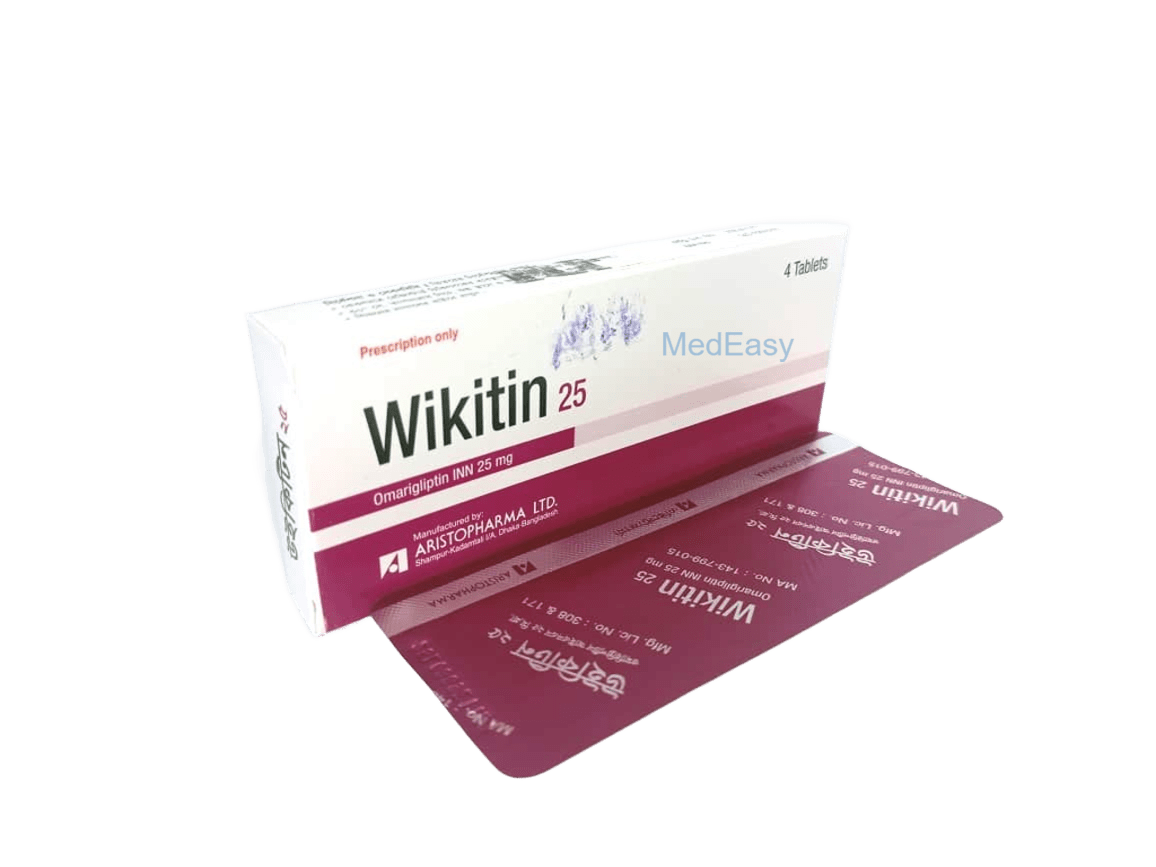
Wikitin25 mg
Aristopharma Ltd.
৳486.00
Add to cart


Omari is a dipeptidyl peptidase-4 (DPP-4) inhibitor indicated as an adjunct to diet and exercise to improve glycemic control in adults with type 2 diabetes mellitus.
Each film-coated tablet of Omarigliptin typically contains Omarigliptin equivalent to 25 mg or 12.5 mg of the free base, along with standard pharmaceutical excipients used for tablet formulation. Exact strengths and excipients may vary by manufacturer; refer to the specific product label for details.
Omari is an orally administered, highly selective dipeptidyl peptidase-4 (DPP-4) inhibitor belonging to the "gliptin" class of antidiabetic medicines. It was developed with a long elimination half-life that allows for once-weekly dosing, distinguishing it from most other DPP-4 inhibitors, which are typically dosed once daily.
Omari is used in the management of type 2 diabetes mellitus, generally as part of a broader treatment plan that includes diet, exercise, and, where appropriate, other antidiabetic medications.
Omari belongs to the Dipeptidyl Peptidase-4 (DPP-4) Inhibitor class of oral antidiabetic agents (also known as "gliptins").
Omarigliptin works by inhibiting the enzyme dipeptidyl peptidase-4 (DPP-4), which is responsible for the rapid degradation of the incretin hormones glucagon-like peptide-1 (GLP-1) and glucose-dependent insulinotropic polypeptide (GIP).
Dosing of Omari should always be individualized by a physician based on glycemic control, concomitant therapy, and renal function.
| Renal function | Recommended dose |
|---|---|
| Normal to mild renal impairment | 25 mg orally, once weekly |
| Moderate to severe renal impairment / end-stage renal disease (on dialysis) | Reduced dose (e.g. 12.5 mg once weekly) as advised by the treating physician |
If a dose of Omari is missed, it should be taken as soon as remembered on the same day, provided the next scheduled dose is not due within the next 3 days; otherwise the missed dose should be skipped and the regular weekly schedule resumed. A double dose should never be taken to make up for a missed one.
See Contraindications and Precautions and Warnings for situations requiring caution or avoidance.
Omari tablets are taken orally, once weekly, on the same day each week, with or without food. The day of weekly administration can be changed if necessary, as long as the next dose is taken at least 3 days after the previous dose. Tablets should be swallowed whole with water and should not be crushed or chewed unless specifically directed by a physician.
Omari has a relatively low potential for clinically significant drug interactions, as it is not extensively metabolized by the cytochrome P450 system. However, the following interactions are clinically relevant:
Patients should inform their physician of all medicines they are taking, including over-the-counter drugs and herbal supplements, before starting Omari.
Omarigliptin is contraindicated in patients with a known history of hypersensitivity to Omarigliptin or any component of the formulation, and in patients with a history of a serious hypersensitivity reaction (such as angioedema, anaphylaxis, or Stevens-Johnson syndrome) to Omarigliptin or to another DPP-4 inhibitor, given the recognized class effect.
Most patients tolerate Omari well. Reported side effects include:
Patients should seek medical attention promptly if they experience severe abdominal pain, signs of an allergic reaction, severe joint pain, or unusual skin blistering.
Pregnancy: Data on the use of Omari in pregnant women are limited. Omari should be used during pregnancy only if clearly needed and if the potential benefit to the mother justifies the potential risk to the fetus. As uncontrolled diabetes during pregnancy carries risks to both mother and baby, insulin is generally the preferred agent for glycemic control in pregnancy; a physician should be consulted before use of Omari in this setting.
Lactation: It is not known whether Omari passes into human breast milk. Because many drugs are excreted in breast milk and the effects on a nursing infant are unknown, a decision should be made by a physician whether to discontinue breastfeeding or discontinue Omari, taking into account the benefit of breastfeeding and the mother's clinical need for the drug.
The following precautions should be observed with Omari:
There is limited clinical experience with overdose of Omari. In the event of a suspected overdose, the patient should seek immediate medical attention or contact a poison control center/emergency services. Management should include standard supportive measures as clinically indicated, including monitoring of blood glucose for hypoglycemia, along with monitoring of vital signs and clinical status. There is no specific antidote for Omari overdose; hemodialysis has not been well studied for this purpose and its usefulness in overdose is unclear.
Store at room temperature (below 30°C), away from light and moisture. Keep out of reach of children.
Dose adjustment of Omari is recommended in patients with moderate-to-severe renal impairment or end-stage renal disease (see Dosage and Administration). Renal function should be assessed before starting Omari and periodically thereafter.
No specific dose adjustment is generally required in mild-to-moderate hepatic impairment; data in severe hepatic impairment are limited, and Omari should be used with caution in such patients.
No overall dose adjustment is required based on age alone; however, elderly patients are more likely to have reduced renal function, which should be taken into account (see Renal Impairment above).
Safety and efficacy of Omari in patients under 18 years of age have not been established (see Pediatric Uses).
Omari is generally used as a long-term, chronic treatment for type 2 diabetes mellitus, alongside diet and exercise. The duration of treatment should be determined by the treating physician based on ongoing glycemic control (e.g., HbA1c), tolerability, and the patient's overall diabetes management plan. Treatment should not be stopped or changed without medical advice.
Dipeptidyl Peptidase-4 (DPP-4) Inhibitor; Oral Antidiabetic Agent (Gliptin class)
Omarigliptin selectively and reversibly inhibits the enzyme DPP-4, thereby slowing the breakdown of the incretin hormones GLP-1 and GIP. This increases their circulating active concentrations, resulting in glucose-dependent stimulation of insulin release and suppression of glucagon secretion, which together lower blood glucose levels without a high intrinsic risk of hypoglycemia.
The safety and efficacy of Omari have not been established in pediatric patients (below 18 years of age). Omari is therefore not recommended for use in children or adolescents until further clinical data become available. Use in this population should only occur under close specialist supervision if considered necessary by a physician.
Q: What is Omari 25 mg Tablet used for?
A: Omari 25 mg Tablet is used to improve blood sugar control in adults with type 2 diabetes mellitus, usually alongside diet, exercise, and sometimes other diabetes medicines.
Q: How often do I need to take Omari 25 mg Tablet?
A: Omari 25 mg Tablet is taken orally only once a week, on the same day each week, which is a key feature that distinguishes it from many other diabetes tablets that are taken daily.
Q: Can Omari 25 mg Tablet cause low blood sugar (hypoglycemia)?
A: On its own, Omari 25 mg Tablet carries a low risk of hypoglycemia. However, when combined with a sulfonylurea or insulin, the risk of hypoglycemia increases, and your physician may need to lower the dose of those other medicines.
Q: Is Omari 25 mg Tablet safe during pregnancy or breastfeeding?
A: Data on Omari 25 mg Tablet in pregnancy and breastfeeding are limited. It should be used in pregnancy only if clearly needed and if the benefit outweighs potential risk to the baby, and a physician should be consulted regarding breastfeeding, since it is not known whether Omari 25 mg Tablet passes into breast milk.
Q: What should I do if I miss a dose of Omari 25 mg Tablet?
A: If you miss a dose, take it as soon as you remember on the same day, as long as your next scheduled dose is not due within 3 days; otherwise skip the missed dose and resume your normal weekly schedule. Do not take a double dose.
Q: When should I stop Omari 25 mg Tablet and see a doctor immediately?
A: Stop Omari 25 mg Tablet and seek medical attention immediately if you develop severe abdominal pain (possible sign of pancreatitis), signs of a serious allergic reaction (such as swelling of the face, lips, or throat, or difficulty breathing), severe joint pain, or unusual skin blistering.
Disclaimer
The information provided is accurate to the best of our knowledge, but it does not replace professional medical advice. We cannot guarantee its completeness or accuracy, and the absence of specific information about a drug should not be taken as an endorsement. We are not responsible for any consequences arising from this information, so please consult a healthcare professional for any concerns or questions.
