
10% Off
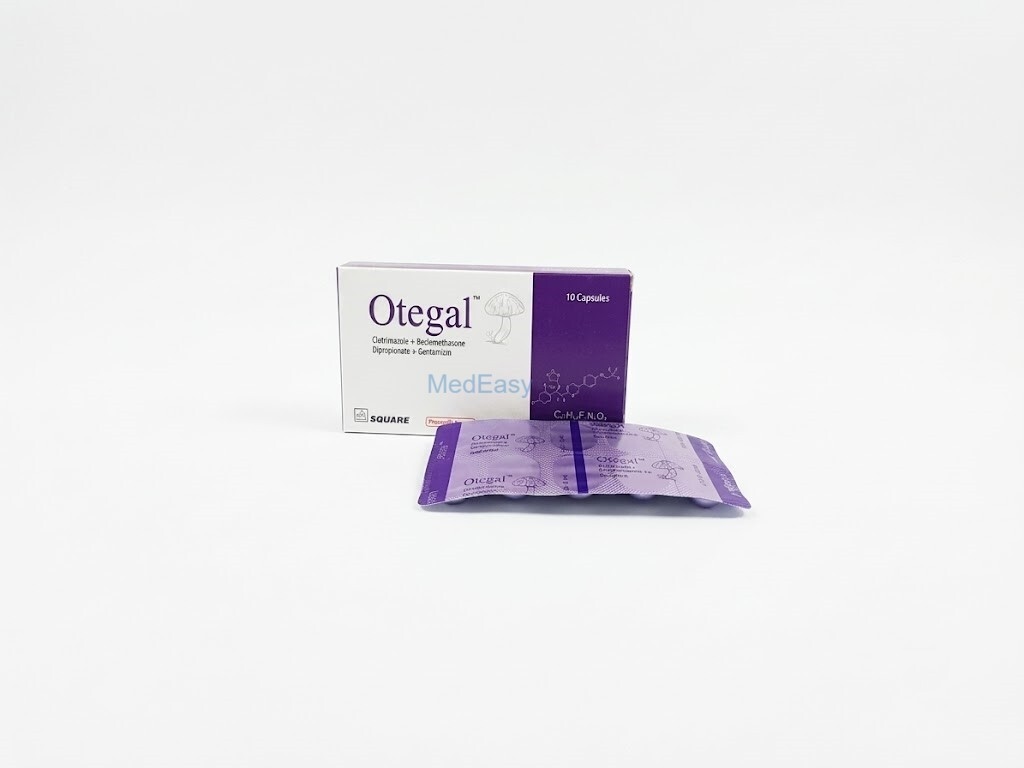
Otegal150 mg
Square Pharmaceuticals PLC.
৳1530.00
Add to cart


Otezol is an oral tetrazole antifungal approved for a single, specific indication:
Otezol is not indicated for the treatment of an acute, active episode of vulvovaginal candidiasis; it is used only for reducing the frequency of future recurrences after the acute infection has been appropriately treated. There are currently no other guideline-supported, adjunct, or accepted off-label uses established for Otezol.
Each capsule of Oteseconazole contains oteseconazole as the active pharmaceutical ingredient, formulated with standard pharmaceutical excipients for oral administration. Strength and exact excipient composition may vary by manufacturer/brand; refer to the specific product packaging/leaflet for complete details.
Otezol is a novel oral tetrazole antifungal agent that selectively inhibits fungal enzymes involved in cell membrane synthesis. It was developed specifically to reduce the recurrence of vulvovaginal candidiasis rather than to treat active fungal infections. A distinguishing pharmacologic feature of Otezol is its very long elimination half-life, allowing an initial short loading course followed by a once-weekly maintenance dosing schedule.
Otezol belongs to the tetrazole class of antifungal agents, a newer subclass distinct from the older triazole/imidazole azole antifungals, designed to selectively target fungal (rather than human) cytochrome P450 enzymes.
Oteseconazole works by selectively inhibiting fungal lanosterol 14α-demethylase (CYP51), an enzyme required for ergosterol synthesis, a critical component of the fungal cell membrane. By blocking ergosterol production, Oteseconazole disrupts fungal cell membrane integrity and inhibits growth of Candida species. Its tetrazole metal-binding group gives it high selectivity for the fungal CYP51 enzyme over human cytochrome P450 enzymes compared with older azole antifungals, which may reduce certain off-target drug interaction risks, although clinically relevant CYP interactions still occur (see Drug Interactions).
Oteseconazole has an unusually long terminal elimination half-life (measured in months), which permits an initial loading-dose regimen followed by once-weekly maintenance dosing, but also means systemic exposure can persist for a prolonged period after the last dose is taken.
| Treatment Phase | Dose | Timing |
|---|---|---|
| Day 1 (Loading) | 600 mg (four 150 mg capsules) as a single dose | Taken with food |
| Day 2 (Loading) | 450 mg (three 150 mg capsules) as a single dose | Taken with food |
| Day 14 onward (Maintenance) | 150 mg (one capsule) once weekly for 11 consecutive weeks | Taken with food, same day each week |
The complete treatment course spans 12 weeks. Otezol should be taken with food to support absorption. Take Otezol exactly as prescribed by your physician; do not stop, extend, skip doses, or share this medicine with others without medical advice. A missed weekly maintenance dose should be taken as soon as remembered unless it is close to the next scheduled dose, in which case the missed dose should be skipped — doses should not be doubled.
Otezol capsules should be swallowed whole with a meal. Do not crush or chew the capsules. Maintenance doses should be taken on the same day each week to maintain a consistent schedule.
Otezol is metabolized by and interacts with several cytochrome P450 enzymes and transporters. Clinically significant interactions include:
Inform your physician of all prescription, over-the-counter, and herbal medicines being used before starting Otezol.
Oteseconazole is contraindicated in:
Non-reproductive-potential status (e.g., permanent infertility, postmenopausal status, or another medically confirmed condition) must be confirmed before prescribing Oteseconazole.
The most commonly reported adverse effects of Otezol in clinical trials include headache and nausea. Other adverse effects reported include:
Most adverse effects reported have been mild to moderate. Given that Otezol is a relatively novel medicine, long-term safety data remain limited, and patients should report any unusual or persistent symptoms to their physician.
Otezol is contraindicated in pregnancy and in females of reproductive potential (see Contraindications) due to demonstrated embryo-fetal toxicity in animal studies and its unusually prolonged systemic exposure. Because of the very long elimination half-life, systemic exposure to Otezol can persist for an extended period after the last dose, which is an important consideration for any future pregnancy planning even after treatment has been discontinued. There is no adequate data on the presence of Otezol in human breast milk; breastfeeding is not recommended during and following treatment given the prolonged systemic exposure, and a physician should be consulted regarding the appropriate interval before breastfeeding may be considered safe.
Otezol should only be prescribed after confirming the patient is not of reproductive potential, given the embryo-fetal risk described in Contraindications.
Take Otezol exactly as prescribed by your physician; do not stop, extend, skip doses, or share this medicine with others without medical advice.
There is limited clinical experience with Otezol overdose. In case of a suspected overdose, seek immediate medical attention or contact a poison control center/emergency services. Treatment of overdose should be symptomatic and supportive, as directed by a physician; there is no specific antidote for Otezol overdose.
Store at room temperature (below 30°C), away from light and moisture. Keep out of reach of children.
Renal impairment: No dedicated dose adjustment for Otezol has been well established; use with caution and physician guidance.
Hepatic impairment: Use Otezol with caution; data in patients with severe hepatic impairment are limited.
Elderly: Otezol is indicated for females not of reproductive potential, which may include postmenopausal women; no specific dose adjustment is established for elderly patients based on age alone.
Pediatric patients: See Pediatric Uses.
The complete treatment course with Otezol is 12 weeks: a 2-day oral loading dose regimen (Day 1 and Day 2) followed by once-weekly maintenance dosing for 11 weeks starting on Day 14. The full course should be completed as prescribed even if symptoms of recurrent yeast infection do not occur during treatment, since the purpose of Otezol is preventive.
Oteseconazole belongs to the tetrazole antifungal drug class, a structurally distinct subclass of azole antifungals developed for greater selectivity toward fungal versus human CYP enzymes.
Oteseconazole selectively inhibits fungal lanosterol 14α-demethylase (CYP51), blocking ergosterol biosynthesis, which is essential for fungal cell membrane structure and function. This disruption of the fungal cell membrane inhibits growth of Candida species responsible for vulvovaginal candidiasis, thereby reducing the likelihood of recurrence when used as directed.
The safety and efficacy of Otezol have not been established in pediatric patients. Otezol is approved for use in females who are not of reproductive potential, which by definition excludes use in children and adolescents of reproductive potential; it should not be used in pediatric patients outside of this defined population, and only under specialist medical guidance if ever considered.
Q: What is Otezol 150 mg Capsule used for?
A: Otezol 150 mg Capsule is used to reduce the incidence of recurrent vulvovaginal candidiasis (recurrent vaginal yeast infections) in females who are not of reproductive potential and who have had three or more yeast infections in the past year. It is not used to treat an active yeast infection.
Q: Can Otezol 150 mg Capsule be used during pregnancy?
A: No. Otezol 150 mg Capsule is contraindicated in pregnancy and in females of reproductive potential because animal studies showed harm to the developing fetus, and the drug stays in the body for a very long time after the last dose. Non-reproductive-potential status must be confirmed before starting treatment.
Q: How is Otezol 150 mg Capsule taken?
A: Otezol 150 mg Capsule is taken as a 600 mg dose on Day 1, followed by 450 mg on Day 2, then 150 mg once weekly for 11 weeks starting on Day 14, always with food. The full 12-week course should be completed exactly as prescribed by your physician; do not stop, extend, skip doses, or share this medicine with others without medical advice.
Q: What are the common side effects of Otezol 150 mg Capsule?
A: The most commonly reported side effects of Otezol 150 mg Capsule are headache and nausea. Other effects may include back pain, abdominal discomfort, and fatigue. Most reported effects have been mild to moderate, but any unusual or persistent symptom should be reported to your physician.
Q: Does Otezol 150 mg Capsule interact with other medicines?
A: Yes. Otezol 150 mg Capsule can interact with medicines metabolized by CYP3A4 and CYP2C9 (such as warfarin) and with BCRP transporter substrates (such as rosuvastatin), potentially increasing their levels in the body. Always tell your physician about all medicines you are taking before starting Otezol 150 mg Capsule.
Q: What happens if I take too much Otezol 150 mg Capsule?
A: If an overdose of Otezol 150 mg Capsule is suspected, seek immediate medical attention or contact a poison control center/emergency services right away. There is no specific antidote, and treatment is supportive and symptomatic under medical supervision.
Disclaimer
The information provided is accurate to the best of our knowledge, but it does not replace professional medical advice. We cannot guarantee its completeness or accuracy, and the absence of specific information about a drug should not be taken as an endorsement. We are not responsible for any consequences arising from this information, so please consult a healthcare professional for any concerns or questions.
