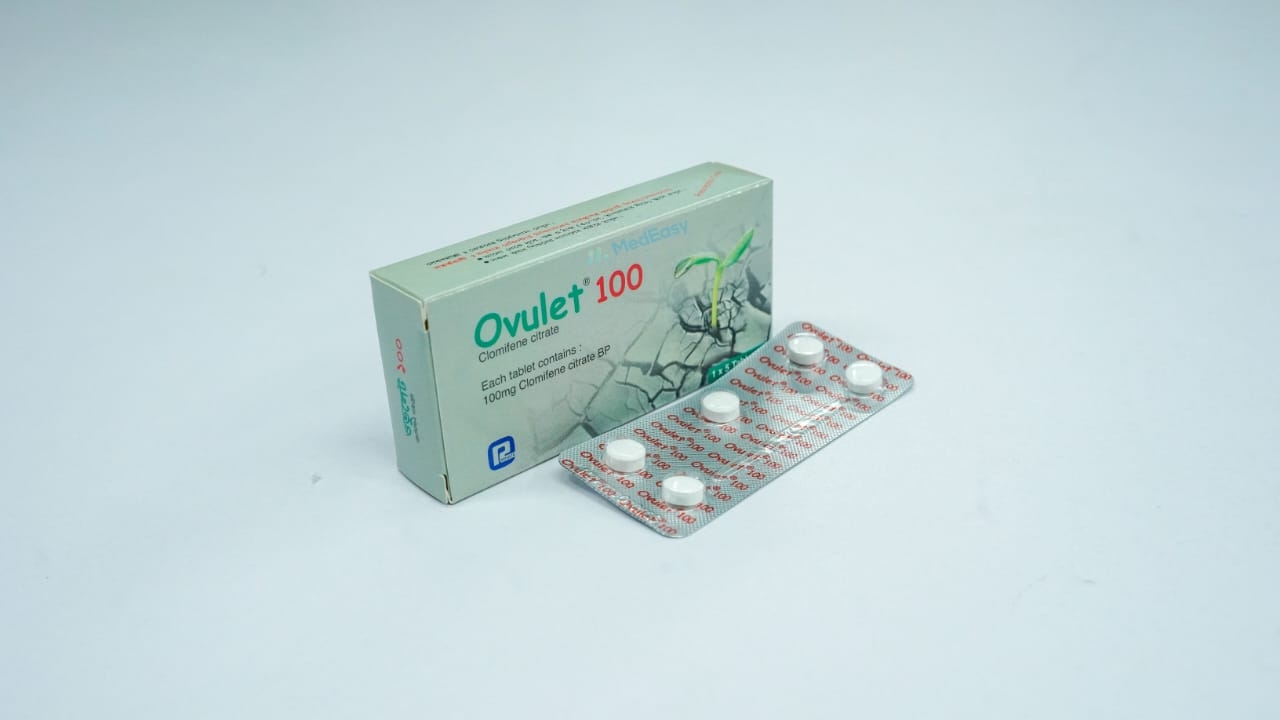
Clomiphene citrate is chiefly indicated for the treatment of ovulatory failure in female patients who wish to become pregnant. This therapy will not be successful unless the patient though unovulatory, is capable of ovulation & her partner is fertile.Clomiphene citrate is also indicated ... Read moreClomiphene citrate is chiefly indicated for the treatment of ovulatory failure in female patients who wish to become pregnant. This therapy will not be successful unless the patient though unovulatory, is capable of ovulation & her partner is fertile.Clomiphene citrate is also indicated for the Polycystic ovary syndrome, Menorrhagia caused by hyperplastic endometrium, Amenorrhea with galactorrhea syndrome, Psychogenic amenorrhea syndrome, Secondary amenorrhea of unknown cause, Amenorrhea during post oral contraceptive period
Theropeutic Class
Drugs for Infertility
Pharmacology
Clomiphene has mainly antiestrogenic effects and some estrogenic effects. The mechanism in stimulating ovulation is unknown but is believed to be related to its antiestrogenic properties. By clomiphene competing with estrogen for binding sites at the hypothalamic level, the gonadotropins, follicle-stimulating hormone (FSH) and luteinizing hormone (LH), secretion is increased, which results in ovarian follicle maturation, followed by the preovulatory LH surge, ovulation, and the subsequent development of the corpus luteum. Usefulness in male infertility is also likely related to the increases in FSH and LH secretion.
Dosage & Administration of Ovuclon 100 mg
The usual dose for the first course of Clomiphene is 50 mg (1 tablet) a day for 5 days in the early follicular phase of the cycle, following normal menstruation or a progestagen-induced withdrawal bleeding. Many regimes have been used, but most common begin either on day 2 or day 5. If this dose induces ovulation, there is no need to increase the dose in the following courses. If this dose induces ovulation, but pregnancy does not occur, stimulation with Ovuclon 100 mg is to be continued, but up to 6 stimulative courses. If the first course does not induce ovulation, the second course should be started with 100 mg a day (2 tablets of 50 mg taken in a single dose) for 5 days. If ovulation is not induced, 2 more stimulative courses of the same dose should be given. If the next three stimulative courses do not produce a successful result, the therapeutic trial is considered to be finished. If ovulation is induced, but pregnancy does not occur, maximum 6 courses with Clomiphene are recommended. However, if menstrual bleeding does not occur, the patient should be examined carefully for the possible pregnancy, and the next course of therapy should be delayed until the correct diagnosis has been determined.
Dosage of Ovuclon 100 mg
The usual dose for the first course of Clomiphene is 50 mg (1 tablet) a day for 5 days in the early follicular phase of the cycle, following normal menstruation or a progestagen-induced withdrawal bleeding. Many regimes have been used, but most common begin either on day 2 or day 5. If this dose induces ovulation, there is no need to increase the dose in the following courses. If this dose induces ovulation, but pregnancy does not occur, stimulation with Ovuclon 100 mg is to be continued, but up to 6 stimulative courses. If the first course does not induce ovulation, the second course should be started with 100 mg a day (2 tablets of 50 mg taken in a single dose) for 5 days. If ovulation is not induced, 2 more stimulative courses of the same dose should be given. If the next three stimulative courses do not produce a successful result, the therapeutic trial is considered to be finished. If ovulation is induced, but pregnancy does not occur, maximum 6 courses with Clomiphene are recommended. However, if menstrual bleeding does not occur, the patient should be examined carefully for the possible pregnancy, and the next course of therapy should be delayed until the correct diagnosis has been determined.
Interaction of Ovuclon 100 mg
No drug interaction has been reported during the administration of Clomiphene citrate.
Contraindications
Clomiphene citrate is contraindicated during pregnancy, in patients with liver diseases, ovarian cysts, bleeding of undetermined origin, patients with neoplasm of endometrium.
Side Effects of Ovuclon 100 mg
Ovuclon 100 mg is well tolerated. However a few side effects like dizziness, headache, nausea, vomiting, depression, fatigue, insomnia, vasomotor flushing, and allergic reaction may occur. Rarely ovarian enlargement and cyst formation may occur. All these effects disappear promptly after the treatment is discontinued.
Pregnancy & Lactation
This is not recommended in pregnancy. In some cases Clomiphene citrate may reduce lactation, if it is administered to a woman during lactating period. So it should be avoided during lactational period.
Precautions & Warnings
Clomiphene citrate should be used with caution in longer maintenance therapy, with alcoholic drinks & antidepressants.
Overdose Effects of Ovuclon 100 mg
No such effects of acute over dosage of Clomiphene citrate have been reported. However, in case of over dosage, a few sign symptoms of nausea, vomiting, vasomotor flushes, scotoma, and ovarian enlargement with pelvic or abdominal pain may occur. In the event of over dosage appropriate supportive measures should be employed.
Storage Conditions
Ovuclon 100 mg tablet should be stored below 25° C and protected from light & moisture.
Drug Classes
Drugs for Infertility
Mode Of Action
Clomiphene has mainly antiestrogenic effects and some estrogenic effects. The mechanism in stimulating ovulation is unknown but is believed to be related to its antiestrogenic properties. By clomiphene competing with estrogen for binding sites at the hypothalamic level, the gonadotropins, follicle-stimulating hormone (FSH) and luteinizing hormone (LH), secretion is increased, which results in ovarian follicle maturation, followed by the preovulatory LH surge, ovulation, and the subsequent development of the corpus luteum. Usefulness in male infertility is also likely related to the increases in FSH and LH secretion.
Pregnancy
This is not recommended in pregnancy. In some cases Clomiphene citrate may reduce lactation, if it is administered to a woman during lactating period. So it should be avoided during lactational period.
Frequently Asked Questions
What is Ovuclon 100 mg used for?
Clomiphene citrate is chiefly indicated for the treatment of ovulatory failure in female patients who wish to become pregnant. This therapy will not be successful unless the patient though unovulatory, is capable of ovulation & her partner is fertile.Clomiphene citrate is also indicated ... Read moreClomiphene citrate is chiefly indicated for the treatment of ovulatory failure in female patients w…
What is the dosage of Ovuclon 100 mg?
The usual dose for the first course of Clomiphene is 50 mg (1 tablet) a day for 5 days in the early follicular phase of the cycle, following normal menstruation or a progestagen-induced withdrawal bleeding. Many regimes have been used, but most common begin either on day 2 or day 5. If this dose induces ovulation, there is no need to increase the dose in the following courses. If this dose induces…
What are the side effects of Ovuclon 100 mg?
Ovuclon 100 mg is well tolerated. However a few side effects like dizziness, headache, nausea, vomiting, depression, fatigue, insomnia, vasomotor flushing, and allergic reaction may occur. Rarely ovarian enlargement and cyst formation may occur. All these effects disappear promptly after the treatment is discontinued.
Who should not take Ovuclon 100 mg?
Clomiphene citrate is contraindicated during pregnancy, in patients with liver diseases, ovarian cysts, bleeding of undetermined origin, patients with neoplasm of endometrium.
What precautions should be taken with Ovuclon 100 mg?
Clomiphene citrate should be used with caution in longer maintenance therapy, with alcoholic drinks & antidepressants.
Is Ovuclon 100 mg safe during pregnancy and breastfeeding?
This is not recommended in pregnancy. In some cases Clomiphene citrate may reduce lactation, if it is administered to a woman during lactating period. So it should be avoided during lactational period.
Disclaimer
The information provided is accurate to our best practices, but it does not replace professional medical advice. We cannot guarantee its completeness or accuracy. The absence of specific information about a drug should not be seen as an endorsement. We are not responsible for any consequences resulting from this information, so consult a healthcare professional for any concerns or questions.