10% Off
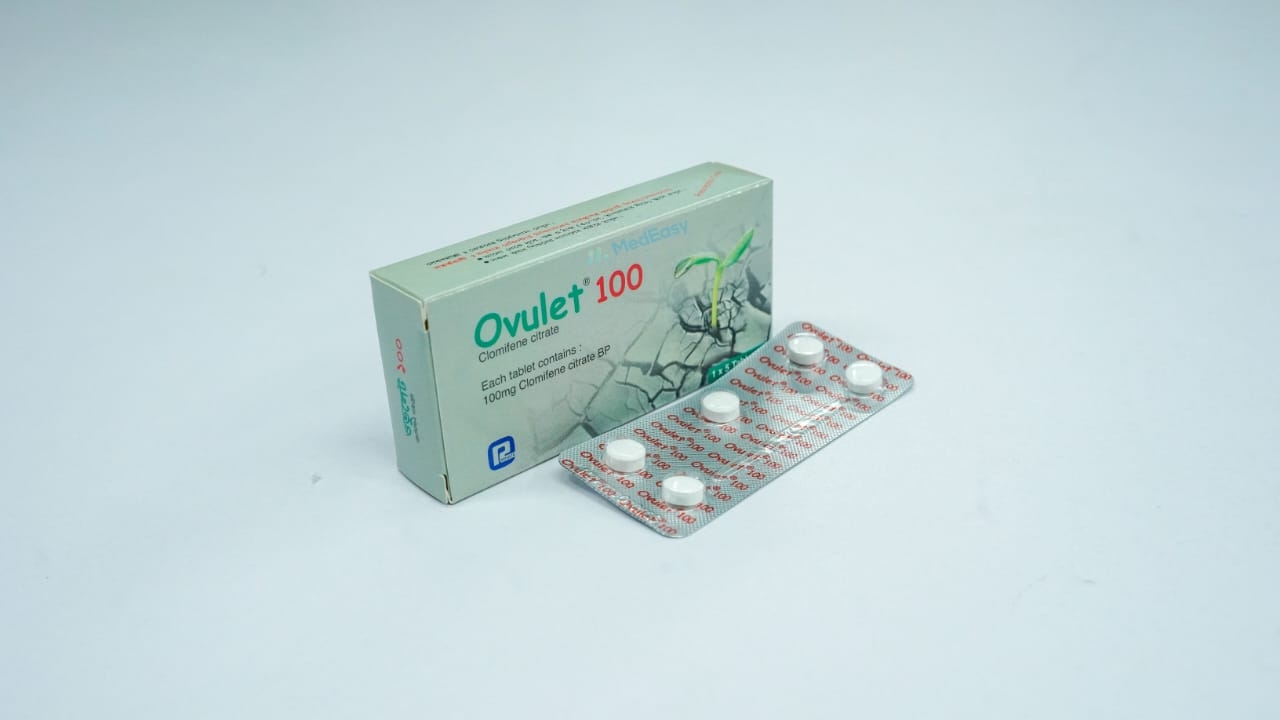
Ovuclon100 mg
Incepta Pharmaceuticals Ltd.
৳16.18
Add to cart

Reomen 100 mg Tablet is available on MedEasy for ৳16.16 per piece, with home delivery anywhere in Bangladesh. It is manufactured by Eskayef Bangladesh Ltd. Its generic name is Clomiphene Citrate.

Reomen is indicated for the treatment of ovulatory dysfunction in women who wish to become pregnant and who have been found to have adequate estrogen levels.
Before starting Reomen, a physician should confirm that the patient is not already pregnant, has normal liver function, and does not have an ovarian cyst other than one caused by PCOS.
Reomen is also used off-label in some fertility protocols (for example, in combination with gonadotropins or timed intercourse/intrauterine insemination) under specialist supervision; such use should be individualized by a fertility specialist and is not an FDA-approved indication.
Each tablet contains Clomiphene Citrate USP as the active ingredient, commonly available in 50 mg strength (also available as 100 mg in some markets), along with pharmaceutically approved excipients.
Reomen is an orally active, non-steroidal ovulatory stimulant belonging to the class of selective estrogen receptor modulators (SERMs). It is chemically related to triphenylethylene compounds and is structurally similar to other anti-estrogenic agents.
Reomen is used to induce ovulation in women who do not ovulate regularly, so that they have the opportunity to conceive. It is taken as a short course of tablets early in the menstrual cycle under the guidance of a physician, with monitoring of ovarian response.
Reomen belongs to the therapeutic class of ovulation-inducing agents / selective estrogen receptor modulators (SERMs), also referred to as anti-estrogens used for fertility treatment.
Clomiphene Citrate is a selective estrogen receptor modulator (SERM) with mixed estrogen agonist/antagonist properties. Its predominant action is as an estrogen antagonist at the hypothalamus, where it competitively binds to and blocks estrogen receptors, interfering with the normal negative feedback of circulating estradiol.
The hypothalamus interprets this as a low-estrogen state, leading to increased secretion of gonadotropin-releasing hormone (GnRH), which in turn increases pituitary release of follicle-stimulating hormone (FSH) and luteinizing hormone (LH). This increase in gonadotropins stimulates ovarian follicular development and, ultimately, ovulation.
Ovulation typically occurs 5–10 days after the last dose of Clomiphene Citrate (usually around day 14–18 of the treatment cycle) in patients who respond to therapy. Clomiphene Citrate does not directly stimulate the ovary; its effect is mediated through the hypothalamic-pituitary-ovarian axis.
Reomen should be prescribed and monitored by a physician experienced in the management of infertility. Treatment should use the lowest effective dose and should not typically continue beyond about six ovulatory cycles.
| Cycle | Dose | Notes |
|---|---|---|
| First cycle | 50 mg once daily for 5 days | Usually started on or about day 5 of the menstrual cycle (spontaneous or induced bleeding). Day 1–5 dosing may also be used per physician preference. |
| Second cycle (if ovulation did not occur) | 100 mg once daily for 5 days | May be given as early as 30 days after the previous course, following confirmation of no pregnancy and no abnormal ovarian enlargement. |
| Subsequent cycles | 100 mg once daily for 5 days (maximum) | Doses above 100 mg/day are not recommended. If ovulation does not occur after 3 courses, further treatment with Reomen is generally not advised and the patient should be re-evaluated. |
If ovulation occurs but pregnancy has not been achieved after about 3 ovulatory cycles, continued treatment with Reomen should be reconsidered by the treating physician.
Reomen tablets are taken by mouth, with or without food, at approximately the same time each day for the prescribed 5-day course. Tablets should be swallowed whole with a glass of water. Do not alter the dose or duration without consulting a physician.
Reomen has minimal well-established clinically significant drug-drug interactions, given its specific hormonal mechanism of action limited largely to the hypothalamic-pituitary-ovarian axis.
No formal drug interaction studies with clinically significant findings are established in the labeling. Patients should nonetheless inform their physician of all medications, supplements, and hormonal therapies they are using before starting Reomen, particularly other fertility medications (e.g. gonadotropins) which may be used together only under specialist supervision.
Clomiphene Citrate is contraindicated in the following situations:
Most side effects of Reomen are mild and related to its hormonal mechanism of action.
Pregnancy: Reomen is contraindicated once pregnancy is confirmed or suspected. It is specifically used to help achieve ovulation and pregnancy, and must be discontinued as soon as pregnancy is confirmed. Pregnancy should be excluded by a physician before each treatment course. Available human data have not shown a clearly increased risk of congenital anomalies above the background population risk when Reomen is used as indicated for ovulation induction, but animal studies have shown adverse fetal effects at high doses, so Reomen should only be used under close medical supervision and exactly as prescribed.
Lactation: It is not known whether Reomen is excreted in human breast milk. Reomen may reduce or inhibit lactation in some women. Use during breastfeeding should only occur if clearly needed and after consulting a physician, since Reomen is generally used prior to conception rather than during an established pregnancy or lactation period for its approved indication.
Reomen can cause ovarian enlargement and, in some patients, ovarian hyperstimulation syndrome (OHSS), a potentially serious condition that can progress rapidly (within 24 hours to several days) and may include gross ovarian enlargement, abdominal pain, gastrointestinal symptoms, ascites, pleural effusion, difficulty breathing, and reduced urine output. Rare but serious complications include venous thromboembolism, ovarian torsion or hemorrhage, and, very rarely, death. The lowest effective dose should be used, and patients should be examined for ovarian enlargement before each treatment course and instructed to report abdominal or pelvic pain, distention, or weight gain promptly.
Blurred vision or other visual symptoms such as spots or flashes of light (scintillating scotomata) may occasionally occur during Reomen therapy, more often with higher doses or longer duration of use. These effects are usually reversible after stopping treatment but may occasionally be prolonged or irreversible. Patients should discontinue Reomen immediately and seek prompt ophthalmological evaluation if any visual symptoms occur, and should avoid driving or operating machinery if vision is affected.
Ovulation induction with Reomen significantly increases the likelihood of multiple pregnancy (twins or higher-order multiples) compared with natural conception. Patients should be counseled about this risk, including the associated obstetric and neonatal risks, before starting treatment.
Reomen should generally not be used for more than about 6 ovulatory cycles; prolonged or repeated use beyond this without reassessment is not recommended and has been associated in some studies with a possible increased risk of ovarian tumors, though a causal relationship has not been firmly established.
Overdose of Reomen may cause nausea, vomiting, hot flashes, visual blurring or spots before the eyes, and ovarian enlargement with abdominal or pelvic pain.
There is no specific antidote. If an overdose of Reomen is suspected, seek immediate medical attention or contact a poison control center. Treatment is supportive and symptomatic; a physician may advise gastric decontamination measures if the ingestion is recent and appropriate. Do not attempt to manage a suspected overdose at home without medical guidance.
Store at room temperature (below 30°C), protected from light, heat, and excessive humidity. Keep out of reach of children.
Reomen is contraindicated in patients with liver disease or significant hepatic dysfunction. There is no well-established dose adjustment for renal impairment; use with caution and physician supervision.
Reomen is used exclusively in women of reproductive age for ovulation induction; it has no indicated use in elderly patients.
Reomen is not indicated for use in children; safety and efficacy in the pediatric population have not been established, as this is an infertility treatment intended for adult women.
Women with polycystic ovary syndrome may be more sensitive to Reomen and are at higher risk of ovarian hyperstimulation; such patients may require lower or more carefully titrated doses under specialist supervision.
A standard course of Reomen is 5 days per cycle. Treatment is generally not continued beyond approximately 6 ovulatory cycles; if pregnancy has not occurred after 3 ovulatory cycles at an adequate dose, or if ovulation does not occur after 3 cycles, the treating physician should reassess the treatment plan.
Selective estrogen receptor modulator (SERM); ovulation-inducing agent / anti-estrogen (fertility agent).
Clomiphene Citrate acts as a competitive antagonist at hypothalamic estrogen receptors, blocking normal estrogen negative feedback. This tricks the hypothalamus into perceiving a low-estrogen state, increasing GnRH pulsatility and subsequent pituitary secretion of FSH and LH, which stimulates ovarian follicular growth and triggers ovulation.
X
Reomen is not indicated for use in children or adolescents who have not reached reproductive maturity. It is used only in adult women of reproductive age for ovulation induction; safety and efficacy in pediatric patients have not been established.
Q: What is Reomen 100 mg Tablet used for?
A: Reomen 100 mg Tablet is used to help women who do not ovulate regularly (anovulation) to ovulate, so they have a better chance of becoming pregnant. It is commonly used in women with polycystic ovary syndrome (PCOS) and other causes of ovulatory dysfunction once other causes of infertility have been ruled out.
Q: How is Reomen 100 mg Tablet taken?
A: Reomen 100 mg Tablet is usually taken as one tablet daily for 5 days, starting around day 5 of the menstrual cycle, exactly as prescribed by your physician. The dose and timing should not be changed without medical advice.
Q: Can Reomen 100 mg Tablet be used during pregnancy?
A: No. Reomen 100 mg Tablet is contraindicated once pregnancy is confirmed or suspected. It is used specifically to help achieve pregnancy and should be stopped as soon as pregnancy is confirmed. Your physician will confirm you are not pregnant before starting or repeating a course.
Q: What are the serious side effects to watch for with Reomen 100 mg Tablet?
A: Seek medical attention promptly if you notice blurred vision, spots, or flashes of light, as these visual disturbances can occasionally be prolonged or irreversible and require stopping the medicine. Also report severe abdominal or pelvic pain, bloating, rapid weight gain, or difficulty breathing, which may indicate ovarian hyperstimulation syndrome (OHSS), a potentially serious complication of Reomen 100 mg Tablet treatment.
Q: Does Reomen 100 mg Tablet increase the chance of having twins?
A: Yes. Reomen 100 mg Tablet significantly increases the likelihood of multiple pregnancy (twins or, less commonly, higher-order multiples) compared to natural conception. Your physician will discuss this risk with you before treatment.
Q: How long can I keep taking Reomen 100 mg Tablet?
A: Treatment with Reomen 100 mg Tablet is generally not continued beyond about 6 ovulatory cycles. If ovulation or pregnancy does not occur after 3 cycles, your physician will reassess your treatment plan rather than continuing indefinitely.
Disclaimer
The information provided is accurate to the best of our knowledge, but it does not replace professional medical advice. We cannot guarantee its completeness or accuracy, and the absence of specific information about a drug should not be taken as an endorsement. We are not responsible for any consequences arising from this information, so please consult a healthcare professional for any concerns or questions.