
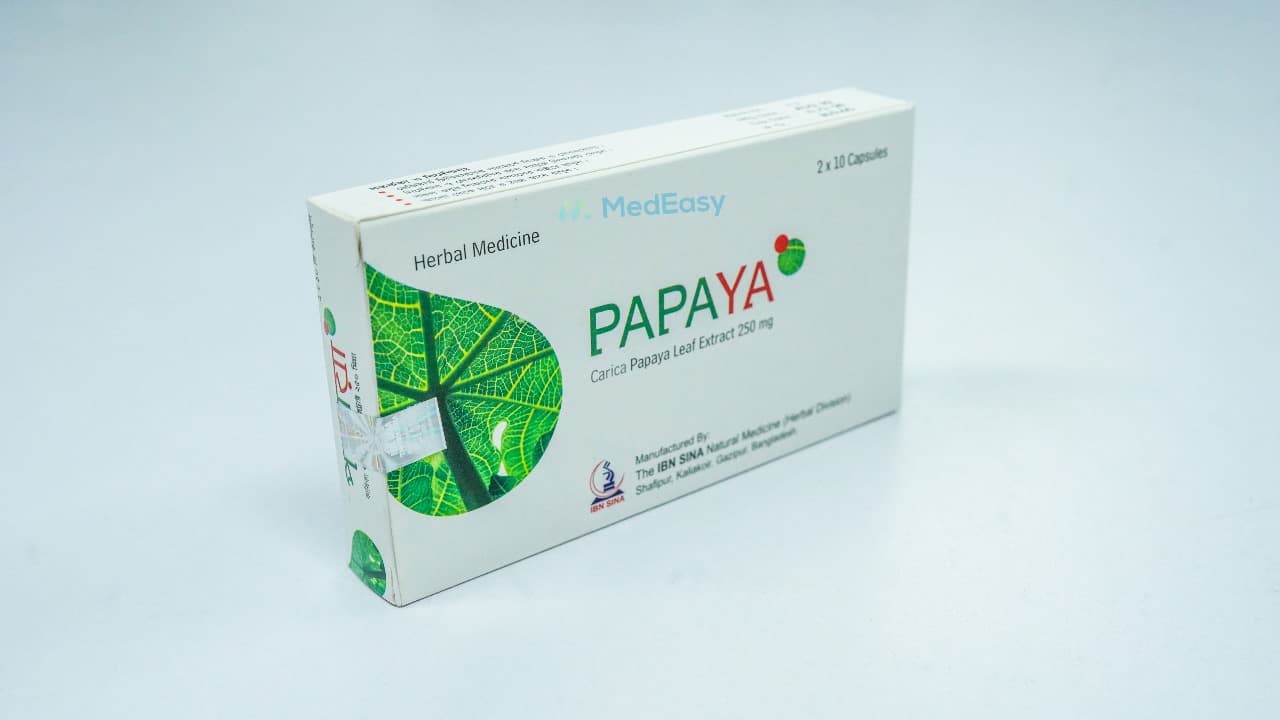

Medicine overview
Indications of Papaya
Indications
Papaya is a herbal (nutraceutical) supplement derived from the leaves of the Carica papaya plant. It is not an FDA-approved pharmaceutical drug; it is marketed and used traditionally, particularly in South and Southeast Asia including Bangladesh, for the following purposes:
- Adjunct/supportive use during dengue fever: Papaya is commonly used as an adjunct, traditional supportive measure that some preliminary small clinical studies suggest may help support platelet counts in patients with dengue-associated thrombocytopenia. This evidence is preliminary and not conclusive, and Papaya is not a substitute for standard medical management, hospital monitoring, or treatment of dengue fever.
- General immune support (traditional use): Used traditionally as a general immune-supportive tonic, based on the antioxidant and phytochemical content of the leaf.
- General digestive support (traditional use): Traditionally used to support digestion, attributed to proteolytic enzymes (e.g., papain) present in the plant.
Important: Anyone with fever, suspected dengue, bleeding symptoms, or a low platelet count must seek prompt medical evaluation. Papaya should only be used as a supportive supplement alongside — never in place of — appropriate medical care.
Composition
Each dose (capsule, tablet, or liquid extract) of Papaya Leaf Extract typically contains a standardized or non-standardized extract of fresh or dried Carica papaya leaves, which naturally contain proteolytic enzymes (papain, chymopapain), flavonoids (e.g., quercetin, kaempferol), alkaloids (e.g., carpaine), tannins, and vitamin C.
Because Papaya Leaf Extract is an herbal product rather than a single, purified pharmaceutical compound, exact composition, extraction method, and potency can vary between manufacturers and batches. Patients should check the specific product label for exact extract strength and standardization details.
Description
Papaya is an herbal supplement prepared from the leaves of the papaya tree (Carica papaya). It has a long history of traditional use in South and Southeast Asian folk medicine and has gained particular popularity in Bangladesh and neighboring countries as a supportive supplement during dengue fever, where it is often used alongside conventional hospital care.
Papaya is available over the counter in various forms, including capsules, tablets, and liquid/syrup extracts. It is regulated as a dietary/herbal supplement rather than as a prescription drug, meaning it has not undergone the same rigorous efficacy and safety evaluation as conventional pharmaceuticals.
Therapeutic Class
Papaya belongs to the category of herbal supplements / nutraceuticals (phytotherapeutic agents). It is not classified within a conventional pharmacological drug class, since it is not an approved pharmaceutical agent.
Pharmacology
Pharmacology
The pharmacological effects of Papaya Leaf Extract are incompletely characterized and are based mainly on preclinical (laboratory/animal) studies and a limited number of small clinical trials, chiefly in the context of dengue-associated thrombocytopenia. Proposed effects include:
- A possible stimulatory effect on platelet production (thrombopoiesis), suggested by small clinical studies showing faster platelet count recovery in dengue patients receiving Papaya Leaf Extract compared to standard care alone.
- Antioxidant activity attributed to flavonoid content, which may reduce oxidative stress associated with acute febrile illness.
- Mild immunomodulatory properties suggested in preclinical research.
These findings are preliminary, based on small or methodologically limited studies, and have not been confirmed in large, well-controlled trials. See Mode of Action for further mechanistic detail.
Dosage & Administration of Papaya
Dosage and Administration
There is no globally standardized, regulator-approved dosing schedule for Papaya, since it is marketed as a herbal supplement rather than a regulated drug. Typical dosing found on marketed products and used in small clinical studies is summarized below; the exact dose depends on the specific product's extract concentration, so the manufacturer's label should always be followed.
| Indication | Typical adult dose | Pediatric dose |
|---|---|---|
| Adjunct supportive use in dengue-associated low platelet count | Commonly 1 capsule/tablet (approx. 250–650 mg standardized extract) 2–3 times daily, or 5–10 mL of liquid extract 2–3 times daily, for a short course (typically 3–7 days) under medical supervision | Safety and efficacy not established; use only under direct medical supervision if considered |
| General immune/digestive supportive use (traditional) | As per product label, generally 1 capsule/tablet once or twice daily | Not recommended without medical advice |
See Dosage and Administration below for further detail, and Duration of Treatment for guidance on treatment length.
Administration of Papaya
Papaya capsules and tablets are generally taken orally with water, with or without food, as directed on the product label. Liquid extract formulations should be measured using the measuring device provided (cup or syringe) and may be diluted in water or juice if the label so directs.
Papaya should be taken exactly as directed by the product label or a physician's advice, particularly when used as a supportive measure during an active illness such as dengue fever, where it should complement — not delay or replace — prompt medical evaluation and treatment.
Interaction of Papaya
Drug Interactions
- Antiplatelet/anticoagulant drugs (e.g., aspirin, clopidogrel, warfarin, heparin): Papaya may have mild effects on platelet function and blood clotting; concurrent use should be undertaken with caution and under medical supervision, as the net effect on bleeding risk is not well established.
- Antidiabetic medications (e.g., insulin, sulfonylureas, metformin): Papaya has been reported to have a mild blood-glucose-lowering effect; concurrent use may increase the risk of hypoglycemia, and blood glucose should be monitored.
Because Papaya is an herbal product with variable composition, other interactions cannot be fully excluded. Patients on any prescription medication should inform their physician before starting Papaya.
Contraindications
Contraindications
- Known hypersensitivity to papaya, papain, or latex. Individuals with a known latex allergy may show cross-reactivity to papaya-derived products ("latex-fruit syndrome") and should avoid Papaya Leaf Extract.
- Pregnancy: Papaya Leaf Extract is contraindicated in pregnancy. Papaya leaf and unripe papaya have a traditional reputation as a uterine stimulant/abortifacient, and safety in pregnancy has not been established; avoid use.
Side Effects of Papaya
Side Effects
Reported side effects of Papaya are generally mild and based on limited data:
- Mild gastrointestinal upset (nausea, stomach discomfort, diarrhea)
- Allergic reactions, ranging from mild skin rash/itching to, rarely, more significant hypersensitivity reactions — particularly in individuals with latex allergy (see Contraindications)
- Rarely, mild hypoglycemia (low blood sugar), especially if combined with antidiabetic medication (see Interactions)
Patients should stop use and seek medical attention if signs of an allergic reaction, unusual bleeding, or severe symptoms occur.
Pregnancy & Lactation
Pregnancy and Lactation
Papaya is contraindicated in pregnancy (see Contraindications) due to a traditional reputation for uterine-stimulant/abortifacient effects and the absence of adequate safety data; it should be avoided.
Data on use during breastfeeding are insufficient to establish safety. As a precaution, Papaya should be avoided during breastfeeding unless specifically advised by a physician, since potential effects on the nursing infant are unknown.
Precautions & Warnings
Precautions and Warnings
- Papaya is a supportive/adjunct supplement only. It must never be used as a substitute for medical evaluation, hospital monitoring, or treatment in suspected dengue fever or any illness involving fever, bleeding, or a low platelet count — prompt medical care should always be sought for these symptoms.
- Use with caution in patients taking anticoagulant/antiplatelet drugs or antidiabetic medications (see Interactions).
- Avoid in individuals with known latex or papaya allergy (see Contraindications).
- As an unregulated herbal product, potency and purity can vary between brands; purchase only from reputable manufacturers/pharmacies.
Overdose Effects of Papaya
Overdose
Data on overdose with Papaya are limited. Excessive intake may theoretically worsen gastrointestinal upset, increase bleeding tendency, or cause hypoglycemia. If overdose is suspected, or if any severe or unusual symptoms occur after taking Papaya, seek immediate medical attention or contact a poison control center/emergency services rather than attempting home treatment.
Storage Conditions
Store at room temperature (below 30°C), away from light and moisture. Keep out of reach of children.
Use In Special Populations
Use in Special Populations
- Pediatric patients: Safety and efficacy of Papaya have not been established in children; use only under direct medical supervision (see Pediatric Uses).
- Elderly patients: Limited data available; use with caution, particularly if taking anticoagulant, antiplatelet, or antidiabetic medications (see Interactions).
- Renal or hepatic impairment: No specific dosing data are available; use with caution and under medical guidance.
- Diabetic patients: Monitor blood glucose closely due to a possible mild blood-glucose-lowering effect (see Interactions).
Duration Of Treatment
When used as a supportive measure during acute dengue-associated thrombocytopenia, Papaya is typically used for a short course (commonly around 3–7 days) alongside medical monitoring, until platelet counts and clinical status improve under a physician's guidance. It is not intended for indefinite or long-term use without medical review. For general supportive/traditional use, duration should follow the product label or a physician's advice.
Drug Classes
Herbal supplement / Nutraceutical; Phytotherapeutic agent (not a conventional pharmaceutical drug class).
Mode Of Action
Mode of Action
The precise mechanism of action of Papaya Leaf Extract is not fully established. Proposed mechanisms, based on preclinical research and small clinical studies, include:
- Possible stimulation of bone marrow platelet production and/or protection of existing platelets from premature destruction, which may explain observed faster platelet recovery in some dengue studies.
- Antioxidant activity from flavonoid compounds (e.g., quercetin) that may reduce oxidative stress during acute infection.
- Possible mild immunomodulatory activity, suggested in laboratory studies.
These mechanisms remain investigational and are not conclusively proven in large controlled human trials.
Pediatric Uses
The safety and efficacy of Papaya in children and adolescents have not been established. There is insufficient clinical data to recommend routine use in pediatric patients. If considered for a child with dengue-associated thrombocytopenia, Papaya should only be used under direct medical supervision, with the understanding that standard pediatric medical management and monitoring for dengue must not be delayed or replaced.
Frequently Asked Questions
Q: What is Papaya 250 mg Capsule used for?
A: Papaya 250 mg Capsule is a herbal supplement traditionally used, particularly in South and Southeast Asia, as an adjunct supportive measure during dengue fever to help support platelet counts, as well as for general immune and digestive support. It is not a proven cure or primary treatment for dengue and must be used alongside, not instead of, proper medical care.
Q: Can Papaya 250 mg Capsule replace hospital treatment for dengue?
A: No. Papaya 250 mg Capsule must never be used as a substitute for medical evaluation, monitoring, or treatment of dengue fever. Anyone with fever, bleeding symptoms, or a low platelet count should seek prompt medical attention; Papaya 250 mg Capsule may only be used as an additional supportive measure alongside standard care, if advised by a physician.
Q: Is Papaya 250 mg Capsule safe during pregnancy?
A: No. Papaya 250 mg Capsule is contraindicated during pregnancy because papaya leaf and unripe papaya have a traditional reputation for stimulating the uterus, and safety in pregnancy has not been established. It should be avoided by pregnant women.
Q: Who should avoid taking Papaya 250 mg Capsule?
A: People with a known allergy to papaya, papain, or latex should avoid Papaya 250 mg Capsule due to possible cross-reactive allergic reactions. It is also contraindicated in pregnancy. Anyone taking blood-thinning medication or antidiabetic drugs should use it only with medical advice due to possible interactions.
Q: Are there any side effects of Papaya 250 mg Capsule?
A: Papaya 250 mg Capsule is generally reported to cause mild side effects such as stomach upset or, in people with latex allergy, allergic skin reactions. Rarely, it may cause low blood sugar, particularly if taken with diabetes medication. Anyone experiencing an allergic reaction, unusual bleeding, or severe symptoms should stop use and seek medical care.
Q: How should Papaya 250 mg Capsule be taken?
A: Papaya 250 mg Capsule is usually taken by mouth as a capsule, tablet, or liquid extract, following the dose and schedule stated on the specific product's label or as advised by a physician, since extract strength varies between brands. It is typically used for a short course of a few days during acute illness under medical guidance.
Disclaimer
The information provided is accurate to the best of our knowledge, but it does not replace professional medical advice. We cannot guarantee its completeness or accuracy, and the absence of specific information about a drug should not be taken as an endorsement. We are not responsible for any consequences arising from this information, so please consult a healthcare professional for any concerns or questions.
