
10% Off
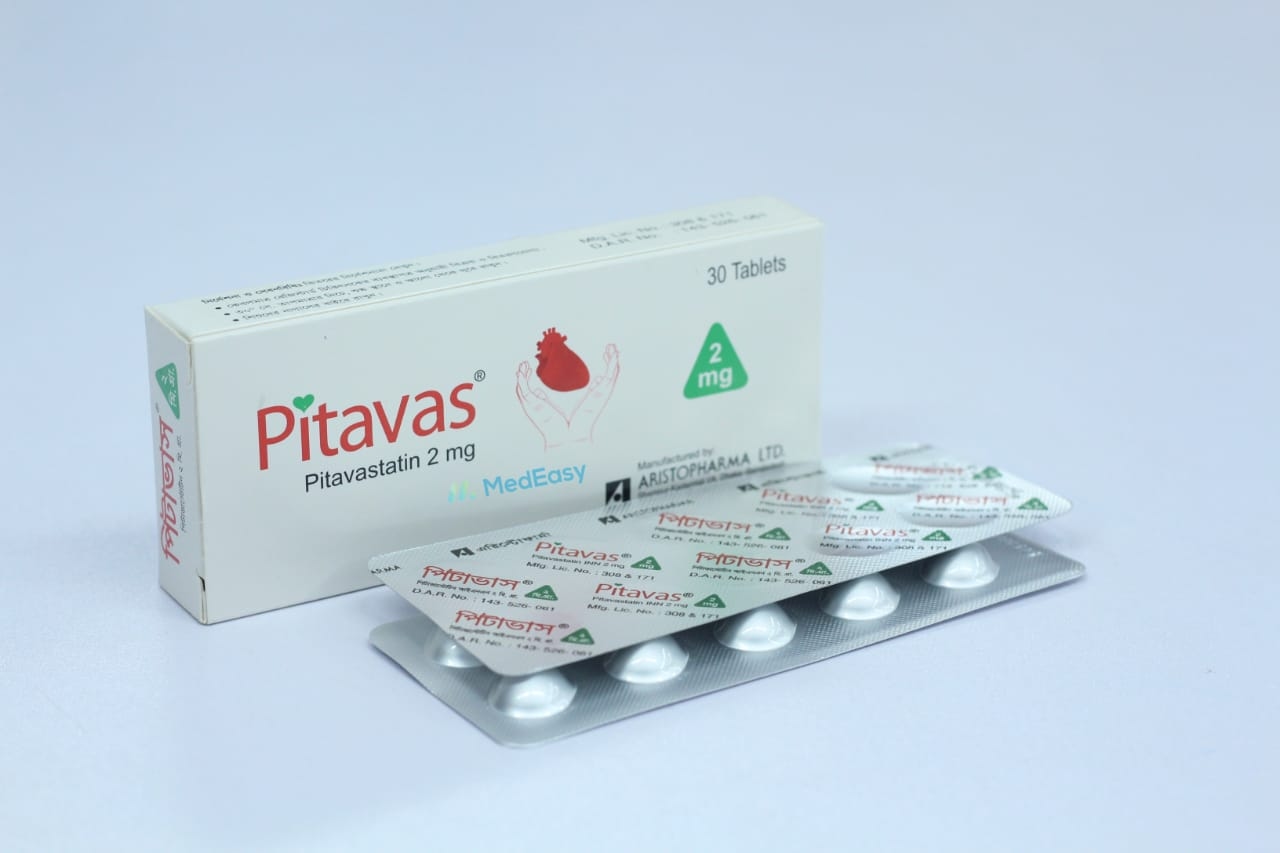
Pitavas2 mg
Aristopharma Ltd.
৳90.00
Add to cart


Pavigard is indicated as an adjunct to diet for the following:
Pavigard is not intended for patients requiring high-intensity LDL-lowering (e.g. very high baseline LDL-C or very high cardiovascular risk); such patients should generally receive an alternative high-intensity statin.
Each film-coated tablet contains Pitavastatin Calcium equivalent to pitavastatin as the active ingredient, commonly available in 1 mg, 2 mg, and 4 mg strengths, along with standard pharmaceutical excipients such as lactose, microcrystalline cellulose, magnesium stearate, and film-coating agents.
Pavigard is a synthetic lipid-lowering agent belonging to the statin (HMG-CoA reductase inhibitor) class. It is used to manage abnormal cholesterol and triglyceride levels and to reduce the risk of cardiovascular events in appropriately selected patients.
Pavigard is administered orally, once daily, and works primarily in the liver, where most cholesterol synthesis occurs. Its effect on LDL cholesterol is generally apparent within two weeks, with maximal effect typically achieved within four weeks of consistent use.
Pavigard belongs to the therapeutic class of lipid-lowering agents, specifically the HMG-CoA reductase inhibitors (statins).
Pitavastatin Calcium competitively inhibits 3-hydroxy-3-methylglutaryl coenzyme A (HMG-CoA) reductase, the rate-limiting enzyme that converts HMG-CoA to mevalonate, an early and rate-determining step in hepatic cholesterol biosynthesis.
By inhibiting this enzyme, Pitavastatin Calcium reduces intracellular cholesterol synthesis, which upregulates hepatic LDL receptor expression on the cell surface. This increases hepatic uptake and clearance of LDL cholesterol from the circulation and reduces circulating LDL-C, total cholesterol, apolipoprotein B, and triglyceride levels, while modestly raising HDL cholesterol.
Pharmacokinetics: Pitavastatin Calcium is absorbed after oral administration with an absolute bioavailability of approximately 51%, undergoes minimal hepatic metabolism (limited CYP2C9/CYP2C8 involvement, making it less prone to certain CYP3A4-mediated drug interactions compared with some other statins), and is eliminated mainly via biliary excretion with a plasma half-life of approximately 12 hours.
| Indication / Situation | Dosing |
|---|---|
| Primary hyperlipidemia / mixed dyslipidemia (adults) | Initial dose 1 mg to 2 mg orally once daily; usual maintenance range 1 mg to 4 mg once daily; maximum 4 mg once daily. Reassess LDL-C after approximately 4 weeks and adjust dose accordingly. |
| Heterozygous familial hypercholesterolemia, ages 8-17 years | Starting dose 1 mg once daily (or 2 mg once daily depending on age/weight per prescriber judgment), titrated at intervals of at least 4 weeks up to a maximum of 4 mg once daily, based on response and tolerability. |
| Moderate to severe renal impairment / hemodialysis | Starting dose 1 mg once daily; maximum dose 2 mg once daily. |
| Hepatic impairment | Not recommended in active liver disease, acute liver failure, or decompensated cirrhosis (see Contraindications). No dose adjustment is established for mild hepatic impairment; use with caution and monitor liver function. |
| Concurrent erythromycin | Limit Pavigard dose to 1 mg once daily. |
| Concurrent rifampin | Limit Pavigard dose to 2 mg once daily. |
Pavigard may be taken at any time of day, with or without food, but should be taken at approximately the same time each day for consistency.
Pavigard tablets should be swallowed whole with water, taken orally once daily at any time of day, with or without food. Tablets should not be crushed or chewed unless the prescribing physician or pharmacist specifically advises otherwise. Consistency in daily timing is recommended to support adherence.
The following interactions with Pavigard are clinically significant and well established:
Patients should inform their physician of all prescription medicines, over-the-counter drugs, and supplements before starting Pavigard.
Pitavastatin Calcium is contraindicated in the following situations:
Most patients tolerate Pavigard well. Reported adverse effects include:
Patients should seek prompt medical attention for unexplained muscle pain, weakness, dark urine, jaundice, or signs of an allergic reaction while taking Pavigard.
Pregnancy: Pavigard is contraindicated in pregnancy. Cholesterol and cholesterol biosynthesis are essential for fetal development, and statins, including Pavigard, may cause fetal harm when administered to a pregnant woman. There is no established benefit of continuing statin therapy during pregnancy, since it is generally used for chronic risk reduction rather than acute treatment. Pavigard should be discontinued as soon as pregnancy is recognized. Females of reproductive potential should use effective contraception while taking Pavigard and should inform their physician promptly if pregnancy occurs or is suspected.
Lactation: Pavigard is contraindicated during breastfeeding. It is not known whether Pavigard is present in human milk, but because of the potential for serious adverse reactions in a breastfed infant, women should not breastfeed while taking this medicine; a decision should be made to either discontinue breastfeeding or discontinue the drug, taking into account the importance of therapy to the mother.
The following precautions apply to the use of Pavigard:
There is no specific antidote for Pavigard overdose. In the event of a suspected overdose, seek immediate medical attention or contact a poison control center. Treatment should be general and supportive, directed at the presenting symptoms, and clinicians may consider monitoring liver function and creatine kinase. Because Pavigard is highly protein-bound, hemodialysis is not expected to significantly enhance its clearance.
Store at room temperature (below 30°C), protected from light and moisture. Keep out of reach of children.
Pediatric use: Pavigard is approved for use in patients aged 8 years and older with heterozygous familial hypercholesterolemia, using weight/age-appropriate dosing and titration under specialist supervision. Safety and efficacy in children under 8 years of age, and in other pediatric lipid disorders, have not been established.
Geriatric use: No overall differences in effectiveness have been observed between elderly and younger patients, but elderly patients (65 years and older) are at increased risk of myopathy and should be monitored closely; a lower starting dose may be considered.
Renal impairment: Dose adjustment is required in moderate-to-severe renal impairment and in patients on hemodialysis (see Dosage and Administration).
Hepatic impairment: Pavigard is contraindicated in active liver disease, acute liver failure, or decompensated cirrhosis; use with caution and appropriate monitoring in mild hepatic impairment.
Pavigard is typically used long-term as part of ongoing management of hyperlipidemia and cardiovascular risk reduction. Treatment duration is determined by the treating physician based on lipid response, tolerability, and overall cardiovascular risk, and therapy is usually continued indefinitely unless contraindications, intolerance, or a change in clinical goals arises.
Pitavastatin Calcium belongs to the statin (HMG-CoA reductase inhibitor) class of lipid-lowering medicines.
Pitavastatin Calcium works by competitively and selectively inhibiting HMG-CoA reductase, the enzyme responsible for converting HMG-CoA to mevalonate, a key early step in hepatic cholesterol synthesis. This inhibition leads to increased expression of hepatic LDL receptors, enhancing the clearance of LDL cholesterol from the bloodstream and lowering total cholesterol, LDL-C, apolipoprotein B, and triglyceride levels.
X
Pavigard is approved for use in pediatric patients aged 8 years and older with heterozygous familial hypercholesterolemia (HeFH) who have an inadequate response to diet, using a weight/age-based starting dose titrated under specialist supervision up to a maximum of 4 mg once daily. Safety and efficacy have not been established in children younger than 8 years of age or for indications other than HeFH. Pediatric patients on Pavigard should be monitored for growth, development, and the same muscle- and liver-related adverse effects seen in adults.
Q: What is Pavigard 2 mg Tablet used for?
A: Pavigard 2 mg Tablet is a statin medicine used, along with diet, to lower high cholesterol (specifically LDL or "bad" cholesterol) and triglycerides, and to help reduce the risk of heart attack and stroke in people with high cardiovascular risk.
Q: How should I take Pavigard 2 mg Tablet?
A: Take Pavigard 2 mg Tablet exactly as prescribed, usually once daily at any time of day, with or without food. Try to take it at the same time each day and continue taking it even if you feel well, since it is used for long-term risk reduction.
Q: Can I take Pavigard 2 mg Tablet during pregnancy or while breastfeeding?
A: No. Pavigard 2 mg Tablet is contraindicated in pregnancy because it may harm the developing fetus, and it should be stopped immediately if you become pregnant. It is also contraindicated during breastfeeding. Women who could become pregnant should use effective contraception while taking Pavigard 2 mg Tablet and discuss family planning with their physician.
Q: What side effects should prompt me to contact my doctor immediately?
A: Contact your doctor right away if you experience unexplained muscle pain, tenderness, or weakness (especially with fever or dark urine), as this can signal a rare but serious muscle problem (myopathy/rhabdomyolysis). Also report signs of liver problems such as unusual tiredness, loss of appetite, yellowing of the skin or eyes, or dark urine.
Q: Are there medicines I should avoid while taking Pavigard 2 mg Tablet?
A: Yes. Pavigard 2 mg Tablet must not be combined with cyclosporine, and caution or dose limits are needed with erythromycin, rifampin, and fibrates such as gemfibrozil, as these can raise Pavigard 2 mg Tablet levels and increase the risk of muscle-related side effects. Always tell your doctor and pharmacist about all medicines and supplements you take.
Q: What should I do if I miss a dose or take too much Pavigard 2 mg Tablet?
A: If you miss a dose, take it as soon as you remember unless it is close to the time for your next dose, in which case skip the missed dose — do not double up. If you or someone else has taken too much Pavigard 2 mg Tablet, seek immediate medical attention or contact a poison control center, since there is no specific antidote and treatment is supportive.
Disclaimer
The information provided is accurate to the best of our knowledge, but it does not replace professional medical advice. We cannot guarantee its completeness or accuracy, and the absence of specific information about a drug should not be taken as an endorsement. We are not responsible for any consequences arising from this information, so please consult a healthcare professional for any concerns or questions.

