10% Off
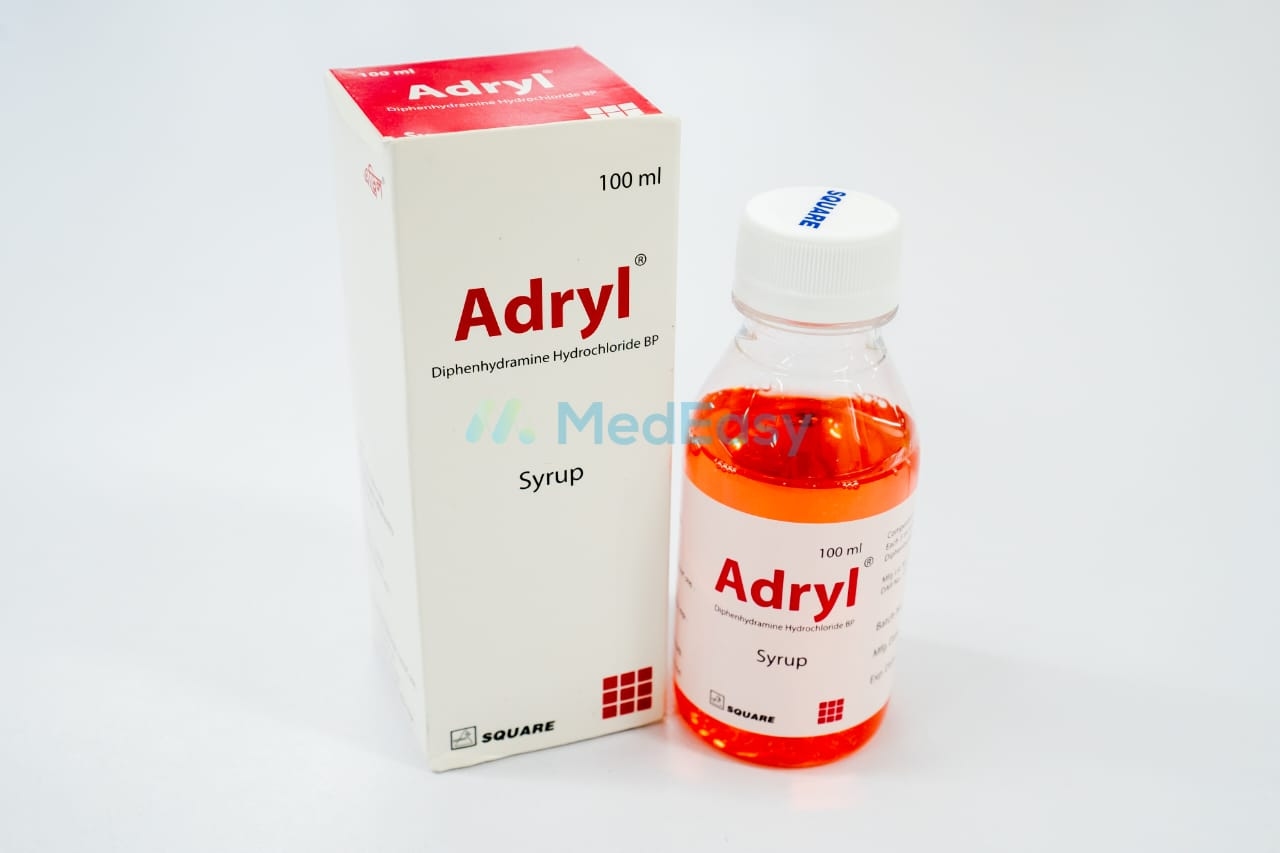
Adryl100 ml
Square Pharmaceuticals PLC.
৳40.50
Add to cart


Pedeamin is a first-generation (sedating) antihistamine indicated for the following uses, classified by strength of evidence:
Each dosage unit contains Diphenhydramine Hydrochloride as the active pharmaceutical ingredient. Diphenhydramine Hydrochloride is available in multiple strengths and dosage forms (e.g., 25 mg and 50 mg tablets/capsules, oral liquid/elixir, and injectable solution for intramuscular or intravenous use), along with pharmaceutically acceptable excipients.
Pedeamin is a first-generation antihistamine belonging to the ethanolamine chemical class. It works primarily by blocking histamine H1 receptors, which relieves allergy symptoms, and it also has notable anticholinergic, sedative, antiemetic, and local anesthetic properties. Because it readily crosses the blood-brain barrier, Pedeamin commonly causes central nervous system sedation, which is why it is also used as an over-the-counter sleep aid.
Pedeamin is available in tablet, capsule, chewable tablet, oral liquid, and injectable forms, and is used both as a single-ingredient product and as a component of combination cough, cold, and allergy formulations.
Pedeamin belongs to the therapeutic class of first-generation (sedating) antihistamines (H1-receptor antagonists), ethanolamine derivatives.
Diphenhydramine Hydrochloride is a first-generation H1-receptor antagonist. It competitively blocks the action of histamine at peripheral H1 receptors, reducing histamine-mediated symptoms such as itching, sneezing, rhinorrhea, and urticaria.
Because Diphenhydramine Hydrochloride is lipophilic and readily crosses the blood-brain barrier, it also blocks central H1 receptors, producing prominent CNS depression (drowsiness/sedation), which underlies its use as a sleep aid. Diphenhydramine Hydrochloride additionally has anticholinergic (antimuscarinic) activity, which contributes to its antiemetic and antivertigo effects (useful in motion sickness) as well as to side effects such as dry mouth, blurred vision, and urinary retention. It also has weak local anesthetic and antitussive properties.
Dosage of Pedeamin should be individualized based on indication, age, and response to therapy. The following is general guidance; a physician's advice should be followed for individual patients.
| Age Group | Dose |
|---|---|
| Adults and children ≥ 12 years | 25-50 mg every 4-6 hours as needed; maximum 300 mg/day |
| Children 6-11 years | 12.5-25 mg every 4-6 hours as needed; maximum 150 mg/day |
| Children under 6 years | Only under medical supervision; not recommended for self-medication |
Adults and children 12 years and older: 50 mg orally at bedtime, as needed. Not intended for regular, chronic use; consult a physician if sleeplessness persists beyond 2 weeks.
Adults and children ≥ 12 years: 25-50 mg orally 30 minutes before travel/exposure to motion, and repeated before meals and at bedtime as needed. Children 6-11 years: 12.5-25 mg on the same schedule, under medical guidance.
Administered by a healthcare professional after epinephrine, by deep intramuscular or slow intravenous injection: Adults, 10-50 mg (up to 100 mg if required); maximum 400 mg/day. Pediatric dosing is weight-based (approximately 5 mg/kg/24 hours, divided doses, maximum 300 mg/day) and must be determined by the treating clinician.
No formal dose-adjustment guidelines are well established; however, caution and dose reduction or extended dosing intervals are advised in significant renal or hepatic impairment due to reduced clearance and increased risk of anticholinergic/CNS side effects, especially in the elderly.
Pedeamin tablets/capsules should be swallowed with water and may be taken with or without food; taking with food may reduce stomach upset. Chewable tablets should be chewed thoroughly. Oral liquid formulations should be measured using an accurate dosing device, not a household spoon.
Injectable Pedeamin is for administration by a healthcare professional only, via deep intramuscular or slow intravenous injection.
Avoid alcohol and use caution when driving or operating machinery after taking Pedeamin, due to its sedating effects.
Clinically significant drug interactions with Pedeamin include:
Diphenhydramine Hydrochloride is contraindicated in:
Common and important side effects of Pedeamin include:
Severe anticholinergic toxicity can occur with high doses or overdose (see Overdose Effects).
Pregnancy: Pedeamin should be used during pregnancy only if clearly needed, and only after the potential benefit has been weighed against the potential risk to the fetus. Use near term should be avoided where possible, as antihistamines may be associated with adverse effects in neonates. A physician should be consulted before use during pregnancy.
Lactation: Pedeamin is excreted in breast milk. It may cause sedation, irritability, or other effects in a nursing infant, and may also suppress milk production, particularly in early lactation. Use during breastfeeding is not recommended unless clearly needed and only under medical advice.
The following precautions apply to the use of Pedeamin:
Overdose of Pedeamin can cause significant anticholinergic toxicity, including flushed skin, dilated pupils, dry mouth, fever, agitation, hallucinations, tremor, involuntary movements, tachycardia, urinary retention, and in severe cases, seizures, arrhythmias, and coma. In young children, overdose may present with paradoxical excitation rather than sedation.
Suspected overdose of Pedeamin is a medical emergency. Seek immediate medical attention or contact a poison control center / emergency services right away. Treatment is generally supportive and should be provided in a hospital setting; do not attempt specific home treatment.
Store at room temperature (below 30°C), away from light and moisture. Keep out of reach of children.
Pediatric patients: Pedeamin is not recommended for children under 6 years of age except under medical supervision, and is not to be used to sedate a child. Use in newborns or premature infants is contraindicated. Paradoxical excitation is more common in children.
Elderly patients: Increased sensitivity to the anticholinergic and sedative effects of Pedeamin is expected in older adults; use with caution due to higher risk of confusion, dizziness, falls, urinary retention, and constipation. Regular use as a sleep aid in the elderly is generally discouraged.
Renal/hepatic impairment: Use with caution and consider reduced doses or longer dosing intervals, as clearance of Pedeamin may be reduced.
For allergic symptoms and motion sickness, Pedeamin is generally used on an as-needed, short-term basis. As an OTC sleep aid, use should be limited to occasional sleeplessness and not continued beyond 2 weeks without consulting a physician. Longer or continuous use for any indication should be guided by a healthcare professional.
First-generation antihistamine (H1-receptor antagonist); ethanolamine derivative
Diphenhydramine Hydrochloride acts as a competitive antagonist at histamine H1 receptors, both peripherally (relieving allergic symptoms) and centrally (producing sedation, due to crossing the blood-brain barrier). It also exhibits anticholinergic (antimuscarinic) activity, contributing to its antiemetic/antivertigo effects, and has mild local anesthetic and antitussive properties.
Category B
Pedeamin is contraindicated in newborn and premature infants. In children under 6 years of age, it should be used only under the guidance of a physician, and it should not be used to sedate or quiet a child. In children 6 years and older, oral dosing follows age-based guidelines (see Dosage and Administration). Paradoxical excitation (hyperactivity, nervousness, insomnia) may occur in children and should prompt discontinuation. Safety and efficacy of Pedeamin for indications outside these established age-based uses have not been established.
Q: What is Pedeamin 100 ml Syrup used for?
A: Pedeamin 100 ml Syrup is used for temporary relief of allergy symptoms (such as sneezing, runny nose, and itchy, watery eyes), hives and itching, motion sickness, and occasional sleeplessness. It is also used as an adjunct with epinephrine in the management of anaphylaxis and acute allergic reactions.
Q: Can I take Pedeamin 100 ml Syrup every night for sleep?
A: No. Pedeamin 100 ml Syrup is intended only for occasional, short-term use as a sleep aid. It is not meant for regular or chronic use, and if sleeplessness continues for more than 2 weeks, a physician should be consulted.
Q: Is it safe to drive after taking Pedeamin 100 ml Syrup?
A: No, it is not advisable. Pedeamin 100 ml Syrup commonly causes drowsiness and impaired coordination. You should avoid driving, operating machinery, or performing tasks requiring alertness until you know how Pedeamin 100 ml Syrup affects you, and you should avoid alcohol while taking it.
Q: Can pregnant or breastfeeding women take Pedeamin 100 ml Syrup?
A: Pedeamin 100 ml Syrup should be used during pregnancy only if clearly needed, after weighing potential benefits against potential risks to the fetus, and use near term should generally be avoided. During breastfeeding, Pedeamin 100 ml Syrup passes into breast milk and may cause sedation or irritability in the infant, or reduce milk supply, so it should be used only if clearly needed and under medical advice. A physician should always be consulted before use in pregnancy or lactation.
Q: Who should not take Pedeamin 100 ml Syrup?
A: Pedeamin 100 ml Syrup should not be used by people with a known hypersensitivity to it or related antihistamines, newborn or premature infants, people currently taking (or who recently stopped) monoamine oxidase inhibitors (MAOIs), people with narrow-angle glaucoma, or people with symptomatic prostatic hypertrophy or bladder neck obstruction.
Q: What should I do if I take too much Pedeamin 100 ml Syrup?
A: An overdose of Pedeamin 100 ml Syrup can cause serious effects such as severe drowsiness or, in children, agitation, hallucinations, fever, rapid heartbeat, and in severe cases seizures or coma. If overdose is suspected, seek immediate medical attention or contact emergency services / a poison control center right away; do not attempt to treat it at home.
Disclaimer
The information provided is accurate to the best of our knowledge, but it does not replace professional medical advice. We cannot guarantee its completeness or accuracy, and the absence of specific information about a drug should not be taken as an endorsement. We are not responsible for any consequences arising from this information, so please consult a healthcare professional for any concerns or questions.