
10% Off
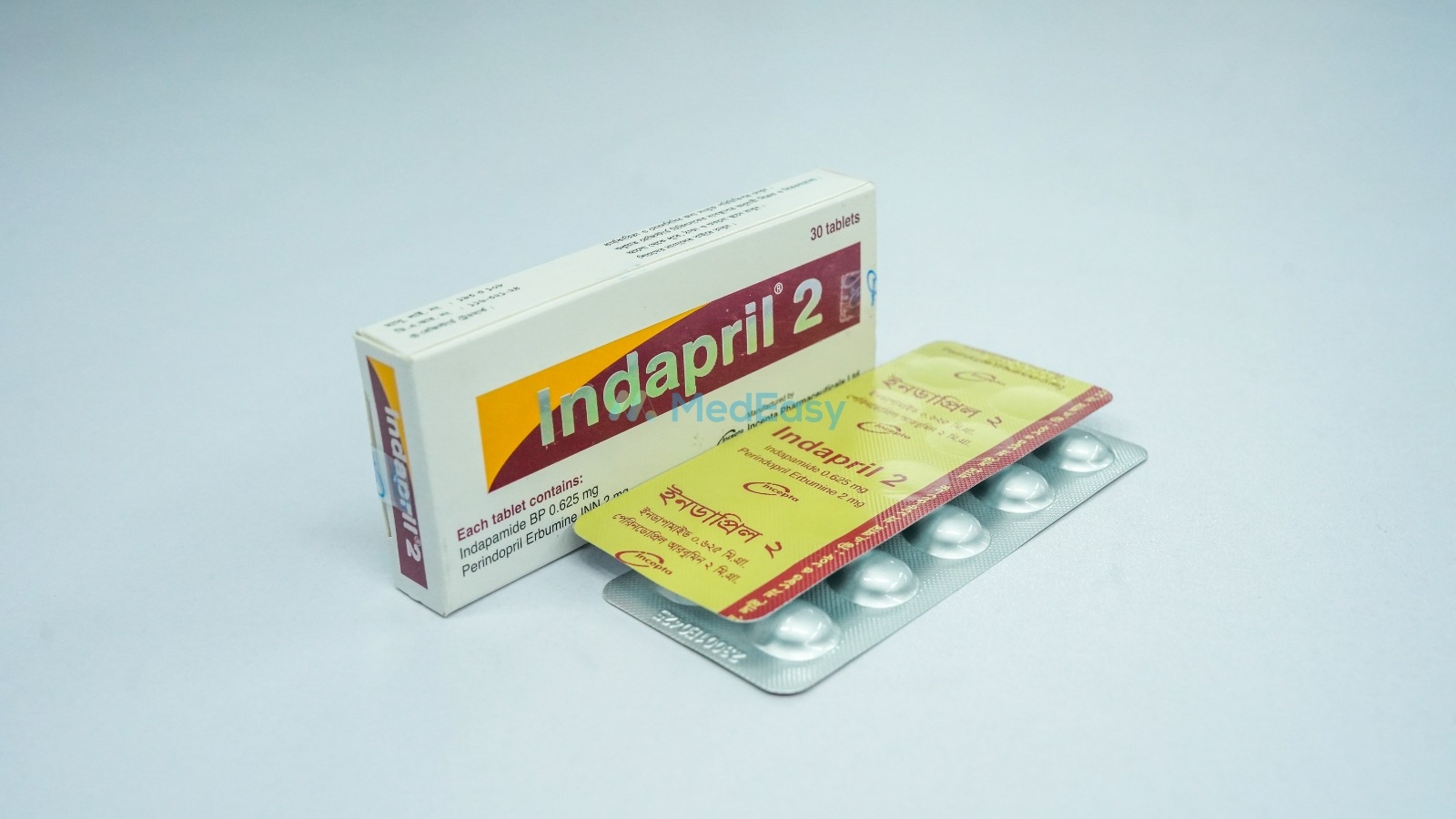
Indapril0.625 mg+2
Incepta Pharmaceuticals Ltd.
৳63.00
Add to cart
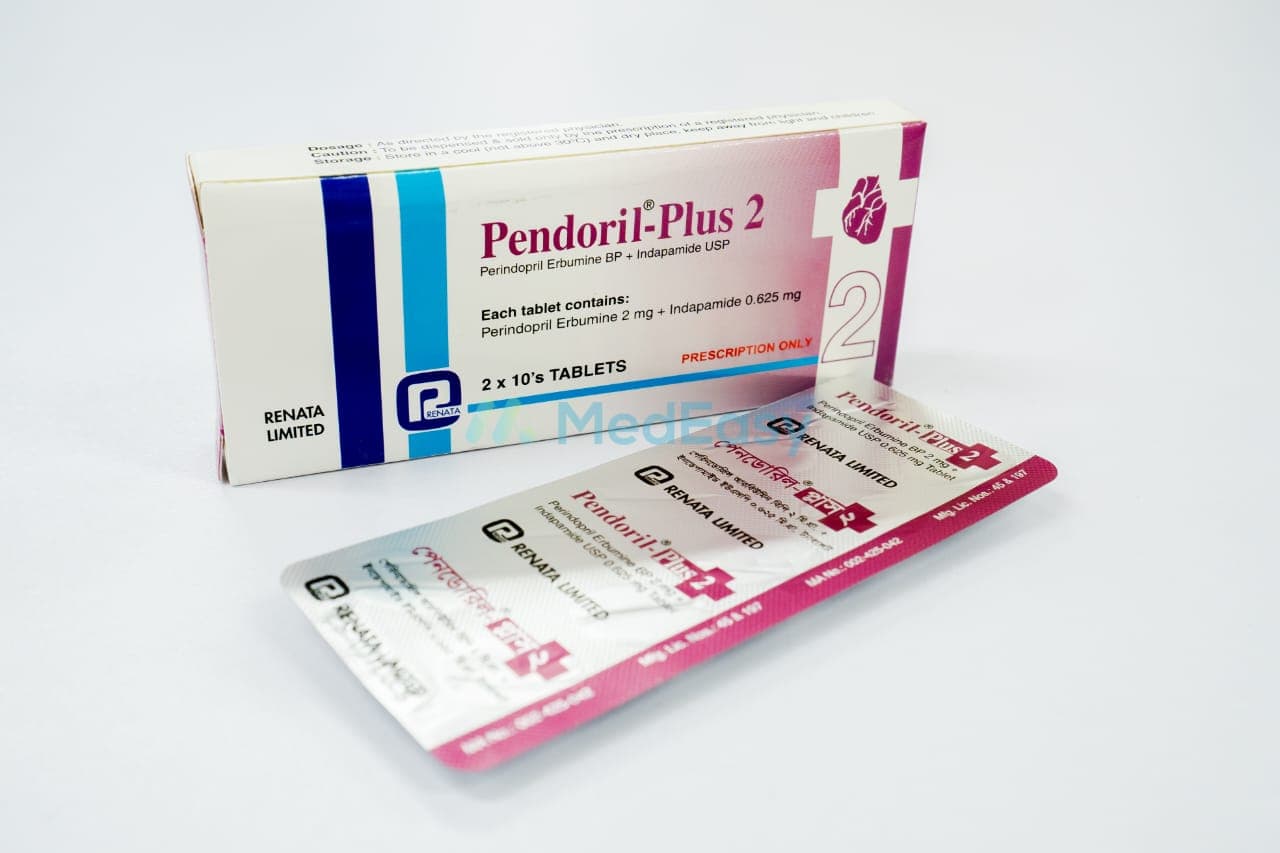

Pendoril Plus is a fixed-dose combination of a thiazide-like diuretic (indapamide) and an angiotensin-converting enzyme (ACE) inhibitor (perindopril arginine), indicated for the treatment of essential hypertension.
Pendoril Plus is generally not used as first-line initial therapy for hypertension; it is intended for patients who require combination treatment after the individual components have been trialed or titrated separately, consistent with standard hypertension management guidelines.
Each tablet of Indapamide + Perindopril Arginine contains two active ingredients:
Typical fixed-dose combinations of Indapamide + Perindopril Arginine pair matching doses of each component (for example, perindopril arginine 2.5 mg with indapamide 0.625 mg, or perindopril arginine 5 mg with indapamide 1.25 mg); exact strengths and inactive ingredients vary by manufacturer and market.
Pendoril Plus combines two complementary antihypertensive mechanisms in a single tablet: a thiazide-like diuretic and an ACE inhibitor. This combination is used when blood pressure control is insufficient with a single antihypertensive agent, or as convenient once-daily substitution therapy for patients already stable on the two individual medicines.
Perindopril arginine is the arginine salt form of perindopril, an ACE inhibitor prodrug that is hydrolyzed in the liver to its active metabolite, perindoprilat. Indapamide is a sulfonamide-derived diuretic with mild diuretic and vasodilatory antihypertensive properties. Together, the components of Pendoril Plus produce additive blood-pressure-lowering effects, while their opposing influences on serum potassium (indapamide can lower it, perindopril can raise it) tend to partially offset one another, though electrolyte monitoring is still required.
Pendoril Plus belongs to the therapeutic class of fixed-dose combination antihypertensives, specifically combining:
This class is used in the management of hypertension, and Pendoril Plus is classified under cardiovascular/antihypertensive combination therapy.
Indapamide + Perindopril Arginine exerts its antihypertensive effect through two complementary mechanisms:
Perindopril is a prodrug hydrolyzed to perindoprilat, which inhibits angiotensin-converting enzyme, blocking conversion of angiotensin I to angiotensin II. This reduces angiotensin II-mediated vasoconstriction and aldosterone secretion, lowers peripheral vascular resistance, and reduces blood pressure without significant reflex tachycardia. ACE inhibition also reduces bradykinin degradation, contributing to vasodilation (and to the characteristic dry cough side effect).
Indapamide inhibits sodium reabsorption in the cortical diluting segment of the distal renal tubule, increasing excretion of sodium, chloride, and water. At antihypertensive doses, its blood-pressure-lowering effect is thought to result predominantly from reduced peripheral vascular resistance (a direct vasodilatory effect) rather than diuresis alone.
The combined mechanism of Indapamide + Perindopril Arginine produces greater blood pressure reduction than either component alone, with onset of antihypertensive effect typically within days to a few weeks and maximal effect with continued regular use.
The dose of Pendoril Plus should be individualized based on prior response to the individual components. It is administered once daily, generally in the morning, before a meal.
| Indication/Situation | Recommended Dose |
|---|---|
| Hypertension inadequately controlled on monotherapy | Start with the lowest available combined strength of Pendoril Plus (e.g., perindopril arginine 2.5 mg/indapamide 0.625 mg) once daily; may be increased after 3–4 weeks if blood pressure control is insufficient, up to the maximum available combined strength. |
| Substitution therapy (already controlled on individual components) | Switch to the Pendoril Plus tablet strength matching the doses of perindopril arginine and indapamide the patient is already taking separately, once daily. |
| Elderly patients | Start at the lowest strength; titrate cautiously with monitoring of renal function and blood pressure. |
| Renal impairment | Use with caution in mild-to-moderate impairment with dose adjustment/monitoring; contraindicated in severe renal impairment (see Contraindications). |
| Pediatric patients | Not recommended; safety and efficacy not established (see Pediatric Use). |
If a dose of Pendoril Plus is missed, it should be taken as soon as remembered unless it is close to the next scheduled dose, in which case the missed dose should be skipped; doses should not be doubled.
Pendoril Plus should be taken by mouth, once daily, preferably in the morning and before a meal, with a glass of water. The tablet should be swallowed whole and taken at approximately the same time each day to maintain consistent blood pressure control. It should not be taken with excessive alcohol, and potassium-containing salt substitutes should be avoided unless directed by a physician.
Pendoril Plus has several clinically significant drug interactions:
Indapamide + Perindopril Arginine is contraindicated in the following situations:
Pendoril Plus is generally well tolerated, but may cause the following adverse effects:
Patients taking Pendoril Plus who experience swelling of the face, lips, tongue, or throat, or difficulty breathing, should seek emergency medical care immediately.
Pregnancy: Pendoril Plus is contraindicated during pregnancy. ACE inhibitors, including the perindopril arginine component, can cause injury and death to the developing fetus when used during the second and third trimesters, including oligohydramnios, fetal renal failure, hypoplasia of the fetal skull, and neonatal death; first-trimester exposure has also been associated with an increased risk of major congenital malformations. When pregnancy is detected, Pendoril Plus should be discontinued as soon as possible and the patient switched to an antihypertensive considered safer in pregnancy, unless continued use is considered lifesaving.
Lactation: It is not established whether perindopril or indapamide are excreted into human breast milk in clinically significant amounts, but thiazide-type/thiazide-like diuretics are known to pass into breast milk and can suppress lactation. Because of the potential for adverse effects in a nursing infant, a decision should be made whether to discontinue nursing or discontinue Pendoril Plus, taking into account the importance of the drug to the mother; use only if clearly needed and if potential benefit justifies potential risk, and only under close medical supervision.
Overdose with Pendoril Plus most commonly presents as marked hypotension, which may be accompanied by dizziness, drowsiness, electrolyte disturbances (hyponatremia, hypokalemia), acute renal failure, and, rarely, bradycardia or shock.
There is no specific antidote. Anyone who has taken more than the prescribed dose of Pendoril Plus, or who shows signs of overdose, should seek immediate medical attention or contact emergency services/a poison control center. Management in a hospital setting is generally supportive and may include intravenous volume/saline expansion for hypotension, close monitoring of vital signs, renal function, and electrolytes; gastric decontamination may be considered if presenting soon after ingestion, under medical supervision.
Store Pendoril Plus at room temperature (below 30°C), protected from light and moisture. Keep the medicine in its original packaging until the time of use. Keep out of reach of children.
Use Pendoril Plus with caution in patients with mild-to-moderate renal impairment, with dose adjustment and monitoring of renal function and electrolytes; it is contraindicated in severe renal impairment (see Contraindications).
Use Pendoril Plus with caution in mild-to-moderate hepatic impairment; it is contraindicated in severe hepatic impairment or hepatic encephalopathy.
Elderly patients should be started on the lowest available strength of Pendoril Plus, with careful blood pressure and renal function monitoring, given increased susceptibility to hypotension and age-related decline in renal function.
ACE inhibitors, including the perindopril arginine component of Pendoril Plus, may be less effective in lowering blood pressure and may carry a higher risk of angioedema in Black patients compared with other populations.
Safety and efficacy of Pendoril Plus in children and adolescents under 18 years have not been established; its use is not recommended in this population (see Pediatric Use).
Pendoril Plus is intended for long-term, ongoing use in the management of chronic hypertension. Treatment should continue for as long as clinically indicated to maintain blood pressure control, with periodic clinical review, blood pressure measurement, and monitoring of renal function and electrolytes. Pendoril Plus should not be stopped abruptly without medical advice, as this may lead to a rebound rise in blood pressure.
Indapamide + Perindopril Arginine is a fixed-dose combination of a thiazide-like diuretic (indapamide) and an angiotensin-converting enzyme (ACE) inhibitor (perindopril arginine), classified within the broader drug class of antihypertensive combination agents.
Indapamide + Perindopril Arginine lowers blood pressure through two complementary and additive mechanisms. The perindopril arginine component inhibits angiotensin-converting enzyme, preventing conversion of angiotensin I to the potent vasoconstrictor angiotensin II and reducing aldosterone secretion, thereby lowering peripheral vascular resistance. The indapamide component inhibits sodium and chloride reabsorption in the distal renal tubule, promoting natriuresis and exerting a direct vasodilatory effect on arterial smooth muscle. Together, the two mechanisms in Indapamide + Perindopril Arginine provide greater antihypertensive efficacy than either agent alone.
D
The safety and efficacy of Pendoril Plus in pediatric patients (under 18 years of age) have not been established. Pendoril Plus is therefore not recommended for use in children and adolescents, and should only be considered in this population under specialist supervision if no suitable alternative is available and the potential benefit is judged to outweigh the risk.
Q: What is Pendoril Plus 0.625 mg+2 mg Tablet used for?
A: Pendoril Plus 0.625 mg+2 mg Tablet is used to treat high blood pressure (hypertension), particularly in patients whose blood pressure is not adequately controlled by either component alone, or as a convenient once-daily substitute for patients already stable on the two individual medicines.
Q: Can I take Pendoril Plus 0.625 mg+2 mg Tablet during pregnancy?
A: No. Pendoril Plus 0.625 mg+2 mg Tablet is contraindicated in pregnancy because the ACE inhibitor component can cause serious harm or death to the developing fetus. If you become pregnant while taking Pendoril Plus 0.625 mg+2 mg Tablet, contact your doctor immediately so treatment can be changed.
Q: Why does Pendoril Plus 0.625 mg+2 mg Tablet cause a dry cough?
A: A persistent dry cough is a well-known side effect of the ACE inhibitor (perindopril arginine) component of Pendoril Plus 0.625 mg+2 mg Tablet, related to increased levels of bradykinin. If the cough is bothersome, discuss it with your physician rather than stopping the medicine on your own.
Q: What should I do if my face, lips, or tongue swell while taking Pendoril Plus 0.625 mg+2 mg Tablet?
A: This may be a sign of angioedema, a rare but potentially life-threatening reaction to the ACE inhibitor component of Pendoril Plus 0.625 mg+2 mg Tablet. Stop the medicine and seek emergency medical attention immediately.
Q: Can I take potassium supplements or salt substitutes with Pendoril Plus 0.625 mg+2 mg Tablet?
A: Generally, no, unless specifically directed by your physician. Potassium supplements and potassium-containing salt substitutes can raise blood potassium to dangerous levels when combined with Pendoril Plus 0.625 mg+2 mg Tablet, due to its ACE inhibitor component.
Q: How should I take Pendoril Plus 0.625 mg+2 mg Tablet?
A: Pendoril Plus 0.625 mg+2 mg Tablet should be taken once daily by mouth, preferably in the morning before a meal, at the same time each day. Do not stop taking it suddenly without consulting your doctor, even if you feel well, since hypertension is usually a lifelong condition requiring ongoing treatment.
Disclaimer
The information provided is accurate to the best of our knowledge, but it does not replace professional medical advice. We cannot guarantee its completeness or accuracy, and the absence of specific information about a drug should not be taken as an endorsement. We are not responsible for any consequences arising from this information, so please consult a healthcare professional for any concerns or questions.
