
10% Off
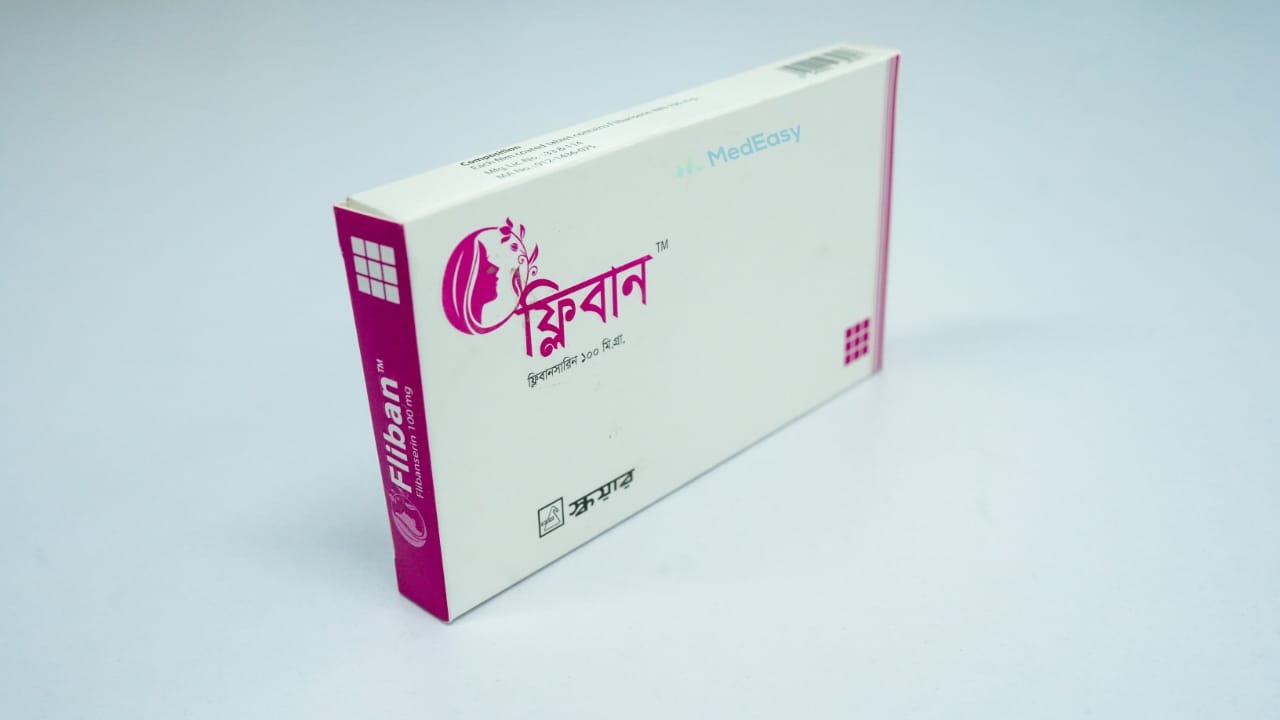
Fliban100 mg
Square Pharmaceuticals PLC.
৳405.00
Add to cart
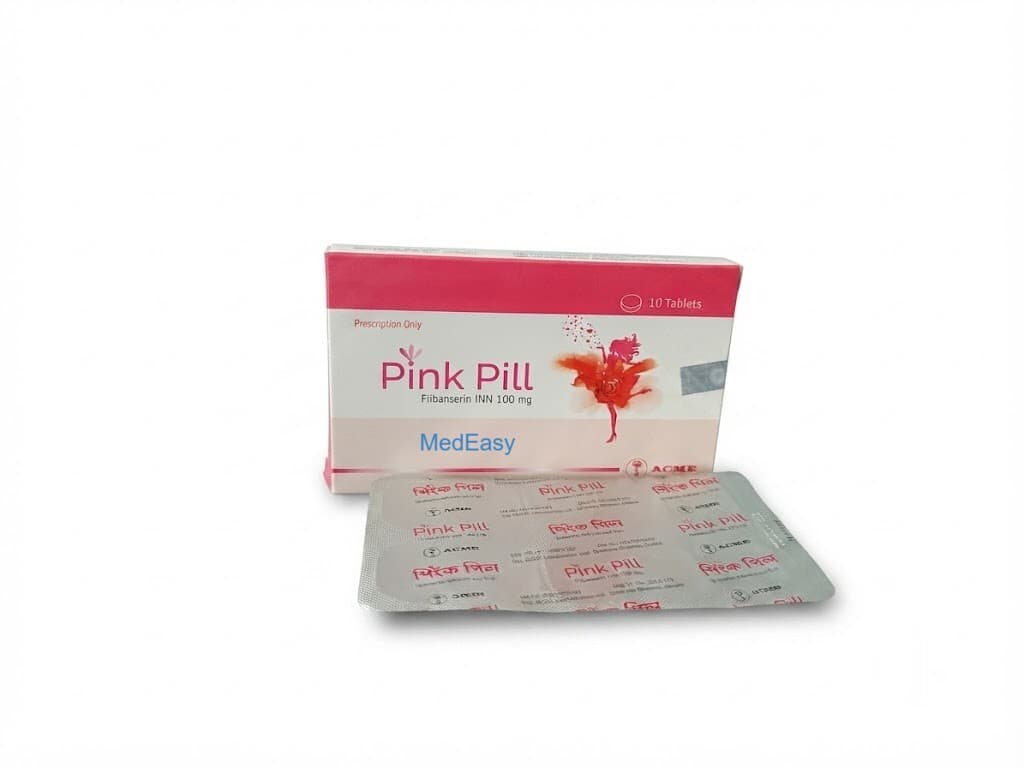

Pink Pill is FDA-approved for the following indication:
There is no well-established guideline-supported or off-label indication for Pink Pill outside of acquired, generalized HSDD in premenopausal women; it should not be prescribed for other forms of sexual dysfunction.
Each film-coated tablet contains Flibanserin 100 mg as the active pharmaceutical ingredient, along with standard pharmaceutical excipients.
Pink Pill is a non-hormonal, centrally acting agent used for the treatment of acquired, generalized hypoactive sexual desire disorder (HSDD) in premenopausal women. Unlike earlier hormonal approaches to female sexual dysfunction, Pink Pill works through modulation of serotonin and, indirectly, dopamine and norepinephrine pathways in the brain that are believed to be involved in sexual desire.
Pink Pill is taken orally, once daily at bedtime, on a continuous (not on-demand) basis. It carries a boxed warning for severe hypotension and syncope, particularly when combined with alcohol, moderate/strong CYP3A4 inhibitors, or in patients with hepatic impairment.
Flibanserin is a mixed serotonin receptor agonist and antagonist, acting as an agonist at 5-HT1A receptors and an antagonist at 5-HT2A receptors, with lower affinity for other serotonin, dopamine (D4), and norepinephrine receptor subtypes.
The precise mechanism by which Flibanserin improves sexual desire is not fully established, but it is thought to produce a transient decrease in serotonin activity together with an increase in dopamine and norepinephrine activity in the prefrontal cortex, which is postulated to help restore the balance between excitatory and inhibitory pathways governing sexual desire.
| Indication | Dose | Timing |
|---|---|---|
| Acquired, generalized HSDD in premenopausal women | 100 mg once daily | At bedtime |
Take Pink Pill at bedtime to reduce the impact of dizziness, sleepiness, and low blood pressure that can occur, since these effects are most pronounced within a few hours of dosing.
Pink Pill is not indicated for use in children or adolescents; safety and efficacy in patients under 18 years have not been established (see Use in Special Populations).
No dose adjustment is required for mild renal impairment. Use with caution in moderate-to-severe renal impairment, as exposure to Pink Pill may be increased; clinical experience in this population is limited.
Pink Pill is contraindicated in patients with any degree of hepatic impairment (see Contraindications).
If a dose is missed, it should simply be skipped; a double dose should not be taken the next day. If there is no improvement in sexual desire and associated distress after 8 weeks of continuous use, Pink Pill should generally be discontinued, as continued use is unlikely to be beneficial.
The most clinically significant interactions with Pink Pill involve drugs and substances that raise its blood levels or add to its sedative/hypotensive effects. The combinations that are absolutely contraindicated (alcohol, and moderate/strong CYP3A4 inhibitors) are detailed fully under Contraindications and are only summarized here.
Flibanserin is contraindicated in the following situations:
These are true absolute contraindications reflecting the boxed warning for Flibanserin; other cautions (e.g., renal impairment, use in the elderly) belong under Precautions and Warnings rather than here.
Patients should seek prompt medical attention for fainting, severe dizziness, or loss of consciousness while taking Pink Pill.
Pink Pill is not indicated for use during pregnancy, as hypoactive sexual desire disorder is not a condition treated in pregnant women. Available data on use of Pink Pill in pregnancy are limited and are insufficient to establish a drug-associated risk of major birth defects or miscarriage. Pink Pill should be used during pregnancy only if clearly needed and if the potential benefit justifies the potential risk to the fetus; a physician should be consulted before use in anyone who is or may become pregnant.
It is not known whether Pink Pill or its metabolites are present in human milk, and effects on the breastfed infant or on milk production are unknown. Because sedation and hypotension have been reported with Pink Pill, and because it is not indicated in this population, a physician should be consulted to weigh the need for therapy against any potential risk before use while breastfeeding.
Pink Pill carries a boxed warning for severe hypotension and syncope. This risk is markedly increased by concomitant alcohol use, use with moderate or strong CYP3A4 inhibitors, and in patients with hepatic impairment - all of which are absolute contraindications (see Contraindications) rather than mere precautions.
Pink Pill commonly causes sedation, dizziness, and somnolence. Patients should be counseled about the risk of accidental injury (e.g., falls) and should not drive or operate heavy machinery until they know how Pink Pill affects them, especially if a dose is taken other than at bedtime or is combined with alcohol.
Pink Pill is approved only for acquired, generalized HSDD in premenopausal women. It should not be used in men, in postmenopausal women, or simply to enhance sexual performance, as safety and efficacy have not been established in these settings.
Use with caution in moderate-to-severe renal impairment because of potentially increased exposure to Pink Pill (see Dosage and Administration).
Overdose with Pink Pill may cause pronounced hypotension, syncope, drowsiness/sedation, dizziness, and nausea. There is no specific antidote for Pink Pill overdose.
Anyone suspected of having taken an overdose of Pink Pill should seek immediate medical attention or contact emergency services / a poison control center. Management is supportive and should be provided under medical supervision (e.g., monitoring of blood pressure and level of consciousness); specific home-treatment measures are not recommended.
Store at room temperature (below 30°C), away from light and moisture. Keep out of reach of children.
Pink Pill is contraindicated in patients with any degree of hepatic impairment (see Contraindications).
No adjustment is needed for mild renal impairment; use with caution in moderate-to-severe renal impairment due to potentially increased Pink Pill exposure.
Clinical trials of Pink Pill did not include substantial numbers of women older than the reproductive/premenopausal age range for which it is indicated; it is not indicated in postmenopausal women, so specific elderly dosing data are not applicable.
Pink Pill is not approved and should not be used in men; safety and efficacy in men have not been established.
Safety and efficacy of Pink Pill in patients under 18 years of age have not been established; it is not indicated for use in children or adolescents.
Pink Pill is intended for continuous, once-daily use rather than as-needed dosing. Response should be assessed after approximately 8 weeks of continuous therapy; if there has been no meaningful improvement in sexual desire and related distress by that time, Pink Pill should generally be discontinued, since continuing beyond this point without benefit is unlikely to help and exposes the patient to ongoing risks unnecessarily.
Flibanserin acts as an agonist at serotonin 5-HT1A receptors and as an antagonist at 5-HT2A receptors, with additional lower-affinity activity at other serotonin, dopamine D4, and norepinephrine receptors. This receptor profile is believed to produce a modest, transient decrease in serotonergic tone together with increased dopamine and norepinephrine activity in brain regions (such as the prefrontal cortex) involved in sexual desire, which is thought to underlie the therapeutic effect of Flibanserin in HSDD. The exact mechanism has not been fully elucidated.
Pink Pill is not indicated for use in pediatric patients. Safety and efficacy in individuals under 18 years of age have not been established, and there is no approved pediatric dosing regimen. Pink Pill should not be prescribed to children or adolescents.
Q: What is Pink Pill 100 mg Tablet used for?
A: Pink Pill 100 mg Tablet is used to treat acquired, generalized Hypoactive Sexual Desire Disorder (HSDD) in premenopausal women - that is, a persistent, distressing loss of sexual desire that is not caused by another medical or psychiatric condition, relationship problem, or medication.
Q: Can I drink alcohol while taking Pink Pill 100 mg Tablet?
A: No. Alcohol is contraindicated with Pink Pill 100 mg Tablet because combining the two markedly increases the risk of severe low blood pressure (hypotension) and fainting (syncope). You should avoid alcohol entirely while on therapy and stop Pink Pill 100 mg Tablet at least 2 days before any anticipated alcohol use, as advised by your physician.
Q: Why is Pink Pill 100 mg Tablet taken at bedtime?
A: Pink Pill 100 mg Tablet is taken once daily at bedtime because it commonly causes dizziness, sleepiness, and low blood pressure, and these effects are strongest within a few hours of dosing. Taking it at bedtime reduces the impact of these effects during your waking, active hours.
Q: Can men or postmenopausal women use Pink Pill 100 mg Tablet?
A: No. Pink Pill 100 mg Tablet is approved only for premenopausal women with acquired, generalized HSDD. It has not been shown to be safe or effective in men or in postmenopausal women, and it should not be used to enhance sexual performance generally.
Q: Who should not take Pink Pill 100 mg Tablet?
A: Pink Pill 100 mg Tablet should not be taken by anyone with any degree of liver (hepatic) impairment, anyone who drinks alcohol, anyone taking moderate or strong CYP3A4 inhibitor medicines (such as certain antifungals, some antibiotics like clarithromycin or erythromycin, and certain HIV medicines), or anyone with a known hypersensitivity to Pink Pill 100 mg Tablet, because each of these substantially raises the risk of severe hypotension and syncope.
Q: What should I do if I think I have taken too much Pink Pill 100 mg Tablet?
A: Seek immediate medical attention or contact emergency services / a poison control center. An overdose of Pink Pill 100 mg Tablet can cause pronounced low blood pressure, fainting, drowsiness, and nausea, and should be managed by medical professionals rather than at home.
Disclaimer
The information provided is accurate to the best of our knowledge, but it does not replace professional medical advice. We cannot guarantee its completeness or accuracy, and the absence of specific information about a drug should not be taken as an endorsement. We are not responsible for any consequences arising from this information, so please consult a healthcare professional for any concerns or questions.

