8% Off
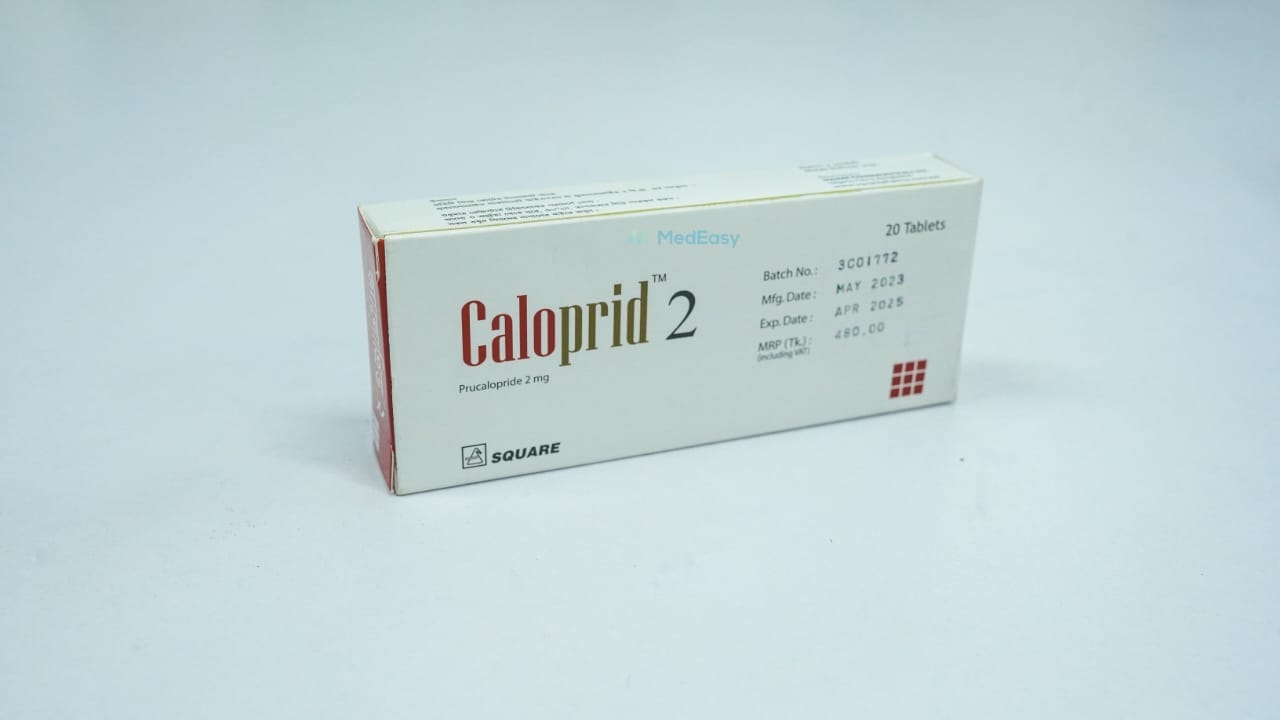
Motelity2 mg
Nuvista Pharma Ltd.
৳220.80
Add to cart


Prucalo is indicated for the treatment of the following condition:
Prucalo is not indicated for children/adolescents under 18 years, as safety and efficacy have not been established in this age group.
Each film-coated tablet contains Prucalopride Succinate equivalent to 1 mg or 2 mg of prucalopride (base), along with pharmaceutically approved excipients.
Prucalopride Succinate is typically available as oral tablets in 1 mg and 2 mg strengths.
Prucalo is the succinate salt of prucalopride, a selective, high-affinity agonist at serotonin 5-HT4 receptors. It belongs to a class of medicines called gastrointestinal prokinetic agents, which work by directly stimulating gut motility rather than by drawing water into the bowel (osmotic laxatives) or irritating the bowel wall (stimulant laxatives).
Prucalo is used for the long-term management of chronic idiopathic constipation in adults who have not responded adequately to conventional laxatives. Unlike some earlier 5-HT4 agonists, Prucalo is highly selective for the 5-HT4 receptor, which is the basis for its favorable cardiovascular safety profile at approved doses.
Prucalo belongs to the therapeutic class of Selective Serotonin (5-HT4) Receptor Agonists, used as a gastroprokinetic agent for chronic constipation.
Prucalopride Succinate is a selective, high-affinity serotonin 5-HT4 receptor agonist. Stimulation of 5-HT4 receptors located on enteric neurons in the gut wall triggers the release of acetylcholine and other neurotransmitters, which increases high-amplitude propagating contractions (HAPCs) in the colon. This accelerates colonic transit and increases the frequency of bowel movements.
Prucalo should be taken exactly as prescribed by a physician. The following is general guidance; individual dosing must be confirmed by a healthcare provider.
| Population / Indication | Recommended Dose |
|---|---|
| Adults (18–65 years) with chronic idiopathic constipation | 2 mg once daily, with or without food |
| Elderly patients (>65 years) | Start at 1 mg once daily; may be increased to 2 mg once daily if well tolerated and clinically needed |
| Severe renal impairment (creatinine clearance <30 mL/min) | 1 mg once daily |
| Mild to moderate renal impairment | No dose adjustment generally required |
| Severe hepatic impairment | Use with caution; consult physician for individualized dosing |
If no improvement in constipation is observed after 4 weeks of treatment at the appropriate dose, the patient should be re-examined and continued treatment reconsidered by the prescribing physician.
Prucalo tablets should be swallowed whole with a glass of water. It may be taken with or without food, but it is best to take it at the same time each day for consistent effect. Do not crush, chew, or split the tablet unless advised by a physician.
Prucalo has a low potential for drug interactions, as it is only a minor substrate of CYP3A4 and has low potential to inhibit or induce major drug-metabolizing enzymes. Clinically relevant interactions include:
No clinically significant interactions have been demonstrated with warfarin, digoxin, oral contraceptives, or paroxetine. Always inform the physician of all medicines being taken before starting Prucalo.
Prucalopride Succinate is contraindicated in the following conditions:
The most commonly reported side effects of Prucalo, especially during the first days of treatment, include:
These effects are usually transient, occur mainly on the first day of treatment, and typically resolve within a few days with continued use. Less commonly, hypersensitivity reactions (rash, urticaria, swelling of the face, difficulty breathing) have been reported and require immediate discontinuation and medical attention (see Precautions and Warnings). Postmarketing reports have also noted mood or behavioral changes such as new or worsening anxiety, depression, or suicidal thoughts in some patients; any such symptom should be reported to a physician promptly.
Pregnancy: Data on the use of Prucalo in pregnant women are limited. Animal reproduction studies have not shown adverse fetal effects at high multiples of the human dose, but this does not confirm safety in humans. Prucalo should be used during pregnancy only if clearly needed and if the potential benefit justifies the potential risk to the fetus; consult a physician before use.
Lactation: Prucalo passes into breast milk. A decision should be made, in consultation with a physician, whether to discontinue breastfeeding or discontinue the medicine, taking into account the benefit of breastfeeding for the infant and the clinical need of the mother.
The following precautions apply to the use of Prucalo:
Overdose of Prucalo may cause an exaggeration of its known pharmacodynamic effects, such as headache, nausea, and diarrhea. There is no specific antidote. In case of suspected overdose, seek immediate medical attention or contact emergency services/poison control. Management is supportive and symptomatic; fluid and electrolyte status should be monitored and corrected as needed, particularly if significant diarrhea has occurred.
Store at room temperature (below 30°C), away from light and moisture. Keep out of reach of children.
No dose adjustment is generally needed in mild to moderate renal impairment. In severe renal impairment (creatinine clearance <30 mL/min), the recommended dose of Prucalo is 1 mg once daily. Use in patients on dialysis is not recommended as data are insufficient.
No dose adjustment is generally needed in mild to moderate hepatic impairment. Prucalo should be used with caution in severe hepatic impairment.
A starting dose of 1 mg once daily is recommended in elderly patients, as they may have reduced renal function leading to higher drug exposure; the dose may be increased to 2 mg once daily if tolerated and clinically indicated.
Safety and efficacy of Prucalo have not been established in patients under 18 years of age; use in this population is not recommended (see Pediatric Uses).
Prucalo may be used for long-term management of chronic idiopathic constipation under medical supervision. If there is no improvement in symptoms after 4 weeks of appropriate dosing, treatment should be reassessed by the prescribing physician, and continued use should be based on ongoing clinical benefit. Do not use for longer than advised without periodic medical review.
Prucalopride Succinate belongs to the drug class of Gastrointestinal Prokinetic Agents, specifically Selective Serotonin 5-HT4 Receptor Agonists.
Prucalopride Succinate acts as a selective agonist at serotonin 5-HT4 receptors located on enteric neurons within the wall of the gastrointestinal tract. By stimulating these receptors, Prucalopride Succinate promotes the release of acetylcholine and other excitatory neurotransmitters from enteric neurons, which enhances high-amplitude propagating contractions (HAPCs) — the primary motor pattern responsible for mass movement of colonic contents. This accelerates gastric emptying, small bowel, and colonic transit, resulting in increased frequency and ease of bowel movements. Because Prucalopride Succinate is highly selective for the 5-HT4 receptor with minimal affinity for other serotonin receptor subtypes (including hERG cardiac channels), it does not carry the cardiovascular risk (e.g., valvulopathy, arrhythmia) that led to the withdrawal of some older, less-selective 5-HT4 agonists.
The safety and efficacy of Prucalo have not been established in pediatric patients under 18 years of age. A clinical trial in patients aged 6 months to 17 years with functional constipation did not demonstrate efficacy over placebo. Therefore, Prucalo is not recommended for use in children or adolescents outside of a physician-directed clinical context, and only established adult dosing should guide use in adults.
Q: What is Prucalo 2 mg Tablet used for?
A: Prucalo 2 mg Tablet is used to treat chronic idiopathic constipation in adults, especially when regular laxatives have not worked well enough. It works by stimulating natural bowel movement rather than simply softening stool.
Q: How long does it take for Prucalo 2 mg Tablet to work?
A: Many patients notice improved bowel movements within the first week, though some side effects like headache, nausea, or diarrhea can also appear early and usually settle within a few days. If there is no improvement after 4 weeks, consult your physician.
Q: Can Prucalo 2 mg Tablet be taken during pregnancy or breastfeeding?
A: Data in pregnant women are limited, and Prucalo 2 mg Tablet passes into breast milk. It should only be used in pregnancy or while breastfeeding if a physician determines the benefit outweighs the potential risk; always consult your doctor first.
Q: Is Prucalo 2 mg Tablet safe for the heart?
A: Prucalo 2 mg Tablet is highly selective for the 5-HT4 receptor and has shown no clinically relevant QT prolongation or significant cardiovascular signal in clinical studies, distinguishing it from some older 5-HT4 agonists that were withdrawn due to cardiac risk. Still, use only as prescribed by your physician.
Q: Who should not take Prucalo 2 mg Tablet?
A: Prucalo 2 mg Tablet should not be used by anyone with a known hypersensitivity to prucalopride, intestinal perforation or obstruction, obstructive ileus, or severe inflammatory bowel conditions such as Crohn’s disease, ulcerative colitis, or toxic megacolon.
Q: Does Prucalo 2 mg Tablet require a dose adjustment in kidney problems?
A: Yes. Patients with severe renal impairment (creatinine clearance below 30 mL/min) should use a reduced dose of 1 mg once daily instead of the standard 2 mg dose, and it is not recommended in patients on dialysis. Consult your physician for the correct dose.
Disclaimer
The information provided is accurate to the best of our knowledge, but it does not replace professional medical advice. We cannot guarantee its completeness or accuracy, and the absence of specific information about a drug should not be taken as an endorsement. We are not responsible for any consequences arising from this information, so please consult a healthcare professional for any concerns or questions.