
10% Off
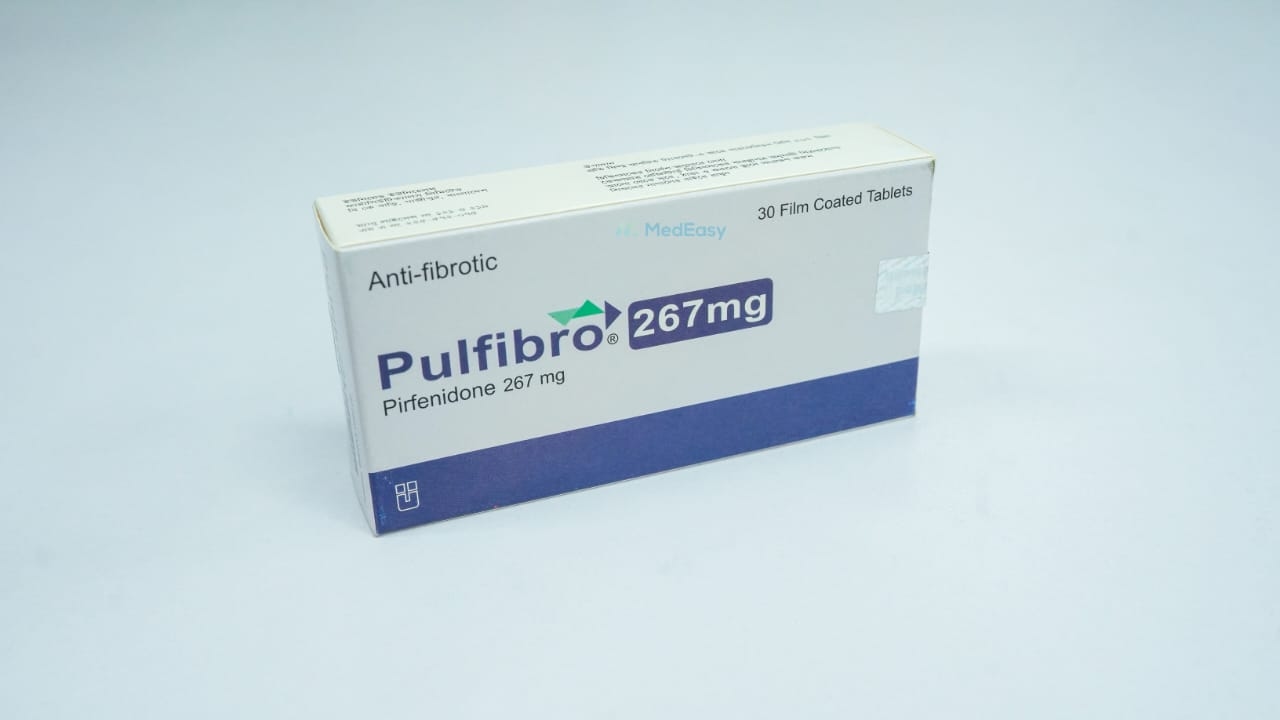
Pulfibro267 mg
Unimed Unihealth MFG. Ltd.
৳405.00
Add to cart


Pulmofib is an antifibrotic medicine that is FDA-approved and internationally guideline-supported for the treatment of:
Off-label / adjunct use (limited evidence): In some specialist pulmonology settings, Pulmofib is used off-label in other progressive fibrosing interstitial lung diseases (PF-ILD) with an IPF-like pattern, based on specialist judgement and limited trial data. This use should only be undertaken under the direct supervision of a pulmonologist experienced in interstitial lung disease, and is not a substitute for the established IPF indication.
Pulmofib does not cure pulmonary fibrosis and does not reverse existing lung scarring; it is used to slow further progression.
Pirfenidone is available as:
Each dosage unit contains Pirfenidone as the active pharmaceutical ingredient, along with standard pharmaceutical excipients. The 534 mg and 801 mg tablet strengths are designed to reduce pill burden once the maintenance dose is reached.
Pulmofib is a small-molecule, orally administered antifibrotic and anti-inflammatory agent belonging to the pyridone chemical class. It was developed specifically to target the underlying fibrotic and inflammatory processes that drive idiopathic pulmonary fibrosis, a disease that was previously managed with only supportive care or immunosuppressive regimens of unproven benefit.
Clinical trials (including the CAPACITY and ASCEND studies) demonstrated that Pulmofib slows the rate of decline in forced vital capacity (FVC) and reduces the risk of disease progression and all-cause mortality in patients with IPF compared with placebo, leading to regulatory approval in multiple countries including the United States, European Union, Japan, and Bangladesh.
Pulmofib belongs to the therapeutic class of Antifibrotic agents, specifically pyridone-derivative antifibrotic and anti-inflammatory drugs used in the management of idiopathic pulmonary fibrosis.
The precise mechanism of action of Pirfenidone is not completely understood, but it is believed to exert combined antifibrotic, anti-inflammatory, and antioxidant effects through several pathways:
By reducing these fibrotic and inflammatory drivers, Pirfenidone slows the progressive scarring of lung tissue characteristic of IPF.
Pharmacokinetics: Pirfenidone is absorbed orally with peak plasma concentration reached in roughly 1–3 hours; taking it with food reduces peak concentration and nausea. It is highly protein-bound (~99%) and is metabolized predominantly by the hepatic enzyme CYP1A2 (with minor contributions from CYP2C9, 2C19, 2D6, and 3A4), with a plasma elimination half-life of approximately 2.4 hours.
Pulmofib must be started with a gradual dose titration over 14 days to improve gastrointestinal and photosensitivity tolerability. If treatment is interrupted for 14 consecutive days or longer, re-initiate with the same 14-day titration.
| Titration Period | Dose |
|---|---|
| Days 1–7 | 267 mg, three times daily with food (801 mg/day) |
| Days 8–14 | 534 mg, three times daily with food (1,602 mg/day) |
| Day 15 onward (maintenance) | 801 mg, three times daily with food (2,403 mg/day) |
If a dose is missed, patients should not double the next dose; the next scheduled dose should be taken as usual with food.
Pulmofib should be taken:
Do not stop or change the dose of Pulmofib without consulting the prescribing physician, even if symptoms feel stable, as this can affect long-term disease control.
Pulmofib is metabolized mainly by CYP1A2, so drugs and habits that alter CYP1A2 activity significantly change its blood levels:
Patients should inform their physician of all prescription, over-the-counter, and herbal products they use before starting Pulmofib.
Pirfenidone is contraindicated in patients with:
Side effects reported with Pulmofib range from common and manageable to rare and serious.
| Frequency | Side Effects |
|---|---|
| Very common (>10%) | Nausea, diarrhea, fatigue, dyspepsia, headache, dizziness, decreased appetite, photosensitivity reaction/rash, upper respiratory tract infection |
| Common (1–10%) | Vomiting, gastroesophageal reflux, weight loss, insomnia, arthralgia, sinusitis, abdominal pain, elevated liver enzymes (ALT/AST) |
| Uncommon/Rare but serious | Significant hepatotoxicity/liver injury, severe photosensitivity/rash, angioedema (swelling of face, lips, tongue, throat), severe allergic reaction |
Patients should seek prompt medical attention for signs of liver problems (yellowing of skin/eyes, dark urine, severe fatigue), severe skin reactions, or symptoms of angioedema/anaphylaxis while taking Pulmofib.
Pregnancy: There are no adequate and well-controlled studies of Pulmofib in pregnant women. Animal reproduction studies have not shown clear evidence of harm at clinically relevant exposures, but human data are insufficient to establish safety. Pulmofib should be used during pregnancy only if clearly needed and the potential benefit justifies the potential risk to the fetus; use only under close physician supervision.
Lactation: It is not known whether Pulmofib passes into human breast milk. Because many drugs are excreted in breast milk and the effect on a nursing infant is unknown, a decision should be made to discontinue nursing or discontinue Pulmofib, taking into account the importance of the drug to the mother — this should be decided in consultation with a physician.
The following precautions should be observed with Pulmofib therapy:
Limited clinical experience with Pulmofib overdose is available. In healthy volunteers, doses up to 4,005 mg/day (divided) have been tolerated with adverse effects generally similar to, but more frequent than, those seen at the recommended dose (notably gastrointestinal symptoms and photosensitivity).
In case of a suspected overdose, seek immediate medical attention or contact a poison control center/emergency services. There is no specific antidote; management is supportive, including monitoring of vital signs and clinical status, and treatment of specific symptoms as they arise. Do not attempt to manage a suspected overdose at home without medical guidance.
Store at room temperature (below 30°C), away from light and moisture. Keep out of reach of children.
No dose adjustment is needed in mild-to-moderate renal impairment. Pulmofib is not recommended in end-stage renal disease requiring dialysis (see Contraindications).
Use with caution and enhanced liver monitoring in mild-to-moderate hepatic impairment (Child-Pugh A or B); a lower dose may be considered if tolerability issues arise. Pulmofib is not recommended in severe hepatic impairment (see Contraindications).
No overall differences in safety or efficacy have been observed in elderly patients compared with younger adults; no specific dose adjustment based on age alone is required, though age-related renal/hepatic decline should be considered.
Smoking reduces Pulmofib plasma levels via CYP1A2 induction; smoking cessation is advised before and during treatment (see Interactions).
See Pediatric Uses.
Pulmofib is intended for long-term, continuous use as a chronic disease-modifying therapy for IPF; it is not a short-course treatment. Treatment is generally continued indefinitely to maintain the slowing of disease progression, unless intolerable side effects, disease progression beyond benefit, or physician assessment indicates otherwise. Duration is determined by the treating pulmonologist based on ongoing lung function monitoring, tolerability, and overall clinical status. Do not stop treatment abruptly without medical advice.
Pirfenidone belongs to the pyridone derivative class of small molecules and is classified therapeutically as an antifibrotic agent with antioxidant and anti-inflammatory properties, used specifically in interstitial lung disease/idiopathic pulmonary fibrosis management.
Pirfenidone acts by inhibiting multiple pathways involved in pulmonary fibrogenesis: it suppresses fibroblast proliferation and the transformation of fibroblasts into collagen-producing myofibroblasts, down-regulates production of the profibrotic cytokine TGF-β, and reduces the pro-inflammatory cytokine TNF-α. The net effect is reduced deposition of collagen and extracellular matrix in lung tissue, slowing the structural scarring and decline in lung function seen in idiopathic pulmonary fibrosis.
C
The safety and efficacy of Pulmofib in pediatric patients (below 18 years) have not been established. Idiopathic pulmonary fibrosis is overwhelmingly a disease of middle-aged and older adults and is rare in children, so Pulmofib is not indicated for use in the pediatric population. Pulmofib should not be given to children outside of a formal clinical trial setting.
Q: What is Pulmofib 267 mg Tablet used for?
A: Pulmofib 267 mg Tablet is used to treat idiopathic pulmonary fibrosis (IPF), a chronic lung disease that causes progressive scarring of the lungs. It helps slow the decline in lung function and disease progression; it does not cure the disease or reverse existing lung scarring.
Q: How should I take Pulmofib 267 mg Tablet?
A: Pulmofib 267 mg Tablet should be taken by mouth with food, three times a day, following a mandatory 14-day dose titration schedule that gradually increases from 267 mg three times daily to the full maintenance dose of 801 mg three times daily. Never change the dose or stop treatment without consulting your physician.
Q: What are the most important side effects of Pulmofib 267 mg Tablet I should watch for?
A: The most important effects to watch for are liver problems (yellowing of the skin or eyes, dark urine, severe tiredness, abdominal pain — requires regular liver blood tests), photosensitivity/skin rash from sun exposure (use sunscreen and protective clothing), and gastrointestinal upset such as nausea and diarrhea, which often improves by taking the medicine with food.
Q: Can I take Pulmofib 267 mg Tablet with other medicines?
A: Pulmofib 267 mg Tablet interacts significantly with certain drugs. It must not be taken with fluvoxamine, as this combination is contraindicated due to a large increase in Pulmofib 267 mg Tablet blood levels. Ciprofloxacin and some other medicines can also raise Pulmofib 267 mg Tablet levels and may require a dose adjustment. Always tell your doctor and pharmacist about every medicine, supplement, and herbal product you take before starting Pulmofib 267 mg Tablet.
Q: Is Pulmofib 267 mg Tablet safe during pregnancy or breastfeeding?
A: Safety of Pulmofib 267 mg Tablet in pregnancy has not been well established in humans, so it should be used during pregnancy only if clearly needed and the potential benefit justifies the potential risk to the baby, and only under close physician supervision. It is not known if Pulmofib 267 mg Tablet passes into breast milk, so a decision about breastfeeding versus continuing Pulmofib 267 mg Tablet should be made together with your physician.
Q: Does smoking affect how Pulmofib 267 mg Tablet works?
A: Yes. Smoking can significantly lower Pulmofib 267 mg Tablet blood levels and reduce its effectiveness. If you smoke, tell your doctor, as your dose may need to be adjusted, and smoking cessation is generally advised while on Pulmofib 267 mg Tablet therapy.
Disclaimer
The information provided is accurate to the best of our knowledge, but it does not replace professional medical advice. We cannot guarantee its completeness or accuracy, and the absence of specific information about a drug should not be taken as an endorsement. We are not responsible for any consequences arising from this information, so please consult a healthcare professional for any concerns or questions.
