

10% Off
Crezyme325 mg
Opsonin Pharma Ltd.
৳3.15
Add to cart
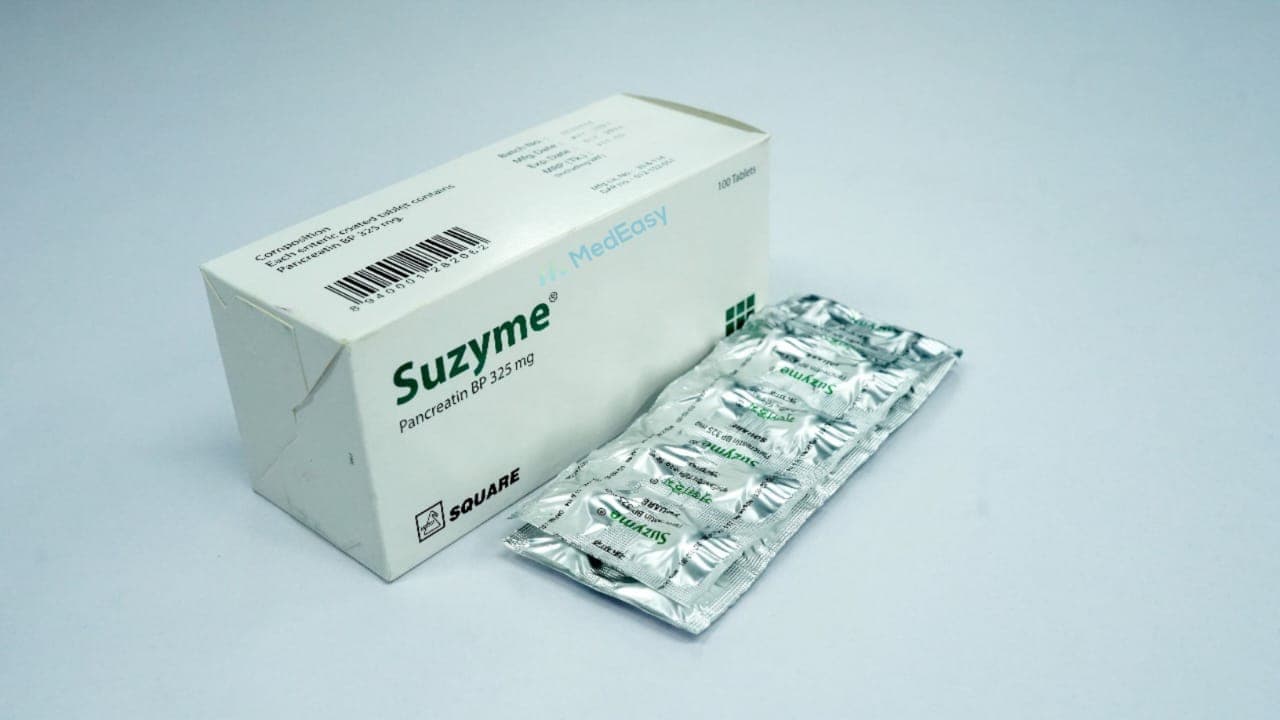

Suzyme does not treat the underlying cause of pancreatic insufficiency; it is a replacement therapy for the missing digestive enzymes.
Pancreatin is a standardized enzyme concentrate obtained from mammalian (typically porcine) pancreas. Each dose provides a combination of:
Pancreatin is available as tablets or capsules; some formulations are enteric-coated to protect the enzymes from inactivation by stomach acid.
Suzyme is a pancreatic enzyme replacement product containing a mixture of lipase, amylase, and protease. It is used to compensate for reduced or absent enzyme secretion by the pancreas, a condition known as exocrine pancreatic insufficiency (EPI).
When the pancreas cannot produce enough digestive enzymes, food is not properly broken down and absorbed, leading to symptoms such as bloating, abdominal discomfort, fatty stools (steatorrhea), weight loss, and deficiency of fat-soluble vitamins. Suzyme supplies these enzymes exogenously so that fats, proteins, and carbohydrates can be digested and absorbed more normally.
Suzyme is taken by mouth with meals and snacks, timed to coincide with food intake for maximum effectiveness.
Suzyme belongs to the therapeutic class of digestive enzyme preparations / pancreatic enzyme replacement therapy (PERT).
Pancreatin works by replacing the digestive enzymes that the pancreas would normally secrete into the small intestine. It contains three main enzyme classes:
Enteric-coated forms of Pancreatin are designed to resist degradation by gastric acid and dissolve in the more alkaline environment of the duodenum, releasing active enzymes where digestion of nutrients primarily occurs. Pancreatin acts locally within the gastrointestinal tract and is not intended to be systemically absorbed in significant amounts.
The dose of Suzyme is individualized based on the severity of enzyme deficiency, dietary fat content, and clinical response (control of steatorrhea, weight gain, symptom relief). Dosing is usually expressed as lipase units per kilogram body weight per meal for pancreatic enzyme products in general, though many conventional Suzyme tablet formulations are dosed by tablet/capsule number.
| Indication | Typical Adult Dosing | Typical Pediatric Dosing |
|---|---|---|
| Exocrine pancreatic insufficiency (chronic pancreatitis, post-pancreatectomy, etc.) | 1–2 tablets/capsules with each main meal and 1 with snacks, or as directed by the physician; adjusted according to fat content of the meal and clinical response | Dose individualized by a pediatrician, generally on a weight/lipase-unit basis for enzyme products; conventional Suzyme tablets are used with caution and physician guidance in children |
| Steatorrhea / malabsorption (adjunct) | As directed by the physician, titrated to control of fatty stools | As directed by the physician |
No well-established specific dose adjustment is defined for renal or hepatic impairment; use with routine clinical monitoring in these patients.
Suzyme should be taken by mouth, with or immediately after meals and snacks. Swallow whole with adequate liquid; avoid crushing or chewing unless the specific product is formulated to be opened and mixed with soft food, in which case it should not be chewed. Do not retain the drug in the mouth.
Suzyme is not known to be a substrate, inhibitor, or inducer of hepatic cytochrome P450 enzymes, so systemic drug-drug interactions are unlikely given its local gastrointestinal action.
Pancreatin is contraindicated in:
Note for patients: because Pancreatin is generally derived from porcine sources, patients who avoid porcine-derived products for religious or personal dietary reasons should discuss available alternatives with their physician or pharmacist.
Side effects of Suzyme are generally dose-related and mostly gastrointestinal:
Pregnancy: Data on the use of Suzyme in human pregnancy are limited. As a locally-acting enzyme product with minimal expected systemic absorption, major fetal risk is not anticipated, but Suzyme should be used during pregnancy only if clearly needed, and the potential benefit should justify the potential risk to the fetus. Consult a physician before use during pregnancy.
Lactation: It is not known whether components of Suzyme are excreted in human milk in clinically significant amounts. Because of its local action and minimal systemic absorption, Suzyme is generally considered acceptable during breastfeeding, but a physician should be consulted, particularly for higher doses or prolonged use.
Deliberate or accidental overdose of Suzyme may cause exaggerated gastrointestinal effects (abdominal pain, nausea, vomiting, diarrhea) and, with sustained very high doses, increases the risk of hyperuricemia/hyperuricosuria and fibrosing colonopathy. There is no specific antidote. If overdose is suspected, seek immediate medical attention or contact a poison control center/emergency services; management is supportive and symptomatic. Do not attempt to manage a suspected overdose at home without medical guidance.
Store at room temperature (below 30°C), away from light and moisture. Keep out of reach of children.
Suzyme is used in children with exocrine pancreatic insufficiency (e.g., cystic fibrosis), with dosing individualized and closely monitored by a pediatrician, generally using weight/enzyme-unit-based schemes for enzyme replacement products; conventional Suzyme tablet formulations should be used in children only under direct physician guidance because of the fibrosing colonopathy risk with high doses.
No specific dose adjustment is established for elderly patients; use the lowest effective dose and monitor for gastrointestinal tolerance.
No well-established dose adjustment is required; monitor uric acid levels if renal impairment coexists, due to the risk of hyperuricemia with high doses.
No well-established dose adjustment is required for hepatic impairment.
Suzyme is typically used long-term (often lifelong) in chronic conditions causing permanent exocrine pancreatic insufficiency, such as chronic pancreatitis or cystic fibrosis, since the underlying enzyme deficiency does not resolve. In situations of temporary or reversible pancreatic insufficiency (e.g., after certain surgeries), duration is determined by the treating physician based on recovery of pancreatic function and symptom control.
Pancreatin is classified as a digestive/pancreatic enzyme supplement (pancreatic enzyme replacement therapy), combining lipase, amylase, and protease activities.
Pancreatin supplies exogenous lipase, amylase, and protease that mimic the natural secretions of the exocrine pancreas. These enzymes act within the intestinal lumen to hydrolyze dietary fats, starches, and proteins into absorbable units (fatty acids/monoglycerides, simple sugars, and amino acids/peptides, respectively), thereby correcting the maldigestion and malabsorption that occur when the pancreas cannot secrete adequate enzymes on its own.
Suzyme is used in pediatric patients with confirmed exocrine pancreatic insufficiency, most commonly due to cystic fibrosis. Dosing must be carefully individualized on a weight/enzyme-unit basis and should not exceed recommended maximum doses, because children with cystic fibrosis are at particular risk of fibrosing colonopathy with high-dose, prolonged pancreatic enzyme use. Safety and efficacy of conventional non-weight-based Suzyme tablet formulations in infants and very young children have not been well established; a pediatrician should supervise use and dose titration in this age group.
Q: What is Suzyme 325 mg Tablet used for?
A: Suzyme 325 mg Tablet is a pancreatic enzyme replacement used to help digest fats, proteins, and carbohydrates in people whose pancreas does not produce enough digestive enzymes, such as those with chronic pancreatitis, cystic fibrosis, or after pancreatic surgery.
Q: How should I take Suzyme 325 mg Tablet?
A: Take Suzyme 325 mg Tablet with or immediately before/after meals and snacks, swallowing the tablet or capsule whole with a full glass of water. Do not crush or chew it, as this can reduce its effectiveness and irritate the mouth, unless your product is specifically designed to be opened and sprinkled on food.
Q: Can I take Suzyme 325 mg Tablet if I am pregnant or breastfeeding?
A: Suzyme 325 mg Tablet should be used during pregnancy only if clearly needed, with the potential benefit outweighing any potential risk; consult your physician first. During breastfeeding it is generally considered acceptable because of its local action in the gut, but you should still check with your doctor, especially for higher doses.
Q: What are the common side effects of Suzyme 325 mg Tablet?
A: The most common side effects of Suzyme 325 mg Tablet are gastrointestinal, including abdominal pain, nausea, vomiting, diarrhea, and bloating. These are usually dose-related. Rarely, high doses over prolonged periods (especially in children with cystic fibrosis) have been linked to a serious bowel condition called fibrosing colonopathy and to elevated uric acid levels, so never exceed the prescribed dose.
Q: Who should not take Suzyme 325 mg Tablet?
A: Suzyme 325 mg Tablet should not be used by anyone with a known hypersensitivity/allergy to pancreatic enzymes or porcine (pig-derived) proteins, since it is usually made from pig pancreas, and should not be used to treat acute pancreatitis during its acute phase.
Q: What should I do if I take too much Suzyme 325 mg Tablet?
A: If you suspect you or someone else has taken too much Suzyme 325 mg Tablet, seek immediate medical attention or contact a poison control center/emergency services right away. Do not try to treat an overdose at home.
Disclaimer
The information provided is accurate to the best of our knowledge, but it does not replace professional medical advice. We cannot guarantee its completeness or accuracy, and the absence of specific information about a drug should not be taken as an endorsement. We are not responsible for any consequences arising from this information, so please consult a healthcare professional for any concerns or questions.
