
10% Off
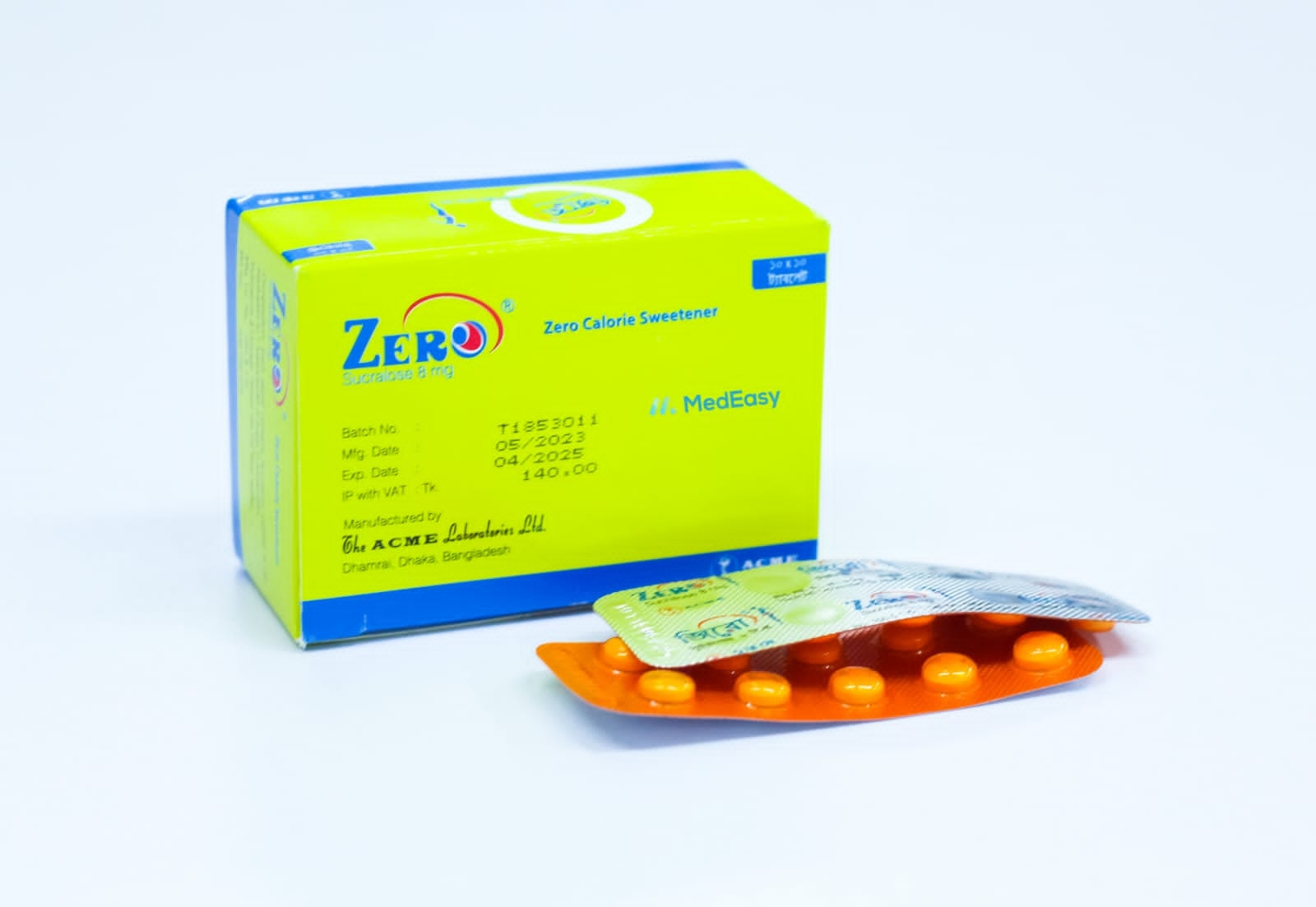
Zero8 mg
ACME Laboratories Ltd.
৳12.60
Add to cart
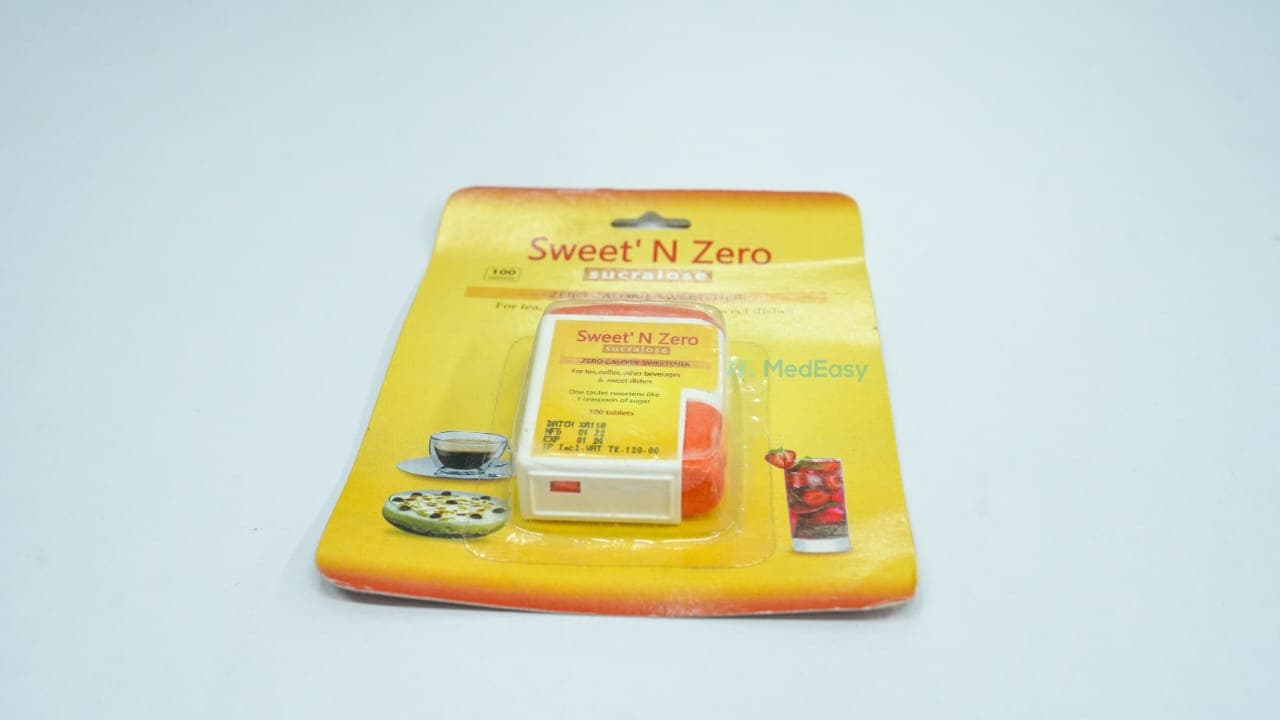

Sweet'n Zero is a non-nutritive (calorie-free) artificial sweetener used as a sugar substitute for sweetening foods and beverages. It is a food additive/dietary aid rather than a therapeutic drug, and is commonly available through pharmacies for people who wish to reduce sugar or calorie intake.
Important: Sweet'n Zero does not treat, cure, or prevent diabetes or any medical condition. It is a dietary aid intended to support, not replace, prescribed diabetes treatment, medical nutrition therapy, and blood glucose monitoring.
Sucralose is available as a stand-alone sweetening agent in several dosage forms commonly sold through pharmacies, including:
Each dosage form contains Sucralose as the active sweetening ingredient, often combined with an inert bulking agent (e.g., maltodextrin) to aid measuring and dissolution. Strength and pack size vary by manufacturer/brand.
Sweet'n Zero is a high-intensity, non-nutritive artificial sweetener derived from sucrose (table sugar) through a chlorination process that substitutes three hydroxyl groups with chlorine atoms. This modification makes Sweet'n Zero approximately 320 to 1000 times sweeter than sucrose by weight, while it is largely not recognized by the body as a sugar and contributes essentially no calories.
Sweet'n Zero is heat-stable, making it suitable for cooking and baking, unlike some other artificial sweeteners. It has been reviewed and permitted for use as a food additive by major regulatory bodies, including the US Food and Drug Administration (FDA) and the European Food Safety Authority (EFSA), and is used worldwide in tabletop sweeteners and a wide range of reduced-calorie and "sugar-free" food and beverage products.
Non-nutritive Sweetener / Sugar Substitute (Dietary Aid) — Sweet'n Zero is classified as a food additive, not a therapeutic drug.
Sucralose produces its sweet taste by binding to the sweet taste receptors (T1R2/T1R3 heterodimer) on the tongue, triggering a sweet sensation without providing the metabolic substrate that sugar provides.
Sucralose is largely not metabolized by the human body. The majority of an oral dose (approximately 85%) is not absorbed from the gastrointestinal tract and is excreted unchanged in the feces. The fraction that is absorbed (roughly 11-27%, largely from the small intestine) is not appreciably metabolized and is excreted essentially unchanged in the urine, with a plasma elimination half-life of a few hours. Because it is not broken down into glucose or other metabolizable sugars, Sucralose does not raise blood glucose or insulin levels, distinguishing it from nutritive sweeteners like sucrose.
Sweet'n Zero is intended to be used according to personal taste preference to replace sugar in foods and beverages. There is no prescribed therapeutic "dose" as Sweet'n Zero is a food additive rather than a medication; however, an Acceptable Daily Intake (ADI) has been established by regulatory authorities.
| Regulatory Body | Acceptable Daily Intake (ADI) |
|---|---|
| US FDA | 5 mg/kg body weight/day |
| EFSA (Europe) | 15 mg/kg body weight/day |
| JECFA (WHO/FAO) | 15 mg/kg body weight/day |
For an average adult, typical dietary use as a tabletop sweetener or in "diet"/"sugar-free" products remains well within these established ADIs.
Sweet'n Zero tablets, sachets, or drops may be added directly to beverages (tea, coffee, water) or used in place of sugar in food preparation and baking, as Sweet'n Zero is heat-stable. Follow the specific product label for the sugar-equivalent measurement (e.g., number of tablets or drops per teaspoon of sugar replaced).
Sweet'n Zero may be taken orally by adding tablets, sachets, or liquid drops to food or beverages as a sugar replacement. It can be used in hot or cold preparations, including cooking and baking, due to its heat stability. It is not injected or administered by any route other than oral dietary use.
Sweet'n Zero is largely not absorbed or metabolized systemically in most individuals, and no clinically significant pharmacokinetic or pharmacodynamic drug interactions have been well established for Sweet'n Zero with commonly used medications.
As a general precaution, patients taking medications for diabetes (insulin or oral hypoglycemic agents) should continue to monitor blood glucose as directed by their physician, since Sweet'n Zero itself does not affect blood glucose levels and should not be assumed to alter the effect of diabetes medications.
Sucralose is contraindicated only in individuals with a known hypersensitivity to Sucralose or any component of the specific product formulation. True hypersensitivity reactions to Sucralose are rare.
Sweet'n Zero is generally very well tolerated by the vast majority of users. Reported side effects are uncommon and typically mild:
Some research has explored possible effects of very high, prolonged Sweet'n Zero intake on gut microbiota composition; findings remain inconsistent and inconclusive, and this continues to be an area of ongoing scientific research. Major regulatory bodies (FDA, EFSA) have not found this to warrant a change in the established safety status of Sweet'n Zero at typical dietary intake levels.
Sweet'n Zero is generally considered acceptable for use in moderation during pregnancy and lactation. Because Sweet'n Zero is minimally absorbed systemically and is not metabolized to any significant extent, major regulatory reviews (FDA, EFSA) have not identified specific safety concerns for use during pregnancy or breastfeeding at typical dietary intake levels.
As with any dietary product used during pregnancy or lactation, moderate use within the established Acceptable Daily Intake is advised, and pregnant or breastfeeding individuals should consult their physician or a qualified healthcare provider for individualized dietary guidance, particularly if managing gestational or pre-existing diabetes.
Sweet'n Zero is a sugar substitute/dietary aid and does not treat, cure, or manage diabetes or any other medical condition. Patients with diabetes mellitus should continue their prescribed diabetes management plan, medications, and blood glucose monitoring as directed by their physician regardless of Sweet'n Zero use; Sweet'n Zero is not a substitute for prescribed diabetes medications or medical nutrition therapy.
Sweet'n Zero should not be considered a treatment for weight loss on its own; it should be used as part of an overall balanced diet and lifestyle approach.
See Contraindications for hypersensitivity information, and Side Effects for information on rare gastrointestinal effects with excessive intake.
Sweet'n Zero has a wide margin of safety, and significant toxicity from oral overdose is not expected at typical consumer exposure. Consuming amounts substantially above the recommended Acceptable Daily Intake may increase the likelihood of mild gastrointestinal symptoms such as bloating, gas, or loose stools.
If a very large accidental ingestion occurs, especially in a child, or if any unusual or severe symptoms develop, seek immediate medical attention or contact a poison control center/emergency services rather than attempting home treatment.
Store at room temperature (below 30°C), away from light and moisture. Keep out of reach of children.
Sweet'n Zero does not raise blood glucose or insulin levels and is widely used by individuals with diabetes as a sugar substitute; however, it does not replace prescribed diabetes medications, monitoring, or medical nutrition therapy.
Because Sweet'n Zero is minimally absorbed and largely excreted unchanged, no specific dose adjustment is established as necessary for renal or hepatic impairment at typical dietary intake; patients with significant organ impairment should still use in moderation and consult their physician.
No specific precautions beyond general dietary moderation are established for elderly individuals using Sweet'n Zero.
Sweet'n Zero does not contain phenylalanine and does not require the warnings applicable to some other sweeteners (e.g., aspartame) for individuals with phenylketonuria.
Sweet'n Zero is not a course-based medication and has no defined "duration of treatment." It may be used on an ongoing, as-needed basis as part of the diet for as long as desired, provided intake remains within the established Acceptable Daily Intake.
Non-nutritive/High-intensity Artificial Sweetener; Sugar Substitute; Food Additive — Sucralose is not classified within a pharmacological drug class as it is not a therapeutic medication.
Sucralose activates the sweet taste receptor (T1R2/T1R3 heterodimer) on taste bud cells, producing an intense sweet taste sensation (roughly 320-1000 times sweeter than sucrose) without providing a metabolizable carbohydrate substrate. Because Sucralose is not significantly absorbed or metabolized by the body, it does not contribute meaningfully to caloric intake and does not raise blood glucose or insulin levels.
Sweet'n Zero is generally regarded as safe for use by children in moderation, within the established Acceptable Daily Intake, and has been reviewed as such by regulatory bodies including the FDA. However, general pediatric nutrition guidance (e.g., American Academy of Pediatrics) recommends limiting all forms of added and substitute sweeteners in very young children (under 2 years of age), favoring whole foods and unsweetened options during early nutritional development.
Sweet'n Zero should not be used as a substitute for a child's balanced, age-appropriate diet, and parents should consult a pediatrician regarding dietary sweetener use in children, particularly for children with diabetes.
Q: Is Sweet'n Zero 8 mg Tablet a medicine?
A: No. Sweet'n Zero 8 mg Tablet is a non-nutritive artificial sweetener and food additive, not a therapeutic drug. It is used as a sugar substitute to sweeten food and beverages without adding significant calories or raising blood sugar.
Q: Can people with diabetes use Sweet'n Zero 8 mg Tablet?
A: Yes. Sweet'n Zero 8 mg Tablet does not raise blood glucose or insulin levels and is widely used by people with diabetes as a sugar substitute. However, Sweet'n Zero 8 mg Tablet does not treat diabetes, and patients should continue their prescribed diabetes medications, blood glucose monitoring, and medical nutrition therapy as advised by their physician.
Q: What are the side effects of Sweet'n Zero 8 mg Tablet?
A: Sweet'n Zero 8 mg Tablet is generally very well tolerated. Rare side effects include mild gastrointestinal symptoms such as bloating, gas, or loose stools, usually only with intake well above typical dietary amounts. Rare allergic-type reactions (rash, itching) have also been reported. Serious side effects are not expected at normal dietary use.
Q: Is Sweet'n Zero 8 mg Tablet safe during pregnancy and breastfeeding?
A: Sweet'n Zero 8 mg Tablet is generally considered acceptable for use in moderation during pregnancy and breastfeeding, as it is minimally absorbed by the body. As with any dietary product, use within the recommended Acceptable Daily Intake and consult your physician for individualized guidance, especially if you have gestational or pre-existing diabetes.
Q: Can children use Sweet'n Zero 8 mg Tablet?
A: Sweet'n Zero 8 mg Tablet is considered safe for children in moderation within established intake limits. However, general pediatric nutrition guidance advises limiting sweeteners of any kind in children under 2 years of age. Parents should consult a pediatrician about dietary sweetener use in children.
Q: Does Sweet'n Zero 8 mg Tablet interact with other medicines?
A: No clinically significant drug interactions have been established for Sweet'n Zero 8 mg Tablet, since it is minimally absorbed and not significantly metabolized by the body. Patients on diabetes medications should still continue routine blood glucose monitoring as advised by their physician.
Disclaimer
The information provided is accurate to the best of our knowledge, but it does not replace professional medical advice. We cannot guarantee its completeness or accuracy, and the absence of specific information about a drug should not be taken as an endorsement. We are not responsible for any consequences arising from this information, so please consult a healthcare professional for any concerns or questions.
