

10% Off
Eziflex500 mg
Incepta Pharmaceuticals Ltd.
৳225.00
Add to cart
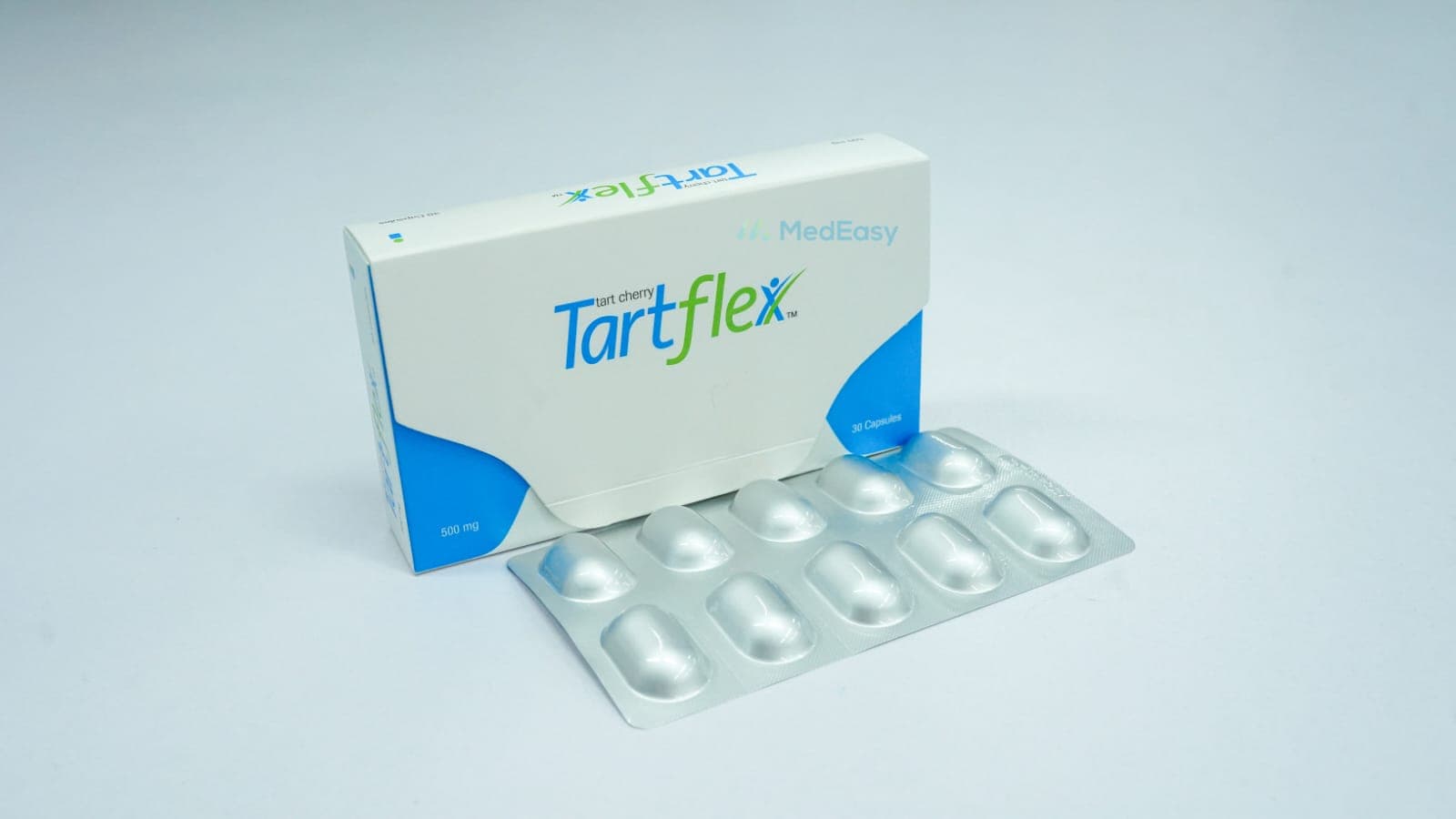

Tartflex is a dietary/herbal supplement made from the fruit of the sour cherry tree (Prunus cerasus), most commonly the Montmorency variety, standardized for its anthocyanin (polyphenol) content. It is not an FDA-approved prescription drug; it is marketed and used based on evidence from clinical studies of varying quality. Evidence-based uses include:
Overall, evidence for muscle-recovery use is stronger than for sleep or gout-related use; all claims should be viewed as supplement-level, not as definitive therapeutic claims, and Tartflex does not replace prescribed medical treatment.
Each unit of Tart Cherry product (juice, juice concentrate, capsule, or powder) contains extract/concentrate derived from the fruit of Prunus cerasus (sour/tart cherry, commonly the Montmorency cultivar), standardized to a specified anthocyanin content. Formulations vary by manufacturer and may be sold as juice, juice concentrate, capsules, tablets, or powder; strength should be checked on the specific product label as there is no single regulated standard dose.
Tartflex is a dietary supplement derived from the fruit of the sour cherry tree (Prunus cerasus), distinct from sweet cherry (Prunus avium). It is rich in polyphenolic compounds, particularly anthocyanins, along with smaller amounts of melatonin, tryptophan, potassium, and vitamin C. Tartflex is available as juice, juice concentrate, capsules, tablets, or powder, and is most commonly used by athletes for exercise-recovery support, and by others for general antioxidant intake, sleep support, and as an adjunct for uric acid/gout management.
Herbal/dietary supplement - fruit-derived polyphenol (anthocyanin) source; Tartflex is classified as a nutritional/dietary supplement rather than a regulated therapeutic drug class.
Tart Cherry is rich in anthocyanins (notably cyanidin glycosides) and other polyphenols with antioxidant and anti-inflammatory properties in laboratory and human studies. Proposed mechanisms relevant to its uses include:
Tart Cherry is not absorbed or metabolized as a single active pharmaceutical ingredient; its effects reflect the combined action of multiple plant constituents, and pharmacokinetic data (absorption, half-life) for its components are not established to pharmaceutical-grade standards.
There is no single FDA-regulated dose for Tartflex; typical amounts used in clinical studies and on commercial product labels are summarized below. Always follow the specific product label, as concentration varies by brand and formulation.
| Use | Typical Adult Dose (as studied/labeled) |
|---|---|
| Exercise recovery / muscle soreness | Approximately 240-355 mL (8-12 oz) of Tartflex juice, or an equivalent extract/capsule dose (commonly 480-960 mg extract), taken twice daily, usually starting a few days before and continuing several days after strenuous exercise |
| Sleep support | Approximately 240 mL (8 oz) of Tartflex juice or equivalent extract, taken once or twice daily, often with an evening dose |
| Gout / uric acid support (adjunct only) | Approximately 240 mL (8 oz) of Tartflex juice or equivalent extract daily, used alongside (not instead of) prescribed gout therapy |
Tartflex should be taken with food if it causes stomach upset. Because it is a supplement, it should be used under the guidance of a physician or pharmacist, particularly by anyone with diabetes, kidney disease, or who takes anticoagulant/antiplatelet medicines, or before use in a diagnosed medical condition such as gout.
Tartflex juice, concentrate, or capsules/tablets are taken orally, typically with a meal to reduce the chance of stomach upset. Juice concentrate should be diluted with water as directed on the product label if not pre-diluted. Capsules/tablets should be swallowed whole with water unless the label states otherwise.
No other well-established, clinically significant drug interactions have been documented for Tartflex; theoretical interactions not listed above should still be discussed with a physician or pharmacist, especially for patients on multiple medications.
Tart Cherry is contraindicated in individuals with known hypersensitivity/allergy to cherries or other fruits of the Prunus family (e.g., peach, plum, apricot, almond), including those with oral allergy syndrome cross-reactive to birch pollen, as Tart Cherry may trigger allergic reactions in these individuals.
Tartflex is generally well tolerated when taken in typical supplement amounts. Reported side effects are usually mild and include:
Serious adverse effects are rare when Tartflex is used as a food-based supplement at typical doses.
There is insufficient high-quality clinical data on the safety of Tartflex supplement use (as distinct from normal dietary cherry consumption) during pregnancy and breastfeeding. As with most herbal/dietary supplements, Tartflex should be used during pregnancy and lactation only if clearly needed and after consulting a physician, since potential benefit and risk have not been formally established in these populations. Ordinary dietary consumption of cherries as a food is not a specific concern, but concentrated supplement forms should be discussed with a healthcare provider first.
There is no well-established toxic dose of Tartflex reported in the literature; excessive intake, particularly of concentrated juice or extract, is most likely to cause gastrointestinal symptoms such as diarrhea, stomach cramping, or nausea, and in people with diabetes, elevated blood sugar from the natural sugar load. If a very large amount of Tartflex has been consumed and symptoms are severe or concerning (e.g., persistent vomiting, allergic reaction, unusual bleeding in someone on blood thinners), seek immediate medical attention or contact a poison control center/emergency services rather than attempting home treatment.
Store at room temperature (below 30°C), away from light and moisture. Once opened, juice and liquid concentrate products should be refrigerated and used within the time stated on the label. Keep out of reach of children.
Duration of Tartflex use varies by purpose: for exercise-related muscle soreness, it is typically used for a short course of several days surrounding a bout of strenuous exercise; for general sleep or uric acid support, it may be used longer-term as a dietary supplement, ideally with periodic reassessment with a physician, since long-term safety data at supplement doses beyond several months are limited.
Herbal/dietary supplement; fruit-derived polyphenol (anthocyanin) source
Tart Cherry's proposed effects are attributed mainly to its high anthocyanin and polyphenol content, which exhibit antioxidant and anti-inflammatory activity, along with smaller amounts of melatonin/tryptophan (relevant to sleep) and potential mild uricosuric activity (relevant to uric acid levels); it does not act via a single defined pharmaceutical receptor or enzyme target the way a conventional drug does.
Tartflex as a concentrated dietary supplement has not been formally studied for safety and efficacy in children, and a specific pediatric dose has not been established. Ordinary dietary consumption of cherries as a food is generally considered safe for children. Use of Tartflex supplement products in children should only occur under the guidance of a pediatrician or registered dietitian.
Q: What is Tartflex 500 mg Capsule used for?
A: Tartflex 500 mg Capsule is a dietary supplement most commonly used to help reduce muscle soreness and support recovery after strenuous exercise. It is also used, with more limited evidence, for sleep support and as an adjunct for uric acid/gout management. It does not replace prescribed medical treatment.
Q: Can I take Tartflex 500 mg Capsule if I am on blood thinners?
A: Tartflex 500 mg Capsule may have a mild effect on platelet function, so there is a theoretical increased bleeding risk when combined with anticoagulant or antiplatelet medicines such as warfarin, aspirin, or clopidogrel. Speak with your prescriber before starting Tartflex 500 mg Capsule if you take these medicines.
Q: Is Tartflex 500 mg Capsule safe during pregnancy or breastfeeding?
A: There isn't enough clinical evidence to confirm the safety of concentrated Tartflex 500 mg Capsule supplement use during pregnancy or breastfeeding. It should be used in these situations only if clearly needed and after consulting a physician.
Q: Who should not take Tartflex 500 mg Capsule?
A: People with a known allergy to cherries or other Prunus-family fruits (such as peach, plum, apricot, or almond) should not take Tartflex 500 mg Capsule, as it may trigger an allergic reaction.
Q: Does Tartflex 500 mg Capsule cure gout?
A: No. Evidence for Tartflex 500 mg Capsule lowering uric acid or reducing gout flares is preliminary and limited. It may be used as a dietary adjunct alongside physician-prescribed urate-lowering therapy, but it is not a substitute for prescribed gout treatment.
Q: What if I take too much Tartflex 500 mg Capsule?
A: Very large amounts may cause stomach upset, diarrhea, or (in people with diabetes) elevated blood sugar due to natural sugars in juice products. If symptoms are severe, such as persistent vomiting, signs of an allergic reaction, or unusual bleeding while on blood thinners, seek immediate medical attention or contact a poison control center.
Disclaimer
The information provided is accurate to the best of our knowledge, but it does not replace professional medical advice. We cannot guarantee its completeness or accuracy, and the absence of specific information about a drug should not be taken as an endorsement. We are not responsible for any consequences arising from this information, so please consult a healthcare professional for any concerns or questions.
