
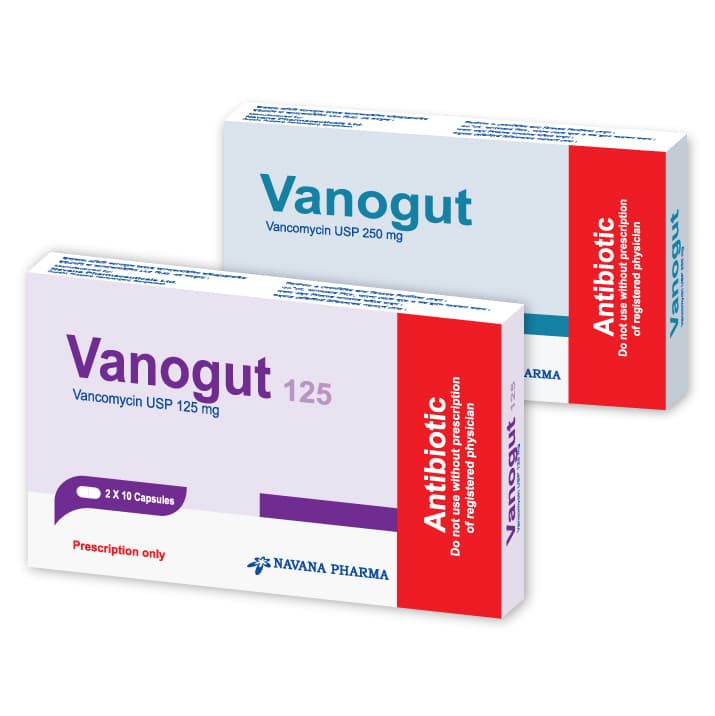

Medicine overview
Indications of Vanogut
Vanogut is a glycopeptide antibiotic used for two very different clinical purposes depending on the route of administration:
Intravenous (IV) form - established/FDA-approved uses
- Treatment of serious or severe infections caused by susceptible strains of methicillin-resistant Staphylococcus aureus (MRSA) and other susceptible gram-positive organisms, including bacteremia, infective endocarditis, bone and joint infections (osteomyelitis), skin and soft-tissue infections, and pneumonia, when other antibiotics (e.g., penicillins, cephalosporins) are ineffective, contraindicated, or the patient is allergic to them.
- Guideline-supported use, often in combination with other antibiotics (e.g., an aminoglycoside), for endocarditis caused by susceptible organisms in penicillin-allergic patients, and for surgical/dental endocarditis prophylaxis in select high-risk, penicillin-allergic patients per current cardiology society guidance.
Oral form - established/FDA-approved use
- Treatment of Clostridioides difficile-associated diarrhea (CDAD) and pseudomembranous colitis caused by C. difficile.
- Treatment of staphylococcal enterocolitis (including MRSA strains).
Important distinction: Oral Vanogut is not effective for systemic (bloodstream, deep tissue) infections because it is minimally absorbed from the gastrointestinal tract. Systemic infections require the intravenous form.
Composition
Each vial/formulation contains Vancomycin Hydrochloride as the active pharmaceutical ingredient, equivalent to a labelled strength of vancomycin base (commonly available as lyophilized powder for injection in strengths such as 500 mg and 1 g per vial, and as oral capsules or powder for oral solution in strengths such as 125 mg and 250 mg).
Description
Vanogut is a tricyclic glycopeptide antibiotic originally derived from the soil bacterium Amycolatopsis orientalis. It is bactericidal against most gram-positive bacteria, including many resistant organisms such as MRSA, but has no clinically useful activity against gram-negative bacteria.
Vanogut is supplied as a sterile lyophilized powder for reconstitution and intravenous infusion, and as an oral capsule/solution formulation used only for gastrointestinal infections such as C. difficile-associated diarrhea.
Therapeutic Class
Vanogut belongs to the glycopeptide antibiotic class of anti-infective agents.
Pharmacology
Vancomycin Hydrochloride inhibits bacterial cell wall biosynthesis by binding with high affinity to the D-alanyl-D-alanine terminus of peptidoglycan precursor units. This binding prevents the transglycosylation and transpeptidation steps required for cross-linking of the peptidoglycan cell wall, resulting in a weakened cell wall and bacterial cell death (bactericidal action against most susceptible organisms).
Vancomycin Hydrochloride also alters bacterial cell-membrane permeability and RNA synthesis, contributing to its antibacterial effect. Because its mechanism differs from beta-lactam antibiotics, it remains active against many beta-lactam-resistant organisms, including MRSA.
Pharmacokinetics: After IV administration, Vancomycin Hydrochloride distributes into most body tissues and fluids; it is eliminated primarily unchanged by glomerular filtration, so renal function strongly affects dosing and drug half-life. After oral administration, absorption from an intact gastrointestinal tract is minimal, which is why the oral form acts locally within the gut lumen and is not useful for systemic infections.
Dosage & Administration of Vanogut
Intravenous use (serious systemic infections)
| Population | Typical Dose |
|---|---|
| Adults | Usual dose 15-20 mg/kg IV every 8-12 hours (based on actual body weight and renal function), infused slowly over at least 60 minutes. Dosing should be individualized and guided by therapeutic drug monitoring (serum trough levels or AUC-guided dosing) per physician/hospital protocol. |
| Children (excluding neonates) | Usual dose 10-15 mg/kg IV every 6 hours, adjusted per weight, age, and clinical response; requires therapeutic drug monitoring. |
| Neonates/infants | Dosed by postmenstrual age and weight under close specialist supervision, with careful monitoring of renal function and serum levels. |
| Renal impairment | Dose and/or dosing interval must be reduced and individualized based on creatinine clearance; serum concentration monitoring is essential. |
Oral use (C. difficile-associated diarrhea / staphylococcal enterocolitis)
| Population | Typical Dose |
|---|---|
| Adults | 125 mg orally four times daily for 10 days for typical CDAD; up to 500 mg orally four times daily for severe or complicated disease, per physician judgment. |
| Children | Approximately 10 mg/kg per dose (up to adult dose) orally four times daily for 10 days, as directed by the treating physician. |
Administration
The IV infusion must be given slowly (over at least 60 minutes, or at a rate not exceeding 10 mg/minute) to reduce the risk of infusion-related reactions ("Red Man Syndrome"). It must never be given as a rapid IV bolus/push. Oral capsules/solution are for gastrointestinal use only and must never be substituted for the IV route in systemic infection.
Take exactly as prescribed by your physician; do not stop, extend, skip doses, or share this medicine with others without medical advice. Completing the full prescribed course is essential to clear the infection and reduce the risk of antibiotic resistance.
Administration of Vanogut
Vanogut IV solution must be administered as a slow intravenous infusion over at least 60 minutes; rapid administration increases the risk of infusion-related reactions. It should be diluted appropriately before infusion (see Reconstitution). The oral capsule/solution form is taken by mouth and acts locally in the gut; it must not be given intravenously.
Interaction of Vanogut
Vanogut has the following well-established, clinically significant interactions:
- Aminoglycosides (e.g., gentamicin, amikacin) and other nephrotoxic/ototoxic drugs (e.g., loop diuretics such as furosemide, amphotericin B, cyclosporine, NSAIDs): Concurrent or sequential use with Vanogut increases the risk of additive nephrotoxicity and ototoxicity. Renal function and hearing should be monitored closely if combined use is unavoidable.
- Anesthetic agents: Concurrent administration of Vanogut with anesthetic agents has been associated with an increased frequency of infusion-related reactions (erythema, histamine-like flushing, anaphylactoid reactions). If concurrent use is necessary, Vanogut should be infused slowly and prior to anesthesia induction where possible.
Always inform the prescribing physician of all other medicines being taken before starting Vanogut.
Contraindications
Vancomycin Hydrochloride is contraindicated in patients with known hypersensitivity to vancomycin.
Side Effects of Vanogut
Serious adverse effects that require prompt medical attention include:
- Nephrotoxicity: kidney function impairment, especially with prolonged therapy, high doses, pre-existing renal disease, or concurrent nephrotoxic drugs (see Interactions); requires monitoring of renal function and serum drug levels.
- Ototoxicity: tinnitus and hearing loss, which can be irreversible, particularly with prolonged high-dose therapy or concurrent ototoxic drugs.
- Infusion-related reaction ("Red Man Syndrome"): flushing, erythema of the face/neck/upper body, pruritus, and sometimes hypotension, related to the rate of IV infusion rather than a true drug allergy in most cases; minimized by slow infusion.
Other reported side effects include phlebitis and pain/irritation at the IV injection site, nausea, chills, drug fever, reversible neutropenia with prolonged use, and rare severe skin reactions (e.g., Stevens-Johnson syndrome, DRESS syndrome). Report any severe rash, breathing difficulty, or swelling immediately.
Pregnancy & Lactation
Pregnancy: Vanogut should be used during pregnancy only if clearly needed and the potential benefit to the mother justifies the potential risk to the fetus, given the serious nature of infections it treats. There is limited human data; use requires close specialist monitoring of maternal renal function and, where feasible, drug levels. Consult a physician before use in pregnancy.
Lactation: Vanogut is excreted in breast milk in small amounts. Because oral absorption is minimal, systemic exposure to a breastfeeding infant is expected to be low, but caution is advised. Consult a physician before use while breastfeeding.
Precautions & Warnings
Vanogut carries important safety warnings that require careful monitoring:
- Nephrotoxicity: Risk increases with high doses, prolonged therapy, pre-existing renal impairment, and concurrent nephrotoxic drugs. Renal function and serum drug concentrations should be monitored regularly during IV therapy.
- Ototoxicity: May be irreversible, especially with prolonged high-dose therapy, pre-existing hearing loss, or concurrent ototoxic drugs. Hearing should be monitored if prolonged therapy is required.
- Infusion-related reactions ("Red Man Syndrome"): Rapid IV infusion can cause flushing, hypotension, and rash. Always infuse slowly over at least 60 minutes.
- Antibiotic stewardship: Take exactly as prescribed by your physician; do not stop, extend, skip doses, or share this medicine with others without medical advice. Inappropriate use may promote resistant bacteria.
- Use with caution in patients with pre-existing renal impairment or hearing impairment, and in the elderly.
Overdose Effects of Vanogut
Overdose of Vanogut may worsen nephrotoxicity and ototoxicity. In case of suspected overdose, seek immediate medical attention or contact a poison control center/emergency services right away. Management is supportive and may include monitoring of renal function and serum drug concentrations; hemodialysis has limited effect on removing Vanogut but may be considered by treating physicians in select cases. Do not attempt home treatment for a suspected overdose.
Storage Conditions
Store unreconstituted Vanogut powder for injection and oral capsules at room temperature (below 30°C), away from light and moisture. Keep out of reach of children. Once reconstituted or diluted for infusion, the solution should be refrigerated (2-8°C) and used within the timeframe specified by the manufacturer/pharmacist; discard any unused reconstituted solution as directed. Do not use beyond the expiry date.
Use In Special Populations
Renal impairment: Requires reduced doses and/or extended dosing intervals, individualized based on creatinine clearance, with close monitoring of serum Vanogut concentrations and renal function.
Hepatic impairment: No specific dose adjustment is well-established, as Vanogut is primarily renally eliminated; use with routine clinical caution.
Elderly: Age-related decline in renal function is common; dose should be based on renal function assessment, and drug levels and renal function should be monitored closely.
Obesity: Dosing is generally based on actual body weight, with close monitoring, as clearance may differ from patients of normal weight.
Duration Of Treatment
Duration of Vanogut therapy depends on the type and severity of infection and clinical response, and must be determined by the treating physician. As a general guide, uncomplicated skin/soft-tissue infections may require 7-14 days, bacteremia typically 2 or more weeks, infective endocarditis and osteomyelitis often 4-6 weeks or longer, and oral therapy for C. difficile-associated diarrhea is typically 10 days. The full prescribed course should always be completed even if symptoms improve earlier.
Reconstitution
Vanogut powder for injection must be reconstituted before use. Add the manufacturer-specified volume of Sterile Water for Injection to the vial (e.g., 10 mL for a 500 mg vial, 20 mL for a 1 g vial) and swirl gently to dissolve completely, giving a concentration of approximately 50 mg/mL. This reconstituted solution must then be further diluted in a compatible IV fluid (e.g., 5% Dextrose Injection or 0.9% Sodium Chloride Injection) to a concentration of 5 mg/mL or less before slow intravenous infusion. Oral solution can be prepared by diluting the reconstituted injectable powder in water or a flavored vehicle, as directed by the pharmacist, for oral administration only. Reconstituted/diluted solutions should be refrigerated and used within the time specified by the manufacturer; do not use if the solution is discolored or contains particulate matter.
Drug Classes
Vancomycin Hydrochloride is classified as a glycopeptide antibiotic, a class of anti-infective agents active mainly against gram-positive bacteria.
Mode Of Action
Vancomycin Hydrochloride exerts its bactericidal effect by binding to the D-alanyl-D-alanine terminus of peptidoglycan cell wall precursors, blocking the transglycosylation and transpeptidation reactions needed to build a functional bacterial cell wall. This inhibition of cell wall synthesis leads to increased cell wall permeability and eventual bacterial cell lysis and death. It additionally affects bacterial RNA synthesis and cell-membrane permeability, contributing to its antibacterial activity against susceptible gram-positive organisms, including MRSA.
Pregnancy
C
Pediatric Uses
Vanogut is used in infants and children, including neonates, for serious gram-positive infections such as MRSA infections and sepsis, and orally for C. difficile-associated diarrhea, under close physician supervision. Dosing is weight-based (and postmenstrual-age-based in neonates) and requires careful monitoring of renal function and serum drug concentrations, as renal clearance and drug half-life vary significantly with age. Safety and efficacy in preterm and very young neonates should be established individually by the treating specialist, with vigilant monitoring for nephrotoxicity and ototoxicity.
Frequently Asked Questions
Q: What is Vanogut 125 mg Capsule used for?
A: Vanogut 125 mg Capsule given intravenously is used to treat serious infections caused by resistant gram-positive bacteria, including MRSA, such as bloodstream infections, endocarditis, bone infections, and pneumonia, usually when other antibiotics cannot be used. The oral form of Vanogut 125 mg Capsule is used specifically to treat C. difficile-associated diarrhea and is not effective for infections outside the gut.
Q: Can Vanogut 125 mg Capsule be taken by mouth for a bloodstream infection?
A: No. Oral Vanogut 125 mg Capsule is poorly absorbed into the bloodstream and only works locally within the gut, so it is used only for gastrointestinal infections like C. difficile colitis. Bloodstream and other systemic infections require the intravenous form of Vanogut 125 mg Capsule.
Q: What are the most serious risks of Vanogut 125 mg Capsule?
A: The most important risks of intravenous Vanogut 125 mg Capsule are kidney damage (nephrotoxicity), hearing problems including tinnitus or hearing loss (ototoxicity) which can sometimes be permanent, and an infusion-related reaction called "Red Man Syndrome" (flushing, rash, low blood pressure) if the infusion is given too quickly. Your doctor will monitor your kidney function, hearing, and blood drug levels during treatment to reduce these risks.
Q: Why is Vanogut 125 mg Capsule infused slowly?
A: Vanogut 125 mg Capsule must be infused slowly, generally over at least 60 minutes, because rapid infusion can trigger "Red Man Syndrome" - flushing, itching, rash, and a drop in blood pressure. Slowing the infusion rate significantly reduces this risk.
Q: Is it safe to use Vanogut 125 mg Capsule during pregnancy or breastfeeding?
A: Vanogut 125 mg Capsule should be used during pregnancy only if clearly needed, since the infections it treats are serious and the benefit may outweigh potential risk to the fetus; your physician will monitor you closely. Small amounts pass into breast milk, but absorption by the infant is expected to be minimal; consult your physician before breastfeeding while on this medicine.
Q: Can I stop taking Vanogut 125 mg Capsule once I feel better?
A: No. You should take Vanogut 125 mg Capsule exactly as prescribed by your physician and complete the full course, even if you start feeling better. Stopping early, skipping doses, or sharing this medicine with others can allow the infection to return and contributes to antibiotic resistance.
Disclaimer
The information provided is accurate to the best of our knowledge, but it does not replace professional medical advice. We cannot guarantee its completeness or accuracy, and the absence of specific information about a drug should not be taken as an endorsement. We are not responsible for any consequences arising from this information, so please consult a healthcare professional for any concerns or questions.
