10% Off
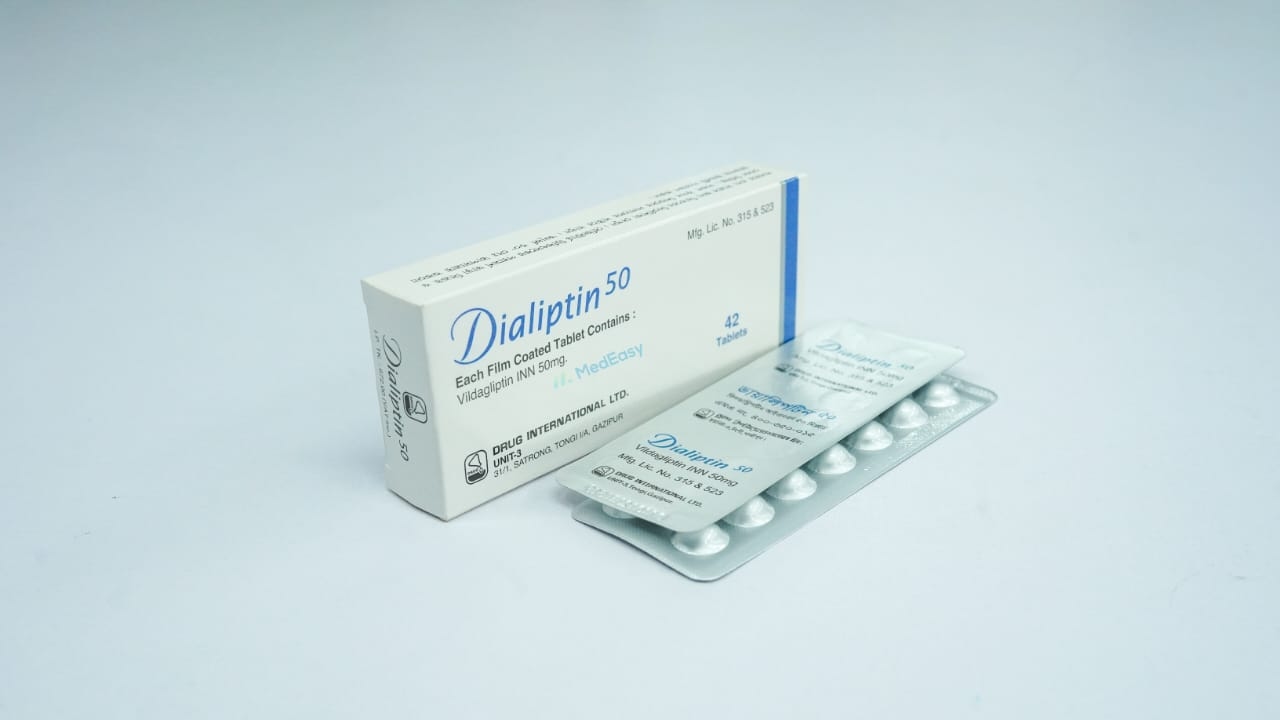
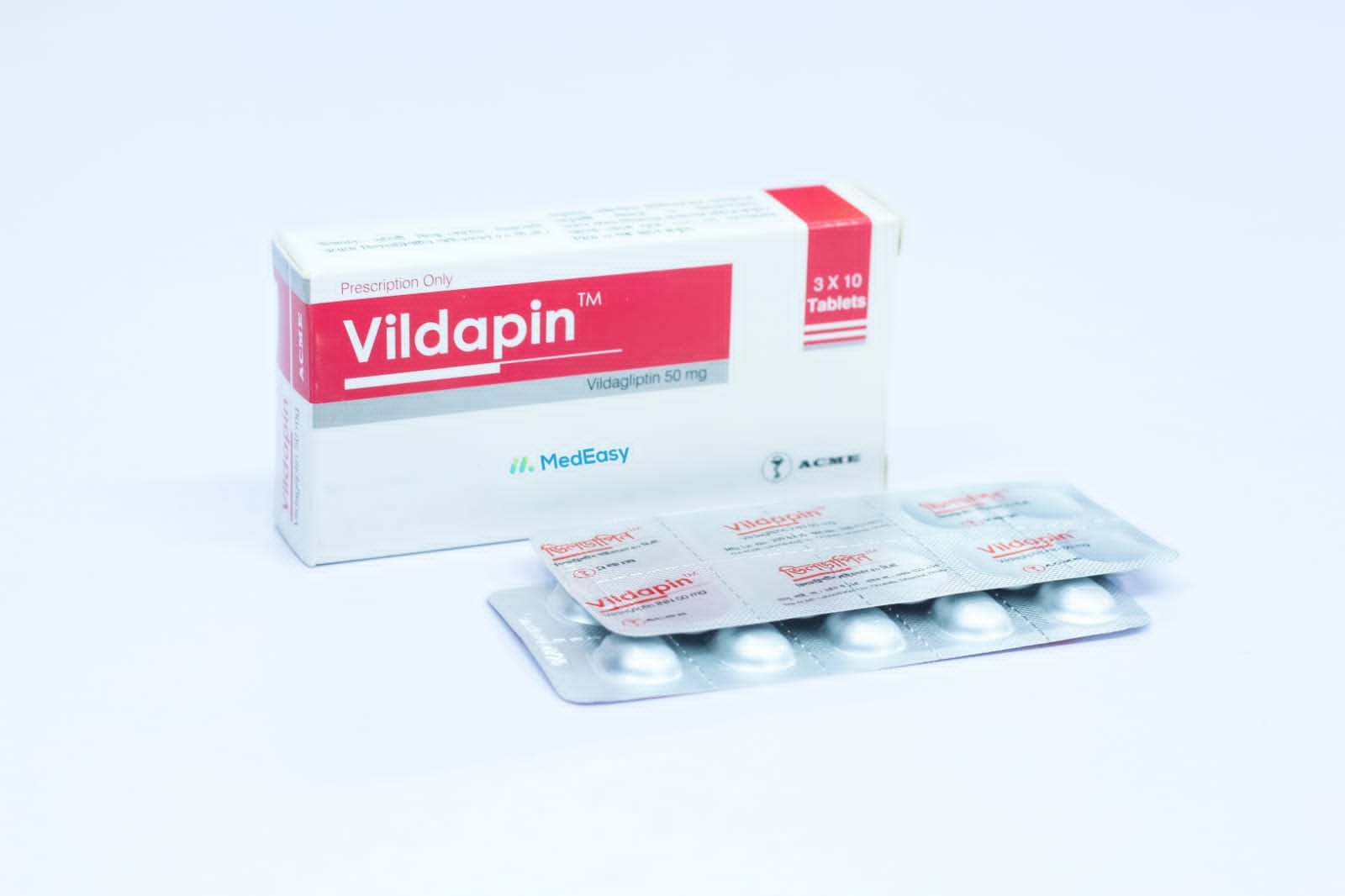
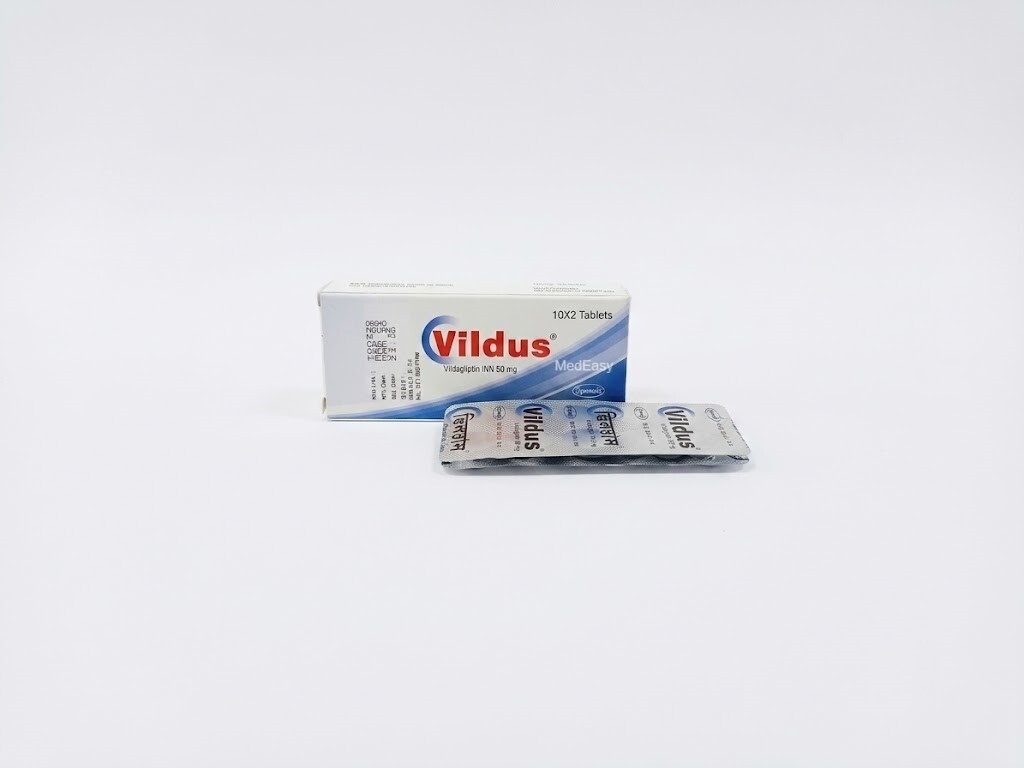
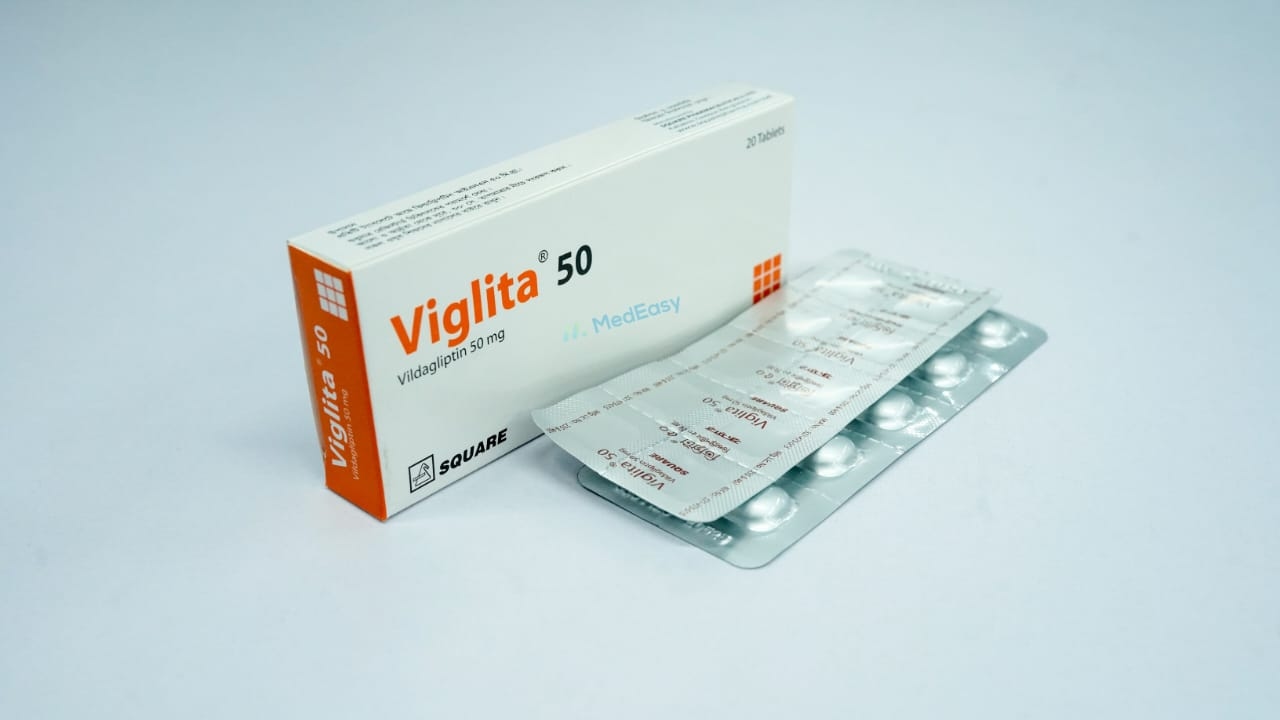
Viglita50 mg
Square Pharmaceuticals PLC.
৳144.00
Add to cart


Vigatin is a dipeptidyl peptidase-4 (DPP-4) inhibitor indicated as an adjunct to diet and exercise to improve glycemic control in adults with type 2 diabetes mellitus.
Vigatin is not indicated for type 1 diabetes mellitus or for the treatment of diabetic ketoacidosis.
Each film-coated tablet contains Vildagliptin 50 mg as the active ingredient, along with pharmaceutically inert excipients such as microcrystalline cellulose, anhydrous lactose, sodium starch glycolate, and magnesium stearate.
Vigatin is an oral antidiabetic agent belonging to the dipeptidyl peptidase-4 (DPP-4) inhibitor class, sometimes called "gliptins." It works by increasing levels of incretin hormones, which help the body release insulin appropriately after meals and reduce excess glucose production by the liver.
Vigatin is used as part of a comprehensive treatment plan for type 2 diabetes that includes diet and exercise, either alone or together with other antidiabetic medicines.
Vigatin belongs to the Dipeptidyl Peptidase-4 (DPP-4) Inhibitor class of oral antidiabetic (anti-hyperglycemic) agents, also known as “gliptins.”
Vildagliptin inhibits the enzyme dipeptidyl peptidase-4 (DPP-4), which is responsible for breaking down the incretin hormones glucagon-like peptide-1 (GLP-1) and glucose-dependent insulinotropic polypeptide (GIP). By slowing the degradation of these hormones, Vildagliptin increases their circulating levels, which in turn increases glucose-dependent insulin secretion from pancreatic beta cells and decreases inappropriate glucagon secretion from alpha cells, reducing hepatic glucose output.
Vildagliptin is rapidly absorbed after oral administration, with peak plasma concentration reached within about 1-2 hours. Absolute bioavailability is approximately 85%. It is partially metabolized (mainly by hydrolysis, not primarily via cytochrome P450 enzymes) and is eliminated roughly 85% in urine and 15% in feces, with an elimination half-life of about 2-3 hours.
Vigatin tablets may be taken with or without food.
| Regimen | Recommended Dose |
|---|---|
| Monotherapy, or combined with metformin, a thiazolidinedione, metformin + sulphonylurea, or insulin | 50 mg twice daily (morning and evening) — total 100 mg/day |
| Combined with a sulphonylurea alone | 50 mg once daily, taken in the morning |
| Moderate to severe renal impairment or end-stage renal disease | 50 mg once daily |
| Hepatic impairment | Not recommended (see Contraindications) |
The maximum recommended daily dose is 100 mg. Missed doses should not be doubled up; the next dose should be taken at the regular scheduled time. Dosage should always be individualized by the prescribing physician based on glycemic response and tolerability.
Vigatin is administered orally, with or without food, at approximately the same time(s) each day. Tablets should be swallowed whole with water and should not be crushed or chewed unless otherwise directed by a physician.
Vigatin has a low potential for drug interactions, as it is not a substrate of, nor a significant inhibitor or inducer of, cytochrome P450 enzymes. The following interactions are clinically relevant:
No clinically significant interactions have been identified with metformin, pioglitazone, glyburide, digoxin, warfarin, amlodipine, ramipril, valsartan, or simvastatin. Patients should inform their physician of all medicines they are taking, including over-the-counter drugs and herbal supplements.
Vildagliptin is contraindicated in patients with:
Adverse effects of Vigatin are generally mild and transient. Common and serious effects include:
Patients should seek prompt medical attention for persistent abdominal pain, yellowing of the skin/eyes, unusual fatigue, or unexplained blistering of the skin.
There are limited human data on the use of Vigatin during pregnancy. Animal studies have shown reproductive toxicity at high doses. As a precaution, Vigatin should not be used during pregnancy unless clearly necessary; if a patient becomes pregnant or plans to become pregnant, insulin therapy is generally preferred, and a physician should be consulted to reassess the treatment plan.
It is not known whether Vigatin is excreted in human breast milk. Because a risk to the breastfeeding infant cannot be excluded, Vigatin should not be used while breastfeeding; a physician should be consulted to select an appropriate alternative.
Rare cases of liver dysfunction, including hepatitis, have been reported with Vigatin. Liver function tests are recommended before starting Vigatin, at three-month intervals during the first year of treatment, and periodically thereafter. If ALT or AST rises to 3 times the upper limit of normal or greater (confirmed on repeat testing), or if jaundice or other signs of liver dysfunction develop, Vigatin should be discontinued and not restarted.
Cases of acute pancreatitis have been reported with Vigatin. Patients should be counseled on the characteristic symptom of persistent, severe abdominal pain. If pancreatitis is suspected, Vigatin should be discontinued promptly; if confirmed, it should not be restarted.
Rare cases of bullous and exfoliative skin lesions, including bullous pemphigoid, have been reported. Patients should be advised to report any blistering or skin ulceration, and Vigatin should be discontinued if bullous pemphigoid is suspected.
Caution is advised when Vigatin is used in patients with heart failure; it is not recommended in patients with New York Heart Association (NYHA) Class IV heart failure. Patients with pre-existing heart failure should be monitored for signs of fluid retention or worsening symptoms.
When Vigatin is combined with a sulphonylurea or insulin, the risk of hypoglycemia is increased; dose reduction of the sulphonylurea or insulin may be required (see Interactions).
Dose adjustment is required in moderate-to-severe renal impairment and end-stage renal disease (see Dosage and Administration). No adjustment is needed in mild renal impairment.
Information on overdose with Vigatin is limited. Doses of up to 400-600 mg in clinical studies were associated with muscle pain, mild and transient paraesthesia, fever, edema, and transient elevations in lipase and creatine phosphokinase, without other clinically significant effects.
In case of a suspected overdose, seek immediate medical attention or contact a poison control center. Treatment involves discontinuing Vigatin and providing supportive care and monitoring based on the patient's clinical signs; Vigatin itself is not effectively removed by hemodialysis, though a major metabolite can be. Do not attempt home treatment for a suspected overdose.
Store at room temperature (below 30°C), away from light and moisture, in the original package. Keep out of reach of children.
No dose adjustment is generally required based on age alone. Use with caution in patients aged 75 years and older, as clinical experience is more limited in this group.
No dose adjustment is needed for mild renal impairment. A reduced dose of 50 mg once daily is recommended for moderate-to-severe renal impairment or end-stage renal disease (see Dosage and Administration).
Vigatin is contraindicated in patients with hepatic impairment, including those with pre-treatment liver enzymes greater than 3 times the upper limit of normal (see Contraindications).
Vigatin is not recommended for use in children and adolescents under 18 years of age, as safety and efficacy have not been established in this population.
Vigatin is used for long-term, ongoing management of type 2 diabetes mellitus as part of a chronic treatment plan. There is no fixed treatment duration; therapy is continued as long as it remains effective and well tolerated, with periodic physician review of glycemic control (e.g. HbA1c) and safety monitoring (including liver function tests). Treatment should not be stopped abruptly without medical advice.
Vildagliptin is classified as an oral antidiabetic agent, specifically a Dipeptidyl Peptidase-4 (DPP-4) inhibitor (“gliptin”).
Vildagliptin works by inhibiting the DPP-4 enzyme, which prevents the rapid breakdown of the incretin hormones GLP-1 and GIP. This raises incretin levels, which increases glucose-dependent insulin release from the pancreas and suppresses excess glucagon secretion, thereby reducing blood glucose levels in a glucose-dependent manner that carries a comparatively low intrinsic risk of hypoglycemia when used alone.
Vigatin is not recommended for use in patients under 18 years of age. Safety and efficacy of Vigatin in children and adolescents have not been established, and clinical trial data in this age group are insufficient to support use. Type 2 diabetes in pediatric patients should be managed under close pediatric endocrinology supervision using therapies with established pediatric safety data.
Q: What is Vigatin 50 mg Tablet used for?
A: Vigatin 50 mg Tablet is used along with diet and exercise to help control blood sugar levels in adults with type 2 diabetes mellitus. It may be used alone or together with other antidiabetic medicines such as metformin, a sulphonylurea, a thiazolidinedione, or insulin.
Q: How should I take Vigatin 50 mg Tablet?
A: Vigatin 50 mg Tablet is usually taken as a 50 mg tablet once or twice daily, with or without food, exactly as prescribed by your physician. The dose depends on what other diabetes medicines you are taking and your kidney function, so do not change your dose without medical advice.
Q: Can Vigatin 50 mg Tablet cause low blood sugar (hypoglycemia)?
A: Vigatin 50 mg Tablet alone has a low risk of causing hypoglycemia. However, when combined with a sulphonylurea or insulin, the risk of low blood sugar increases, and your physician may reduce the dose of those other medicines.
Q: Is Vigatin 50 mg Tablet safe during pregnancy or breastfeeding?
A: Vigatin 50 mg Tablet is not recommended during pregnancy or breastfeeding because there is not enough human safety data. If you are pregnant, planning pregnancy, or breastfeeding, consult your physician, who will likely recommend an alternative treatment such as insulin.
Q: What side effects should I watch for with Vigatin 50 mg Tablet?
A: Most people tolerate Vigatin 50 mg Tablet well, but you should seek prompt medical attention if you develop persistent severe abdominal pain (which can signal pancreatitis), yellowing of the skin or eyes or unusual fatigue (which can signal liver problems), or unexplained blistering of the skin.
Q: Can Vigatin 50 mg Tablet be used in children or elderly patients?
A: Vigatin 50 mg Tablet is not recommended in children and adolescents under 18 years because safety and efficacy have not been established. In elderly patients, especially those 75 years and older, Vigatin 50 mg Tablet can generally be used but with closer monitoring, and the dose may need adjustment if kidney function is reduced.
Disclaimer
The information provided is accurate to the best of our knowledge, but it does not replace professional medical advice. We cannot guarantee its completeness or accuracy, and the absence of specific information about a drug should not be taken as an endorsement. We are not responsible for any consequences arising from this information, so please consult a healthcare professional for any concerns or questions.