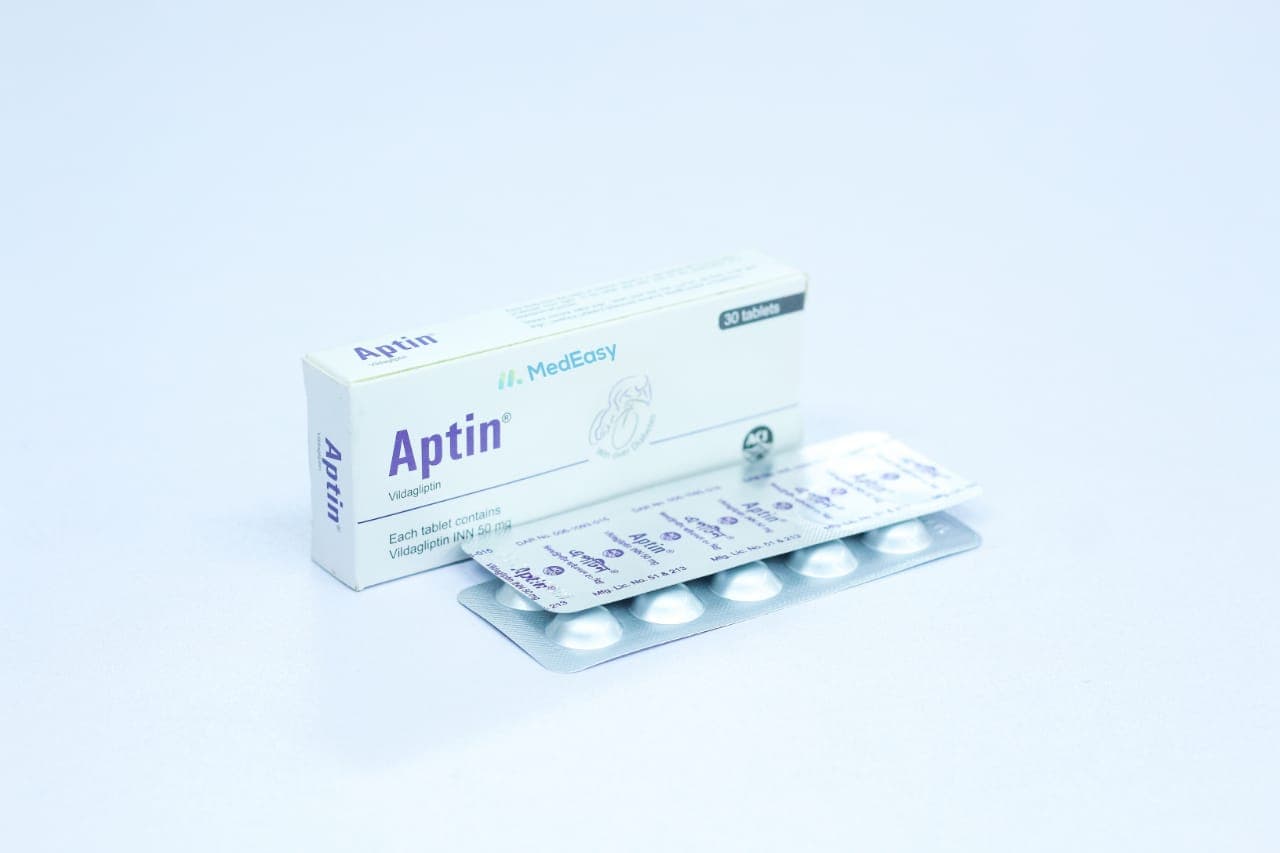
Aptin 50 mg is indicated as an adjunct to diet and exercise to improve glycemic control in patients with type 2 diabetes mellitus as monotherapy and in dual combination with Metformin, a Sulphonylurea, a Thiazolidinedione, or Insulin when diet, exercise and a single antidiabetic agent do not result in adequate glycemic control.
Theropeutic Class
Dipeptidyl Peptidase-4 (DPP-4) inhibitor
Pharmacology
Aptin 50 mg is a dipeptidyl peptidase-4 (DPP-4) inhibitor, which is believed to exert its actions in patients with type 2 diabetes by slowing the inactivation of incretin hormones. Incretin hormones, including glucagon-like peptide-1 (GLP-1) and glucose-dependent insulinotropic polypeptide (GIP), are released by the intestine throughout the day, and levels are increased in response to a meal. These hormones are rapidly inactivated by the enzyme, DPP-4. The incretins are part of an endogenous system involved in the physiologic regulation of glucose homeostasis. When blood glucose concentrations are normal or elevated, GLP-1 and GIP increase insulin synthesis and release from pancreatic beta cells by intracellular signaling pathways involving cyclic AMP. GLP-1 also lowers glucagon secretion from pancreatic alpha cells, leading to reduced hepatic glucose production. By increasing and prolonging active incretin levels, Aptin 50 mg increases insulin release and decreases glucagon levels in the circulation in a glucose-dependent manner.
Dosage & Administration of Aptin 50 mg
The recommended dose of Aptin 50 mg is-
50 mg or 100 mg daily for monotherapy.
50 mg twice daily (morning and evening) when used in dual combination with Metformin or a Thiazolidinedione;
50 mg once daily in the morning when used in dual combination with a Sulphonylurea.
Aptin 50 mg may be taken with or without a meal. No dosage adjustment is required in the elderly, or in patients with mild renal impairment.
Dosage of Aptin 50 mg
The recommended dose of Aptin 50 mg is-
50 mg or 100 mg daily for monotherapy.
50 mg twice daily (morning and evening) when used in dual combination with Metformin or a Thiazolidinedione;
50 mg once daily in the morning when used in dual combination with a Sulphonylurea.
Aptin 50 mg may be taken with or without a meal. No dosage adjustment is required in the elderly, or in patients with mild renal impairment.Pediatric use: Aptin 50 mg is not recommended in patients 18 years of age.
Interaction of Aptin 50 mg
In pharmacokinetic studies, no interactions were seen with pioglitazone, metformin, glibenclamide, digoxin, warfarin, amlodipine, ramipril, valsartan or simvastatin. As with other oral antidiabetic medicinal products the glucose-lowering effect of Aptin 50 mg may be reduced by certain active substances, including thiazides, corticosteroids, thyroid products and sympathomimetics.
Contraindications
Aptin 50 mg is contraindicated in patients with:
Hypersensitivity to the active substance or to any of the excipients
Patients with moderate to severe renalImpairment
Patients with Hepatic Impairment: patients with pre-treatment alanine aminotransferase (ALT) or aspartate aminotrasferase (AST) >3 times the upper limit of normal (ULN).
Patients with type 1 diabetes
Side Effects of Aptin 50 mg
The majority of adverse reactions were mild and transient, not requiring treatment discontinuations. A rare case of hepatic dysfunction is seen. Clinical trials of up to and more than 2 years duration did not show any additional safety signals or unforeseen risks when using this combination.
Pregnancy & Lactation
Pregnancy: There are no adequate data on the use of Aptin 50 mg in pregnant women; hence the potential risk for human is unknown.Lactation: It is not known whether Aptin 50 mg is excreted in human milk. Due to lack of human data, Aptin 50 mg should not be used during lactation.
Precautions & Warnings
Caution should be exercised in patients aged 75 years and older due to limited clinical experience. It is recommended that LFTs are monitored prior to initiation of Aptin 50 mg, at three-monthly intervals in the first year and periodically thereafter. If transaminase levels are increased, patients should be monitored with a second liver function evaluation to confirm the finding and be followed thereafter with frequent liver function tests until the abnormality returns to normal. If AST or ALT persists at 3xULN, Aptin 50 mg treatment should be stopped. Patients who develop jaundice or other signs of liver dysfunction should discontinue Aptin 50 mg. Following the withdrawal of treatment with Aptin 50 mg and LFT normalization, treatment with Aptin 50 mg should not be reinitiated. Due to limited clinical experience, use with caution in patients with congestive heart failure of New York Heart Association (NYHA) functional class I-II, and do not use in patients with NYHA functional class III IV.
Storage Conditions
Store below 30°C temperature & keep away from light & moisture. Keep out of reach of children.
Use In Special Populations
Paediatric use: Aptin 50 mg is not recommended in patients 18 years of age
Drug Classes
Dipeptidyl Peptidase-4 (DPP-4) inhibitor
Mode Of Action
Aptin 50 mg is a dipeptidyl peptidase-4 (DPP-4) inhibitor, which is believed to exert its actions in patients with type 2 diabetes by slowing the inactivation of incretin hormones. Incretin hormones, including glucagon-like peptide-1 (GLP-1) and glucose-dependent insulinotropic polypeptide (GIP), are released by the intestine throughout the day, and levels are increased in response to a meal. These hormones are rapidly inactivated by the enzyme, DPP-4. The incretins are part of an endogenous system involved in the physiologic regulation of glucose homeostasis. When blood glucose concentrations are normal or elevated, GLP-1 and GIP increase insulin synthesis and release from pancreatic beta cells by intracellular signaling pathways involving cyclic AMP. GLP-1 also lowers glucagon secretion from pancreatic alpha cells, leading to reduced hepatic glucose production. By increasing and prolonging active incretin levels, Aptin 50 mg increases insulin release and decreases glucagon levels in the circulation in a glucose-dependent manner.
Pregnancy
Aptin 50 mg should not be used in pregnancy. Aptin 50 mg should not be used during lactation.
Frequently Asked Questions
What is Aptin 50 mg used for?
Aptin 50 mg is indicated as an adjunct to diet and exercise to improve glycemic control in patients with type 2 diabetes mellitus as monotherapy and in dual combination with Metformin, a Sulphonylurea, a Thiazolidinedione, or Insulin when diet, exercise and a single antidiabetic agent do not result in adequate glycemic control.
What is the dosage of Aptin 50 mg?
The recommended dose of Aptin 50 mg is- 50 mg or 100 mg daily for monotherapy. 50 mg twice daily (morning and evening) when used in dual combination with Metformin or a Thiazolidinedione; 50 mg once daily in the morning when used in dual combination with a Sulphonylurea. Aptin 50 mg may be taken with or without a meal. No dosage adjustment is required in the elderly, or in patients with mild renal…
What are the side effects of Aptin 50 mg?
The majority of adverse reactions were mild and transient, not requiring treatment discontinuations. A rare case of hepatic dysfunction is seen. Clinical trials of up to and more than 2 years duration did not show any additional safety signals or unforeseen risks when using this combination.
Who should not take Aptin 50 mg?
Aptin 50 mg is contraindicated in patients with: Hypersensitivity to the active substance or to any of the excipients Patients with moderate to severe renalImpairment Patients with Hepatic Impairment: patients with pre-treatment alanine aminotransferase (ALT) or aspartate aminotrasferase (AST) >3 times the upper limit of normal (ULN). Patients with type 1 diabetes
What precautions should be taken with Aptin 50 mg?
Caution should be exercised in patients aged 75 years and older due to limited clinical experience. It is recommended that LFTs are monitored prior to initiation of Aptin 50 mg, at three-monthly intervals in the first year and periodically thereafter. If transaminase levels are increased, patients should be monitored with a second liver function evaluation to confirm the finding and be followed th…
Is Aptin 50 mg safe during pregnancy and breastfeeding?
Pregnancy: There are no adequate data on the use of Aptin 50 mg in pregnant women; hence the potential risk for human is unknown.Lactation: It is not known whether Aptin 50 mg is excreted in human milk. Due to lack of human data, Aptin 50 mg should not be used during lactation.
Disclaimer
The information provided is accurate to our best practices, but it does not replace professional medical advice. We cannot guarantee its completeness or accuracy. The absence of specific information about a drug should not be seen as an endorsement. We are not responsible for any consequences resulting from this information, so consult a healthcare professional for any concerns or questions.