7% Off
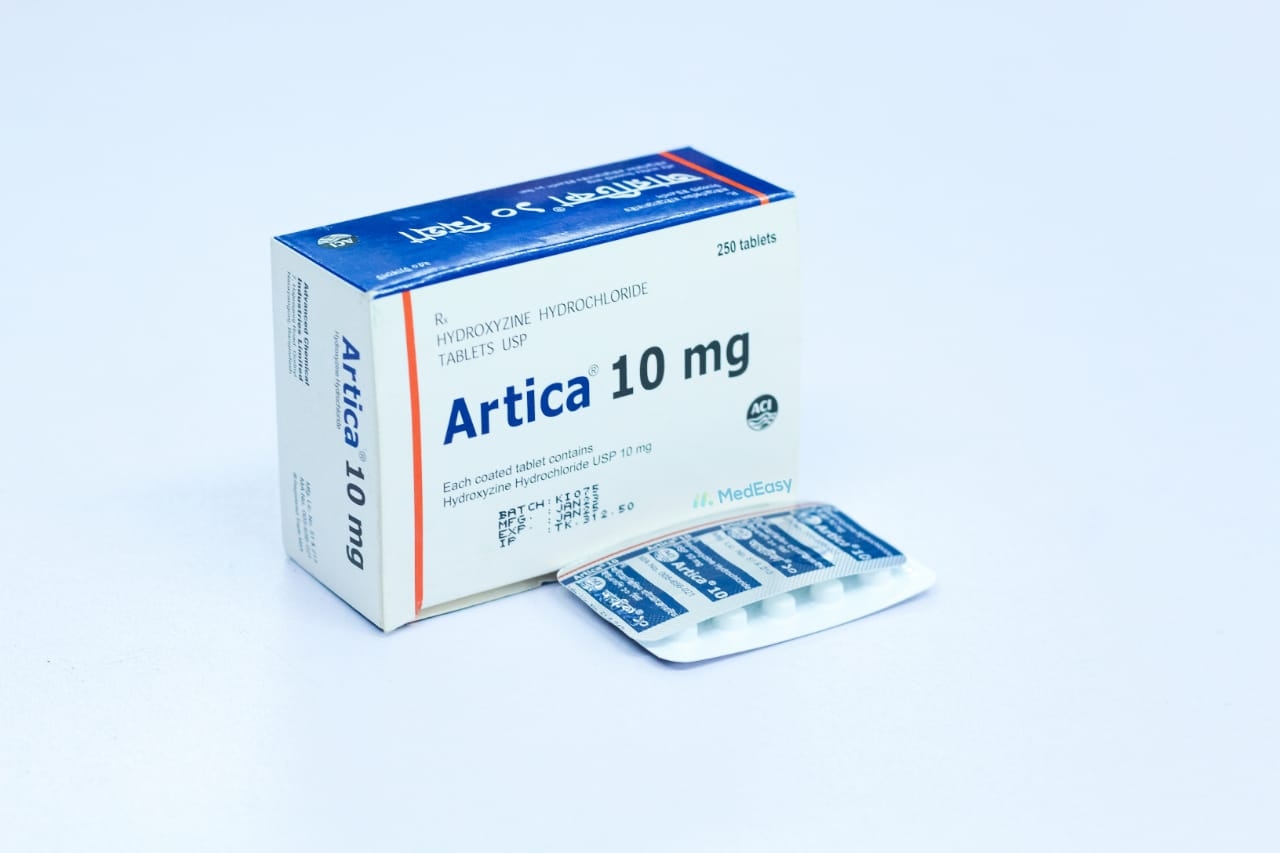
Artica10 mg
ACI Limited
৳13.95
Add to cart
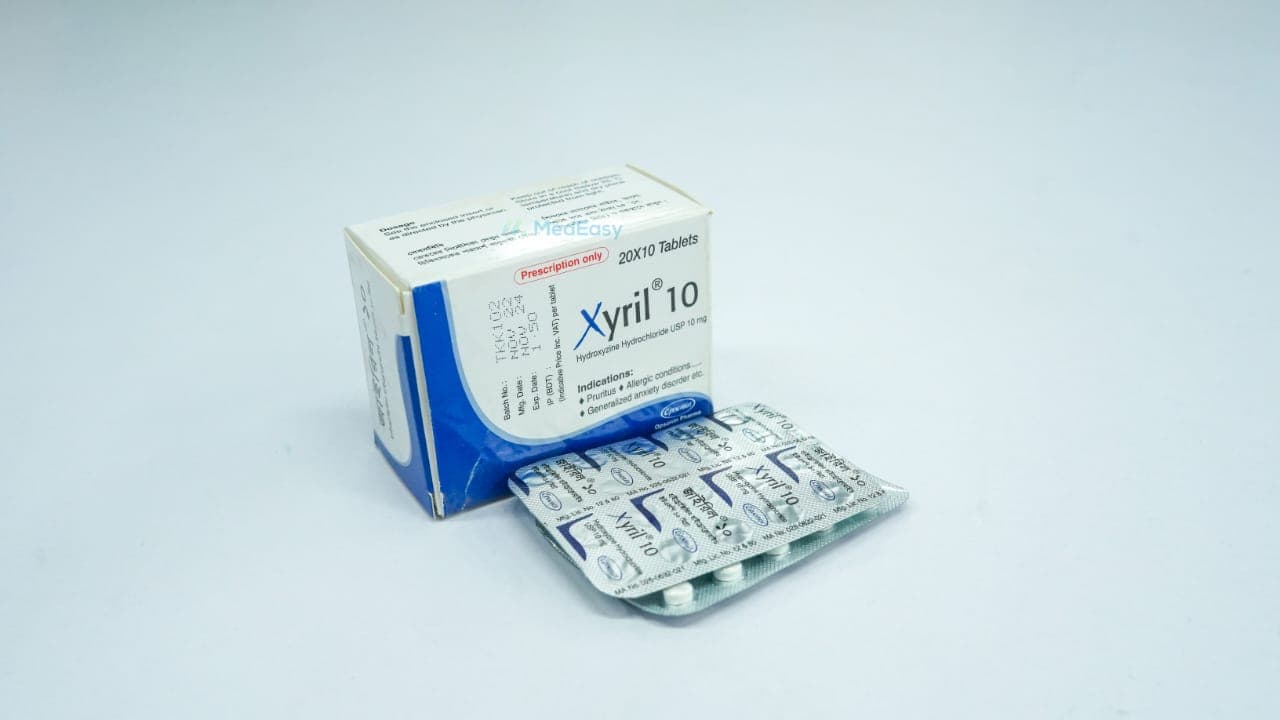

Xyril is an established first-generation antihistamine (piperazine derivative) used for the following FDA-approved and guideline-supported indications:
Xyril is not indicated for long-term, standalone treatment of generalized anxiety disorder as a substitute for guideline-preferred agents, and is not a first-line antihistamine for routine allergic rhinitis where less sedating agents are generally preferred.
Each tablet/capsule/syrup formulation of Hydroxyzine Hydrochloride contains hydroxyzine hydrochloride as the active pharmaceutical ingredient, commonly available as 10 mg and 25 mg tablets and 10 mg/5 mL oral syrup, along with standard pharmaceutical excipients (binders, fillers, sweeteners, and preservatives as applicable to the specific formulation).
Xyril is a piperazine-derivative first-generation (sedating) antihistamine with anxiolytic, antipruritic, antiemetic, and sedative properties. It is chemically distinct from benzodiazepines and is not considered to have significant abuse potential, but it does produce prominent central nervous system depression.
Xyril is rapidly metabolized in the liver, primarily to cetirizine, an active metabolite responsible for much of its antihistaminic activity.
Xyril belongs to the first-generation (sedating) antihistamine class, specifically the piperazine derivatives, and is also classified as an anxiolytic/sedative agent.
Hydroxyzine Hydrochloride acts primarily as a potent H1-receptor antagonist. It also has central nervous system depressant activity at the subcortical level of the brain, contributing to its anxiolytic and sedative effects, and possesses anticholinergic and antiemetic properties.
Onset of action after oral administration of Hydroxyzine Hydrochloride is typically within 15-30 minutes, with a duration of action of several hours. It is extensively metabolized in the liver, mainly to cetirizine (an active metabolite), and eliminated with a half-life of approximately 20 hours in adults (longer in the elderly and in hepatic impairment).
| Indication | Dose |
|---|---|
| Anxiety and tension | 50-100 mg by mouth 4 times daily |
| Pruritus (allergic conditions) | 25 mg by mouth 3-4 times daily |
| Sedation (pre/post-operative) | 50-100 mg as a single dose |
| Age/Weight | Dose |
|---|---|
| Children under 6 years | Up to 50 mg per day in divided doses |
| Children 6 years and older | 50-100 mg per day in divided doses |
| Premedication (sedation) | 0.6 mg/kg body weight |
Xyril should be taken exactly as prescribed by a physician; the dose and duration should be individualized based on age, indication, and response, and should not be adjusted without medical advice. It may be taken with or without food; taking with food may reduce stomach upset.
Xyril is administered orally as tablets or syrup. It may be taken with or without food. When used as a syrup formulation, the dose should be measured using an accurate measuring device. Do not exceed the dose or frequency prescribed by the physician.
Hydroxyzine Hydrochloride is contraindicated in:
The most common side effect of Xyril is:
Less common but clinically important effects include anticholinergic effects at higher doses (blurred vision, constipation, urinary retention), hypotension, palpitations, and rarely, QT prolongation and arrhythmias (including torsades de pointes), which is a well-recognized, drug-specific safety signal for Xyril (see Precautions and Warnings). Hypersensitivity reactions, including rash and, rarely, angioedema, have also been reported.
Pregnancy: Xyril should be avoided, particularly in early pregnancy, based on historical animal reproduction studies showing fetal abnormalities; adequate and well-controlled human studies are lacking. Xyril should be used during pregnancy only if clearly needed and only if the potential benefit justifies the potential risk to the fetus; a physician must be consulted before use in pregnancy.
Lactation: It is not well established whether Xyril is excreted in human breast milk; because of the potential for sedation in the nursing infant, use during breastfeeding is generally not recommended and should only occur under medical supervision, with the infant monitored for sedation.
Xyril has a well-established, dose-related risk of QT interval prolongation, which can lead to serious ventricular arrhythmias, including torsades de pointes. Caution is warranted in patients with pre-existing cardiac disease, electrolyte disturbances (particularly hypokalemia or hypomagnesemia), or concomitant use of other QT-prolonging medications (see Interactions and Contraindications).
Because Xyril causes prominent sedation, patients should be cautioned against engaging in activities requiring mental alertness, such as driving a vehicle or operating machinery, until they know how the medication affects them. Concomitant alcohol or other CNS depressant use should be avoided.
Elderly patients may be more sensitive to the anticholinergic and sedative effects of Xyril and are at increased risk of falls, confusion, and urinary retention; use with caution and at the lowest effective dose in this population (see Use in Special Populations).
Xyril should be used with caution in patients with conditions that may be worsened by anticholinergic activity, such as narrow-angle glaucoma, urinary retention, or reduced gastrointestinal motility.
Overdose of Xyril may present with excessive sedation, hypotension, tremor, involuntary motor movements, and, in severe cases, seizures or QT prolongation with arrhythmias. If overdose is suspected, seek immediate medical attention or contact a poison control center/emergency services right away. Treatment is supportive, with cardiac (ECG) monitoring where QT prolongation is a concern; there is no specific antidote for Xyril overdose. Do not attempt home treatment for a suspected overdose.
Store at room temperature (below 30°C), protected from light and moisture. Keep out of reach of children.
Xyril may be used in children for approved indications (pruritus, sedation, anxiety-related symptoms) using weight/age-based dosing (see Dosage and Administration). Safety and efficacy in infants and very young children should be individualized and guided by a pediatrician; caution is advised due to greater sensitivity to sedative and anticholinergic effects in young children.
Elderly patients are more susceptible to the anticholinergic and sedative effects of Xyril and have a higher risk of falls, confusion, and cardiac conduction effects (including QT prolongation); a lower starting dose and close monitoring are recommended, and alternative agents may be preferred where possible.
Xyril is extensively metabolized by the liver; dose reduction and caution are advised in patients with hepatic impairment due to reduced clearance and prolonged half-life.
No well-established dose adjustment guideline exists for renal impairment; use with caution and physician guidance in patients with significant renal impairment.
Duration of treatment with Xyril depends on the indication: as a premedication/sedative, it is typically used as a single dose or short course around the time of a procedure; for anxiety or pruritus, it is generally used short-term and re-evaluated periodically by the prescribing physician, as long-term use has not been extensively studied. Treatment duration should always be determined by the prescribing physician.
Hydroxyzine Hydrochloride is classified as a first-generation antihistamine (piperazine derivative) with anxiolytic, antipruritic, antiemetic, and sedative properties.
Hydroxyzine Hydrochloride exerts its effects primarily through potent antagonism of peripheral and central histamine H1 receptors, which underlies its antipruritic and sedative effects. It also acts as a CNS depressant at the subcortical level of the brain, contributing to its anxiolytic activity, and exhibits anticholinergic and antiemetic actions.
Xyril is used in pediatric patients for pruritus due to allergic conditions and as a sedative/premedication before procedures, using age- and weight-based dosing (see Dosage and Administration). Use in very young children and infants should be individualized under close pediatric supervision, given increased sensitivity to sedative and anticholinergic effects; safety and efficacy for indications outside the established uses have not been established in this population.
Q: What is Xyril 10 mg Tablet used for?
A: Xyril 10 mg Tablet is used for the symptomatic relief of anxiety and tension, for managing itching (pruritus) caused by allergic conditions such as urticaria, and as a sedative before and after general anesthesia.
Q: Can Xyril 10 mg Tablet cause heart problems?
A: Yes. Xyril 10 mg Tablet has a well-established, dose-related risk of prolonging the QT interval on the heart's electrical rhythm, which can rarely lead to serious arrhythmias such as torsades de pointes. It should be avoided in patients with a known prolonged QT interval or those taking other QT-prolonging medications, and used cautiously in anyone with cardiac risk factors.
Q: Is it safe to take Xyril 10 mg Tablet during pregnancy?
A: Xyril 10 mg Tablet should generally be avoided, particularly in early pregnancy, due to historical animal data suggesting a risk of fetal abnormalities and a lack of adequate human safety data. It should only be used in pregnancy if clearly needed and if the potential benefit outweighs the potential risk, and only under a physician's guidance.
Q: Can I drive or operate machinery after taking Xyril 10 mg Tablet?
A: Xyril 10 mg Tablet commonly causes drowsiness and sedation. Patients should avoid driving or operating machinery until they know how the medication affects them, and should avoid alcohol and other sedating medications while taking it.
Q: What should I do if I take too much Xyril 10 mg Tablet?
A: An overdose of Xyril 10 mg Tablet can cause excessive sedation, tremors, seizures, or heart rhythm problems. If an overdose is suspected, seek immediate medical attention or contact a poison control center or emergency services right away; do not attempt to treat an overdose at home.
Q: Can children take Xyril 10 mg Tablet?
A: Yes, Xyril 10 mg Tablet can be used in children for approved indications such as itching and pre-procedure sedation, using age- and weight-based dosing determined by a physician. Younger children may be more sensitive to its sedative and anticholinergic effects, so use should be closely supervised.
Disclaimer
The information provided is accurate to the best of our knowledge, but it does not replace professional medical advice. We cannot guarantee its completeness or accuracy, and the absence of specific information about a drug should not be taken as an endorsement. We are not responsible for any consequences arising from this information, so please consult a healthcare professional for any concerns or questions.