
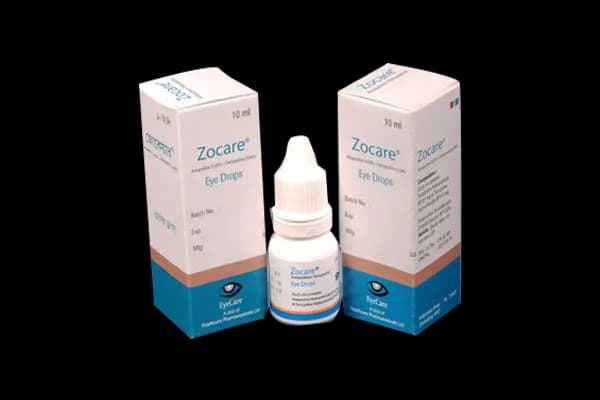

Medicine overview
Indications of Zocare
Zocare is an ophthalmic (eye) combination of an antihistamine (antazoline) and an imidazoline-derivative vasoconstrictor/decongestant (tetiyzoline). It is indicated for:
- Established/labeled use: Temporary relief of eye redness, itching, and irritation caused by allergic conjunctivitis (pollen, dust, animal dander, and other environmental allergens).
- Established/labeled use: Temporary relief of minor eye irritation and redness due to non-specific causes such as smoke, wind, dust, swimming, or minor eye strain.
This is a symptomatic, over-the-counter type of ophthalmic decongestant-antihistamine product and is not intended to treat the underlying cause of allergy or infection.
Composition
Each mL of ophthalmic solution typically contains Antazoline Hydrochloride + Tetiyzoline Hydrochloride as the active combination, along with pharmaceutically acceptable ophthalmic excipients such as buffering agents, tonicity agents, and a preservative (e.g., benzalkonium chloride), formulated as sterile eye drops.
Description
Zocare is a fixed-dose ophthalmic combination product used topically in the eye. Antazoline is a first-generation antihistamine (H1-receptor antagonist) that reduces itching and allergic response, while tetiyzoline is an imidazoline-derivative alpha-adrenergic agonist that constricts conjunctival blood vessels to reduce redness. Together, they provide rapid, temporary symptomatic relief of allergic and irritant conjunctival redness and itching. It is supplied as a sterile ophthalmic solution for topical instillation into the eye(s).
Therapeutic Class
Zocare belongs to the therapeutic class of ophthalmic antihistamine-decongestant combinations, used in the management of allergic and irritant conjunctivitis.
Pharmacology
Antazoline Hydrochloride + Tetiyzoline Hydrochloride combines two complementary mechanisms of action:
- Antazoline (antihistamine component): Competitively blocks histamine H1 receptors on conjunctival nerve endings and blood vessels, reducing itching, and to a lesser extent, vascular permeability associated with the allergic response.
- Tetiyzoline (imidazoline vasoconstrictor component): Acts as an alpha-adrenergic agonist on conjunctival blood vessels, producing local vasoconstriction that reduces hyperemia (redness) of the eye.
Following topical ocular administration, onset of action is rapid (within minutes), with effects on redness typically lasting a few hours. Systemic absorption from the conjunctiva is normally low, but can be clinically significant in infants and young children, or with excessive/prolonged use.
Dosage & Administration of Zocare
The typical labeled dosing for Zocare ophthalmic solution is described below. Always follow the specific product label or a physician's instructions.
| Population | Dose |
|---|---|
| Adults and children (per product age labeling, generally above the labeled minimum age) | Instill 1 to 2 drops into the affected eye(s) up to 2 to 4 times daily as needed, or as directed by a physician. |
| Young children below the labeled minimum age | Not recommended; safety and efficacy not established (see Use in Special Populations). |
Treatment should generally not exceed a few consecutive days without medical reassessment (see Precautions and Warnings for rebound redness).
Administration of Zocare
Zocare is for topical ophthalmic use only. Tilt the head back, gently pull down the lower eyelid to form a pocket, and instill the drop(s) without letting the dropper tip touch the eye, eyelid, fingers, or any surface (to avoid contamination). Close the eye gently for 1-2 minutes after instillation. If wearing contact lenses, remove them before use unless the product is specifically labeled safe for use with lenses in place, and wait as directed before reinserting.
Interaction of Zocare
Clinically significant interactions with Zocare include:
- Monoamine oxidase inhibitors (MAOIs) and tricyclic antidepressants: Concurrent systemic use may potentiate the vasopressor (blood-pressure-raising) effect of the imidazoline vasoconstrictor component, even with topical ocular administration; use with caution and consult a physician.
- Other sympathomimetic or vasoconstrictor eye/nasal preparations: Concomitant use may increase the risk of additive vasoconstrictive and systemic sympathomimetic effects.
- Other topical ophthalmic medications: Space administration of other eye drops by several minutes to avoid dilution or washout of either product.
Contraindications
Antazoline Hydrochloride + Tetiyzoline Hydrochloride is contraindicated in:
- Patients with known hypersensitivity to antazoline, tetiyzoline, or any component of the formulation.
- Patients with narrow-angle (angle-closure) glaucoma or a predisposition to it, as the vasoconstrictor component can precipitate acute angle-closure glaucoma.
- Children below the minimum age specified on the product labeling.
Side Effects of Zocare
Reported side effects of Zocare include:
- Common: Transient stinging or burning on instillation, mild pupil dilation (mydriasis), blurred vision, and increased eye redness on discontinuation of prolonged use (rebound hyperemia).
- Less common: Eye dryness, increased intraocular pressure, headache, and drowsiness.
- Rare but serious: Acute angle-closure glaucoma (in predisposed individuals - see Contraindications), and systemic effects such as elevated blood pressure, tachycardia, tremor, or CNS depression, particularly if excessive amounts are absorbed (more likely in infants/young children).
Pregnancy & Lactation
Data on the use of Zocare in pregnancy and lactation are limited. As with most topical ophthalmic decongestant-antihistamine products, it should be used during pregnancy only if clearly needed and if the potential benefit justifies the potential risk to the fetus. It is not known whether the components are excreted in human breast milk following ocular administration; caution is advised and a physician should be consulted before use while breastfeeding.
Precautions & Warnings
Important precautions for Zocare:
- Rebound redness (conjunctivitis medicamentosa): Frequent or prolonged use beyond a few days can cause worsening redness upon withdrawal; avoid chronic daily use and do not exceed the labeled duration without consulting a physician.
- Angle-closure glaucoma risk: See Contraindications; use caution in individuals with a shallow anterior chamber or family history of glaucoma.
- Contact lenses: Do not instill with contact lenses in place unless the product is specifically labeled safe for such use, due to the preservative and vasoconstrictor components.
- Systemic absorption in young children: Absorption through the conjunctiva or via the nasolacrimal duct can be significant in infants and young children, potentially causing CNS depression (e.g., sedation, hypothermia, bradycardia); avoid use in young children below the labeled age.
- Persistent or worsening symptoms: If eye pain, vision changes, or redness/irritation persists or worsens beyond a few days, discontinue use and seek medical evaluation, as this may indicate a condition other than allergic or minor irritant conjunctivitis (e.g., infection or foreign body).
- Cardiovascular conditions: Use with caution in patients with hypertension, cardiac disease, hyperthyroidism, or diabetes, given the systemic sympathomimetic potential of the vasoconstrictor component.
Overdose Effects of Zocare
Accidental ingestion or significant overdose of Zocare (particularly in children) can cause systemic effects such as drowsiness, sedation, hypothermia, bradycardia, hypotension followed by hypertension, and respiratory depression. If overdose or accidental ingestion is suspected, seek immediate medical attention or contact a poison control center right away; do not attempt home treatment.
Storage Conditions
Store Zocare at room temperature (below 30°C), away from light and moisture. Keep out of reach of children. Discard the bottle according to the labeled in-use period after opening, and discontinue use if the solution changes color or becomes cloudy.
Use In Special Populations
Elderly: No specific dose adjustment established for Zocare; use with caution given potential for undiagnosed narrow-angle glaucoma or cardiovascular disease in this age group.
Children: Use Zocare only in children at or above the minimum age specified on the product label; safety and efficacy in younger children have not been established, and systemic absorption risk is higher in this group (see Precautions and Warnings).
Renal/hepatic impairment: No well-established dose adjustment data available for topical ophthalmic use of Zocare; systemic exposure is minimal with correct use, but caution is advised.
Duration Of Treatment
Use Zocare for the shortest duration needed to relieve symptoms, generally not more than a few consecutive days. If symptoms do not improve or worsen within this period, discontinue and consult a physician rather than continuing use, due to the risk of rebound redness with prolonged therapy.
Drug Classes
Antazoline Hydrochloride + Tetiyzoline Hydrochloride is classified as an ophthalmic antihistamine (antazoline) combined with an ophthalmic imidazoline-derivative decongestant/vasoconstrictor (tetiyzoline).
Mode Of Action
Antazoline Hydrochloride + Tetiyzoline Hydrochloride works through dual, complementary mechanisms: antazoline blocks histamine H1 receptors to relieve itching and allergic symptoms, while tetiyzoline stimulates alpha-adrenergic receptors on conjunctival vessels to cause vasoconstriction, reducing redness. This combination provides rapid symptomatic relief of both itching and hyperemia associated with allergic or irritant conjunctivitis.
Pediatric Uses
Use of Zocare in children should follow the minimum age stated on the product labeling. Safety and efficacy in infants and very young children have not been established, and this age group is at higher risk of systemic absorption leading to CNS depression, bradycardia, or hypothermia. Use in children should only occur under the guidance of a physician, and the product should be kept out of reach of children to prevent accidental ingestion.
Frequently Asked Questions
Q: What is Zocare (0.5 mg+0.4 mg)/ml Ophthalmic Solution used for?
A: Zocare (0.5 mg+0.4 mg)/ml Ophthalmic Solution eye drops are used for temporary relief of eye redness and itching caused by allergic conjunctivitis or minor eye irritation from dust, smoke, or other environmental irritants.
Q: How often can I use Zocare (0.5 mg+0.4 mg)/ml Ophthalmic Solution eye drops?
A: Typically 1 to 2 drops are instilled into the affected eye(s) 2 to 4 times daily as needed, but you should not use it for more than a few consecutive days without consulting a physician, since prolonged use can cause rebound redness.
Q: Can I use Zocare (0.5 mg+0.4 mg)/ml Ophthalmic Solution if I have glaucoma?
A: No. Zocare (0.5 mg+0.4 mg)/ml Ophthalmic Solution is contraindicated in narrow-angle (angle-closure) glaucoma because its vasoconstrictor component can precipitate an acute glaucoma attack. Discuss safe alternatives with your eye doctor.
Q: Is Zocare (0.5 mg+0.4 mg)/ml Ophthalmic Solution safe to use with contact lenses?
A: Contact lenses should generally be removed before instilling Zocare (0.5 mg+0.4 mg)/ml Ophthalmic Solution unless the specific product is labeled safe for use with lenses in place, due to the preservative and vasoconstrictor ingredients.
Q: Is Zocare (0.5 mg+0.4 mg)/ml Ophthalmic Solution safe during pregnancy?
A: Data are limited. It should be used during pregnancy only if clearly needed and the potential benefit outweighs potential risk; consult a physician before use if pregnant or breastfeeding.
Q: What should I do if my child accidentally swallows Zocare (0.5 mg+0.4 mg)/ml Ophthalmic Solution?
A: Systemic absorption in young children can cause serious effects such as drowsiness, low body temperature, and slowed heart rate. Seek immediate medical attention or contact a poison control center right away if accidental ingestion occurs.
Disclaimer
The information provided is accurate to the best of our knowledge, but it does not replace professional medical advice. We cannot guarantee its completeness or accuracy, and the absence of specific information about a drug should not be taken as an endorsement. We are not responsible for any consequences arising from this information, so please consult a healthcare professional for any concerns or questions.
