Quick answer: WHO advises starting solid (complementary) foods at 6 months, about 180 days, while continuing breastfeeding to 2 years or beyond. Begin with 2-3 spoonfuls of soft, thick, mashed food, and build up. Prioritise iron-rich foods such as meat, liver, fish, egg and lentils, and avoid honey, added salt and sugar, and choking hazards.
When is my baby ready for solid foods?
Most babies are ready at about 6 months. Look for these signs:
- sits with support and has good head control;
- shows interest in your food and opens the mouth;
- no longer automatically pushes food out with the tongue.
Until then, breast milk alone is enough. After 6 months it is no longer enough on its own, especially for iron. See our guide on breastfeeding for how to keep feeding going alongside solids.
How should I increase food from 6 to 23 months?
| Age | Texture | Meals a day |
|---|---|---|
| 6-8 months | Soft, mashed or pureed | 2-3 meals |
| 9-11 months | Finely chopped or mashed, plus finger foods | 3-4 meals plus 1-2 snacks |
| 12-23 months | Family foods, cut to a safe size | 3-4 meals plus 1-2 snacks |
Start with 2-3 spoonfuls once or twice a day and slowly increase. Keep breastfeeding on demand throughout.
What are good first foods in Bangladesh?
Make food thick and energy-dense. Thin, watery porridge, plain suji or rice water has too little nutrition. Add a teaspoon of oil or ghee to the baby's portion.
Iron-rich foods matter most:
- pureed or minced meat and liver;
- deboned fish;
- egg;
- lentils such as masoor or moong dal;
- khichuri with vegetables and egg, fish or meat.
WHO suggests aiming for at least 5 of 8 food groups each day: breast milk, grains and roots, legumes and nuts, dairy, flesh foods, eggs, vitamin A-rich fruit and vegetables (such as carrot, pumpkin, mango, papaya), and other fruit and vegetables. Ask your doctor whether your baby needs any vitamin or iron drops, and see the baby care section for feeding bowls, spoons and other infant essentials.
What does a first feed look like?
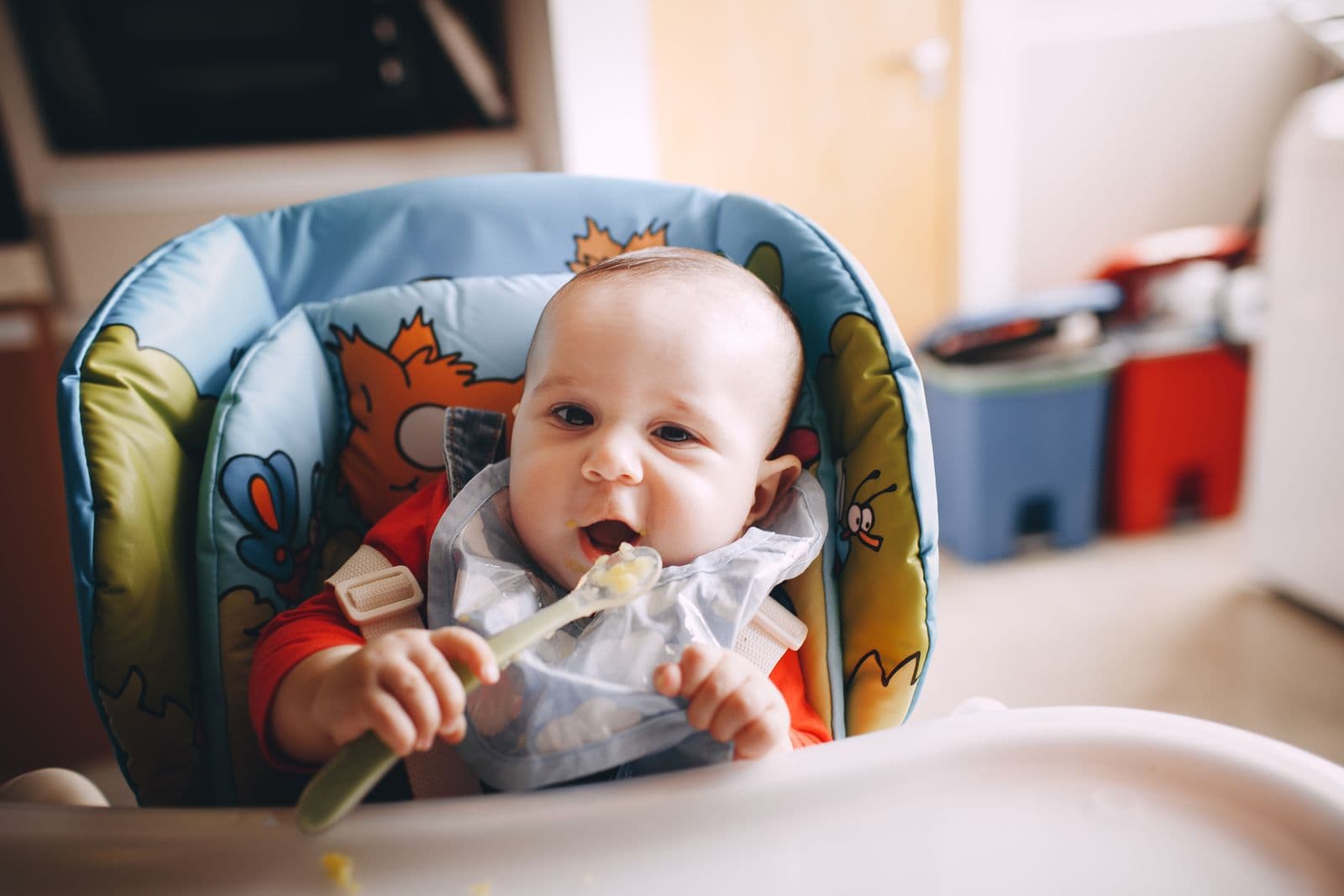
Choose a time when your baby is alert and not too hungry or tired. Sit the baby upright on your lap or in a safe high chair, use a clean spoon, and offer 2-3 spoonfuls of a single soft food. Let the baby touch and explore the food. Expect mess and small amounts at first; the baby is learning, and breast milk still provides most of the nutrition at this stage. Add new foods one at a time over several days so you can notice any reaction.
Should I delay allergenic foods like egg and peanut?
No. Evidence shows that delaying common allergens does not prevent allergy. Introduce egg, peanut (as a thinned paste or powder, never whole nuts), fish and wheat in small amounts around 6 months, one new food at a time. If your baby has severe eczema or a known egg allergy, talk to the doctor before introducing these foods.
Which foods and drinks should I avoid?
- Honey before 12 months, because of the risk of infant botulism.
- Cow's milk as a main drink before 12 months. Small amounts in cooking are fine.
- Added salt and sugar, sweetened drinks, packaged juices and tea.
- Choking hazards: whole nuts, whole grapes, hard raw vegetables and small bones.
Always stay with your baby while they eat. Gagging is noisy, with coughing and the tongue pushing forward, and usually settles by itself. Choking is silent: the baby cannot cough, cry or breathe. Choking is an emergency, so call 999 and give first aid.
How do I keep my baby's food safe and feeding responsive?
- Wash your hands and the baby's hands, and use safe, clean water and clean utensils.
- Serve freshly cooked food and do not keep leftovers.
- Let the baby lead. Do not force-feed or use screens.
- Offer a new food 8-10 times, because refusal is common at first.
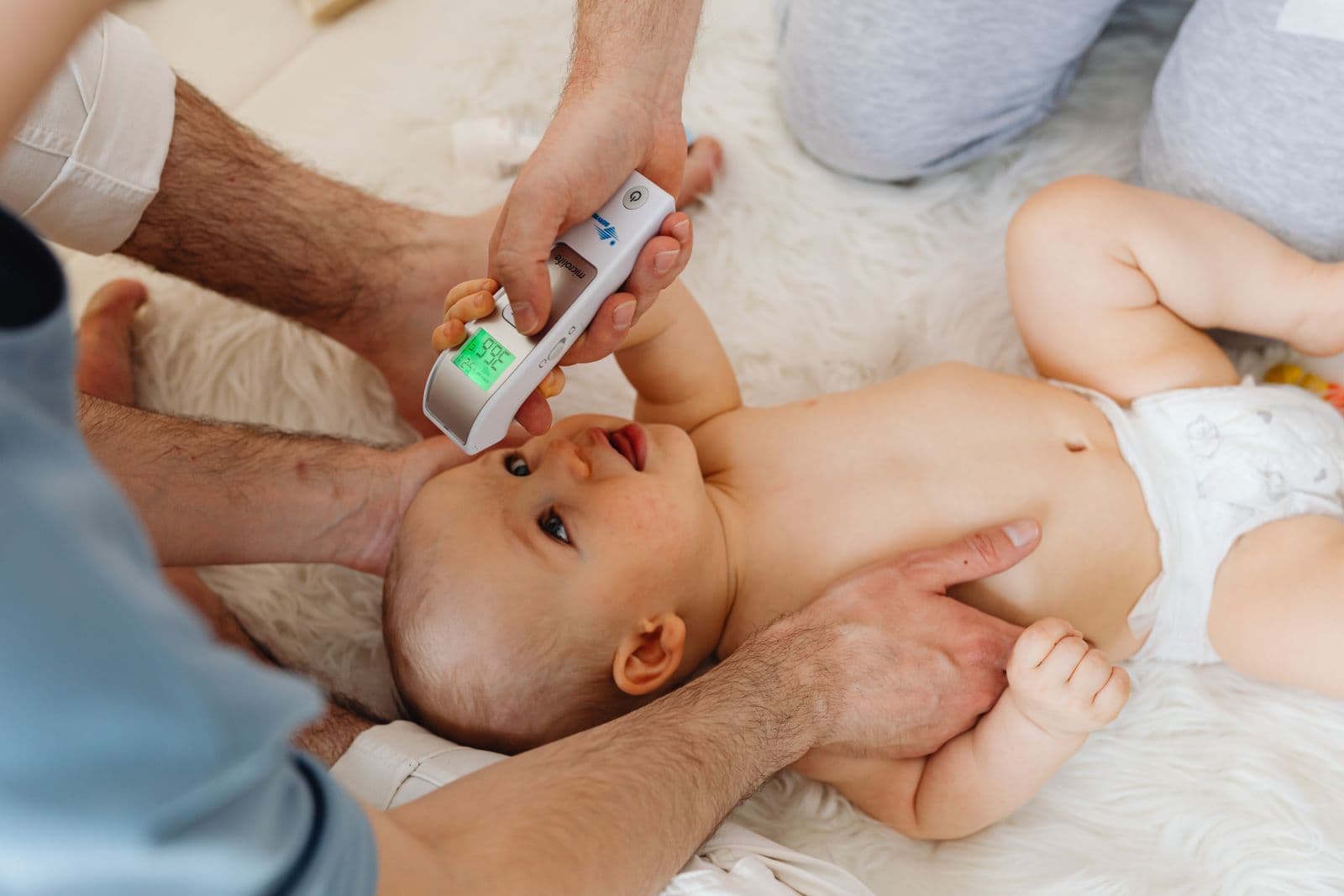
If your baby has just had a fever, our guide to baby fever explains when to call a doctor.
When should I see a doctor?
Call or visit a doctor if your baby has:
- poor growth or weight gain;
- repeated vomiting;
- constipation that does not settle;
- refusal of all solid foods;
- a rash or hives after a new food.
Go to emergency care straight away (call 999) if the lips or face swell, the baby has trouble breathing, or is choking. For feeding plans or growth worries between visits, an online doctor consultation can help, but a baby with breathing difficulty needs emergency care in person.
References
- Complementary feeding - WHO
- Infant and young child feeding - WHO
- Your baby's first solid foods - NHS
- Starting Solid Foods - HealthyChildren.org (AAP)
This article is for general awareness only and is not a substitute for advice from a qualified doctor. If your baby seems unwell, seek medical care promptly.