8% Off
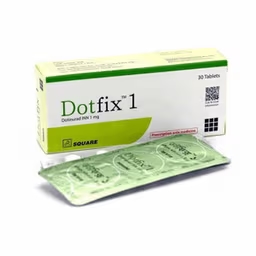
Dotfix1 mg
Square Pharmaceuticals PLC.
৳110.40
Add to cart
Dotinurad is a selective urate reabsorption inhibitor (URAT1 inhibitor) used for lowering elevated serum uric acid levels.
Dotinurad is a selective urate reabsorption inhibitor (URAT1 inhibitor) used for lowering elevated serum uric acid levels. Its evidence-based uses include:
Dotinurad is not indicated for treating acute gout flares themselves; it is used for chronic urate-lowering therapy and should not be started during an acute attack (see Precautions and Warnings).
Dotinurad is administered orally, once daily, with the dose individualized and titrated according to serum uric acid response.
| Indication | Dosing |
|---|---|
| Hyperuricemia with gout (adults) | Start at 0.5 mg once daily. If tolerated and serum uric acid remains above target, increase to 1 mg once daily after approximately 2 weeks, then to 2 mg once daily after approximately 6 weeks, based on physician assessment and uric acid monitoring. Usual maintenance dose is 2 mg once daily; maximum recommended dose is 4 mg once daily. |
| Pediatric use | Safety and efficacy have not been established in children; not recommended (see Use in Special Populations). |
| Renal impairment | Use with caution; efficacy may be reduced with worsening renal function, and use is contraindicated in severe renal impairment or dialysis-dependent patients (see Contraindications). |
Tablets of Dotinurad may be taken with or without food, at approximately the same time each day, to help maintain consistent uric acid control. Do not start Dotinurad during an acute gout attack; if a flare occurs while already on treatment, therapy is generally continued alongside appropriate anti-inflammatory treatment of the flare, under physician guidance.
The following adverse effects have been reported with Dotinurad:
| Frequency | Effects |
|---|---|
| Common (approximately 1-5%) | Gouty arthritis flare (especially during dose initiation/titration), limb/joint discomfort |
| Uncommon (<1%) | Loose stools/diarrhea, elevated liver enzymes (transaminases), joint pain, renal/urinary stones (urolithiasis), increased blood creatinine, albuminuria/proteinuria |
Patients should seek prompt medical attention for signs of severe hypersensitivity, significant flank pain or blood in the urine (possible urolithiasis), or jaundice while taking Dotinurad.
Dotinurad is contraindicated in:
Disclaimer
The information provided is accurate to the best of our knowledge, but it does not replace professional medical advice. We cannot guarantee its completeness or accuracy, and the absence of specific information about a drug should not be taken as an endorsement. We are not responsible for any consequences arising from this information, so please consult a healthcare professional for any concerns or questions.