10% Off
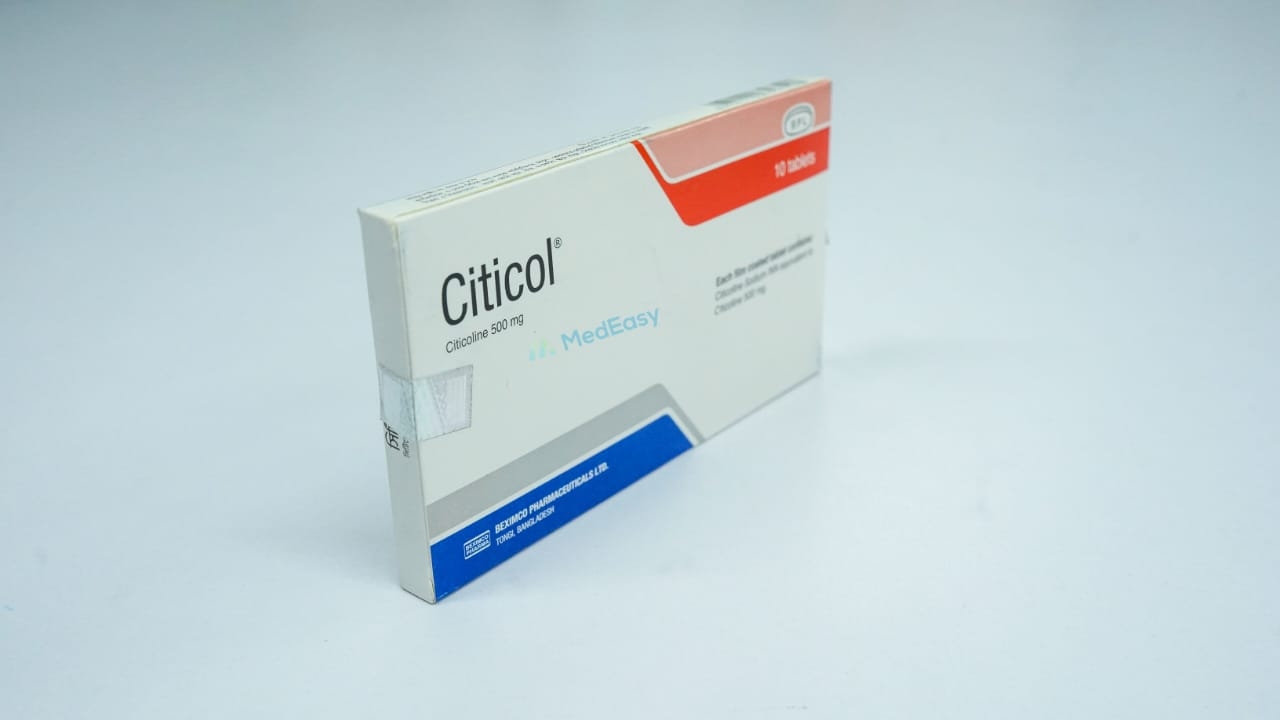
Citicol500 mg
Beximco Pharmaceuticals Ltd.
৳450.00
Add to cart
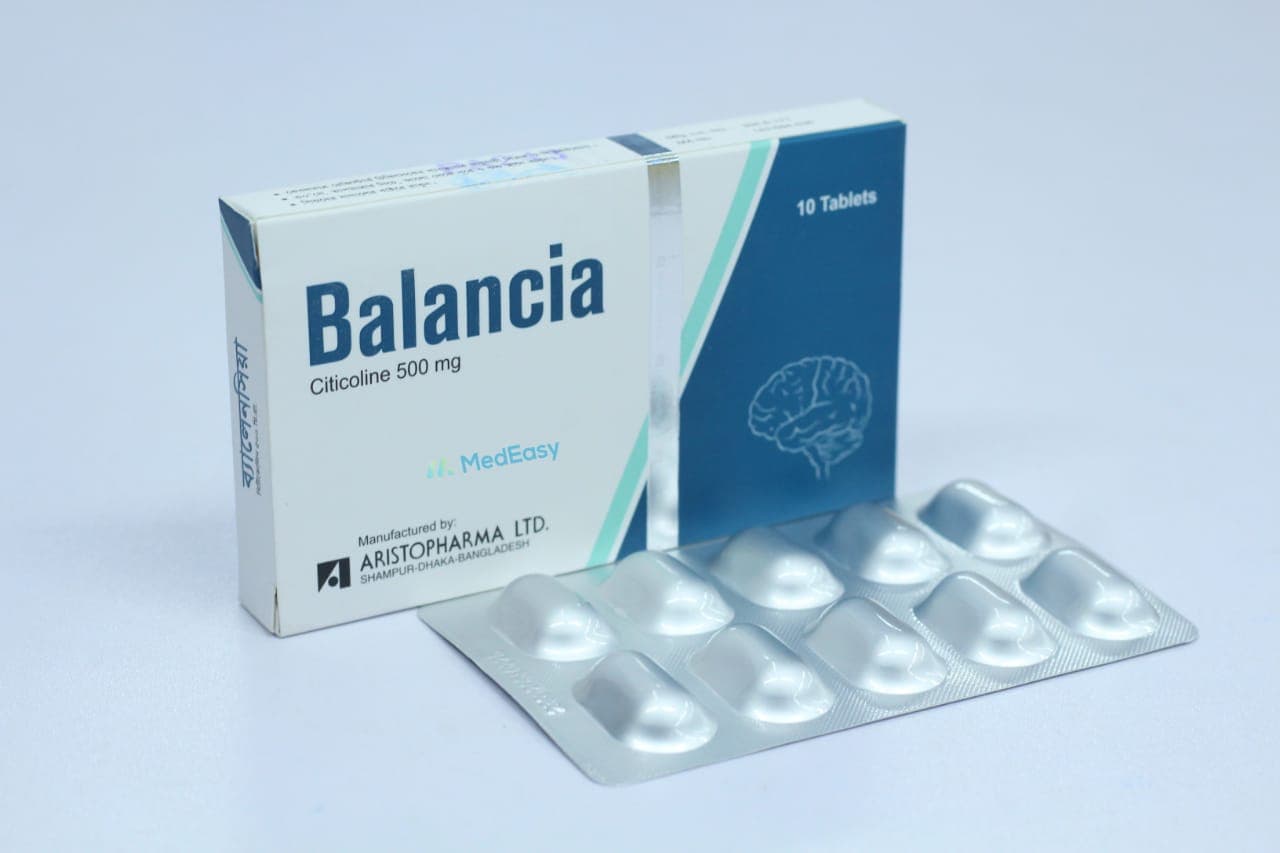

Balancia is a naturally occurring nucleotide (cytidine diphosphate-choline, CDP-choline) precursor of phospholipids used mainly as a nootropic/neuroprotective adjunct. It is not an FDA-approved prescription drug in the United States, where it is sold as a dietary supplement, but it is a registered pharmaceutical product in Bangladesh and many other countries. Its uses can be classified by strength of evidence as follows:
Balancia is not a cure for stroke, brain injury, or dementia; it is intended to be used in combination with, not instead of, standard medical and rehabilitative care, and the underlying condition should be diagnosed and managed by a physician.
Products containing Citicoline Sodium that are marketed in Bangladesh are commonly available as tablets (typically 500 mg citicoline base per tablet) and as an injectable solution (typically 500 mg/4 mL) for intramuscular or intravenous use. Exact strength, salt form, and excipients vary by manufacturer and brand — always check the product label/pack insert of the specific brand dispensed.
Balancia is the sodium salt of citicoline, a naturally occurring nucleotide (cytidine 5'-diphosphocholine, CDP-choline) that serves as an essential intermediate in the biosynthesis of phosphatidylcholine, a major structural phospholipid of neuronal and other cell membranes. Given orally or parenterally, Balancia is broken down into its constituent choline and cytidine moieties, which are absorbed and cross the blood-brain barrier before being recombined into citicoline within brain tissue. It is used mainly as a neuroprotective/nootropic adjunct to support recovery of brain function after ischemic or traumatic injury and in cognitive impairment associated with cerebrovascular disease, alongside standard medical management.
Balancia belongs to the nootropic/neuroprotective agents class (cholinergic precursor, psychostimulant/cognition-enhancing agent group). It is used therapeutically as an adjunct agent in cerebrovascular disease, traumatic brain injury recovery, and cognitive impairment.
Citicoline Sodium acts through several complementary mechanisms:
Pharmacokinetics: after oral or parenteral administration, Citicoline Sodium is almost completely absorbed/bioavailable and is hydrolyzed into choline and cytidine, which are distributed widely, cross the blood-brain barrier, and are incorporated into phospholipid and nucleotide pools. Only a small fraction is excreted unchanged, mainly in urine and as respiratory carbon dioxide, with the remainder incorporated into structural components of the body.
Dosage of Balancia should be individualized by the prescribing physician according to indication, severity, and route. Typical dosing ranges used in regional labeling are summarized below; always follow the specific product label and physician's instructions.
| Indication | Adult dose | Notes |
|---|---|---|
| Acute ischemic stroke (adjunct) | 500–2000 mg daily, oral or parenteral, generally started within 24 hours of symptom onset | Used alongside standard acute stroke care, not as a substitute for it |
| Post-stroke cognitive impairment / chronic cerebrovascular disease (adjunct) | 500–1000 mg daily, oral, often in divided doses | Duration guided by physician response assessment; see Duration of Treatment |
| Traumatic brain injury recovery (adjunct) | 500–1000 mg daily, oral or parenteral, as directed by physician | Dose and route depend on injury severity and clinical setting |
| Injectable (IM/IV) use | Typically 500 mg once or twice daily; IV doses given as a slow infusion | For hospital/physician-administered use only; injection site and rate as per product labeling |
Administration: Oral tablets are usually taken with water, with or without food. Injectable Balancia must be administered by a qualified healthcare professional via the intramuscular or intravenous route; intravenous administration should be given slowly. Do not exceed the dose or duration recommended by the physician. See Use in Special Populations for pediatric, elderly, hepatic, and renal considerations.
Take oral Balancia tablets with a glass of water; they may be taken with or without food. Swallow tablets whole unless the product labeling states otherwise. Take doses at evenly spaced intervals as directed and do not double a dose to make up for one missed. Injectable Balancia is given only by a doctor or trained healthcare worker, by intramuscular injection or by slow intravenous injection/infusion — do not attempt to self-administer the injectable form.
The following interactions with Balancia are recognized as clinically relevant or important precautions:
Citicoline Sodium is contraindicated in:
Balancia is generally well tolerated. Reported side effects include:
| Frequency | Effects |
|---|---|
| Common | Mild gastrointestinal upset (nausea, diarrhea, stomach discomfort), headache, insomnia or (in some patients) drowsiness |
| Less common | Dizziness, transient changes in blood pressure (hypotension or, rarely, hypertension), skin rash |
| Rare | Parasympathetic (vagotonic) stimulation effects, hypersensitivity reactions |
Patients should seek medical advice if side effects are severe or persistent.
Pregnancy: Robust controlled human safety data for Balancia in pregnancy are limited. Balancia should be used during pregnancy only if clearly needed and if the potential benefit to the mother justifies the potential risk to the fetus; a physician should be consulted before use.
Lactation: It is not well established whether Balancia or its metabolites pass into human breast milk in clinically significant amounts. As a precaution, use during breastfeeding should occur only if a physician determines the expected benefit outweighs any potential risk to the nursing infant.
Reported clinical experience with overdose of Balancia is limited, and it has a wide margin of safety at recommended doses; however, excessive doses could theoretically increase the frequency or severity of known side effects (such as gastrointestinal upset, changes in blood pressure, or dizziness).
If overdose is suspected, seek immediate medical attention or contact emergency services / a poison control center right away. Treatment should be supportive and symptomatic and carried out under medical supervision; do not attempt specific home treatment.
Store at room temperature (below 30°C), away from light and moisture. Keep out of reach of children.
Duration of treatment with Balancia depends on the indication and clinical response. In acute ischemic stroke, treatment is often started early after the event and continued for several weeks as directed by the treating physician. For post-stroke cognitive impairment and traumatic brain injury recovery, courses of several weeks to a few months are commonly used in regional practice, with periodic reassessment of benefit by the physician. Balancia should not be continued indefinitely without medical review, and the prescribing physician should determine when to continue, adjust, or stop therapy.
Nootropic/neuroprotective agents; Cholinergic precursors (cytidine diphosphate-choline analogues); Cerebral metabolic enhancers
Citicoline Sodium supplies choline and cytidine, the two building blocks needed by the Kennedy pathway to synthesize phosphatidylcholine and other structural phospholipids of neuronal cell and mitochondrial membranes. By supporting repair of damaged membranes, increasing acetylcholine and dopamine neurotransmitter availability, stabilizing cell membranes during hypoxic/ischemic stress, and reducing free-radical-mediated and apoptotic neuronal injury, Citicoline Sodium helps support recovery of neurological and cognitive function after ischemic stroke, traumatic brain injury, and in chronic cerebrovascular cognitive impairment.
Safety and efficacy of Balancia in children have not been well established through large controlled pediatric trials, and it is not a standard first-line therapy in children. Where used in pediatric neurology practice (for example, in some cases of pediatric traumatic brain injury or developmental/cognitive support), this should occur only under the supervision of a specialist physician, with dosing individualized to the child's age, weight, and clinical condition rather than following adult dosing directly.
Q: What is Balancia 500 mg Tablet used for?
A: Balancia 500 mg Tablet is mainly used as an adjunct (add-on) treatment to support recovery of brain function after an ischemic stroke, to help with cognitive impairment linked to cerebrovascular disease, and to support recovery after traumatic brain injury. It is also sometimes used as an adjunct in Parkinson's disease and certain cognitive disorders. It is used together with, not instead of, standard medical treatment.
Q: How should I take Balancia 500 mg Tablet?
A: Oral Balancia 500 mg Tablet tablets are usually taken with water, with or without food, following the schedule your physician prescribes. The injectable form of Balancia 500 mg Tablet is given only by a doctor or nurse, by injection into a muscle or slowly into a vein — never self-administer the injection.
Q: Who should not take Balancia 500 mg Tablet?
A: Balancia 500 mg Tablet should not be used by anyone with a known allergy to it, or by patients with severe hypertonia (overactivity) of the parasympathetic nervous system, a specific condition your doctor can assess. Always tell your doctor about your full medical history before starting Balancia 500 mg Tablet.
Q: Is Balancia 500 mg Tablet safe during pregnancy or breastfeeding?
A: Data on the safety of Balancia 500 mg Tablet during pregnancy and breastfeeding are limited. It should be used in pregnancy only if clearly needed and if your physician believes the benefit outweighs any potential risk to the baby, and similarly during breastfeeding only on your physician's advice. Always consult your doctor before use.
Q: What are the common side effects of Balancia 500 mg Tablet?
A: Balancia 500 mg Tablet is generally well tolerated. The most commonly reported side effects are mild stomach upset, headache, and either insomnia or drowsiness in some patients. Dizziness and mild changes in blood pressure occur less commonly. Tell your doctor if any side effect is severe or does not go away.
Q: Can Balancia 500 mg Tablet be taken with levodopa for Parkinson's disease?
A: Yes, Balancia 500 mg Tablet is sometimes used together with levodopa-based treatment for Parkinson's disease and may enhance levodopa's effects, but this can also increase the chance of levodopa-related side effects. Your physician will monitor you and may adjust doses if you are taking both.
Disclaimer
The information provided is accurate to the best of our knowledge, but it does not replace professional medical advice. We cannot guarantee its completeness or accuracy, and the absence of specific information about a drug should not be taken as an endorsement. We are not responsible for any consequences arising from this information, so please consult a healthcare professional for any concerns or questions.