
10% Off
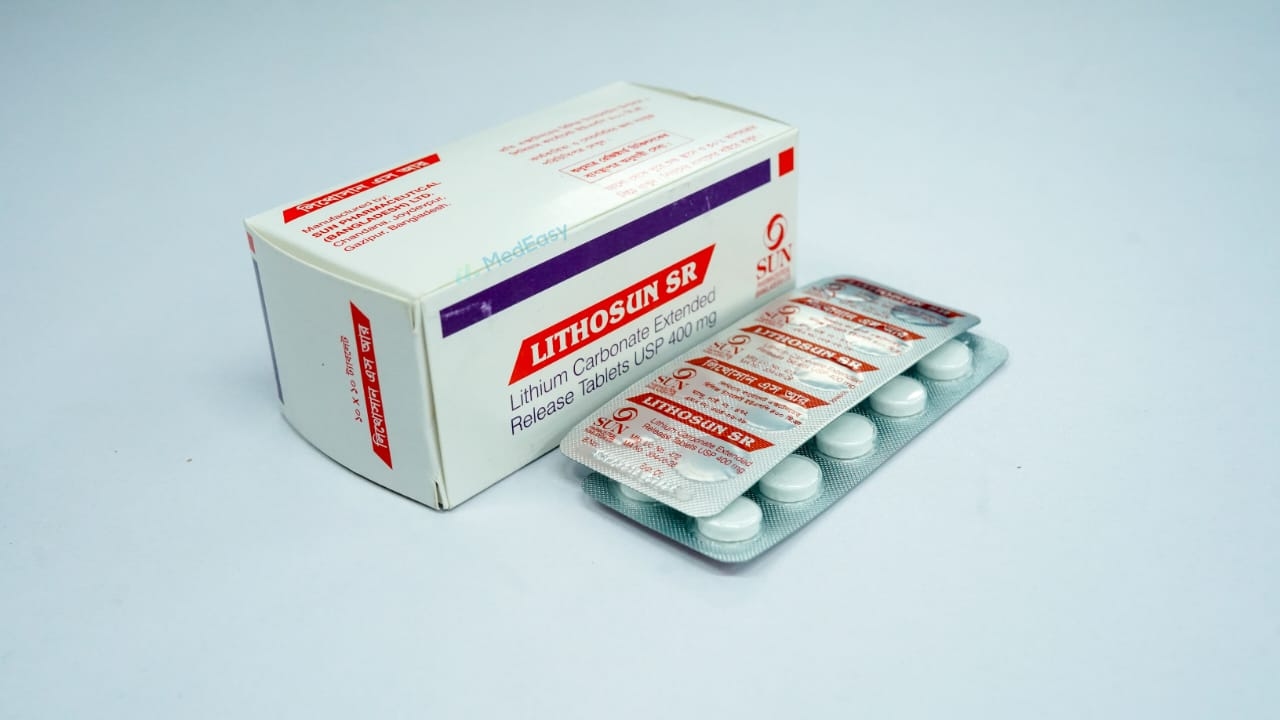
Lithosun SR400 mg
Sun Pharmaceutical Ltd.
৳50.40
Add to cart
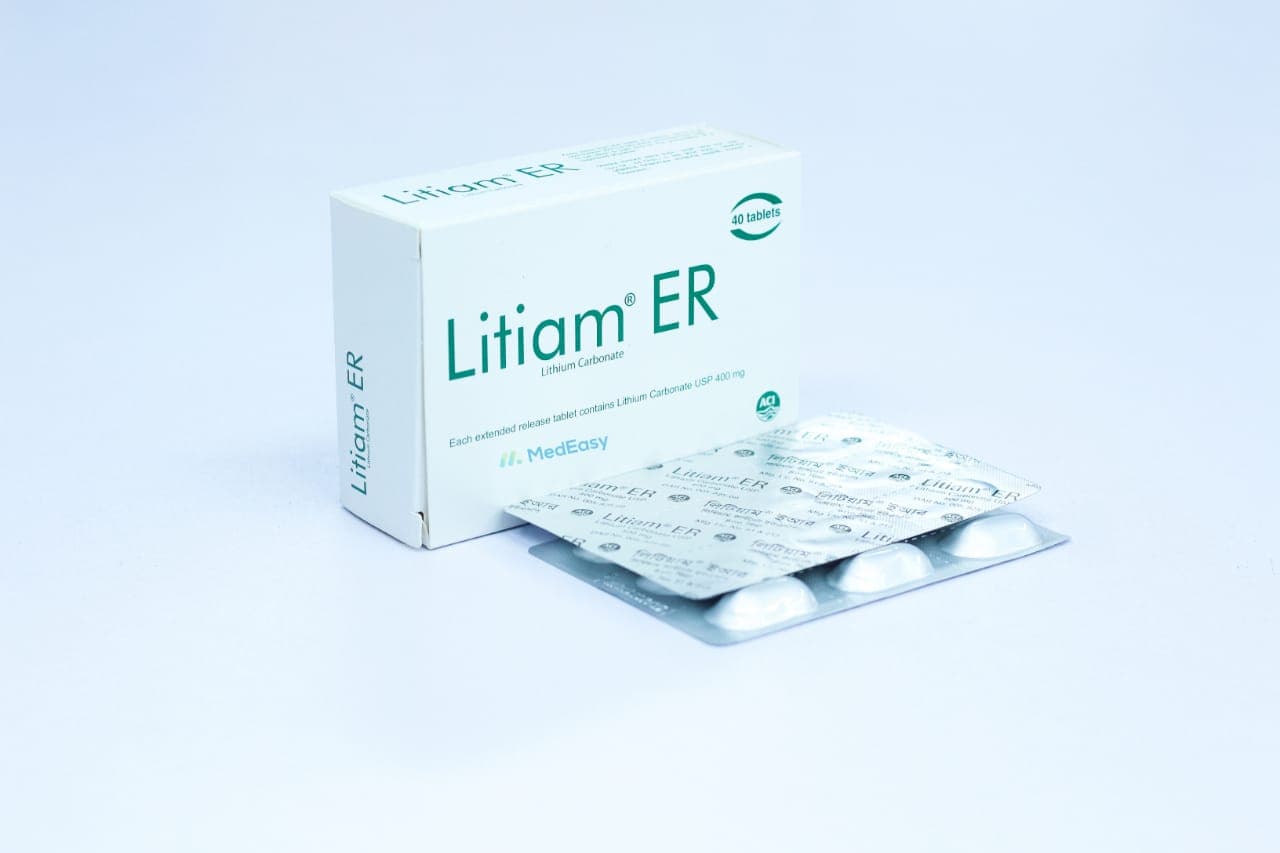

Litiam ER is a mood-stabilizing agent used in the treatment of bipolar disorder. Its evidence-based uses include:
Litiam ER is not indicated for rapid control of acute agitation on its own, as its onset of clinical effect is delayed (days to weeks); antipsychotics or benzodiazepines are typically used for immediate control while Litiam ER levels are established.
Each capsule/tablet of Lithium Carbonate contains Lithium Carbonate as the active ingredient. In Bangladesh, Lithium Carbonate is commonly available as sustained-release (SR/ER) tablets of 400 mg strength; immediate-release capsules and tablets (e.g., 300 mg) and oral liquid preparations are also available in some markets. Formulations contain standard inactive excipients that may vary by manufacturer.
Litiam ER is a monovalent cation salt that has been used as a mood stabilizer for more than 50 years in the treatment of bipolar disorder. It has a narrow therapeutic index, meaning the difference between an effective dose and a toxic dose is small, so treatment requires regular monitoring of serum lithium concentration alongside renal and thyroid function. Litiam ER is administered orally as immediate-release or sustained-release tablets/capsules.
Litiam ER belongs to the therapeutic class of mood stabilizers / antimanic agents.
The precise mechanism of action of Lithium Carbonate is not fully established. Proposed mechanisms include inhibition of glycogen synthase kinase-3 (GSK-3) and inositol monophosphatase, alteration of second-messenger signaling (the phosphoinositide cycle), modulation of neurotransmitter release (including serotonin, dopamine, and glutamate), and effects on sodium transport across neuronal and muscle cell membranes. These actions are believed to contribute to its mood-stabilizing and neuroprotective effects.
Lithium Carbonate is well absorbed after oral administration (essentially complete for immediate-release forms; sustained-release forms are absorbed more slowly and completely over several hours). It is not protein-bound and is not metabolized; it is excreted almost entirely unchanged by the kidneys, competing with sodium for renal reabsorption. The elimination half-life is approximately 18-24 hours in healthy adults (longer in elderly patients and those with reduced renal function), and steady-state serum levels are generally reached after about 5 days of consistent dosing.
| Parameter | Detail |
|---|---|
| Typical starting dose | Approximately 900 mg-1.8 g per day in divided doses (immediate-release), or per local sustained-release product labeling; individualized to patient weight and renal function |
| Titration | Adjusted based on serum lithium levels, clinical response, and tolerability, checked at least twice weekly during initial titration |
| Target serum level (acute mania) | 0.8-1.2 mEq/L |
| Parameter | Detail |
|---|---|
| Usual maintenance dose | 300-600 mg two to three times daily (immediate-release) or equivalent total daily dose using sustained-release tablets, individualized to achieve target serum level |
| Target serum level (maintenance) | 0.8-1.0 mEq/L (a lower target of around 0.6-0.8 mEq/L may be used in elderly patients or those sensitive to side effects) |
When used as augmentation to an antidepressant, Litiam ER is typically dosed similarly to maintenance therapy for bipolar disorder, with the dose individualized to serum level and response, and always continued alongside the antidepressant being augmented (never as monotherapy for this indication).
Patients weighing more than 30 kg may be dosed similarly to adults. Patients weighing 20-30 kg typically start at a lower total daily dose (e.g., around 300 mg twice daily with immediate-release product), with careful upward titration guided by serum levels and clinical response. Use in children under 7 years has not been established.
Since Litiam ER is cleared almost entirely by the kidneys, patients with reduced renal function require lower doses, longer dosing intervals, and more frequent serum level monitoring. Litiam ER should not be used in patients with severe renal impairment or renal failure (see Contraindications).
Litiam ER should be taken with food or immediately after meals to reduce gastrointestinal upset. Sustained-release tablets should be swallowed whole and not crushed or chewed. Doses should be taken consistently at the same times each day, with stable daily fluid and salt (sodium) intake, since dehydration or low sodium intake can significantly raise lithium levels and increase toxicity risk.
Litiam ER is given orally, ideally with or right after food to minimize nausea and stomach upset. Sustained-release tablets must be swallowed whole with a full glass of water, not crushed, split, or chewed. Take Litiam ER at the same times every day, maintain normal, consistent fluid and dietary salt intake, and do not stop or change the dose without consulting a physician, as abrupt discontinuation can increase the risk of relapse of mood symptoms.
Lithium Carbonate is contraindicated in patients with:
Significant pre-existing cardiovascular disease is a relative contraindication requiring careful individualized risk-benefit assessment rather than an absolute prohibition; see Precautions and Warnings.
Adverse effects of Litiam ER are closely related to serum concentration. Common and important effects include:
Signs of developing toxicity (e.g., coarse tremor, ataxia, confusion, persistent vomiting) are distinct from these common effects and require prompt medical evaluation; see Overdose/Toxicity.
Pregnancy: Litiam ER has been associated with an increased risk of fetal cardiac malformations, particularly Ebstein's anomaly, with exposure during the first trimester. Litiam ER should be used during pregnancy only if clearly needed and if the potential benefit to the mother justifies the potential risk to the fetus; this decision should always be made together with a physician, with careful risk-benefit discussion, fetal cardiac screening if used in the first trimester, and closer serum lithium monitoring throughout pregnancy and around delivery, since fluid shifts can significantly change lithium levels.
Lactation: Litiam ER passes into breast milk in significant amounts and infant serum lithium levels can approach maternal levels, with a risk of toxicity in the nursing infant. Breastfeeding during Litiam ER therapy is generally not recommended; if a mother chooses to breastfeed, this should only be done under close physician supervision with monitoring of the infant.
Litiam ER has a narrow margin between therapeutic and toxic serum concentrations. Regular monitoring of serum lithium levels is essential, and patients/caregivers should be counseled on early signs of toxicity (see Overdose/Toxicity) and instructed to seek prompt medical attention if these occur.
Since Litiam ER is renally cleared, any condition that reduces renal function (including age-related decline, dehydration, or intercurrent illness) can raise lithium levels and toxicity risk. Renal function should be assessed before starting treatment and monitored periodically thereafter; dose reduction may be needed with declining renal function.
Litiam ER can cause reversible ECG changes and, rarely, sinus node dysfunction. Patients with significant pre-existing cardiovascular disease should be evaluated carefully before starting therapy and monitored closely, weighing potential benefits against cardiac risk on an individual basis.
Litiam ER can cause hypothyroidism or goiter with long-term use. Thyroid function tests should be obtained at baseline and monitored periodically (e.g., every 6-12 months) during treatment; thyroid hormone replacement can usually be co-administered if hypothyroidism develops without needing to stop Litiam ER.
Conditions causing significant fluid or sodium loss — such as prolonged sweating, fever, vomiting, diarrhea, reduced fluid intake, or use of diuretics/low-salt diets — can substantially raise serum lithium levels and precipitate toxicity. Patients should maintain consistent daily fluid and salt intake and seek medical advice promptly if significant fluid losses occur, as temporary dose reduction or suspension may be required.
Combining Litiam ER with serotonergic drugs or certain antipsychotics carries risk of serotonin syndrome or a severe neurotoxic (encephalopathic) reaction; see Interactions. Monitor for confusion, agitation, tremor, rigidity, fever, and autonomic instability.
Litiam ER can cause drowsiness, tremor, or impaired coordination, particularly at higher levels. Patients should use caution when driving or operating machinery until they know how Litiam ER affects them.
Overdose or accumulation of Litiam ER to toxic serum concentrations (generally at or above 1.5 mEq/L) is a medical emergency. Early signs include coarse hand tremor, muscle weakness, lack of coordination (ataxia), diarrhea, vomiting, drowsiness, and slurred speech. More severe toxicity can progress to confusion, muscle twitching, seizures, cardiac rhythm disturbances, significantly reduced consciousness, and coma, and can be fatal.
If overdose or toxicity is suspected, seek immediate medical attention or contact emergency services / a poison control center right away — do not wait for symptoms to worsen. There is no specific antidote for lithium toxicity. Management is supportive and is provided in a hospital setting, with close monitoring of serum lithium levels, electrolytes, and renal function; hemodialysis may be required to rapidly lower lithium levels in severe cases. Do not attempt to manage suspected Litiam ER toxicity at home.
Store at room temperature (below 30°C), away from light and moisture. Keep out of reach of children.
Litiam ER should be used in pregnancy only if clearly needed, given the risk of fetal cardiac malformations. See Pregnancy and Lactation.
Breastfeeding is generally not recommended during Litiam ER therapy. See Pregnancy and Lactation.
Dose reduction and more frequent monitoring are required in renal impairment; Litiam ER is contraindicated in severe renal impairment or renal failure (see Contraindications).
Litiam ER is not hepatically metabolized, so dedicated hepatic dose adjustment is not established; use with general caution and clinical monitoring in significant liver disease.
Elderly patients often have reduced renal clearance and increased sensitivity to Litiam ER. A lower starting dose, a lower target serum level, and closer monitoring are generally recommended.
See Pediatric Uses.
For acute mania, Litiam ER is typically continued until manic symptoms are controlled, then transitioned to a maintenance regimen. Maintenance/prophylactic treatment of bipolar I disorder with Litiam ER is often long-term, sometimes indefinite, given the recurrent nature of bipolar disorder, and requires ongoing physician follow-up with periodic reassessment of continued need, serum lithium levels, and renal/thyroid function throughout treatment. When used as an adjunct for treatment-resistant depression, duration is guided by response and is determined together with the treating physician.
Lithium Carbonate is classified as a mood stabilizer / antimanic agent (a monovalent cation salt).
The exact mode of action of Lithium Carbonate is not completely understood. It is thought to stabilize mood through inhibition of glycogen synthase kinase-3 (GSK-3) and inositol monophosphatase, modulation of intracellular second-messenger (phosphoinositide) signaling, effects on neurotransmitter systems (including serotonin, dopamine, and glutamate), and alteration of sodium ion transport across excitable cell membranes, collectively contributing to its antimanic and mood-stabilizing effects.
Category D (per FDA legacy pregnancy categorization system) — positive evidence of human fetal risk, but potential benefits may warrant use in select patients despite the risk.
Litiam ER is approved for the treatment of acute manic and mixed episodes of bipolar I disorder, as monotherapy, in patients 7 years of age and older; safety and efficacy have not been established in children younger than 7 years. Patients weighing more than 30 kg may generally be dosed similarly to adults, while those weighing 20-30 kg typically require a lower starting dose with careful upward titration. Children and adolescents on Litiam ER require close monitoring of serum lithium levels, renal function, thyroid function, growth, and weight, given their potentially greater sensitivity to adverse effects. Use should be supervised by a physician experienced in pediatric psychiatric care.
Q: What is Litiam ER 400 mg Tablet used for?
A: Litiam ER 400 mg Tablet is a mood stabilizer used mainly to treat and prevent episodes of mania in bipolar disorder. It is also sometimes added to an antidepressant to help treat depression that has not responded well to the antidepressant alone.
Q: Why do I need regular blood tests while taking Litiam ER 400 mg Tablet?
A: Litiam ER 400 mg Tablet has a narrow safety margin between the dose that helps and the dose that can cause toxicity. Regular blood tests measure your serum lithium level, along with kidney and thyroid function, so your doctor can adjust your dose and catch early signs of toxicity before they become serious.
Q: Can I take ibuprofen or other pain relievers with Litiam ER 400 mg Tablet?
A: NSAID pain relievers such as ibuprofen, diclofenac, and naproxen can raise your lithium blood level and increase the risk of toxicity. Avoid them unless your doctor specifically approves it, and use paracetamol/acetaminophen for pain or fever unless advised otherwise. Always tell your doctor or pharmacist about any new medicine, including over-the-counter drugs, before combining it with lithium.
Q: Is Litiam ER 400 mg Tablet safe to take during pregnancy?
A: Litiam ER 400 mg Tablet has been linked to an increased risk of certain heart defects in the baby, particularly with exposure in the first trimester. It should be used during pregnancy only if clearly needed, and always under close physician supervision with careful monitoring. Never stop or start Litiam ER 400 mg Tablet in pregnancy without first discussing it with your doctor.
Q: What are the warning signs of Litiam ER 400 mg Tablet toxicity that I should watch for?
A: Early signs of Litiam ER 400 mg Tablet toxicity include coarse hand tremor (worse than your usual mild tremor), unsteadiness or poor coordination, confusion, persistent vomiting, or diarrhea. If you notice any of these, contact your doctor immediately or seek emergency medical care, as Litiam ER 400 mg Tablet toxicity can become serious quickly.
Q: What should I do if I miss a dose of Litiam ER 400 mg Tablet?
A: Take the missed dose as soon as you remember, unless it is almost time for your next dose, in which case skip the missed dose and continue your normal schedule. Do not take a double dose to make up for a missed one, and never suddenly stop Litiam ER 400 mg Tablet without consulting your doctor, as this can increase the risk of your mood symptoms returning.
Disclaimer
The information provided is accurate to the best of our knowledge, but it does not replace professional medical advice. We cannot guarantee its completeness or accuracy, and the absence of specific information about a drug should not be taken as an endorsement. We are not responsible for any consequences arising from this information, so please consult a healthcare professional for any concerns or questions.
