8% Off
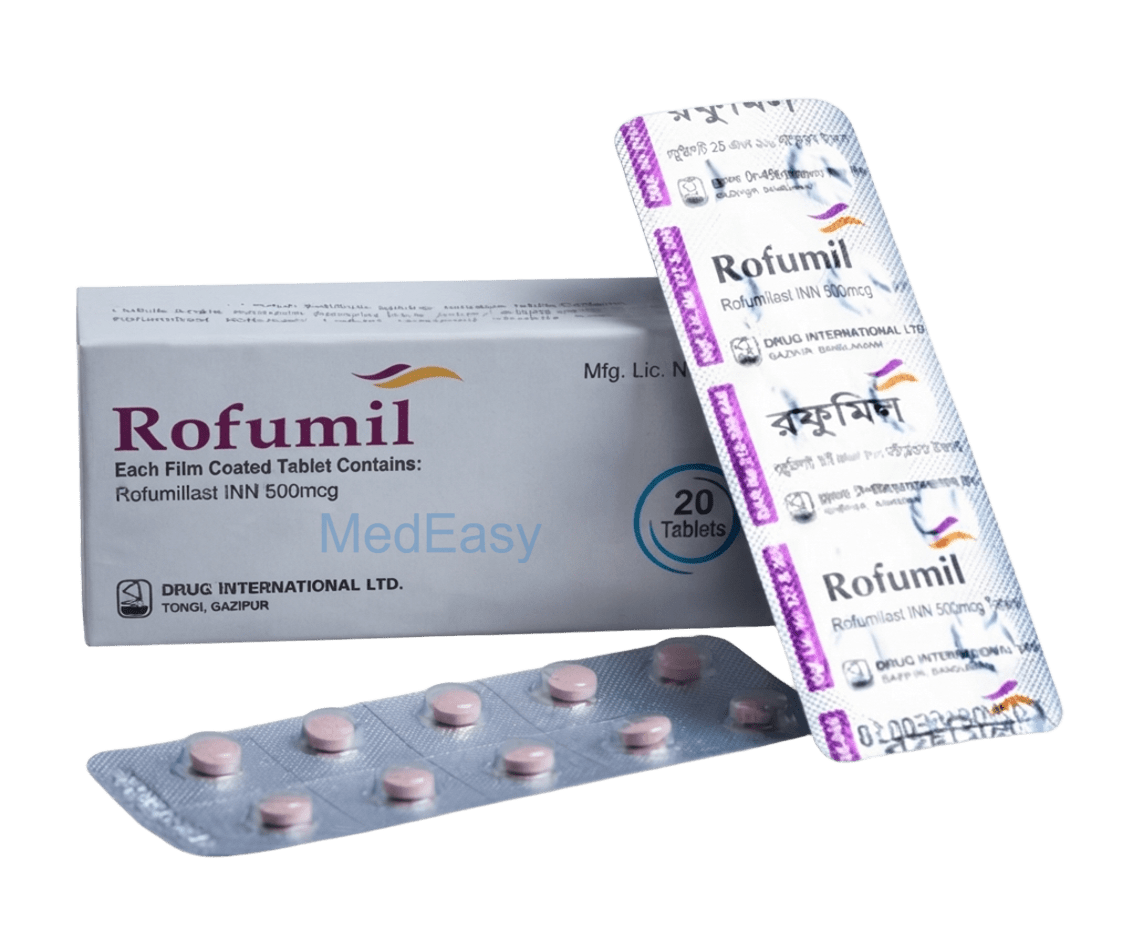
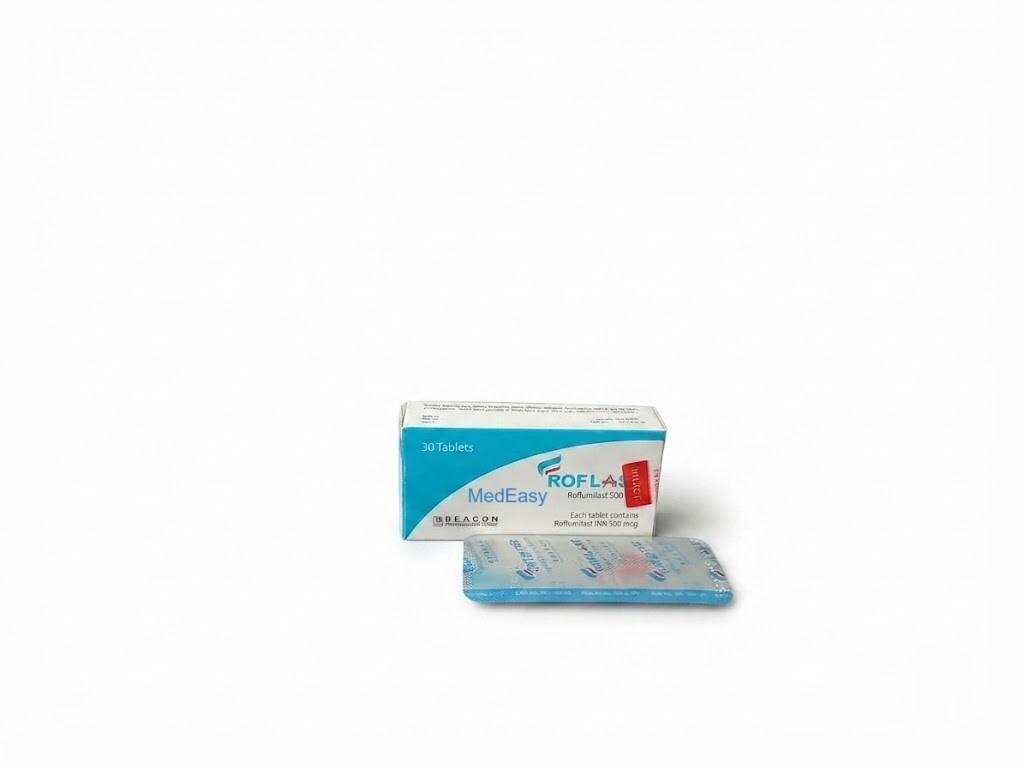
Roflast500 mcg
Beacon Pharmaceuticals PLC
৳138.46
Add to cart

Romilast 500 mcg Tablet is available on MedEasy for ৳9.00 per piece, with home delivery anywhere in Bangladesh. It is manufactured by Labaid Pharma Ltd. Its generic name is Roflumilast.

Romilast is indicated as a treatment to reduce the risk of exacerbations (flare-ups) in adults with severe chronic obstructive pulmonary disease (COPD) associated with chronic bronchitis who have a history of frequent exacerbations.
Use of Romilast for any other condition should only be considered under specific physician guidance, as this is not an approved indication for this oral formulation.
Romilast is an oral, selective phosphodiesterase-4 (PDE4) inhibitor used specifically to reduce exacerbations in a defined group of patients with severe COPD and chronic bronchitis. Unlike bronchodilators, which relax airway muscle for quick symptom relief, Romilast works by reducing the underlying airway inflammation associated with COPD. It is supplied as an oral tablet taken once daily as long-term maintenance therapy, used together with — not instead of — other prescribed COPD medicines.
Phosphodiesterase-4 (PDE4) inhibitor; anti-inflammatory agent used specifically in chronic obstructive pulmonary disease (COPD) management.
Mechanism of action: Roflumilast and its active metabolite roflumilast N-oxide selectively inhibit phosphodiesterase-4 (PDE4), the predominant PDE enzyme in inflammatory and structural cells relevant to COPD. Inhibiting PDE4 raises intracellular cyclic AMP (cAMP), which reduces release of inflammatory mediators and suppresses activation of neutrophils, macrophages, T-lymphocytes, and other cells implicated in COPD-related airway inflammation. This anti-inflammatory action — not bronchodilation — is what underlies its ability to reduce exacerbation frequency.
Pharmacokinetics: Roflumilast is well absorbed after oral administration (absolute bioavailability approximately 80%) and is extensively metabolized, mainly via CYP3A4 and CYP1A2, to its active N-oxide metabolite. Both the parent drug and metabolite are highly protein-bound. Elimination half-life is approximately 17 hours for Roflumilast and about 30 hours for the N-oxide metabolite, supporting once-daily dosing. Metabolites are eliminated primarily via the kidneys.
Dosing of Romilast by indication and population:
| Population / Indication | Recommended Dose |
|---|---|
| Adults – severe COPD with chronic bronchitis and a history of exacerbations | Romilast 500 microgram (mcg) orally, once daily, long-term, as an add-on to bronchodilator therapy |
| Mild hepatic impairment (Child-Pugh A) | No dose adjustment required; use with caution |
| Moderate-to-severe hepatic impairment (Child-Pugh B or C) | Contraindicated — see Contraindications |
| Renal impairment | No dose adjustment required |
| Elderly patients | No dose adjustment required; monitor as for general adult population |
| Pediatric patients (under 18 years) | Safety and efficacy not established; not recommended |
Tablets should be swallowed whole with water, with or without food, at approximately the same time each day. Full clinical benefit in reducing exacerbations may take several weeks to months of continuous therapy to become apparent; do not stop treatment abruptly without consulting a physician.
Romilast is metabolized mainly by CYP3A4 and CYP1A2, so interactions primarily involve drugs that affect these enzymes:
Inform your physician of all medicines, supplements, and herbal products you are taking before starting Romilast.
Roflumilast is contraindicated in:
The most commonly reported side effects of Romilast include:
Psychiatric effects such as anxiety, depression, and — rarely — suicidal thoughts or behavior have been reported (see Precautions and Warnings). Gastrointestinal side effects tend to occur early in treatment and often diminish over time; however, any persistent or severe symptoms, mood changes, or significant unintentional weight loss should be reported to a physician promptly.
Pregnancy: Data on the use of Romilast in pregnant women are limited. Romilast should be used during pregnancy only if clearly needed and if the potential benefit justifies the potential risk to the fetus. Consult a physician before use if pregnant or planning pregnancy.
Lactation: It is not known whether Romilast or its metabolites are excreted in human breast milk, though animal studies have shown excretion into milk. A decision to discontinue breastfeeding or discontinue Romilast should be made taking into account the importance of the drug to the mother, in consultation with a physician.
Not a bronchodilator: Romilast is not indicated for relief of acute bronchospasm or sudden worsening of COPD symptoms; it does not provide immediate symptom relief and must not be used as rescue therapy.
Psychiatric effects (important safety concern): Use of Romilast has been associated with psychiatric adverse events, including insomnia, anxiety, and depression, and with postmarketing reports of suicidal ideation and behavior, including completed suicide. Patients and caregivers should be advised to alert their physician about any new or worsening mood changes, unusual behavior, or suicidal thoughts. Use with particular caution in patients with a history of depression or psychiatric illness, and discontinue if significant psychiatric symptoms occur.
Weight loss: Romilast is associated with weight loss in some patients. Body weight should be monitored regularly during treatment, especially in patients who are underweight, and Romilast should be discontinued if unexplained or clinically significant weight loss occurs.
Hepatic impairment: Use with caution in mild hepatic impairment; contraindicated in moderate-to-severe hepatic impairment (see Contraindications).
Do not stop other prescribed COPD medicines when starting Romilast unless instructed by your physician.
In case of a suspected overdose of Romilast, seek immediate medical attention or contact emergency services/poison control. Reported effects of overdose (at doses several times the recommended dose) include headache, gastrointestinal upset (nausea, diarrhea), dizziness, and palpitations, generally more frequent or severe than at recommended doses. There is no specific antidote; management is supportive and symptomatic, and should be carried out under medical supervision.
Store at room temperature (below 30°C), away from light and moisture. Keep out of reach of children.
Elderly: No dose adjustment is required for Romilast in elderly patients, though monitoring for adverse effects such as psychiatric symptoms and weight loss is advised.
Hepatic impairment: No adjustment needed for mild impairment (Child-Pugh A); contraindicated in moderate-to-severe impairment (Child-Pugh B or C).
Renal impairment: No dose adjustment required for Romilast.
Pediatric patients: Safety and efficacy of Romilast have not been established in patients under 18 years of age; not recommended for this population, as COPD is primarily a disease of adults.
Pregnant/breastfeeding women: See the Pregnancy and Lactation section.
Phosphodiesterase-4 (PDE4) inhibitors; anti-inflammatory respiratory agents used specifically in COPD management.
C
Q: What is Romilast 500 mcg Tablet used for?
A: Romilast 500 mcg Tablet is used to reduce the risk of exacerbations (flare-ups) in adults with severe COPD associated with chronic bronchitis who have a history of frequent exacerbations. It is used together with, not instead of, bronchodilator therapy.
Q: Will Romilast 500 mcg Tablet relieve my COPD symptoms immediately?
A: No. Romilast 500 mcg Tablet is not a bronchodilator and does not provide immediate relief of breathlessness or acute worsening of symptoms. It works over time to reduce inflammation and lower the frequency of exacerbations; continue using your prescribed rescue and maintenance inhalers as directed by your physician.
Q: What are the most serious risks I should know about with Romilast 500 mcg Tablet?
A: Romilast 500 mcg Tablet has been associated with psychiatric side effects such as insomnia, anxiety, depression, and — rarely — suicidal thoughts or behavior. Tell your physician immediately if you or a family member notice mood changes, unusual behavior, or thoughts of self-harm. Romilast 500 mcg Tablet can also cause weight loss, so your weight should be monitored during treatment.
Q: Can I take Romilast 500 mcg Tablet if I have liver problems?
A: Romilast 500 mcg Tablet is contraindicated in people with moderate-to-severe liver impairment, because drug levels can build up to unsafe amounts. Tell your physician about any history of liver disease before starting Romilast 500 mcg Tablet.
Q: Is Romilast 500 mcg Tablet safe during pregnancy or breastfeeding?
A: Data are limited. Romilast 500 mcg Tablet should be used in pregnancy only if clearly needed, when the potential benefit justifies the potential risk to the fetus, and only under a physician's guidance. Discuss breastfeeding plans with your physician, as it is not known whether Romilast 500 mcg Tablet passes into human breast milk.
Q: What should I do if I miss a dose or take too much Romilast 500 mcg Tablet?
A: If you miss a dose, take it as soon as you remember unless it is close to the next dose — do not double up. If you suspect you have taken too much Romilast 500 mcg Tablet, seek immediate medical attention or contact a poison control center, as overdose can increase side effects like headache, nausea, diarrhea, and dizziness.
Disclaimer
The information provided is accurate to the best of our knowledge, but it does not replace professional medical advice. We cannot guarantee its completeness or accuracy, and the absence of specific information about a drug should not be taken as an endorsement. We are not responsible for any consequences arising from this information, so please consult a healthcare professional for any concerns or questions.