Quick answer: Asthma is long-term inflammation of the airways causing wheeze, cough, chest tightness and breathlessness. A doctor diagnoses it and prescribes a daily controller inhaler plus a quick-relief inhaler. Use the right technique, preferably with a spacer, avoid your triggers and follow a written action plan. Severe breathlessness, or a reliever that is not helping, is an emergency.
What are the symptoms and triggers of asthma?
Typical symptoms are wheeze (a whistling sound), cough that is often worse at night or early morning, chest tightness and shortness of breath. They come and go and vary in severity. Not all wheeze is asthma, so a doctor diagnoses it from your history and tests such as spirometry or peak-flow measurement.
Common triggers are dust mites, pollen, mould, pet dander, smoke (tobacco, cooking smoke, mosquito coils, incense), cold air, exercise, viral infections, air pollution and strong smells. If your symptoms look more like a cold or hay fever, see cold, flu or allergy: how to tell the difference.
Triggers that matter in Bangladesh
Road dust, wood-stove smoke, mosquito coils and agarbatti, cold dry winter air, the November to February pollution peak when brick kilns run, mould on damp monsoon walls and viral colds.
How is asthma treated?
Treatment is prescribed by a doctor and usually has two parts:
- A controller: usually an inhaled corticosteroid, sometimes combined with another medicine. It is taken every day, even when you feel well, to keep the airways calm.
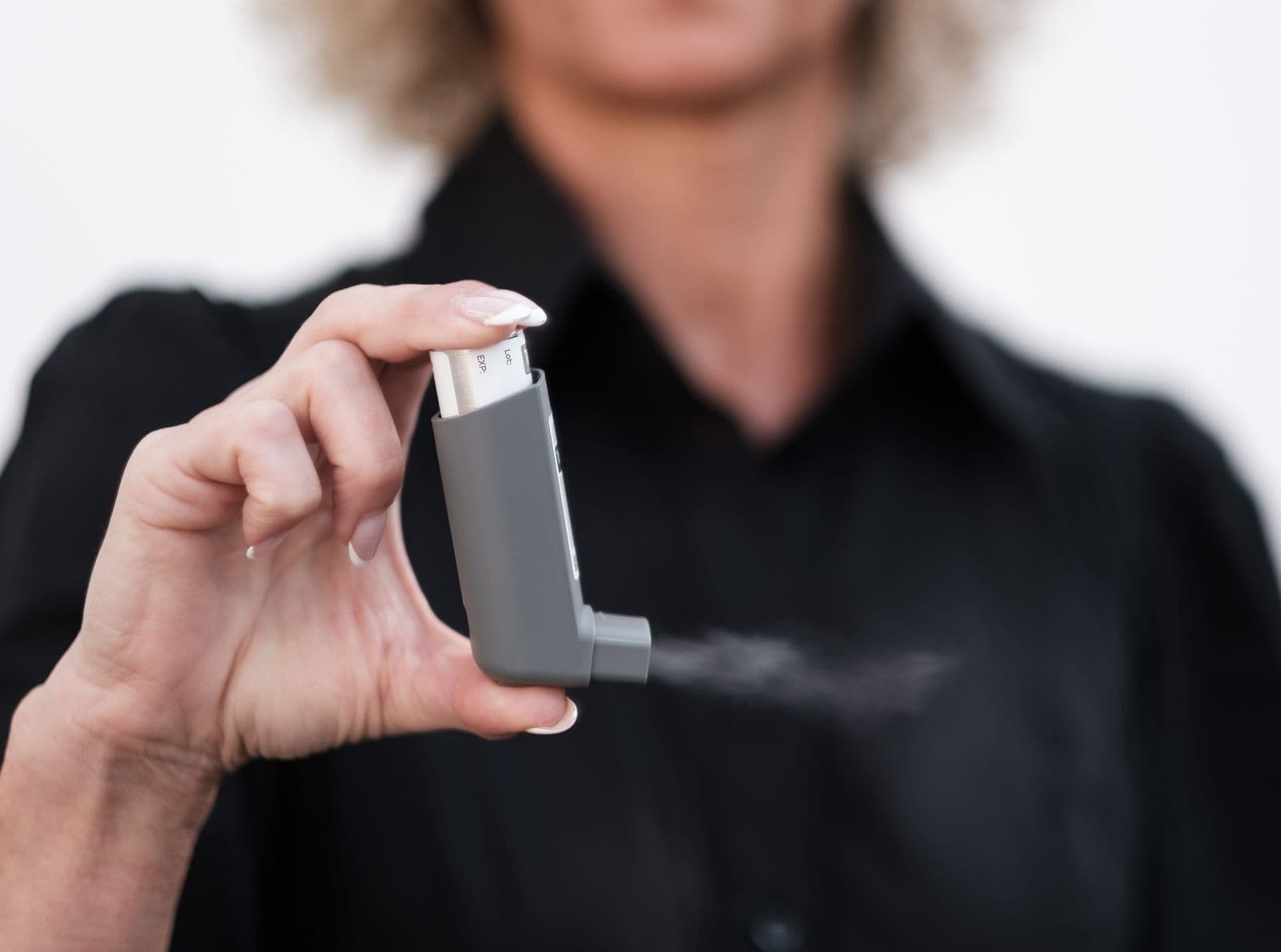
- A quick-relief (reliever) inhaler: used for sudden symptoms.
GINA guidelines advise against relying on a quick-relief inhaler alone, because it does not treat the underlying inflammation. Inhaled steroids at prescribed doses are safe and are different from steroid tablets. Rinse your mouth and spit after using a steroid inhaler. Inhalers are listed under prescription medicine.
A reliever works within minutes; a preventer, an inhaled corticosteroid (ICS) such as budesonide or beclometasone, works slowly and reduces attacks. Since 2019 GINA has recommended against treating adults and adolescents with a salbutamol-type (SABA) reliever alone, as it raises the risk of severe attacks. Everyone in this age group should have ICS-containing treatment: a daily preventer or, for mild asthma, a combined ICS-formoterol inhaler used as needed. Ask your doctor which suits you.
What tests will the doctor order and what do the results mean?
- Spirometry with reversibility: you blow hard into a machine before and 10 to 15 minutes after a reliever. A low FEV1/FVC ratio means narrowed airways; an FEV1 rise of more than 12% and 200 mL after the reliever shows it is reversible, which supports asthma.
- Peak flow and personal best: record the best of 3 blows morning and evening for 2 weeks when well; the highest is your personal best, and zones are percentages of it.
- Allergy tests: skin-prick or specific IgE blood tests show what you react to; they guide avoidance but do not diagnose asthma.
How do I use a metered-dose inhaler with a spacer?
- Shake the inhaler and attach it to the spacer.
- Breathe out gently.
- Seal your lips around the spacer mouthpiece.
- Press the inhaler once.
- Breathe in slowly, or take 5 normal breaths through the spacer.
- Hold your breath for about 10 seconds if you can.
- Wait about 30 to 60 seconds before the next puff, and repeat from step 1.
Young children should use a spacer with a face mask. Dry-powder inhalers work differently: do not shake them, and breathe in fast and deeply. Check the dose counter and expiry date, clean the device as the leaflet says, and ask a doctor or pharmacist to check your technique at least once a year.
How do I use an inhaler without a spacer, or a dry-powder inhaler?
Metered-dose inhaler (pMDI) without a spacer
- Remove the cap and shake the inhaler 4 to 5 times.
- Sit upright and breathe out gently.
- Seal your lips around the mouthpiece.
- Start breathing in slowly and deeply, press the canister once as you begin, and keep breathing in for 3 to 5 seconds.
- Hold your breath for up to 10 seconds, then breathe out gently.
- For a second puff wait 30 to 60 seconds and repeat; rinse your mouth after a steroid inhaler.
Dry-powder inhaler (DPI)
- Load one dose as the leaflet shows (twist, click or pierce). Do not shake it.
- Breathe out fully away from the device, never into it, as moisture clumps the powder.
- Seal your lips around the mouthpiece and breathe in fast and deep.
- Hold your breath for up to 10 seconds, then breathe out slowly, away from it.
- Close it, keep it dry, and rinse your mouth after a steroid.
Cleaning your spacer
Wash it before first use and then monthly in warm water with a little dish soap, do not rinse or wipe the inside (the soap film reduces static), air-dry it upright, and replace it every 6 to 12 months.
What is an asthma action plan?
This is a written plan from your doctor with three zones. Green means well: take your controller as usual. Yellow means getting worse: more cough, wheeze or night waking, so follow the steps written for this zone and contact your doctor. Red means an emergency. If advised, record peak-flow readings.
| Zone | Symptoms | Peak flow | What to do |
|---|---|---|---|
| Green | No cough, wheeze or night waking; normal activity | 80% or more of personal best | Keep taking the controller |
| Yellow | Cough, wheeze, night waking, reliever needed more | About 50 to 80% of personal best | Follow your plan's yellow-zone steps; see a doctor if not better within a day |
| Red | Breathless at rest, cannot speak in sentences, reliever not helping | Below 50% of personal best | Emergency: reliever up to 10 puffs and call 999 |
Needing your reliever more than usual, for example more than twice a week, or waking at night with symptoms, means your asthma is poorly controlled. See your doctor to review treatment.
Asthma in children often shows as night cough, fast breathing or getting tired quickly during play. Children need an age-appropriate device, a spacer with a mask when young, and an adult who knows the action plan. If you are pregnant, keep taking your controller unless your doctor says otherwise, because poorly controlled asthma is a greater risk than the medicine. If exercise brings on symptoms, tell your doctor, who may adjust your treatment.
Inhaled salbutamol and steroids have been used safely in pregnancy for decades, and very little reaches the baby; uncontrolled asthma is linked with low birth weight, preterm birth and pre-eclampsia. Tell your doctor or midwife and keep every inhaler.
How can I reduce attacks at home?
- Avoid smoking, and cook in a ventilated kitchen away from the child's bed.
- Wash bedding in hot water weekly to reduce dust mites.
- Get a flu vaccine if your doctor advises it.
- Keep damp corners of the home clean and dry, as mould is a trigger.
- On days when air pollution is high, limit strenuous outdoor activity.
- Stay active; exercise is good for asthma when you have a plan.
- Never use leftover steroid tablets or someone else's inhaler.
- Tell your doctor about other medicines: beta-blockers (tablets or eye drops), aspirin and NSAIDs can trigger attacks.
Reliever inhalers containing salbutamol are listed on MedEasy. Use the inhaler your doctor has prescribed and ask them to check your technique.
Common myths and questions in Bangladesh
- "Inhalers are addictive." No. Asthma is long-term, so you keep needing treatment, as a diabetic needs insulin; needing the reliever more and more means poor control.
- "Inhalers are a last resort for severe asthma." The opposite: they are first-line, since a tiny dose goes straight to the lungs.
- "My asthma has gone, so I can stop the preventer." Symptoms disappear because the preventer is working; stopping suddenly often brings attacks back within weeks. A doctor may step down after about 3 months of good control.
- "Tablets are safer than inhalers." Steroid and salbutamol tablets act on the whole body at far higher doses; short courses are for flare-ups only; repeated courses raise the risk of diabetes, bone loss and cataracts.
When should I get emergency help?
Call 999 or go to hospital without delay if any of these occur:
- severe breathlessness, or you cannot speak in full sentences
- lips or face turning blue
- the reliever is not helping, or you need it more often than every 4 hours
- no improvement after 10 puffs
- peak flow below 50% of your personal best
- drowsiness or exhaustion
While waiting for help, sit upright and take 1 puff of the reliever every 30 to 60 seconds, up to 10 puffs, through a spacer if you have one.
Keep the spacer clean as the leaflet directs, and let it air-dry. Carry your reliever with you, and check it is not empty or out of date before you travel or when the season changes.
Book a routine review through online doctor consultation if you need reliever more than twice a week, wake at night, or are unsure about your inhaler technique.
References
- Global Initiative for Asthma (GINA)
- Global Strategy for Asthma Management and Prevention 2024 - GINA
- Asthma - NHS
- Asthma - World Health Organization
- Asthma attacks - Asthma + Lung UK
- Living with Asthma: Asthma Action Plan - CDC
This article is for general awareness only and is not a substitute for advice from a qualified doctor. Follow your own asthma action plan.