Quick answer: Combined pills such as Femicon 28, Femipil and Noret 28 work mainly by stopping ovulation and are over 99% effective when taken every day. Start within the first 5 days of your period for immediate protection. If you miss two or more pills, continue and use condoms for 7 days. Smokers aged 35 and over, and women with high blood pressure, migraine with aura or past clots, need another method.
How do combined pills work, and how effective are they?
A combined oral contraceptive (COC) contains a low dose of an oestrogen (ethinylestradiol) and a progestin (norgestrel or levonorgestrel in Bangladeshi brands). It stops the ovary releasing an egg and thickens the cervical mucus so sperm cannot pass.
The NHS says that taken correctly every day the pill is more than 99% effective; with typical use about 91%, so roughly 9 in 100 users become pregnant in a year. The WHO Family Planning Handbook says the riskiest mistake is starting a new pack 3 or more days late. The progestin-only pill (Minicon) is a separate type, covered in another article.
How do I start the pill, and when am I protected?
- Day 1 to 5 of your period: protected straight away (NHS, CDC).
- Any other day: start if reasonably sure you are not pregnant, and use condoms for 7 days (CDC).
- Switching from another hormonal method used correctly: start the same day, no backup (WHO).
- After a baby, not breastfeeding: not before day 21 (NHS); the Femicon leaflet says 6 weeks after a caesarean, matching WHO advice for women with extra clot risk.
- After a baby, breastfeeding: never before 6 weeks; if fully breastfeeding, WHO advises waiting until 6 months.
Combined pills are sold over the counter in Bangladesh, so no one may check you first. WHO says a blood pressure check is desirable before starting: ask a pharmacist, doctor or family-planning worker to measure it and ask about smoking, migraine and clots (see our guide to high blood pressure).
How do I take a 28-day pack with iron tablets?
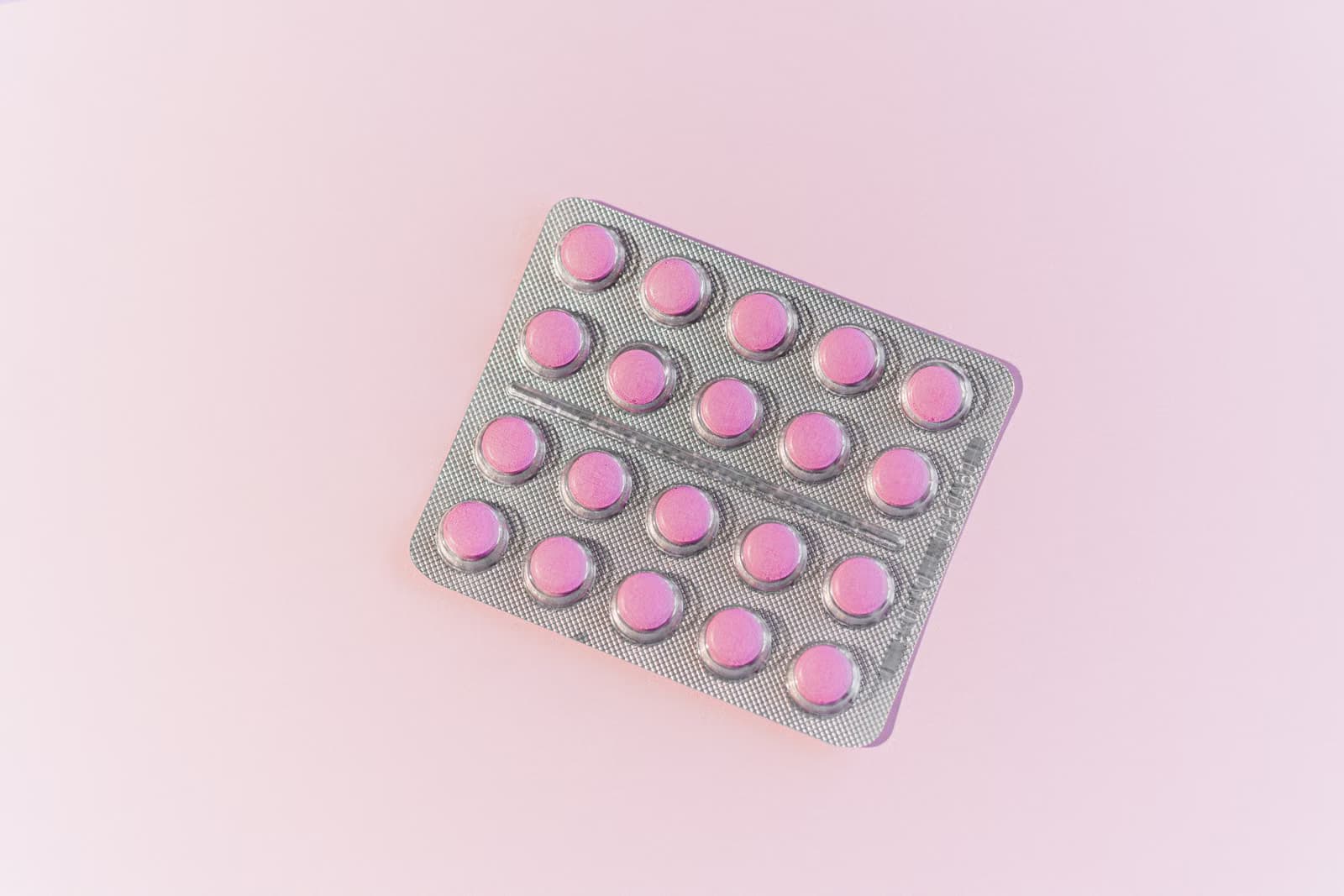
SMC packs follow one pattern: 21 white hormone tablets, then 7 brown iron tablets. Femicon 28 contains norgestrel 0.30 mg with ethinylestradiol 0.03 mg; Femipil contains levonorgestrel 0.15 mg with ethinylestradiol 0.03 mg; Noret 28 contains ethinylestradiol 0.03 mg with a progestin (the listing is inconsistent about which, so check the pack). The brown tablets are ferrous fumarate 75 mg. More options: contraceptive pills in our feminine care range.
What the pack says
- Start on day 1 of your period (Femipil and Noret 28: days 1 to 5 acceptable).
- One white tablet daily for 21 days, then one brown daily for 7 days, at the same time each day, preferably with food.
- Start the next strip the very next day, whether or not your period has come.
What are the brown iron tablets for?
They contain no hormone; they keep the daily habit going and give a little iron during the bleeding days. The dose does not treat anaemia: if you feel tired or look pale, get a blood test (see iron-deficiency anaemia). Missing a brown tablet does not reduce protection (WHO handbook).
What should I do if I miss a pill?
These are the CDC Selected Practice Recommendations, which the SMC leaflets also follow; “two or more missed” means 48 hours or more since your last hormone pill.
| Situation | What to do | Backup? |
|---|---|---|
| 1 white pill late or missed | Take it as soon as you remember, even if that means two in one day, and carry on. | No. |
| 2 or more white pills missed in a row | Take the most recent missed pill, discard the others, continue the pack. | Condoms or no sex for 7 days. |
| 2 or more missed in days 15 to 21 | Finish the white pills, skip the brown ones, start a new pack the next day. | 7 days. |
| 2 or more missed in week 1, with sex in the previous 5 days | As above, plus consider emergency contraception (levonorgestrel 1.5 mg, as soon as possible). | 7 days. |
| Vomiting within 2 to 3 hours | Take another pill (WHO says 2 hours, NHS 3). | Only if it continues: until 7 days after it stops. |
What are the side effects, and what are the benefits?
Good evidence
- Common, usually temporary: spotting between periods, nausea, headache, breast tenderness, mood changes and dizziness, settling within about 3 months (NHS, WHO).
- Weight: the NHS says there is no evidence the pill causes weight gain; WHO lists “weight change” as something some users report.
- Serious but rare: a clot in the leg or lung (NHS: up to 1 in 1,000 users); stroke and heart attack are extremely rare.
- Cancer: breast and cervical cancer risk is slightly higher while on the pill, returning to normal about 10 years after stopping; womb, ovarian and bowel cancer risk is lower for 15 years or more after stopping (NHS, WHO).
- Other benefits: lighter, more regular and less painful periods, acne that usually improves, and some protection against pelvic infection, ovarian cysts and iron-deficiency anaemia (WHO).
Limited or mixed evidence: the NHS lists mood changes as a possible side effect but finds no evidence that the pill changes sex drive. Tell a doctor if your mood changes.
Who should not take combined pills?
Nearly all women can use COCs safely; the exceptions below come from the WHO Medical Eligibility Criteria and mostly concern clot and stroke risk.
| Condition | WHO guidance |
|---|---|
| Aged 35 or over and smoke (any amount) | Do not use |
| Blood pressure 160/100 or higher (140 to 159/90 to 99: recheck first) | Do not use |
| Current or past blood clot (DVT or pulmonary embolism), heart attack or stroke | Do not use |
| Migraine with aura at any age; migraine without aura at 35 or over | Do not use |
| Breast cancer, now or ever | Do not use |
| Serious liver disease or active hepatitis; diabetes over 20 years or with organ damage | Do not use |
| Breastfeeding and under 6 weeks postpartum; not breastfeeding and under 21 days | Not yet |
| Taking rifampicin, rifabutin or enzyme-inducing seizure medicines | Choose another method |
| Pregnant, or unexplained vaginal bleeding | See a doctor first |
Pack leaflets are not always this strict: the Femicon listing names smoking over 40 cigarettes a day, age over 50 and migraine with aura lasting over 72 hours, whereas international guidance rules out any smoker aged 35 or over and migraine with aura at any age. If any row applies, ask a doctor, pharmacist or family-planning worker about a progestin-only or non-hormonal method. They are not for children; if you find you are pregnant, stop and see a doctor (WHO says the pill does not harm the pregnancy).
Which medicines make the pill less effective?
- Rifampicin and rifabutin (tuberculosis treatment): use another method during treatment (NHS, WHO).
- Enzyme-inducing seizure medicines: carbamazepine, phenytoin, barbiturates, primidone, oxcarbazepine, topiramate; with lamotrigine WHO advises a method without oestrogen.
- St John's wort, a herbal remedy (MedlinePlus), and some HIV medicines.
Ordinary antibiotics: the Femicon listing says antibiotics in general may reduce effectiveness, but the NHS names only rifampicin and rifabutin, so a short course of amoxicillin or azithromycin is not thought to affect the pill. Vomiting or diarrhoea from the illness can, so follow the missed-pill rules; condoms during the course and 7 days after are a harmless precaution. Always tell the prescriber you take the pill (see our guide to reading a prescription and taking medicines safely).
When should I see a doctor or call 999?
Stop the pill and call 999 or go to hospital for these warning signs of a clot or stroke, remembered as ACHES (MedlinePlus):
- Abdominal pain, severe
- Chest pain or sudden breathlessness
- Headache, sudden and severe, or with weakness or slurred speech
- Eye problems: sudden vision loss or blurring
- Severe pain or swelling in one leg
See a doctor within a few days for yellow eyes or skin, a breast lump, very heavy bleeding or bleeding over 7 days, two missed periods in a row, blood pressure of 140/90 or higher, or side effects lasting beyond 3 months. Or book an online doctor consultation on MedEasy.
Common beliefs and questions in Bangladesh
“The pill causes infertility or permanent weight gain”
No. WHO states that COCs do not make women infertile; fertility returns as soon as you stop, so use another method from that day. The NHS finds no evidence of weight gain.
“You should take a break from the pill every year”
No. The hormones do not build up, and WHO says women do not need a rest from COCs; breaks only risk an unplanned pregnancy.
“The pill is only for married women”
Eligibility depends on health, not marital status. Any adult woman can use the pill if none of the conditions above apply, and deserves respectful advice.
“The pill protects against STIs”
It does not. Only condoms reduce the risk of HIV and other sexually transmitted infections; use both if there is any risk.
References
- U.S. Selected Practice Recommendations: Combined Hormonal Contraceptives - CDC
- Medical Eligibility Criteria for Combined Oral Contraceptives, Family Planning: A Global Handbook for Providers - WHO / Johns Hopkins CCP
- Combined Oral Contraceptives: Managing Missed Pills, Family Planning: A Global Handbook for Providers - WHO / Johns Hopkins CCP
- Combined pill: How to take it - NHS
- Combined pill: Side effects and risks - NHS
- Estrogen and Progestin (Oral Contraceptives) - MedlinePlus
This article is for general awareness and is not a substitute for advice from a doctor. The products mentioned do not replace a consultation, and the choice of a contraceptive method, especially if you have any health condition, should be discussed with a doctor, pharmacist or family-planning worker.